
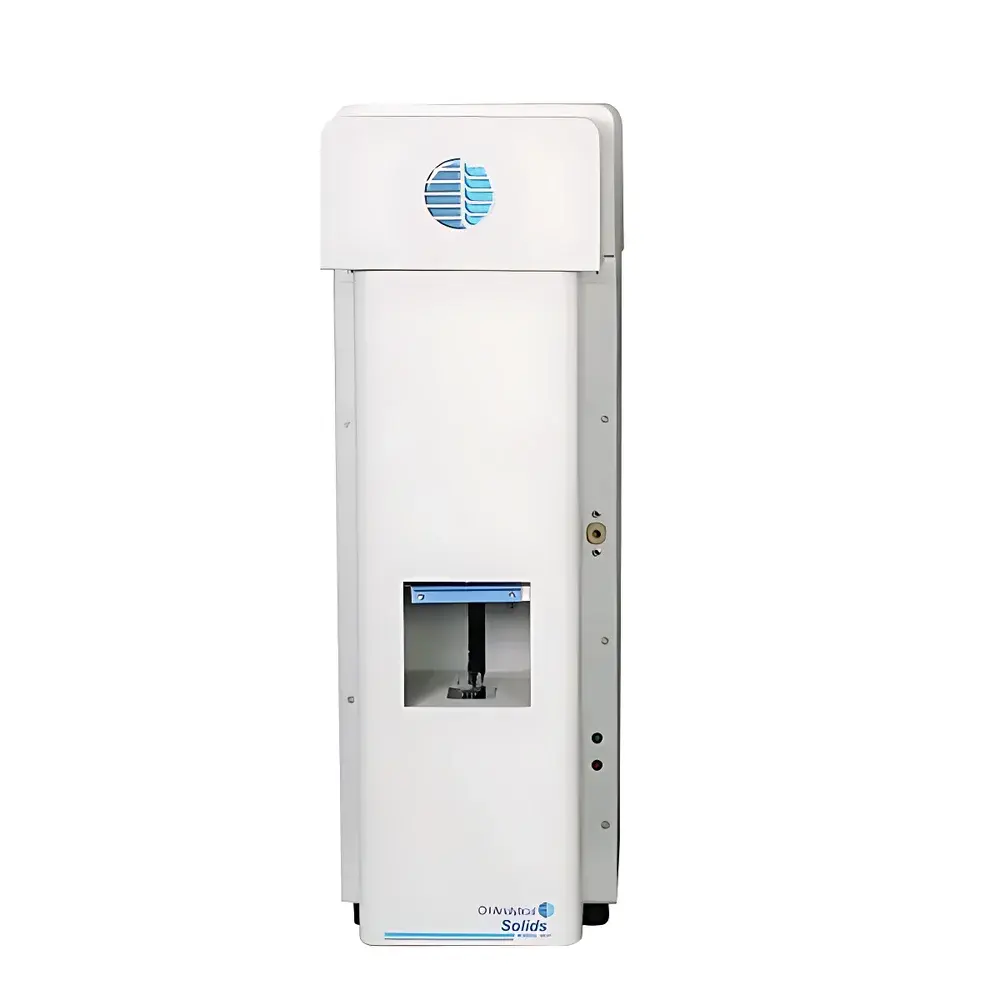
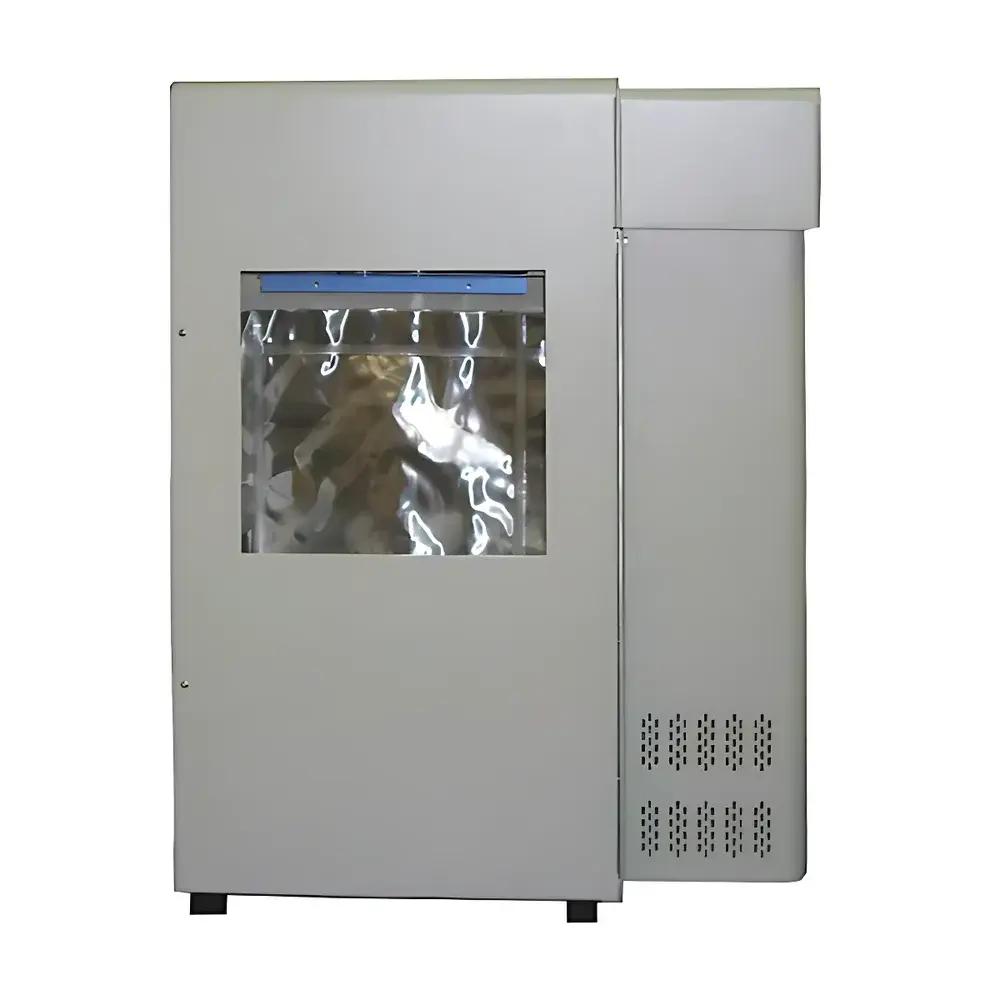
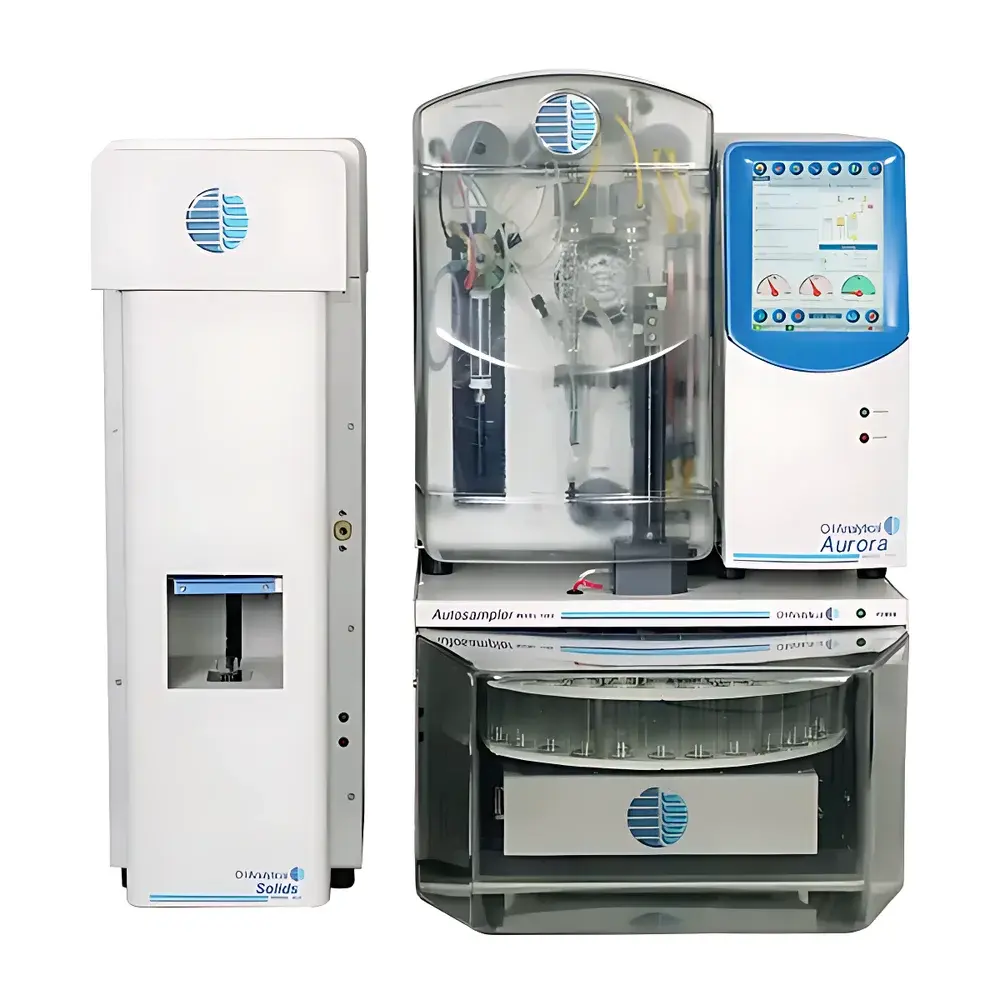
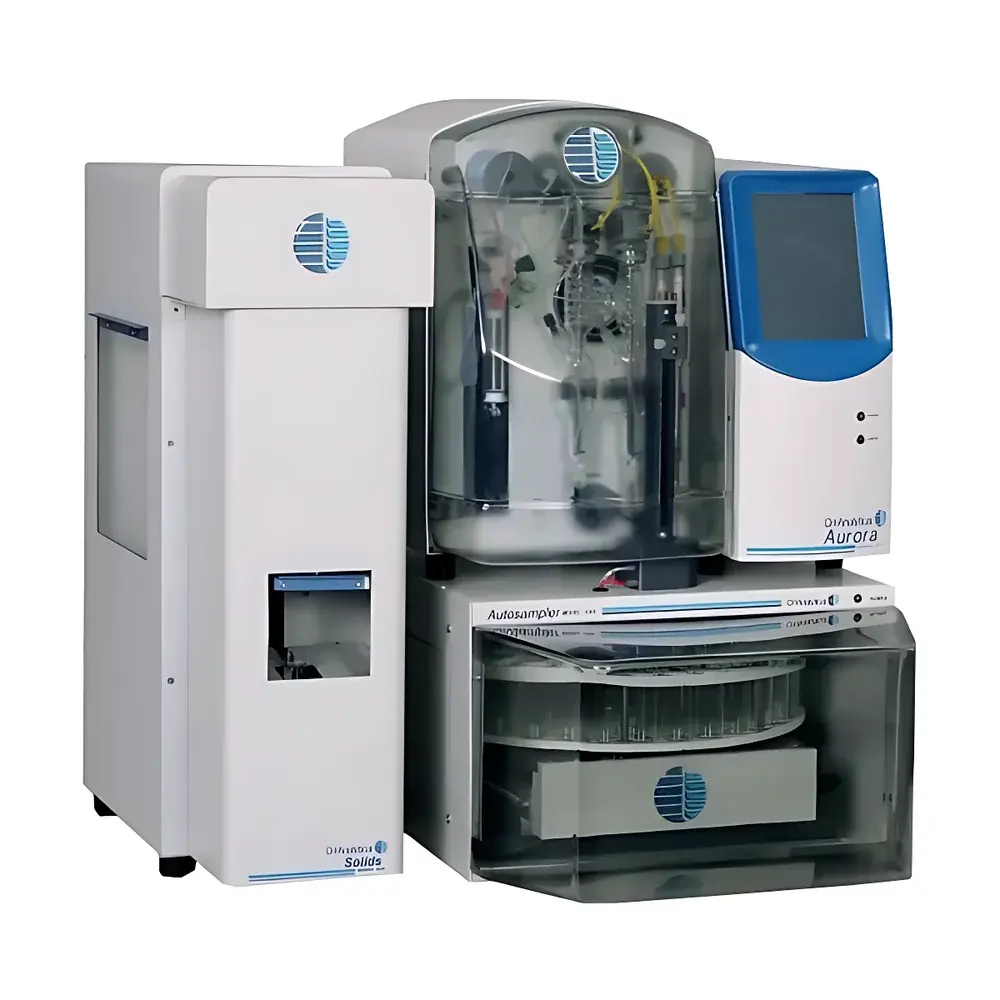
OI Analytical 1030S Solid Sample Introduction Module for Total Organic Carbon Analysis
| Brand | OI Analytical |
|---|---|
| Origin | USA |
| Model | 1030S |
| Compatibility | Requires coupling with OI Analytical Aurora 1030W, 1030C, or 1030D TOC Analyzer |
| Sample Mass Range | 50 µg – 2 g |
| TC/TOC Quantification Range | 0.05 mg – 50 mg |
| Design | Vertical compact footprint |
| Gas Capture Method | Sealed sample bag system for post-combustion CO₂ retention and sequential analysis |
Overview
The OI Analytical 1030S Solid Sample Introduction Module is an engineered accessory designed to extend the analytical capability of the Aurora 1030 series (W/C/D) Total Organic Carbon (TOC) analyzers to heterogeneous solid matrices. Unlike conventional liquid-injection TOC systems, the 1030S employs high-temperature catalytic combustion (typically at 680–950 °C) followed by selective CO₂ capture in a proprietary sealed quartz-fiber sample bag. This physical containment strategy enables quantitative recovery and repeated measurement of evolved carbon dioxide from a single solid sample—eliminating inter-sample carryover and significantly improving method reproducibility. The module operates on the fundamental principle that total carbon (TC) is determined after complete oxidation of all carbon forms, while TOC is derived by difference following acidification and purging of inorganic carbon (IC), or via direct combustion of pre-acidified solids under inert atmosphere. Its integration preserves the core NDIR (non-dispersive infrared) detection architecture of the host 1030 analyzer, ensuring traceable, calibrated quantification across the full dynamic range.
Key Features
- Vertical modular architecture minimizes benchtop footprint while maintaining ergonomic access to sample loading ports and gas routing interfaces.
- Sealed quartz-fiber sample bag system retains combusted CO₂ for multiple injections into the NDIR detector—enabling replicate measurements without recombustion and reducing relative standard deviation (RSD) to ≤3% for heterogeneous soils and sediments.
- Wide sample mass tolerance (50 µg–2 g) accommodates low-carbon environmental matrices (e.g., atmospheric particulates, glacial ice cores) and high-carbon industrial powders (e.g., activated carbon, biochar).
- Direct compatibility only with OI Analytical Aurora 1030W (wet-persulfate), 1030C (catalytic combustion), or 1030D (dual-method) platforms—ensuring firmware synchronization, thermal protocol alignment, and automated method sequencing.
- No internal consumables beyond disposable sample bags; no moving parts or valves subject to particulate fouling—enhancing long-term operational stability in high-silt-content applications.
Sample Compatibility & Compliance
The 1030S supports regulatory-compliant analysis of solid-phase environmental specimens including EPA Method 9060A (soil/sediment TC/TOC), ASTM D7573-22 (total carbon in solid waste), and ISO 20236:2019 (determination of organic carbon in soils). It accepts granular, powdered, or homogenized slurry samples—such as agricultural topsoil, dredged harbor sediments, wastewater biosolids, coal fly ash, and pharmaceutical excipients—without requiring pelletization or binder addition. All combustion and gas-handling protocols comply with US EPA SW-846 requirements for carbon oxidation efficiency (>95%) and blank control integrity (<0.1 mg C). When operated under validated laboratory SOPs, data output meets GLP audit criteria for traceability, including electronic records of sample ID, combustion temperature ramp, bag seal verification, and NDIR integration time.
Software & Data Management
Module operation is fully embedded within the Aurora 1030 Series Control Software (v5.2+), providing synchronized method templates for solid-mode TC/TOC, IC subtraction workflows, and multi-point calibration using certified solid reference materials (e.g., NIST SRM 2710a, 2711a). Raw NDIR absorbance traces, peak area integrals, and calculated carbon mass values are stored with timestamped metadata—including operator ID, ambient pressure/temperature, and instrument diagnostic logs. Audit trail functionality complies with FDA 21 CFR Part 11 requirements when deployed on validated Windows OS environments with role-based user authentication. Export options include CSV, XML, and LIMS-compatible ASTM E1384 formats.
Applications
- Environmental site assessment: Quantifying petroleum hydrocarbon residues and natural organic matter in contaminated soils and riverine sediments.
- Wastewater treatment optimization: Monitoring TOC removal efficiency across anaerobic digesters and tertiary filtration media.
- Carbon sequestration research: Validating long-term soil carbon storage in regenerative agriculture trials.
- Pharmaceutical manufacturing: Verifying residual organic solvents and excipient carbon content in lyophilized drug products per ICH Q5C guidelines.
- Geological carbon cycling studies: Measuring kerogen-bound carbon in shale formations and carbonate mineral interference in paleoclimate proxies.
FAQ
Can the 1030S operate independently without a 1030W/C/D analyzer?
No—the 1030S is a non-autonomous module; it lacks its own detector, furnace controller, or data acquisition hardware and must be physically and electrically interfaced with a compatible Aurora 1030 platform.
What sample preparation is required prior to loading into the quartz bag?
Samples must be air-dried, homogenized, and sieved to ≤250 µm; moisture content should be documented separately as it affects mass-normalized reporting (e.g., % TOC dry weight basis).
Is acid pretreatment mandatory for IC correction in solid mode?
Yes—solid samples require pre-combustion acid fumigation (HCl vapor) or slurry acidification to remove carbonate-derived inorganic carbon; omission invalidates TOC calculation per ASTM D7573.
How often must the quartz sample bags be replaced?
Bags are single-use consumables; reuse risks cross-contamination and CO₂ leakage—each analysis requires a new, certified low-carbon bag (OI P/N 1030-SB-KIT).
Does the 1030S support automated sample changers?
Not natively—the module is manually loaded; however, third-party robotic arms with programmable XYZ stages can be integrated via TTL-triggered I/O ports on the host 1030 analyzer.
Related Products







