
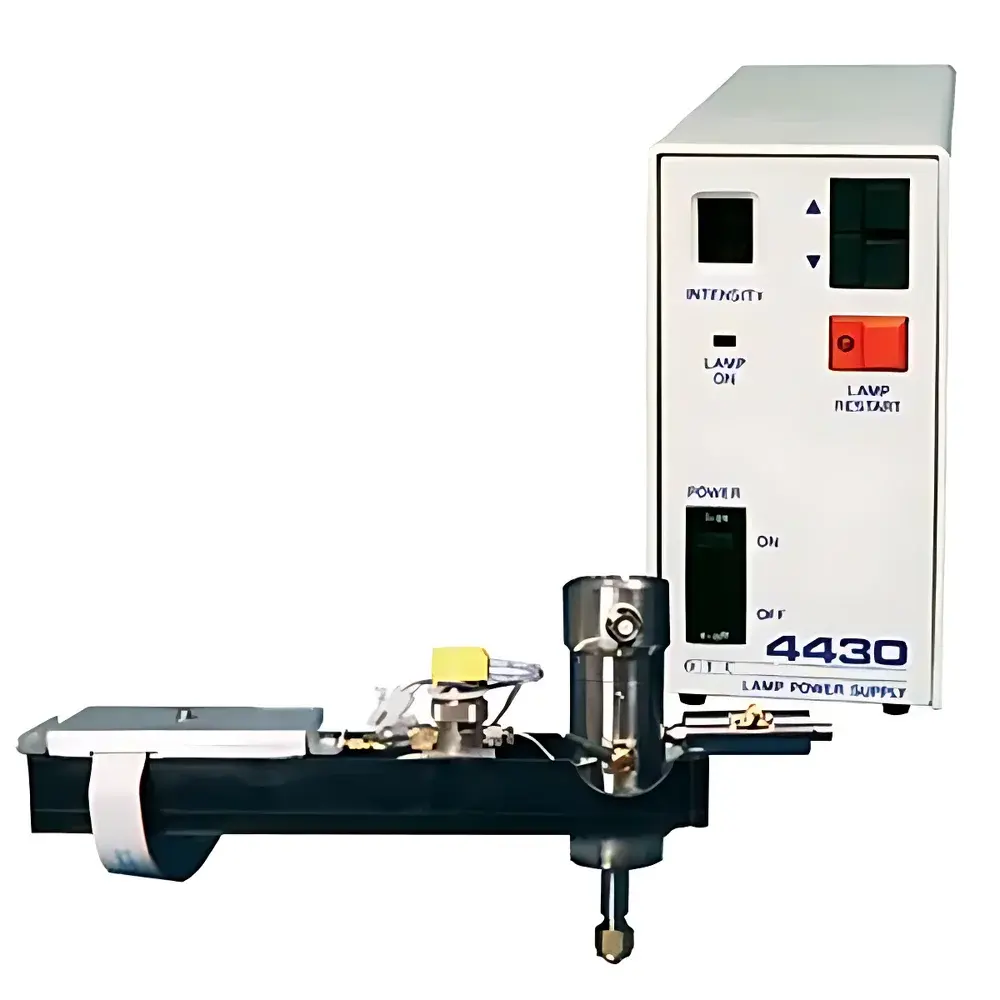
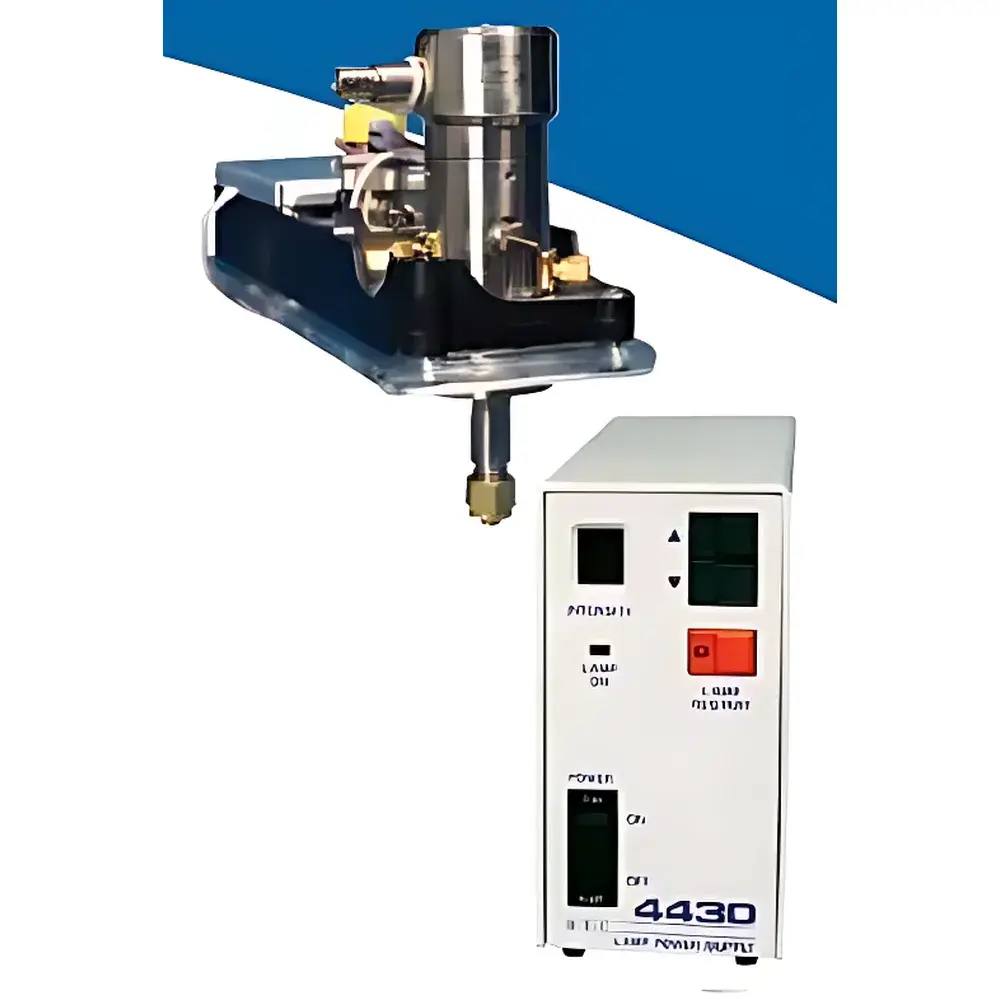
OI Analytical 4450 PID-FID Dual-Mode Chromatographic Detector
| Brand | OI Analytical |
|---|---|
| Origin | USA |
| Model | 4450 PID-FID |
| Detector Configuration | Integrated Series-Connected PID and FID |
| Compatible GC Interfaces | Single-detector port (supports dual 4450 installation with OI Dual-Channel Electronics) |
| Column Compatibility | Packed and Capillary Columns |
| Regulatory Alignment | Designed for EPA Method 8021B, ASTM D6728, and USP <467> residual solvent analysis |
Overview
The OI Analytical 4450 PID-FID Dual-Mode Chromatographic Detector is an engineered solution for simultaneous, selective detection of volatile organic compounds (VOCs) in gas chromatography applications. Unlike conventional single-mode detectors, the 4450 integrates a photoionization detector (PID) and a flame ionization detector (FID) in a physically compact, series-connected architecture—enabling concurrent acquisition of two orthogonal response profiles from a single chromatographic run. The PID channel operates via 10.6 eV ultraviolet lamp ionization, delivering enhanced sensitivity to aromatic and unsaturated compounds (e.g., benzene, toluene, styrene), while the downstream FID provides universal, carbon-mass-proportional response to virtually all organic analytes—including saturated aliphatics (e.g., hexane, propane) that exhibit low photoionization cross-sections. This dual-response capability eliminates the need for method duplication or column-switching workflows, significantly reducing analysis time and improving inter-run reproducibility in environmental, industrial hygiene, and pharmaceutical QC laboratories.
Key Features
- Patented series-coupled PID/FID design housed in a single GC detector module, occupying only one detector port on the GC oven
- Independent signal processing paths for PID and FID outputs, each with dedicated gain control, baseline adjustment, and analog/digital output channels
- Compatible with both packed and fused-silica capillary columns—no hardware modification required for column type switching
- Supports dual 4450 installation via OI’s proprietary Dual-Channel Electronics (DCE) platform, enabling parallel analysis of two independent sample streams or method verification workflows
- UV lamp with stable 10.6 eV photon energy output; FID jet optimized for low-noise, high-linearity response across 10⁵ dynamic range (typical)
- Thermally stabilized detector body with precision temperature control (±0.1 °C) to ensure retention time stability and detector response consistency
Sample Compatibility & Compliance
The 4450 PID-FID is validated for use in regulated analytical environments requiring adherence to method-defined selectivity and sensitivity thresholds. It meets instrumental performance criteria outlined in U.S. EPA Method 8021B for VOC analysis in water and soil extracts, ASTM D6728 for hydrocarbon speciation in reformulated gasoline, and USP for residual solvents in pharmaceutical excipients and active ingredients. Its dual-channel output structure supports audit-ready data generation when paired with compliant chromatography data systems (CDS) that implement 21 CFR Part 11–compliant electronic signatures, audit trails, and user access controls. No internal calibration gases or consumables beyond standard FID hydrogen/air supplies are required—reducing operational overhead and qualification burden.
Software & Data Management
The 4450 interfaces seamlessly with industry-standard GC control software (e.g., Thermo Chromeleon, Agilent OpenLab CDS, Shimadzu GCsolution) via analog voltage outputs (0–1 V or 0–5 V full scale) and optional RS-232/USB digital communication modules. Raw PID and FID chromatograms are acquired as synchronized, time-aligned data streams—enabling post-run ratio analysis (e.g., PID/FID peak area ratios) for compound class differentiation. When used with OI’s optional ChromaTOF™ data processing suite, users can perform spectral deconvolution, library matching, and automated peak identification based on combined ionization behavior. All detector configuration parameters—including lamp voltage, FID bias, and temperature setpoints—are stored in non-volatile memory and recalled automatically upon power-up, ensuring method transfer integrity across instruments.
Applications
- Environmental monitoring: Simultaneous quantification of BTEX (benzene, toluene, ethylbenzene, xylenes) and C₂–C₆ aliphatics in ambient air, landfill gas, and groundwater headspace
- Industrial hygiene: Real-time workplace exposure assessment per OSHA and NIOSH sampling protocols without method revalidation
- Pharmaceutical quality control: Residual solvent profiling in APIs and drug products under ICH Q3C guidelines, where differential PID/FID response aids in distinguishing Class 2 (e.g., acetone) from Class 3 (e.g., ethanol) solvents
- Fuel and petrochemical analysis: Hydrocarbon group-type analysis in gasoline, diesel, and biofuel blends using retention index correlation with dual-response fingerprints
- Research laboratories: Mechanistic studies of thermal degradation pathways where co-eluting fragments exhibit divergent ionization efficiencies
FAQ
Can the 4450 be used with third-party GC systems?
Yes—the 4450 features standard GC mounting dimensions and analog signal interfaces compatible with all major OEM gas chromatographs.
Is lamp replacement required regularly?
The 10.6 eV UV lamp has a rated lifetime exceeding 5,000 hours under continuous operation; lamp status is monitored via built-in photodiode feedback.
Does the FID portion require special gas purity specifications?
Hydrogen fuel gas must meet Grade 5 (99.999%) purity; compressed air should be oil-free and dew-point controlled to −40 °C or lower.
How is detector alignment maintained during thermal cycling?
The optical and combustion chambers are constructed from low-thermal-expansion Invar alloy, and mechanical alignment is factory-verified and sealed—no field recalibration is necessary.
Is the 4450 suitable for trace-level analysis in complex matrices?
With sub-part-per-trillion (pptv) detection limits for aromatics (PID) and low-picogram (pg) sensitivity for aliphatics (FID), it supports EPA-required reporting levels in drinking water and soil vapor investigations.





