
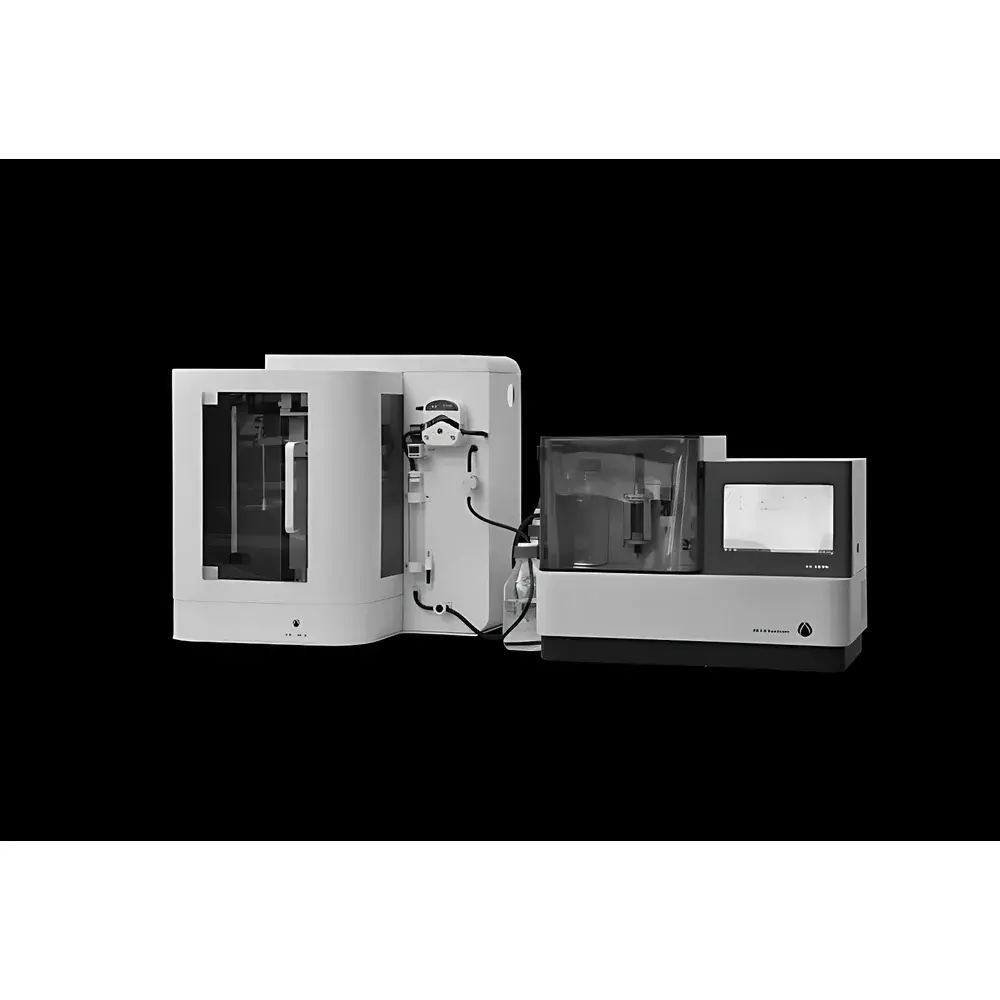
OL1020 Infrared Spectrophotometric Oil Analyzer
| Origin | Shanghai, China |
|---|---|
| Manufacturer Type | Authorized Distributor |
| Origin Category | Domestic (PRC) |
| Model | OL 1020 |
| Instrument Type | Benchtop Laboratory Analyzer |
| Measurement Principle | Infrared Absorption Spectrophotometry (ASTM D7066, HJ 637–2012) |
| Measurement Range | 0–50,000 mg/L (with automatic dilution for over-range samples) |
| Detection Limit | 0.005 mg/L |
| Accuracy | ±2% of reading |
| Resolution | 0.001 mg/L |
| Wavenumber Range | 3,400–6,000 cm⁻¹ |
| Absorbance Range | 0.0000–2.0000 AU |
| Sample Throughput | Up to 10 samples per batch |
| Sample Volume | 10–1,000 mL |
| Extraction Solvents | Tetrachloroethylene or Carbon Tetrachloride |
| Extraction Ratio Programmable | 0.01–100 |
| Measurement Time per Sample | <5 minutes |
| Compliance | HJ 637–2012, HJ/T 91–2002, ISO 9377-2:2000 (Water Quality — Determination of Hydrocarbon Oil Index) |
Overview
The OL1020 Infrared Spectrophotometric Oil Analyzer is a fully automated benchtop instrument engineered for precise, trace-level quantification of total oil, petroleum hydrocarbons, and animal/vegetable oils in aqueous environmental matrices. It operates on the principle of mid-infrared absorption spectroscopy, measuring characteristic C–H stretching vibrations at three standardized wavenumbers—3030 cm⁻¹ (CH₂ symmetric stretch), 2960 cm⁻¹ (CH₃ asymmetric stretch), and 2870 cm⁻¹ (CH₂ asymmetric stretch, formerly cited as 73250 px⁻¹ in legacy unit conventions)—as defined in China’s national standard HJ 637–2012 and aligned with international methodologies including ISO 9377-2:2000. The system integrates solvent-based liquid–liquid extraction, phase separation, selective adsorption, and spectral acquisition into a single closed-loop workflow, eliminating manual handling of hazardous solvents while ensuring metrological traceability and analytical reproducibility.
Key Features
- Patented Phase Separation Module: A pressure-driven, PTFE-lined separation device enables robust partitioning of aqueous and organic phases—even from heterogeneous or particulate-laden water samples—followed by inline drying using anhydrous sodium sulfate. Reverse-pressure solvent flush prevents clogging and eliminates carryover between analyses.
- Automated Tri-Parameter Quantification: Simultaneous calculation of total oil, petroleum hydrocarbons, and animal/vegetable oils in a single run. Integrated silica-magnesium adsorption column monitors real-time reagent depletion via software feedback, prompting timely replacement to maintain method integrity.
- Dedicated Field Sampling Integration: Includes EPA-compliant sampling kit (sealed HDPE bottles with calibrated volume markings, immersion samplers, and transport case), enabling direct injection of field-collected water without volumetric transfer—minimizing analyte loss and contamination risk per HJ/T 91–2002.
- Hermetic, Operator-Safe Workflow: All extraction, separation, and measurement steps occur within a sealed fluidic path. Volatile organic compound (VOC) emissions are captured by activated carbon filtration, meeting occupational exposure limits (OELs) and supporting GLP-compliant laboratory environments.
- Intelligent Solvent Management: Onboard reagent recovery system collects spent tetrachloroethylene or carbon tetrachloride for off-site regeneration or disposal, reducing hazardous waste generation and lifecycle cost per analysis.
Sample Compatibility & Compliance
The OL1020 is validated for use with surface water, groundwater, wastewater effluents, leachates, and marine samples across municipal, industrial, and regulatory monitoring programs. Its design conforms to HJ 637–2012 (determination of petroleum and animal/vegetable oils in water by infrared spectrophotometry), HJ/T 91–2002 (surface water and wastewater monitoring technical specifications), and harmonized elements of ISO 9377-2:2000. The instrument supports audit-ready data generation compliant with GLP and GMP documentation requirements; all critical parameters—including solvent volume, extraction ratio, dilution factor, absorbance values at each band, and column saturation status—are time-stamped and stored with full electronic signature capability. Optional 21 CFR Part 11 compliance packages include role-based access control, audit trail logging, and electronic record retention protocols.
Software & Data Management
Controlled via a ruggedized touchscreen PC running embedded Windows OS, the OL1020’s proprietary software provides intuitive method setup, real-time process visualization, and automated calibration curve generation using up to six standard concentrations. It supports automatic standard solution preparation via integrated dispensing modules, dynamic range extension through programmable serial dilution, and QC flagging based on absorbance linearity (R² ≥ 0.999), baseline drift (<0.002 AU), and column breakthrough detection. Raw spectral data (absorbance vs. wavenumber) and processed concentration reports are exportable in CSV, PDF, and XML formats compatible with LIMS integration. All data files include embedded metadata: operator ID, instrument serial number, calibration date, environmental temperature/humidity logs, and version-controlled firmware build ID.
Applications
- Regulatory compliance monitoring for discharge permits (e.g., NPDES, local environmental bureaus)
- Wastewater treatment plant influent/effluent characterization and process optimization
- Oil spill impact assessment in rivers, lakes, and coastal zones
- Leachate analysis from landfill monitoring wells
- Industrial pretreatment verification for petrochemical, food processing, and metalworking facilities
- Research-grade hydrocarbon speciation in ecological and geochemical studies
FAQ
What extraction solvents are supported?
Tetrachloroethylene (PERC) and carbon tetrachloride are both fully supported; solvent selection is user-configurable and automatically adjusted in flow control algorithms.
Does the system meet international standards beyond Chinese regulations?
Yes—the optical path design, spectral resolution, and calibration methodology align with ISO 9377-2:2000 and ASTM D7066 for hydrocarbon index determination in water.
How is cross-contamination prevented during high-throughput operation?
The patented reverse-flush separation module, combined with PTFE-wetted fluid paths and automated solvent purge cycles between samples, ensures RSD <2% across 10-sample batches.
Can the instrument be integrated into an existing LIMS environment?
Yes—via configurable ODBC drivers and HL7-compatible XML output; optional middleware supports direct bidirectional communication with major LIMS platforms.
Is routine maintenance documented and traceable?
All service events—including column replacement, lamp alignment, detector calibration, and cleaning logs—are recorded in the internal audit trail with digital signatures and timestamped entries.







