
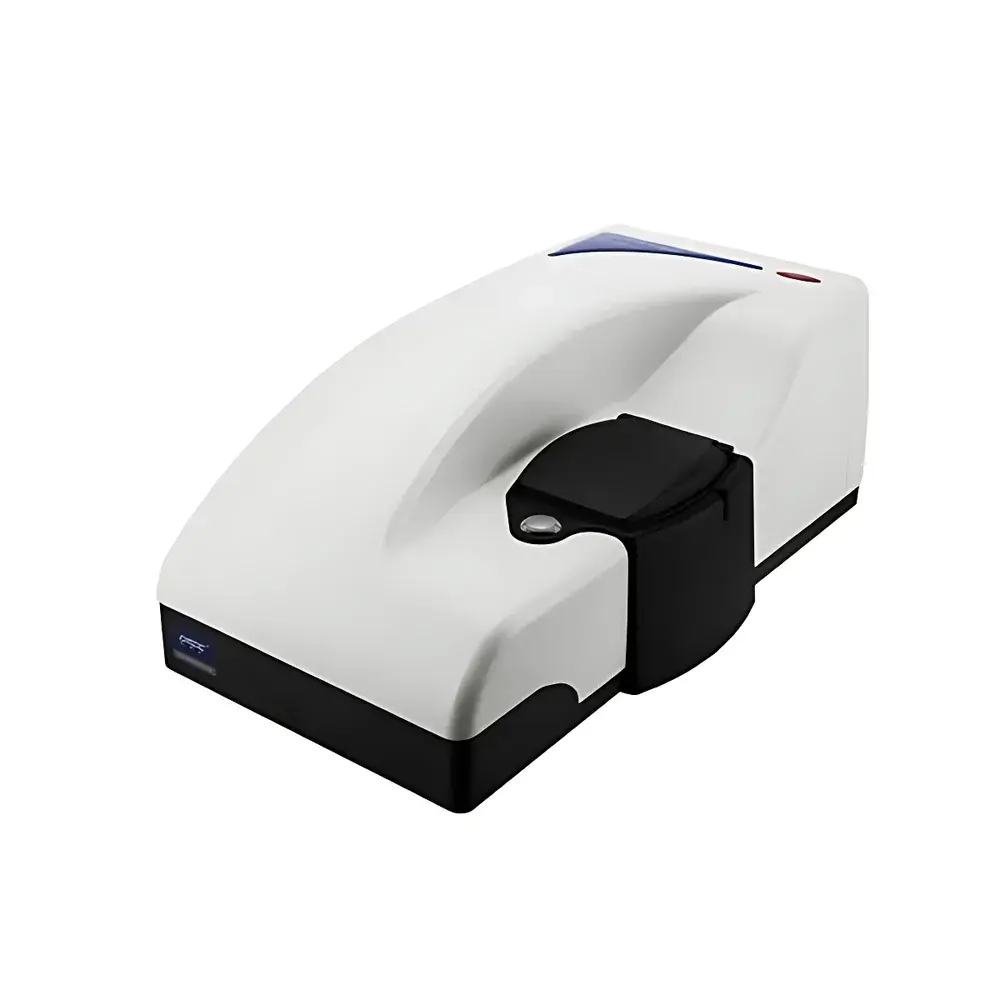
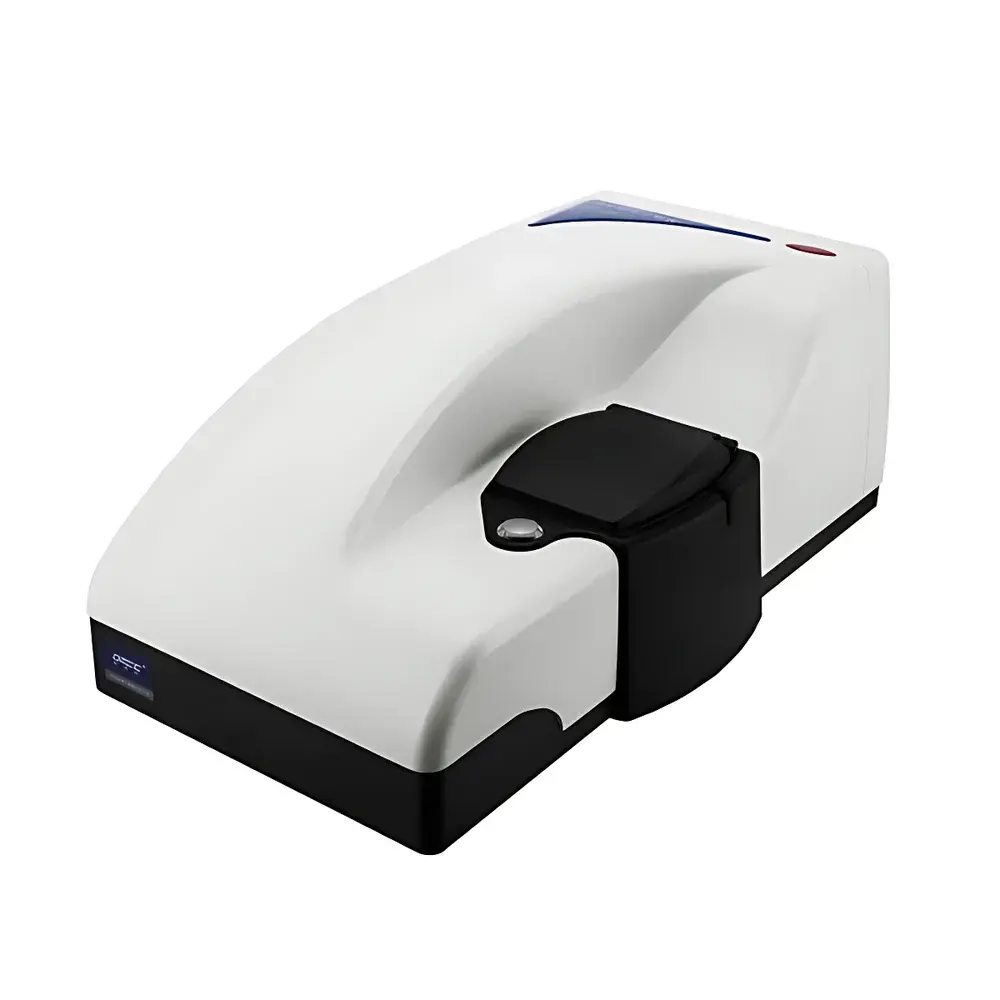
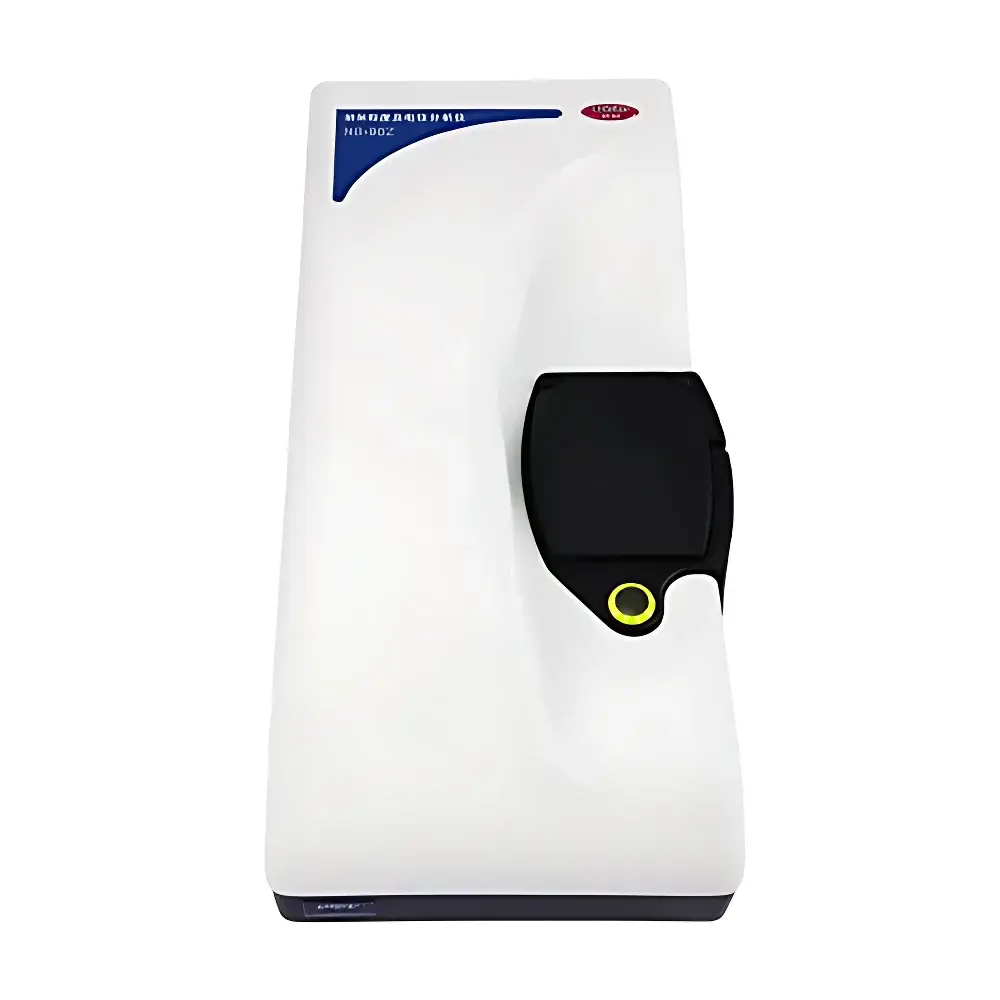
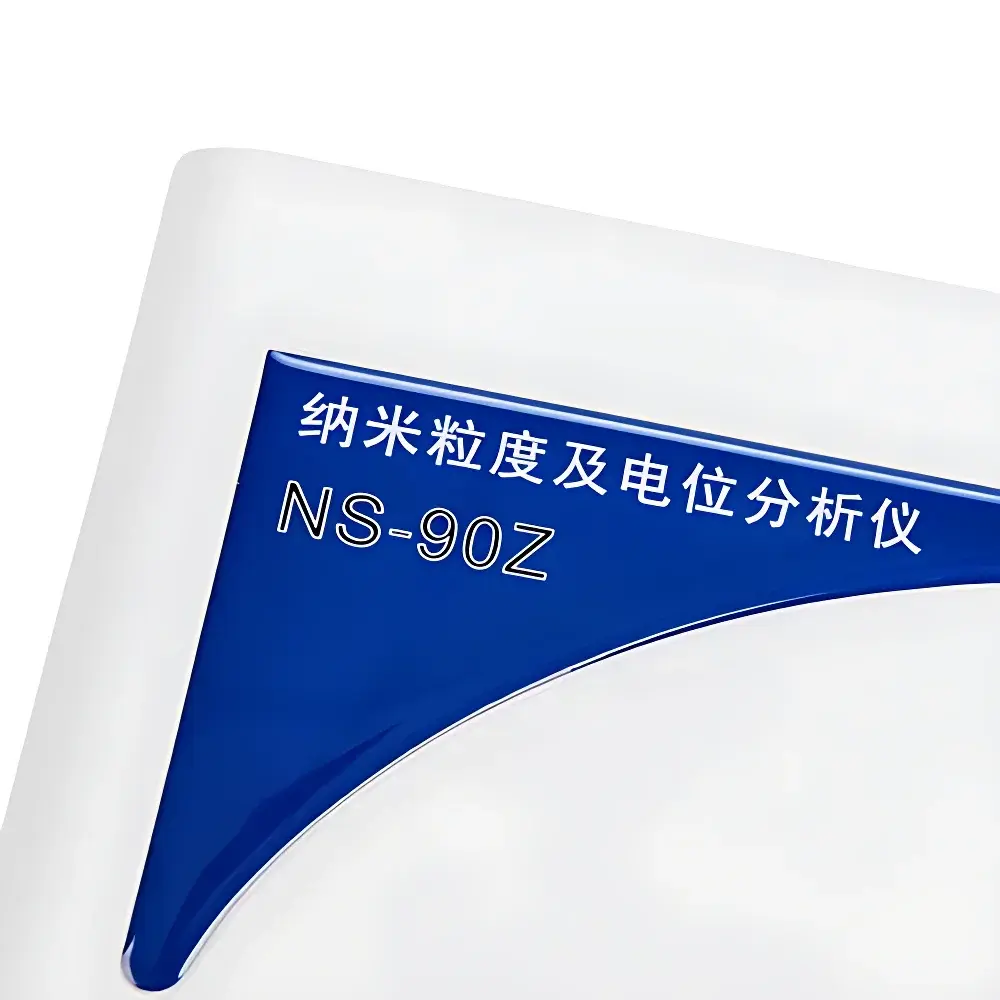
OMEC NS-90Z Nanoparticle Size and Zeta Potential Analyzer
| Brand | OMEC |
|---|---|
| Origin | Guangdong, China |
| Manufacturer Type | Manufacturer |
| Country of Origin | China |
| Model | NS-90Z |
| Price | Upon Request |
| Zeta Potential Range | Not Limited (Typical Range: ±500 mV) |
| pH Application Range | Not Specified |
| Operating Temperature Range | 0 °C – 90 °C |
| pH Resolution | Not Specified |
| Temperature Resolution | ±0.1 °C |
| Accuracy | Not Specified |
| Repeatability | <1% (NIST-traceable latex standard) |
Overview
The OMEC NS-90Z Nanoparticle Size and Zeta Potential Analyzer is a fully integrated, benchtop instrument engineered for high-precision characterization of colloidal and macromolecular systems. It combines three complementary light-scattering techniques—Dynamic Light Scattering (DLS), Static Light Scattering (SLS), and Electrophoretic Light Scattering (ELS)—within a single optical platform. DLS measures hydrodynamic diameter (0.3 nm – 5000 nm) via analysis of Brownian motion-induced intensity fluctuations in 90° and 13° scattered light; SLS determines absolute molecular weight (9.8 kDa – 20 MDa) using Debye plot analysis of time-averaged scattering intensity; ELS quantifies zeta potential through phase-analysis light scattering (M3-PALS), enabling robust electrophoretic mobility measurement even in high-conductivity media (up to 200 mS/cm). The system employs a stabilized He-Ne laser (633 nm, 4 mW, Class 1 safety), an avalanche photodiode (APD) detector with quantum efficiency >50%, and a high-speed digital correlator (25 ns – 8000 s sampling, 4000 channels, 1011 dynamic linearity). Its sealed optical path, dry-air purge, and precision Peltier-based temperature control (0–90 °C, ±0.1 °C stability) ensure long-term signal integrity and inter-laboratory reproducibility.
Key Features
- Triple-technique platform: Simultaneous DLS, SLS, and M3-PALS for comprehensive nanoparticle and macromolecule characterization
- High-sensitivity detection: APD detector enables reliable measurements at low concentrations (as low as 0.1 mg/mL for DLS; 10 mg/mL for 66 kDa protein in ELS)
- Extended operational range: Supports samples from dilute protein solutions to highly concentrated dispersions (up to 40% w/v)
- Advanced thermal management: Independent circulating thermostat with ±0.1 °C accuracy across full 0–90 °C range
- Robust optical architecture: Sealed fiber-coupled beam path, automatic laser attenuation (300,000:1 dynamic range), and CDRH/CE-compliant Class 1 laser safety
- Intelligent software-assisted operation: Auto-optimization of measurement parameters, real-time data quality assessment, and SOP-driven workflow execution
Sample Compatibility & Compliance
The NS-90Z accommodates aqueous and organic dispersions, including liposomes, polymeric nanoparticles, protein formulations, surfactant micelles, pigment suspensions, and industrial emulsions. Sample volume requirement is only 20 µL per measurement—critical for precious biologics or early-stage R&D materials. Its M3-PALS detection mode mitigates electro-osmotic flow artifacts inherent in capillary-based electrophoresis, delivering statistically meaningful zeta distributions without manual correction. The instrument supports GLP/GMP-aligned workflows: audit-trail-enabled software logs all parameter changes, user actions, and calibration events; raw correlation data and scattering intensity files are stored with metadata for full traceability. While not pre-certified to specific regulatory standards, its measurement principles align with ISO 22412 (DLS), ISO 13321 (ELS), and USP and guidance for subvisible particle and colloidal stability assessment. Data output formats comply with ASTM E2412 requirements for reporting particle size distribution statistics.
Software & Data Management
The proprietary Windows-based software (compatible with Windows 7/10, USB 2.0 interface) provides a modular, role-adapted interface for both routine QC operators and research scientists. Core capabilities include SOP creation and deployment, automated sample-to-sample transition, adaptive measurement duration selection based on signal-to-noise ratio, and real-time validation of autocorrelation function fit quality. Distribution analysis applies non-negative least squares (NNLS) and CONTIN algorithms optimized for mono-, poly-, and multimodal systems. Molecular weight determination integrates both DLS-derived hydrodynamic radius conversion (via Stokes-Einstein) and SLS-based Debye plot fitting. Reports are exportable in PDF, CSV, and XML formats; built-in report designer allows custom layout configuration—including overlay of multiple runs, statistical comparison tables, and annotated distribution plots. All raw and processed data are archived in self-contained .omd files with embedded instrument configuration, environmental logs, and operator credentials.
Applications
The NS-90Z serves critical functions across pharmaceutical development, nanomaterial synthesis, and industrial colloid science. In drug delivery, it validates liposome encapsulation efficiency, monitors PEGylated nanoparticle aggregation during storage, and correlates zeta potential shifts with pH or ionic strength to predict formulation stability. For protein therapeutics, it detects early-stage oligomer formation (<5% population) before SEC-HPLC becomes sensitive, assesses excipient effects on conformational stability, and guides buffer optimization to minimize surface charge heterogeneity. In water treatment, it quantifies coagulant-induced zeta potential neutralization thresholds for turbidity control. Materials scientists use it to optimize pigment dispersion stability in inkjet inks, evaluate surfactant adsorption kinetics on carbon black, and screen polymer stabilizers for ceramic slurries. Its ability to generate both size and surface charge metrics from one sample aliquot significantly reduces experimental throughput time versus sequential instrumentation.
FAQ
What sample volume is required for a complete DLS + Zeta measurement?
A single 20 µL aliquot is sufficient for concurrent size and zeta potential analysis under standard conditions.
Can the NS-90Z measure samples with high ionic strength or conductivity?
Yes—it supports conductivities up to 200 mS/cm using M3-PALS, making it suitable for physiological saline buffers and industrial process streams.
Is calibration traceable to NIST standards?
Repeatability is verified using NIST-traceable polystyrene latex standards (e.g., NIST SRM 1960); no factory-applied absolute calibration is performed, as DLS and ELS are inherently absolute techniques.
Does the system support temperature-controlled kinetic studies?
Yes—the integrated thermostat enables programmable ramping and isothermal holds from 0–90 °C, allowing Arrhenius-based stability modeling and accelerated degradation testing.
How does the NS-90Z handle polydisperse or multimodal samples?
Its software applies regularization algorithms (NNLS and CONTIN) validated against ISO 22412 Annex B, generating intensity-, volume-, and number-weighted distributions with confidence intervals for each peak.



