Ophir PD10/30A-P-RP Laser Energy Meter
| Brand | Ophir |
|---|---|
| Origin | Israel |
| Model | PD10/30A-P-RP series |
| Sensor Types | Photodiode & Pyroelectric Energy Sensors, RP (Real-time Pulse) Sensors |
| Wavelength Range | 0.15–20 µm (depending on model) |
| Energy Range | 10 pJ – 40 J |
| Avg. Power Range | 30 mW – 1500 W |
| Max. Repetition Rate | 25 kHz |
| Aperture Sizes | Φ10 mm to Φ96 mm |
| Compliance | ISO 17025 traceable calibration, CE, RoHS |
Overview
The Ophir PD10/30A-P-RP series laser energy meters are precision metrology instruments engineered for quantitative measurement of pulsed and quasi-continuous wave (QCW) laser radiation across scientific, industrial, and medical laser systems. These instruments operate on two complementary physical principles: photodiode-based detection for high-sensitivity, fast-response measurements in the UV–NIR range (0.19–1.1 µm), and pyroelectric detection for broadband thermal energy absorption across deep UV to far-IR (0.15–20 µm). The proprietary RP (Real-time Pulse) sensor architecture extends functionality beyond single-value energy reporting by capturing synchronized temporal data — including pulse shape, repetition frequency, average power, and individual pulse energy — all within a single acquisition window. This capability is critical for characterizing lasers with variable pulse widths, burst modes, or unstable temporal profiles, where conventional integrating sensors fail to resolve dynamic behavior.
Key Features
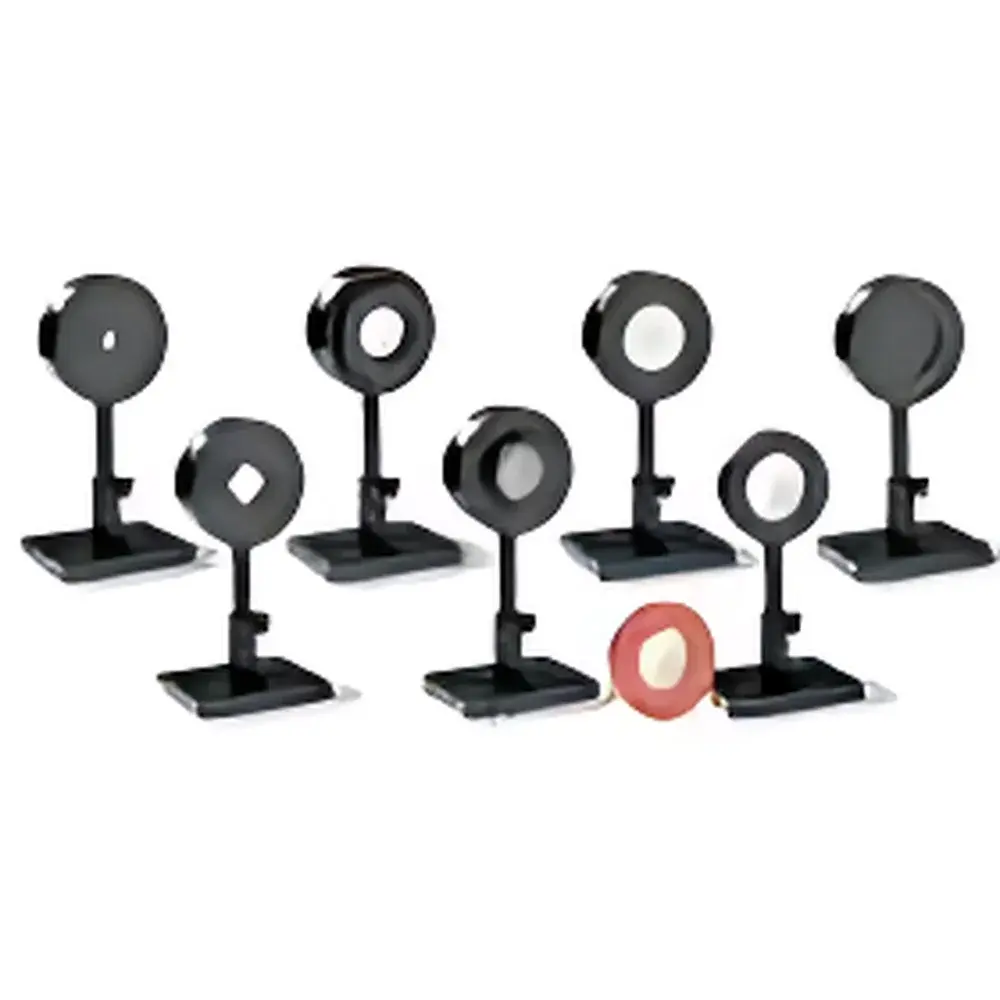
- Multi-sensor platform supporting interchangeable photodiode, pyroelectric, and RP-type detectors — each optimized for specific irradiance, energy density, and temporal regimes.
- Ultra-low energy threshold down to 10 pJ (PD10-pJ model), enabling characterization of ultrafast oscillators and low-energy seed lasers.
- High-speed acquisition up to 25 kHz (PE9-F model), suitable for high-repetition-rate ultrafast amplifiers and QCW diode-pumped solid-state (DPSS) sources.
- RP-series sensors provide real-time pulse waveform digitization at 15 kHz sampling rate, delivering time-resolved energy distribution without external oscilloscopes or triggering hardware.
- Diffractive optical elements (e.g., PE50BB-DIF, PE100BF-DIF) integrate removable diffusers to homogenize beam profiles and raise damage thresholds — essential for high-peak-power nanosecond and picosecond lasers.
- Modular mechanical interface design accommodates vacuum chambers (via vacuum flange adapters), fiber-coupled delivery (FC/ST/SMA adapters), and beam-splitting configurations for simultaneous monitoring and process control.
Sample Compatibility & Compliance
The PD10/30A-P-RP platform supports measurement of diverse laser sources including Nd:YAG (1064 nm, 532 nm, 355 nm, 266 nm), Ti:sapphire (700–1000 nm), CO₂ (10.6 µm), Er:YAG (2.94 µm), excimer (193 nm, 248 nm), and high-power fiber lasers (1.06–1.55 µm). All sensors undergo factory calibration traceable to NIST-equivalent standards via ISO/IEC 17025-accredited laboratories. Calibration certificates include uncertainty budgets per ISO/IEC Guide 98-3 (GUM). The system meets CE marking requirements for electromagnetic compatibility (EMC Directive 2014/30/EU) and low-voltage safety (LVD Directive 2014/35/EU). RP-series firmware supports audit-ready logging compliant with FDA 21 CFR Part 11 when used with Ophir StarLab software under validated GxP environments.
Software & Data Management
Ophir StarLab v4.x provides native support for all PD10/30A-P-RP sensors, offering real-time visualization of pulse trains, statistical analysis (min/max/mean/std dev over user-defined windows), histogram generation, and export to CSV, MATLAB (.mat), or HDF5 formats. The software implements full GLP/GMP-compliant data integrity features: electronic signatures, role-based access control, automated timestamping, and immutable audit trails for all configuration changes and measurement sessions. Optional SDKs (C/C++, .NET, Python) enable integration into automated test benches, laser manufacturing lines, and QA/QC workflows requiring programmable trigger synchronization and closed-loop feedback.
Applications
- Laser development labs: Characterization of oscillator-amplifier chains, MOPA systems, and ultrafast OPCPA architectures.
- Medical device validation: Verification of ophthalmic, dermatological, and surgical laser outputs per IEC 60601-2-22 and ANSI Z136.3.
- Industrial laser processing: Monitoring of ablation, welding, and surface treatment systems operating at kW-class average powers and MJ/cm² fluences.
- Defense & aerospace: Testing of directed-energy weapon (DEW) prototypes, LIDAR transmitters, and free-space optical communication terminals.
- Academic research: Time-resolved photophysics studies, nonlinear optics diagnostics, and pump-probe experiment synchronization.
FAQ
What distinguishes RP-series sensors from standard pyroelectric or photodiode sensors?
RP sensors embed analog-to-digital conversion and onboard memory directly at the detector head, enabling real-time capture of pulse shape and timing metadata — not just integrated energy. This eliminates reliance on external digitizers and preserves signal fidelity in noisy industrial environments.
Can the same sensor measure both average power and pulse energy simultaneously?
Yes — RP-series sensors output synchronized streams of instantaneous power, cumulative energy per pulse, repetition rate, and pulse width — all derived from a single optical input and processed in real time.
How is calibration maintained across different wavelengths and pulse durations?
Each sensor model is calibrated at multiple discrete wavelengths and pulse widths (e.g., 10 ns, 100 ns, 1 µs, CW) per ISO 11554. Spectral responsivity curves and pulse-width correction factors are embedded in firmware and applied automatically during measurement.
Is vacuum-compatible operation supported?
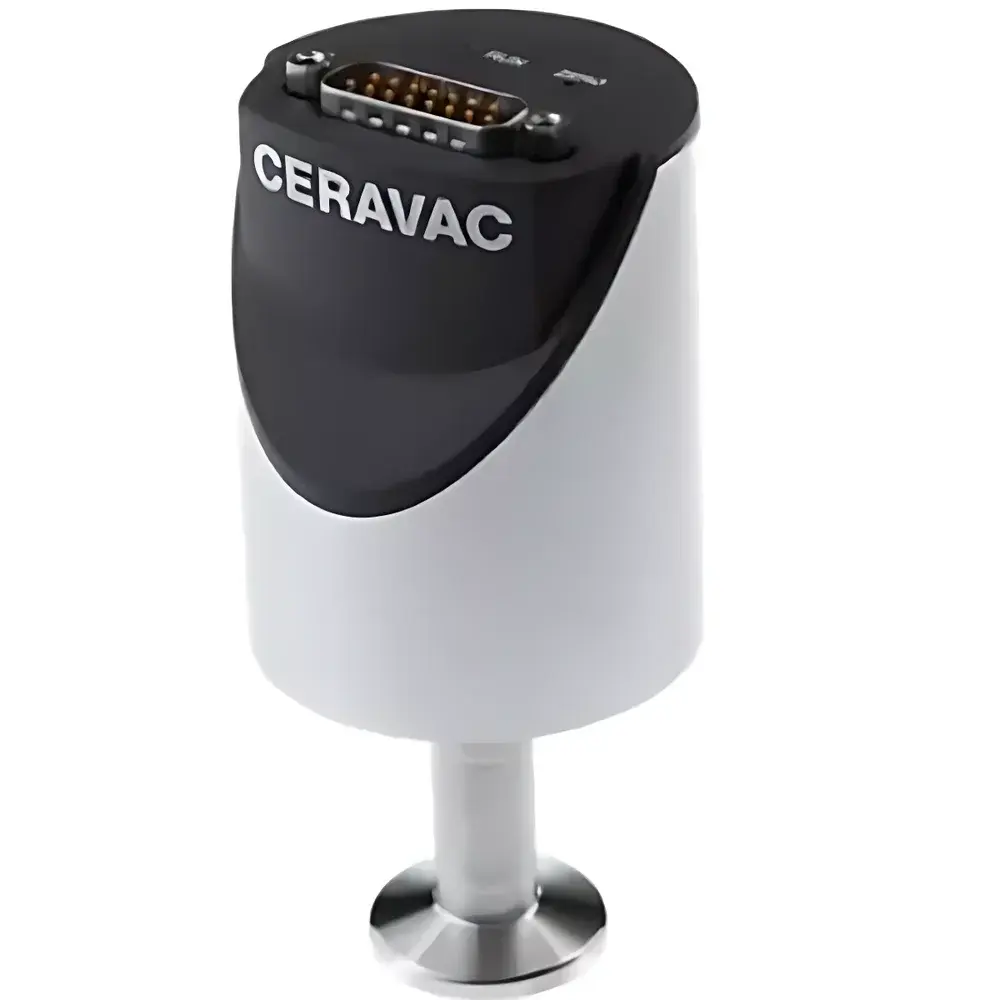
Yes — optional CF- or KF-flanged versions of PE25, PE50, and PE100 series sensors are rated for UHV conditions down to 10⁻⁹ mbar, with non-outgassing housings and ceramic feedthroughs.
Does the system support compliance with FDA 21 CFR Part 11 for regulated environments?
When deployed with StarLab v4.x in validated mode (including electronic signatures, audit trail activation, and password-protected configuration locks), the system satisfies electronic record and signature requirements for pharmaceutical and medical device quality systems.