
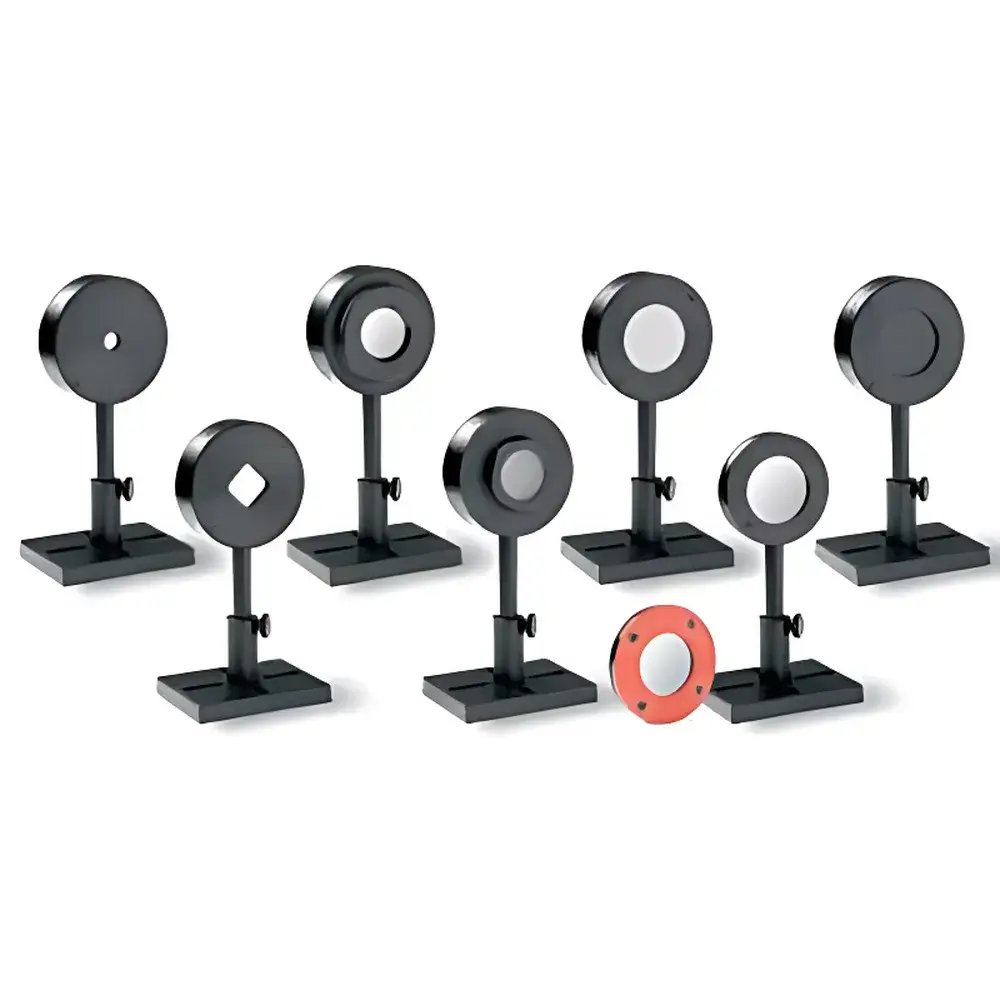
Ophir PD10 Photodiode Laser Energy Sensor Probe
| Origin | Israel |
|---|---|
| Manufacturer Type | Authorized Distributor |
| Import Status | Imported |
| Model | PD10 |
| Pricing | Available Upon Request |
| Measurement Principle | Photodiode-based Pulse Energy Detection |
| Max Repetition Rate | 10 kHz |
| Energy Range | 2 nJ – 20 µJ |
| Spectral Range | 190–1100 nm |
| Active Area | Ø10 mm |
Overview
The Ophir PD10 is a high-precision, silicon photodiode-based laser energy sensor probe engineered for accurate, real-time pulse energy measurement in demanding R&D, industrial laser processing, and optical metrology environments. Unlike thermal or pyroelectric sensors, the PD10 leverages fast-response photodiode technology to deliver nanosecond-level temporal resolution and exceptional signal-to-noise ratio across its specified spectral band (190–1100 nm). Its design conforms to ISO 11554 and ASTM E1461 standards for laser beam characterization, ensuring traceable, repeatable measurements suitable for ISO/IEC 17025-accredited laboratories. The probe operates under constant-bias voltage mode, minimizing dark current drift and enabling stable baseline performance over extended acquisition periods—critical for low-energy pulsed lasers used in ultrafast spectroscopy, LIBS, and seed oscillator monitoring.
Key Features
- Active sensing area of Ø10 mm with uniform responsivity across UV-VIS-NIR spectrum (190–1100 nm)
- Energy measurement range from 2 nJ to 20 µJ per pulse with ±3% calibration uncertainty (k=2) at 1064 nm
- Maximum pulse repetition rate of 10 kHz, supporting high-duty-cycle Q-switched and mode-locked laser systems
- Integrated thermoelectric temperature stabilization to suppress responsivity drift (<0.05%/°C)
- Low-noise analog output (0–10 V) compatible with Ophir StarLite, Nova II, and Juno meters, as well as third-party DAQ systems via BNC interface
- Rugged aluminum housing with SMA-compatible mounting threads and optional vacuum feedthrough adapters (e.g., CF-35)
- NIST-traceable factory calibration certificate included; recalibration intervals recommended every 12 months under GLP-compliant usage
Sample Compatibility & Compliance
The PD10 is optimized for free-space beam measurement of collimated or mildly focused pulses with beam diameters ≤8 mm at the sensor surface. It supports integration with Ophir’s line of calibrated attenuators, beam splitters (e.g., 50:50 fused silica plate beamsplitters), and fiber-coupled adapters (FC/PC, SMA-905) for flexible optical path configuration. All probes comply with IEC 61000-6-3 (EMC emission limits) and IEC 61010-1 (safety requirements for electrical equipment). For regulated environments—including pharmaceutical laser cleaning validation and medical device laser safety testing—the PD10’s audit-ready calibration records and firmware logging (via StarLite meter) support FDA 21 CFR Part 11 compliance when paired with Ophir’s validated software suite.
Software & Data Management
When connected to Ophir’s StarLite or Nova II display units, the PD10 enables full waveform capture (up to 1 MS/s sampling), statistical analysis (mean, std dev, min/max, pulse-to-pulse stability), and automated pass/fail thresholding. Ophir’s StarLab PC software provides CSV export, real-time trending, multi-channel synchronization (for simultaneous power + energy monitoring), and customizable report generation aligned with ISO 9001 documentation requirements. Raw analog output allows direct integration into LabVIEW, MATLAB, or Python-based control systems using standard NI-DAQ or USB-6009 acquisition hardware—facilitating closed-loop feedback in laser annealing or ablation process control.
Applications
- Quantification of pulse energy stability in Ti:sapphire and fiber-amplified ultrafast laser systems (fs–ns regime)
- Calibration and verification of excimer laser output (193 nm, 248 nm) in semiconductor lithography tool maintenance
- In-line energy monitoring during laser marking, welding, and selective laser sintering (SLS) processes
- Characterization of low-energy optical parametric oscillator (OPO) outputs in nonlinear optics labs
- Validation of laser safety interlock thresholds per ANSI Z136.1 and IEC 60825-1 standards
- Reference-grade energy measurement in national metrology institute (NMI) transfer calibrations
FAQ
Is the PD10 suitable for measuring femtosecond pulses?
Yes—its <1 ns rise time and minimal pulse broadening (<5% FWHM distortion for ≥10 ps pulses) make it appropriate for characterizing fs-to-ns laser sources, provided pulse energy falls within its 2 nJ–20 µJ range.
Can the PD10 be used in vacuum environments?
Yes—when equipped with the optional CF-35 vacuum adapter (sold separately), the probe maintains hermetic integrity up to 10⁻⁶ mbar and is rated for bake-out temperatures ≤80°C.
Does the PD10 require external power or bias supply?
No—it operates from the integrated bias voltage supplied by compatible Ophir meters (StarLite, Nova II, Juno); no external power source is needed.
How often should the PD10 be recalibrated?
Annual recalibration is recommended under normal laboratory use; more frequent calibration may be required in high-fluence or high-repetition-rate applications where sensor aging or contamination risk increases.
Is spectral correction available for non-1064 nm wavelengths?
Yes—Ophir StarLab software applies built-in wavelength-dependent responsivity correction tables, derived from NIST-traceable spectral calibration data across the full 190–1100 nm range.





