
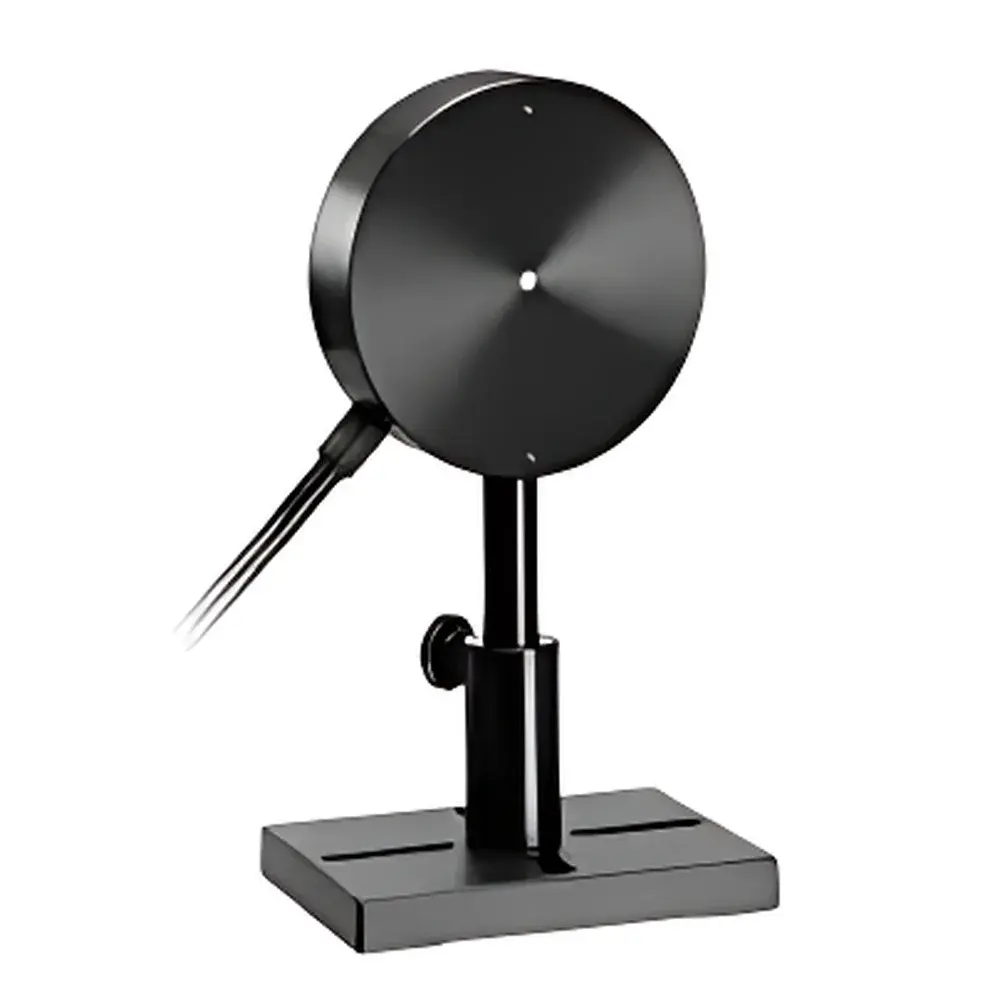
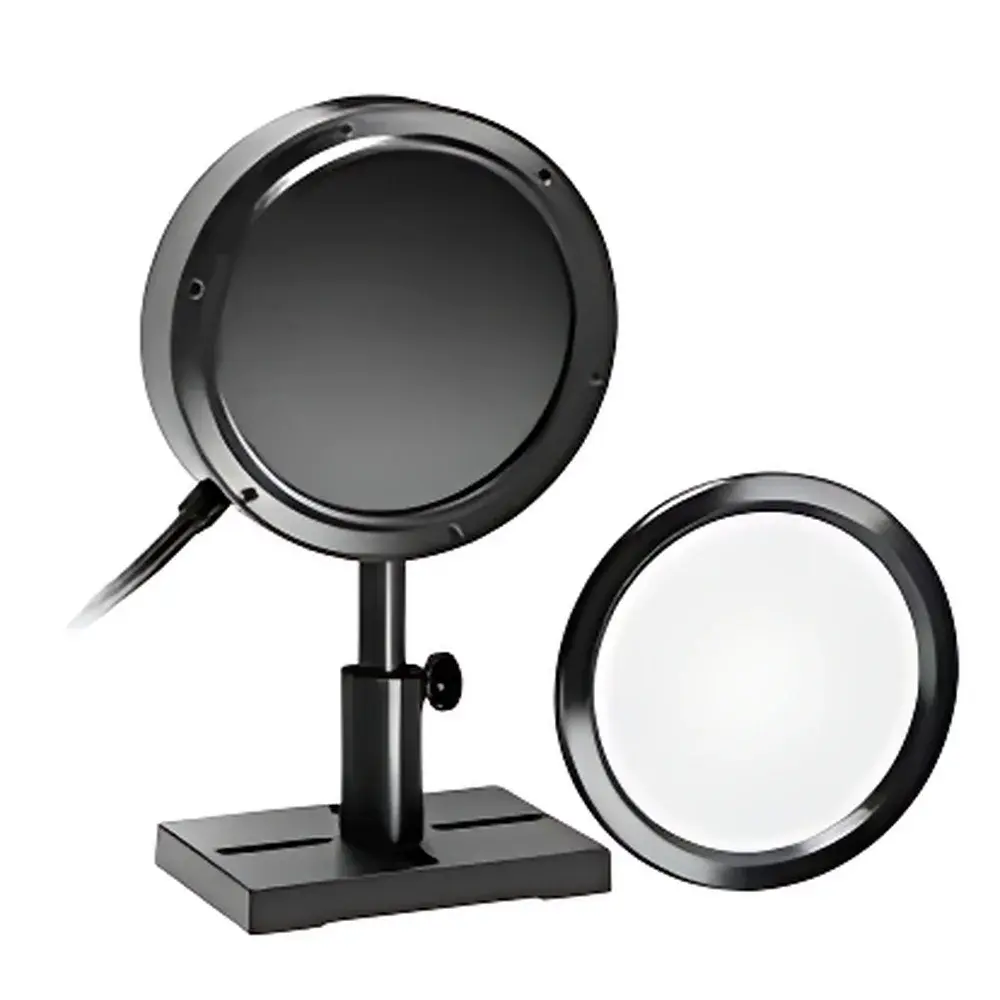
Ophir PD10-pJ-C Photodiode Laser Energy Sensor Probe
| Brand | Ophir |
|---|---|
| Origin | Israel |
| Model | PD10-pJ-C |
| Detector Type | Silicon Photodiode |
| Minimum Measurable Pulse Energy | 10 pJ |
| Maximum Repetition Rate | 20 kHz |
| Spectral Range | 190–1800 nm |
| Output Connector | SMA |
| Damage Threshold | >100 MW/cm² (for 10 ns pulses at 1064 nm) |
| Active Area | 10 mm Ø |
| Rise Time | <1 ns |
| Interface | Compatible with Ophir StarLite, Juno, Vega, and Nova II meters |
Overview
The Ophir PD10-pJ-C is a high-sensitivity photodiode-based laser energy sensor probe engineered for precise single-pulse and low-energy pulsed laser measurement in R&D, metrology, and industrial laser qualification environments. Operating on the principle of fast photovoltaic conversion, the probe delivers sub-nanosecond temporal response and calibrated linearity across an exceptionally broad spectral range—from deep ultraviolet (190 nm) through visible to near-infrared (1800 nm). Its 10 mm diameter active area ensures uniform spatial responsivity while maintaining compatibility with standard optical beam paths. Designed for integration with Ophir’s family of intelligent power and energy meters—including StarLite, Juno, Vega, and Nova II—the PD10-pJ-C supports real-time pulse-by-pulse energy logging, statistical analysis (e.g., mean, standard deviation, min/max), and automated pass/fail thresholding per ISO 11554 and ASTM E1461 compliance workflows.
Key Features
- Ultra-low energy detection limit of 10 pJ per pulse—enabling characterization of ultrafast oscillators, seeded amplifiers, and low-power Q-switched sources
- 20 kHz maximum repetition rate capability—suitable for high-repetition-rate femtosecond and picosecond laser systems
- Calibrated spectral responsivity from 190 nm to 1800 nm, covering excimer, Ti:sapphire, Nd:YAG, OPO, and telecom-band lasers
- NIST-traceable calibration certificate supplied with each unit; recalibration services available per ISO/IEC 17025-accredited procedures
- Integrated SMA output connector with 50 Ω impedance matching for minimal signal reflection and optimal oscilloscope or digitizer interfacing
- Rise time 350 MHz—preserving temporal fidelity of short-duration pulses without distortion
- Robust mechanical housing with integrated thermal stabilization to minimize drift during extended acquisition sessions
Sample Compatibility & Compliance
The PD10-pJ-C is optimized for free-space pulsed laser beams with diameters up to 8 mm (within the 10 mm active area). It is not intended for continuous-wave (CW) power measurement or high-average-power applications. For beam delivery flexibility, optional adapters—including ST, FC, SC, and fiber-coupled variants—are available to interface with multimode and single-mode fibers (subject to NA and core diameter constraints). The probe conforms to IEC 61000-6-3 (EMC emission) and IEC 61000-6-2 (immunity) standards. Its calibration methodology adheres to ISO 17025 requirements, and measurement uncertainty budgets are documented per ILAC-G8:2009 guidelines. When used with Ophir meters supporting FDA 21 CFR Part 11 mode (e.g., Vega with audit trail enabled), the system supports GLP/GMP-compliant data integrity protocols including electronic signatures, user access control, and immutable audit logs.
Software & Data Management
The probe operates natively within Ophir’s StarLab v3.50+ software platform, which provides real-time waveform visualization, pulse train analysis, histogram generation, and export to CSV, MATLAB (.mat), or HDF5 formats. StarLab supports scripting via Python API for automated test sequences and integration into LabVIEW or MATLAB-based QA pipelines. All measurement metadata—including timestamp, meter firmware version, calibration ID, and environmental temperature—is embedded in exported files. Firmware updates and calibration file loading are performed directly through the software interface, eliminating manual configuration errors. For enterprise deployment, StarLab Enterprise Edition enables centralized license management, remote probe diagnostics, and synchronized calibration expiration alerts across multi-site laboratories.
Applications
- Characterization of ultrafast laser oscillators (Ti:sapphire, Yb-fiber) and amplifier chains
- Energy stability monitoring of low-power Q-switched DPSS lasers used in LIBS and time-resolved spectroscopy
- Validation of pulse energy in optical parametric amplifier (OPA) and difference frequency generation (DFG) setups
- Calibration transfer between primary standards (e.g., cryogenic radiometers) and secondary lab instruments
- Beam profiling auxiliary sensor for M² and spatial-temporal coupling analysis
- Quality assurance testing of micro-machining and marking lasers operating below 1 µJ/pulse
FAQ
Is the PD10-pJ-C suitable for measuring CW laser power?
No—it is designed exclusively for pulsed laser energy measurement. For CW power, Ophir recommends thermopile-based sensors such as the 3A-F or 10A-P series.
Can this probe be used with non-Ophir meters?
While the analog voltage output is standardized (1 V per µJ), full functionality—including auto-recognition, calibration loading, and statistical analysis—requires native support from Ophir meters or third-party DAQ systems configured per Ophir’s published analog interface specification.
What is the recommended recalibration interval?
Ophir recommends annual recalibration under normal laboratory conditions; more frequent intervals may be required for high-use environments or after exposure to optical overload events.
Does the probe require external bias or cooling?
No—this is a self-powered photodiode sensor requiring no external bias voltage or thermoelectric cooling. Its low dark current (<10 pA) ensures stable baseline performance at ambient temperatures (15–30 °C).




