
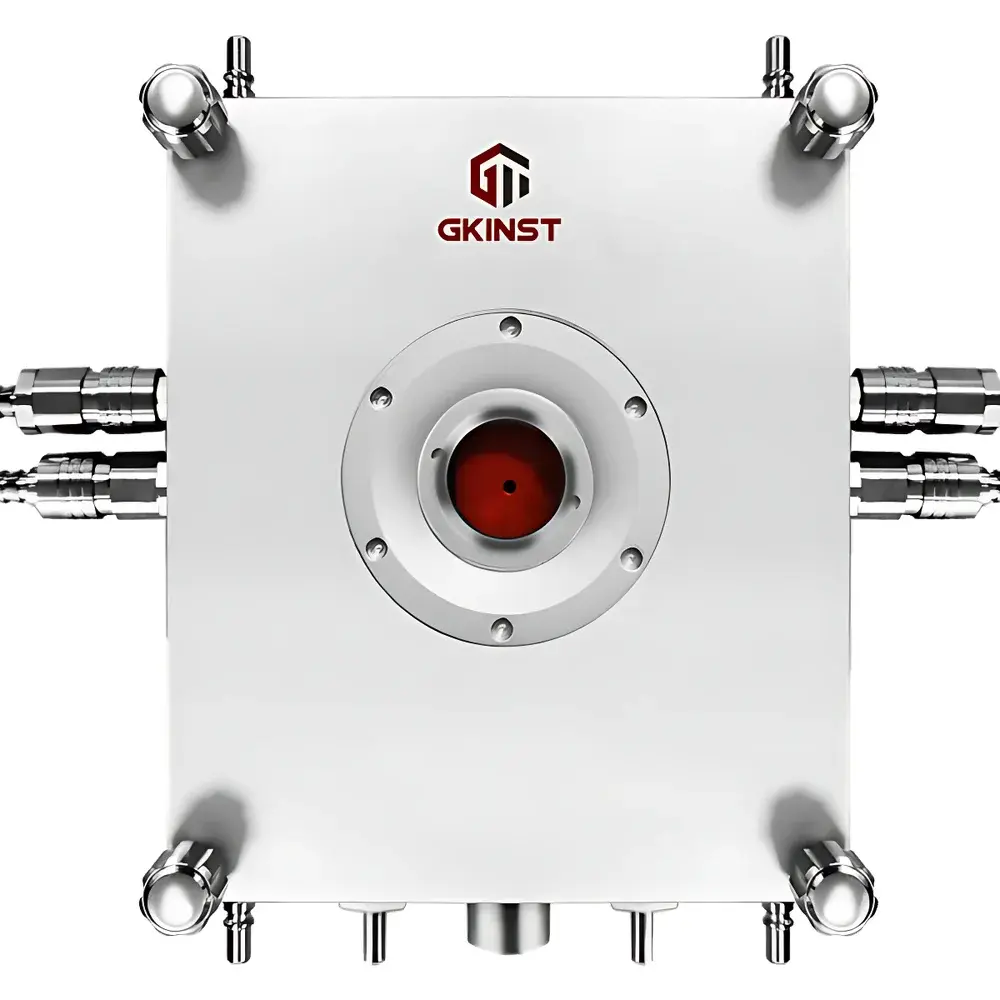
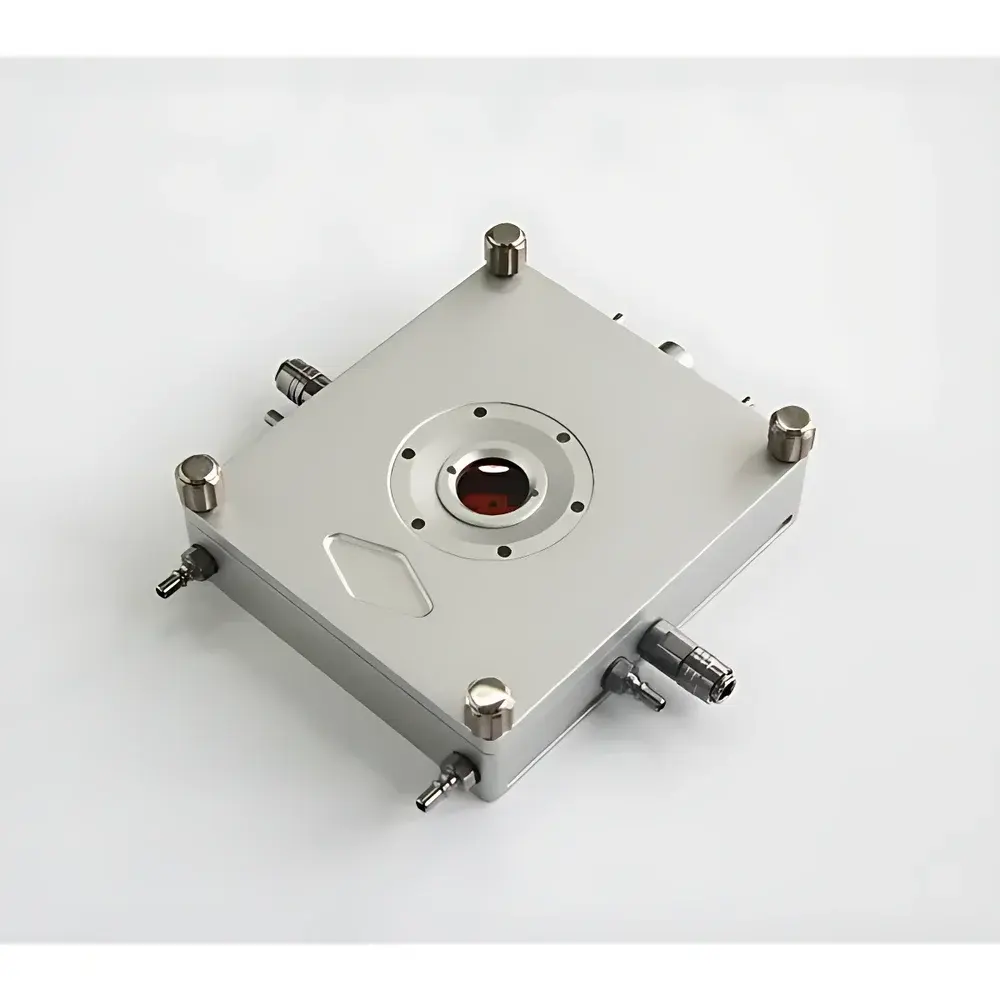
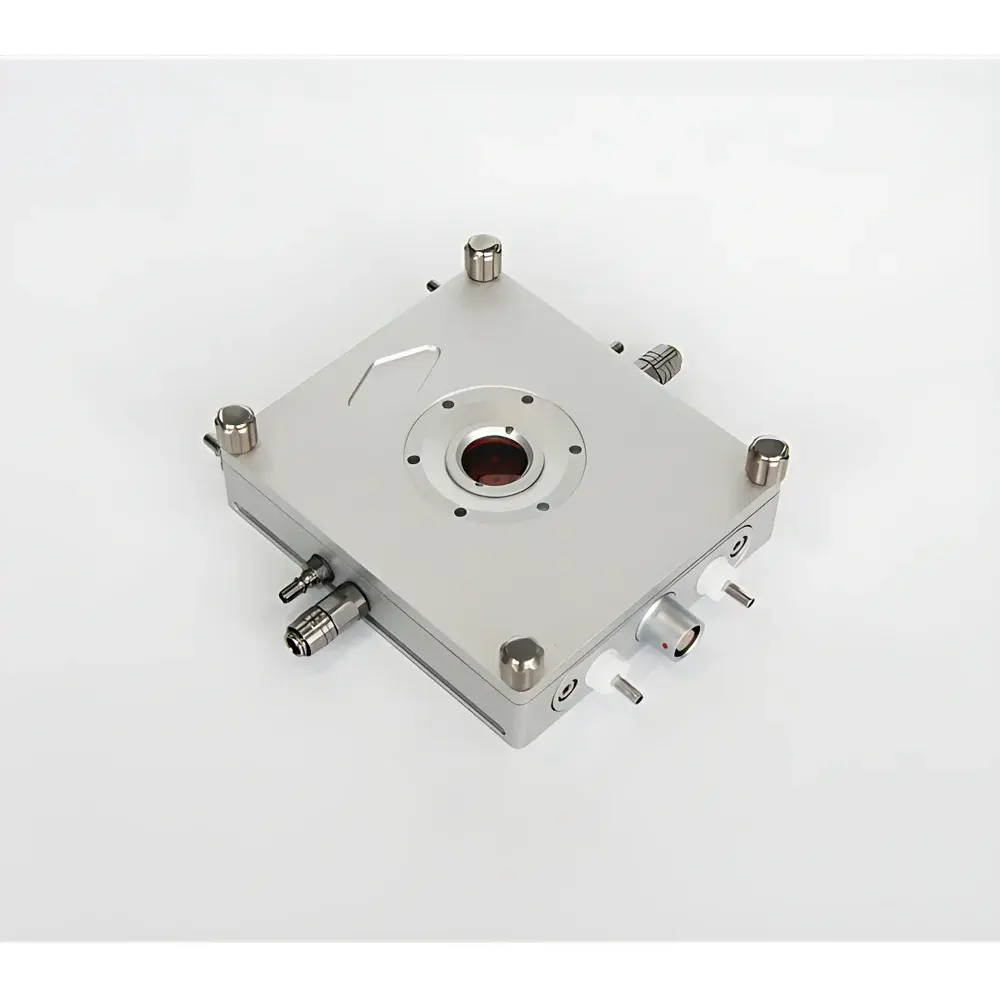
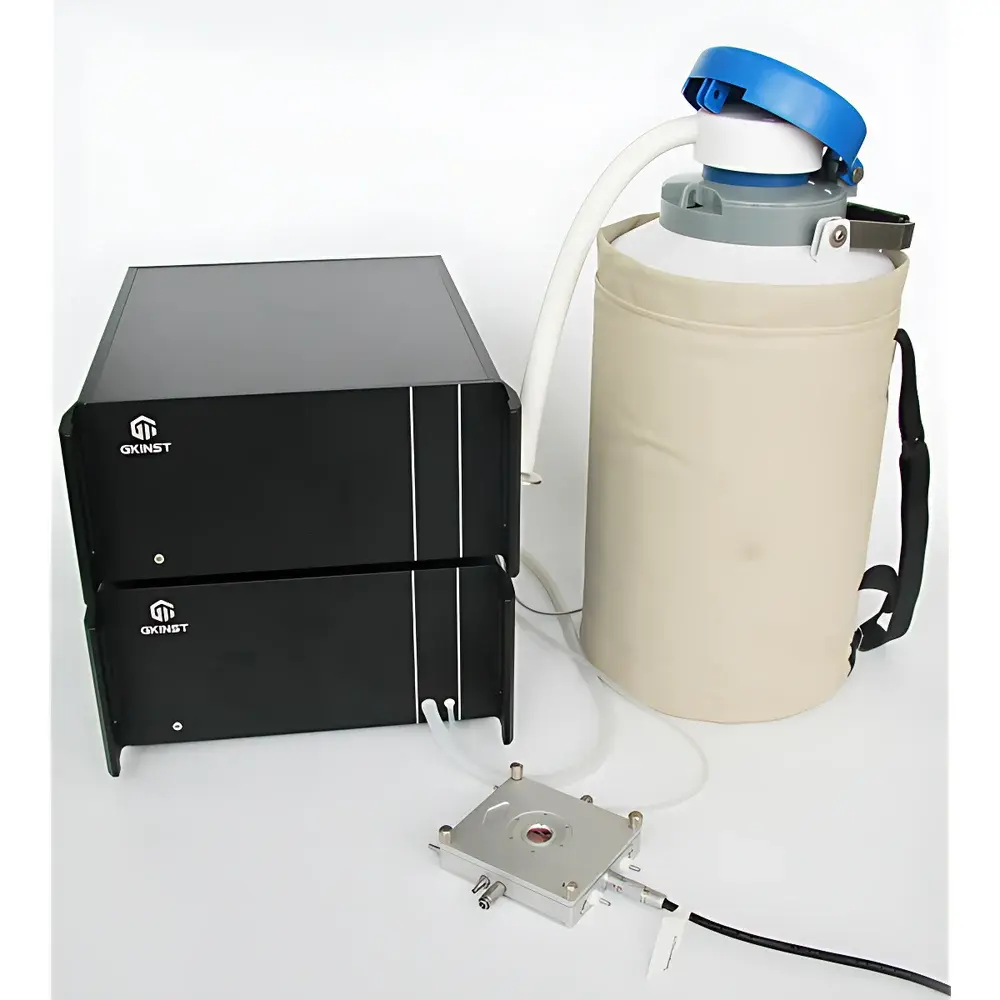
Optical Cryo-Heating Stage THMS350V
| Brand | GKINST |
|---|---|
| Model | GK-THMS350V |
| Max Temp | 350 °C |
| Min Temp | −195 °C |
| Max Heating Rate | 150 °C/min |
| Max Cooling Rate | 30 °C/min |
| Temp Resolution | < 0.05 °C |
| Temp Stability | < 0.05 °C |
| Control Algorithm | PID Dynamic Regulation |
| Sensor Type | PT100 Platinum Resistance Thermometer |
Overview
The GKINST THMS350V Optical Cryo-Heating Stage is a high-precision, vacuum-compatible in-situ environmental stage engineered for real-time structural and morphological characterization of materials under dynamically controlled thermal conditions. Designed for integration with optical microscopy systems—including polarized light, differential interference contrast (DIC), and confocal platforms—the THMS350V enables direct observation of phase transitions, crystallization kinetics, thermal expansion behavior, grain boundary evolution, and solid-state reactions across an exceptionally wide temperature range: from cryogenic −195 °C (liquid nitrogen cooling) to elevated 350 °C. Its core architecture leverages a dual-zone thermal design with independent heating and active cooling circuits, ensuring rapid thermal response while maintaining sub-0.05 °C resolution and stability—critical for quantitative thermomechanical analysis in research-grade optical imaging workflows.
Key Features
- Vacuum-rated construction (≤10−5 mbar compatible) with low-outgassing materials and feedthroughs for electrical and optical access
- Optically transparent sapphire or fused silica window (standard configuration) providing >85% transmission from UV (250 nm) to NIR (2500 nm)
- Integrated high-accuracy PT100 sensor embedded adjacent to the sample zone, calibrated traceable to NIST standards
- PID dynamic temperature regulation with adaptive tuning algorithms to minimize overshoot and stabilize within ±0.03 °C at setpoint
- Thermal ramping profiles programmable via external controller or optional GKINST StageLink software interface
- Compact footprint (120 × 120 × 45 mm) and modular mounting interface (M4/M6 tapped holes) for seamless integration on inverted or upright microscopes
- Electromagnetic shielding and low-noise heater drivers to prevent interference with sensitive CCD/CMOS detectors
Sample Compatibility & Compliance
The THMS350V accommodates standard microscope slides (76 × 26 mm), TEM/SEM-compatible specimen holders (e.g., 3 mm diameter discs), and custom substrates up to 25 mm in diameter and 2 mm thickness. Sample loading is performed under ambient or inert gas purge conditions; optional glovebox-compatible transfer modules support air-sensitive materials. The stage conforms to ISO 17025 calibration traceability requirements for temperature measurement systems. All electrical components meet IEC 61010-1 safety standards for laboratory equipment. When operated with GKINST-certified controllers, the system supports audit trails and electronic signatures compliant with FDA 21 CFR Part 11 for regulated environments requiring GLP/GMP documentation.
Software & Data Management
Stage operation is fully supported through GKINST’s StageLink™ control suite (Windows/Linux), which provides synchronized temperature logging at 10 Hz resolution alongside time-stamped image metadata export (TIFF/OME-TIFF). The API supports integration with third-party acquisition software (e.g., MetaMorph, μManager, Python-based OpenCV pipelines) via TCP/IP or USB-VCP protocols. Real-time temperature feedback is embedded into image headers, enabling pixel-wise thermal correlation in post-processing. Data files include full thermal history (ramp rate, dwell time, deviation from setpoint), supporting reproducibility reporting aligned with ASTM E2550 and ISO 11357 standards for thermal analysis.
Applications
- Advanced Materials: In-situ observation of polymer melting/crystallization, shape-memory alloy martensitic transformations, and glass transition dynamics
- Semiconductor R&D: Thermal stress evaluation of thin-film adhesion, interdiffusion kinetics at metal/oxide interfaces, and dopant activation behavior
- Energy Materials: Solid electrolyte decomposition pathways in solid-state batteries, Li dendrite nucleation under thermal gradient, and perovskite phase segregation in photovoltaics
- Pharmaceutical Sciences: Polymorph screening during freeze-drying cycles, hydrate/dehydrate transitions, and amorphous-to-crystalline conversion kinetics
- Geosciences & Mineralogy: High-pressure–temperature mineral phase equilibria (when coupled with diamond anvil cells), fluid inclusion homogenization studies, and metamorphic reaction textures
FAQ
Is the THMS350V compatible with laser-based optical techniques such as Raman or fluorescence lifetime imaging?
Yes—its sapphire window exhibits minimal autofluorescence and negligible Raman background below 3500 cm−1. Optional anti-reflection coatings are available for specific excitation wavelengths.
Can the stage be used under controlled atmosphere (e.g., O2-free or humidified gas)?
Absolutely. A dedicated gas-purge port (Swagelok 1/8″) allows continuous flow of N2, Ar, forming gas, or saturated vapor streams; humidity control down to 5% RH is achievable with optional inline saturator.
What is the typical thermal lag between controller setpoint and actual sample surface temperature?
Under standard 10 µm-thick SiN membrane substrates, measured lag is ≤0.8 s at 100 °C/min ramp rates, verified using ultrafast IR thermography (FLIR X6900SC).
Does GKINST provide calibration certificates with NIST-traceable uncertainty statements?
Yes—each unit ships with a factory calibration report covering −195 °C to 350 °C at five points, including expanded uncertainty (k=2) per ISO/IEC 17025 Annex A. On-site recalibration services are available globally.




