
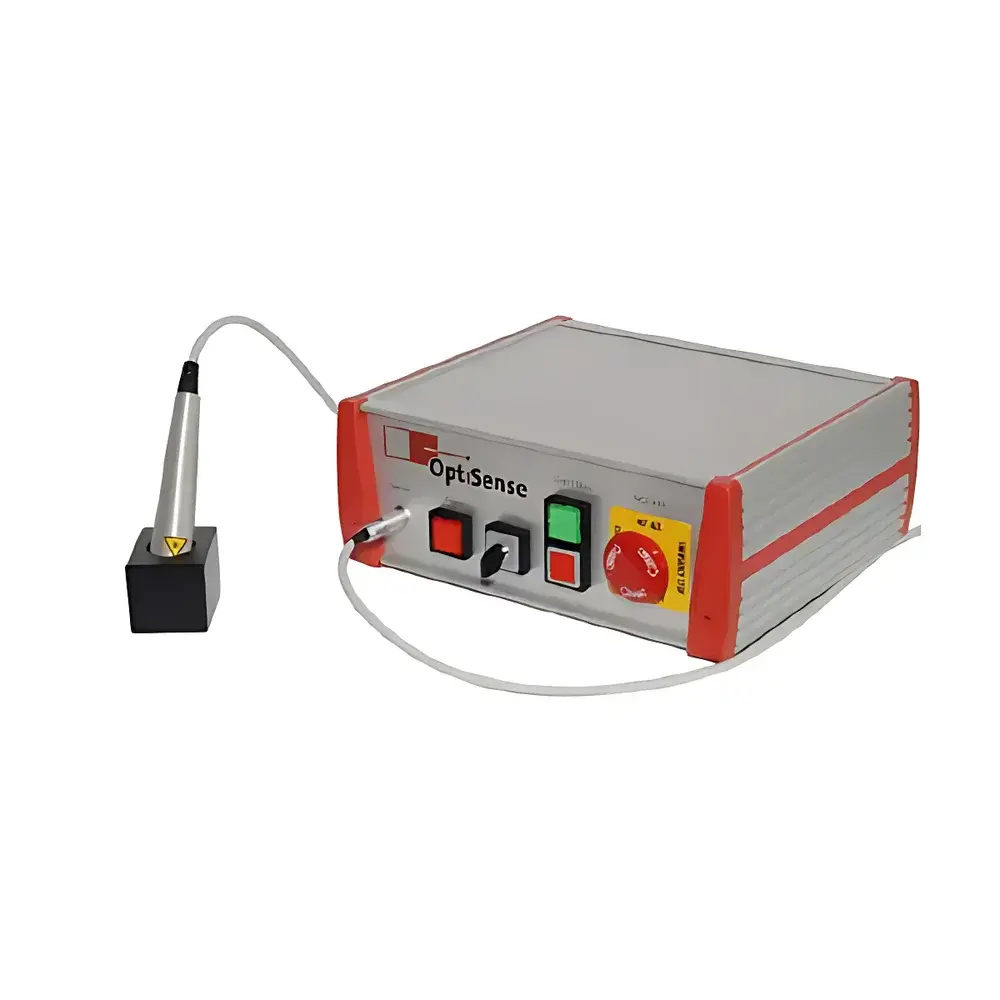
OptiSense PaintChecker Automation Coating Thickness Gauge
| Brand | OptiSense |
|---|---|
| Origin | Germany |
| Model | Automatic |
| Measurement Principle | Photothermal (Laser-Based Non-Contact) |
| Standards Compliance | DIN EN 15042-2 |
| Max. Measuring Range | 0–300 µm (on metallic substrates), 0–60 µm (on non-metallic substrates) |
| Spot Size | Ø 0.5 mm |
| Measurement Distance | 16 mm ±1 mm |
| Angular Tolerance | ±15° |
| Laser Class | 1M (≤0.5 W peak pulse power) |
| Repetition Rate | up to 1 Hz |
| Measurement Duration | 8–512 ms |
| Resolution | ~3% of actual thickness |
| Accuracy | ~5% of actual thickness |
| Probe Weight | ~100 g |
| Terminal Dimensions | 227 × 267 × 100 mm |
| Terminal Weight | 2.2 kg |
| Power Supply | 230 V AC, 50 Hz, max. 40 W |
| Interface | 10 Mbps Ethernet (RJ45) |
Overview
The OptiSense PaintChecker Automation is a fully automated, non-destructive, non-contact coating thickness gauge engineered for high-precision photothermal measurement in industrial and laboratory environments. It operates on the principle of laser-induced photothermal deflection—where a short-pulse, eye-safe Class 1M laser irradiates the coated surface, generating localized thermal expansion; the resulting surface displacement is optically detected via interferometric or confocal displacement sensing. This method enables direct, real-time quantification of dry film, wet film, and powder coating thicknesses without physical contact, substrate damage, or chemical interaction. Designed and manufactured in Germany, the system complies with DIN EN 15042-2—the European standard governing optical measurement methods for organic coatings on rigid substrates. Its robust optical architecture ensures stable performance under variable ambient lighting, temperature fluctuations, and typical factory-floor vibration conditions.
Key Features
- Non-contact, non-destructive measurement of organic solvent-based, waterborne, powder, and ceramic glaze coatings on metallic (e.g., steel, aluminum), elastomeric (rubber), and ceramic substrates
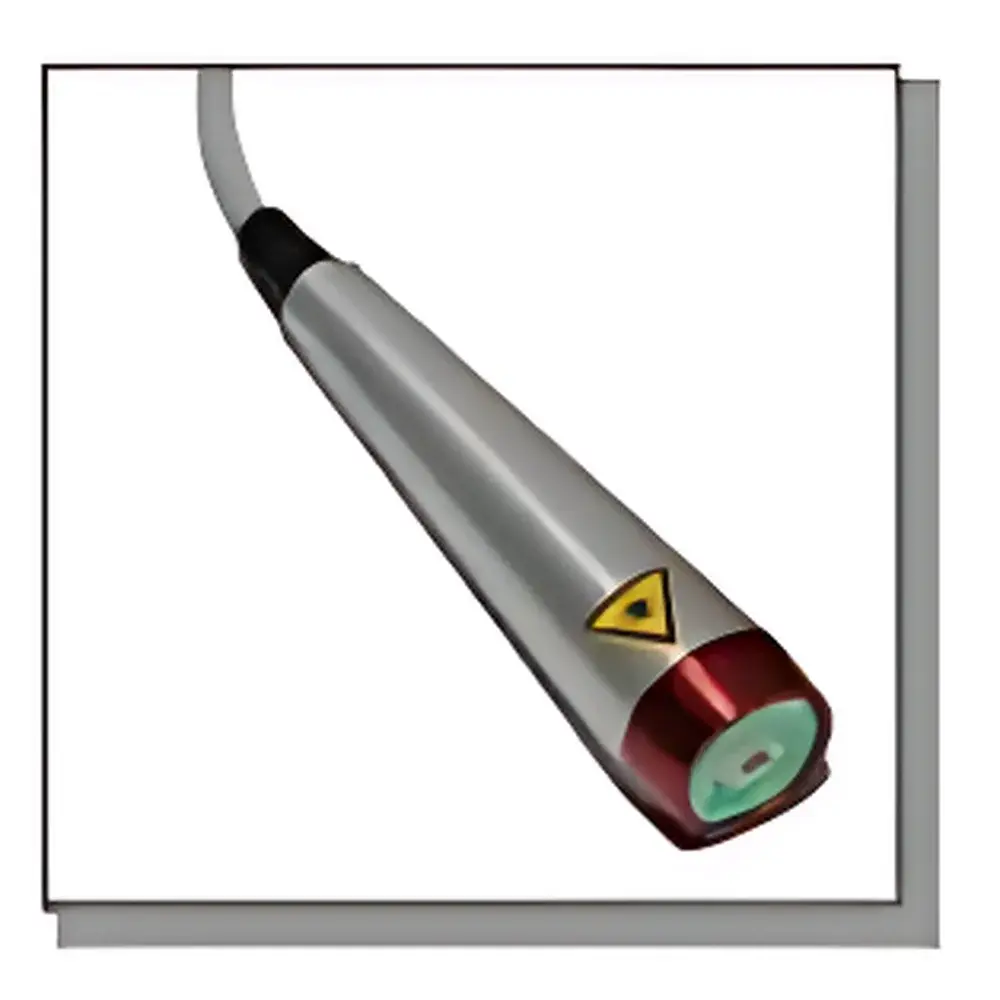
- Compact handheld aluminum probe (Ø25 mm × 110 mm, ~100 g) with integrated Class 1M pulsed laser (≤0.5 W peak) and high-speed displacement sensor
- Precise optical alignment enabled by fixed 16 mm working distance (±1 mm tolerance) and ±15° angular acceptance—ideal for inline or handheld use on curved or uneven surfaces
- Adjustable measurement parameters: configurable integration time (8–512 ms) and pulse repetition rate (up to 1 Hz) to optimize signal-to-noise ratio across diverse coating viscosities and reflectivities
- Dedicated aluminum-encased data processing terminal (227 × 267 × 100 mm, 2.2 kg) featuring embedded control firmware, real-time evaluation algorithms, and local data storage
- Standard Ethernet (10 Mbps, RJ45) interface for seamless integration into SCADA, MES, or PLC-controlled production lines
Sample Compatibility & Compliance
The PaintChecker Automation supports a broad range of industrial coating systems—including epoxy, polyurethane, acrylic, polyester, and UV-curable formulations—on both conductive and non-conductive substrates. Its photothermal methodology eliminates reliance on substrate conductivity or magnetic permeability, distinguishing it from eddy-current or magnetic induction gauges. Calibration is traceable to NIST-traceable reference standards (optional laser reference standard included). The system meets DIN EN 15042-2 requirements for measurement uncertainty, repeatability, and environmental robustness. For regulated industries (e.g., automotive OEMs, aerospace finishing, medical device coating), measurement data logs include timestamped metadata, operator ID fields, and audit-ready export formats compatible with GLP/GMP documentation workflows. Optional programmable interfaces support 21 CFR Part 11-compliant electronic signatures when deployed with validated software configurations.
Software & Data Management
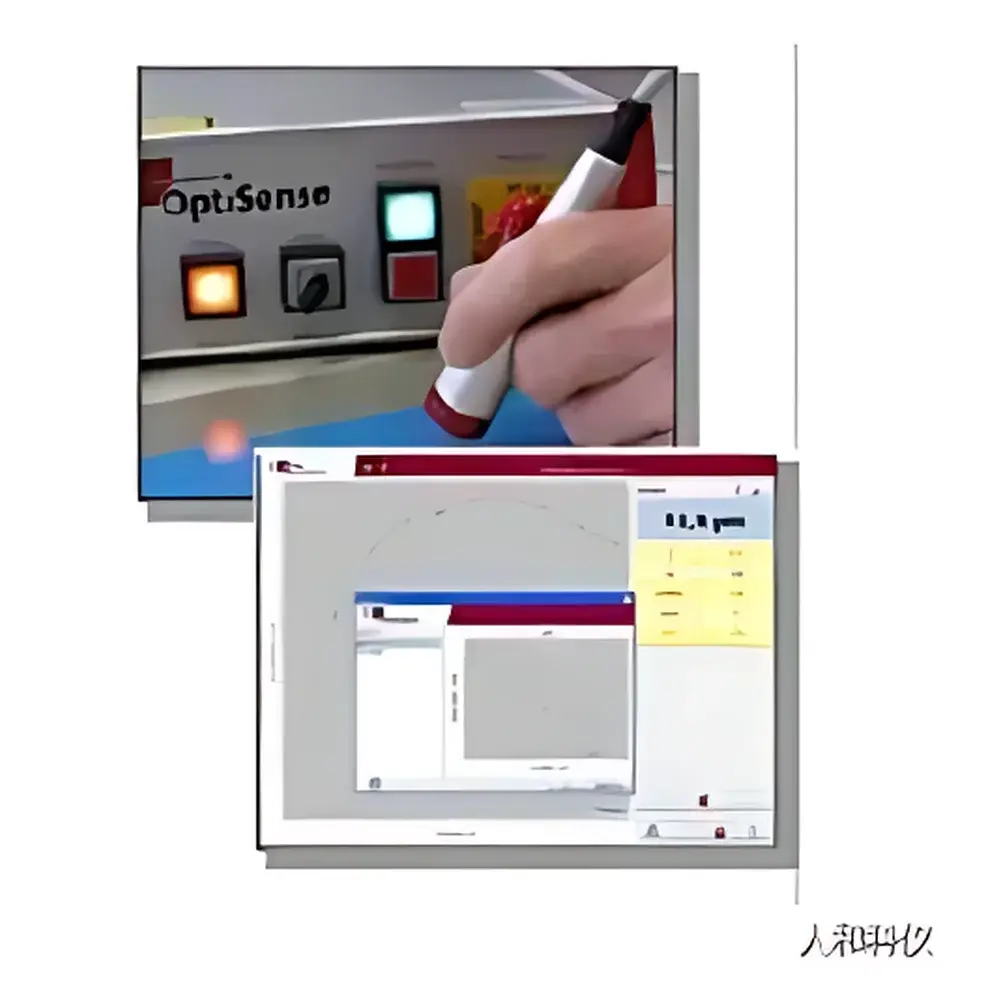
The included workstation software provides intuitive GUI-based instrument control, live waveform visualization, and batch-wise statistical analysis (mean, std. deviation, min/max, Cp/Cpk). All raw and processed data are stored in structured CSV and XML formats, enabling direct import into LIMS or ERP platforms. Reporting templates comply with ISO/IEC 17025 documentation requirements: each report includes measurement date/time, probe serial number, calibration status, substrate ID, coating type, and full uncertainty budget per ISO GUM guidelines. Firmware updates and custom calibration curve uploads (e.g., for proprietary pigment-loaded powders) are performed via secure Ethernet connection. An optional API toolkit (C/C++, Python bindings) allows integration with LabVIEW, MATLAB, or custom HMI applications for closed-loop process feedback.
Applications
- Real-time monitoring of coil coating lines—measuring wet film build prior to curing to minimize over-application and material waste
- In-process verification of powder coating thickness on automotive body panels, ensuring uniform electrostatic deposition and optimal melt-flow behavior
- QC inspection of medical-grade polymer coatings on stainless-steel implants, where contact-based methods risk surface contamination or micro-scratching
- R&D validation of novel low-VOC waterborne systems on composite substrates (e.g., CFRP), where traditional ultrasonic or beta-backscatter techniques suffer from acoustic impedance mismatch or radiation safety constraints
- Automated end-of-line verification in robotic spray booths, using the industrial variant’s standardized mounting fixtures and digital I/O triggers for pass/fail binning
FAQ
Does the PaintChecker Automation require physical contact with the coated surface?
No—it is a strictly non-contact system relying on photothermal displacement detection. No surface pressure, stylus contact, or couplant medium is required.
Can it measure wet films accurately during high-speed production?
Yes. With adjustable integration times down to 8 ms and real-time signal averaging, it captures dynamic thickness profiles even at line speeds exceeding 60 m/min.
Is calibration substrate-specific?
Calibration curves are optimized per coating-substrate combination. The system supports user-defined curve libraries, including multi-point polynomial fits for non-linear response regimes.
What environmental conditions affect measurement stability?
Ambient temperature drift beyond 15–35 °C may require re-zeroing; however, the probe’s thermally compensated optics maintain ±1% baseline stability across this range. Air turbulence and condensation on the probe window must be avoided.
How is traceability ensured for quality audits?
Each measurement record contains embedded probe ID, firmware version, calibration certificate expiry, and digital signature of the last calibration event—fully compliant with ISO 9001:2015 clause 7.1.5.2.



