
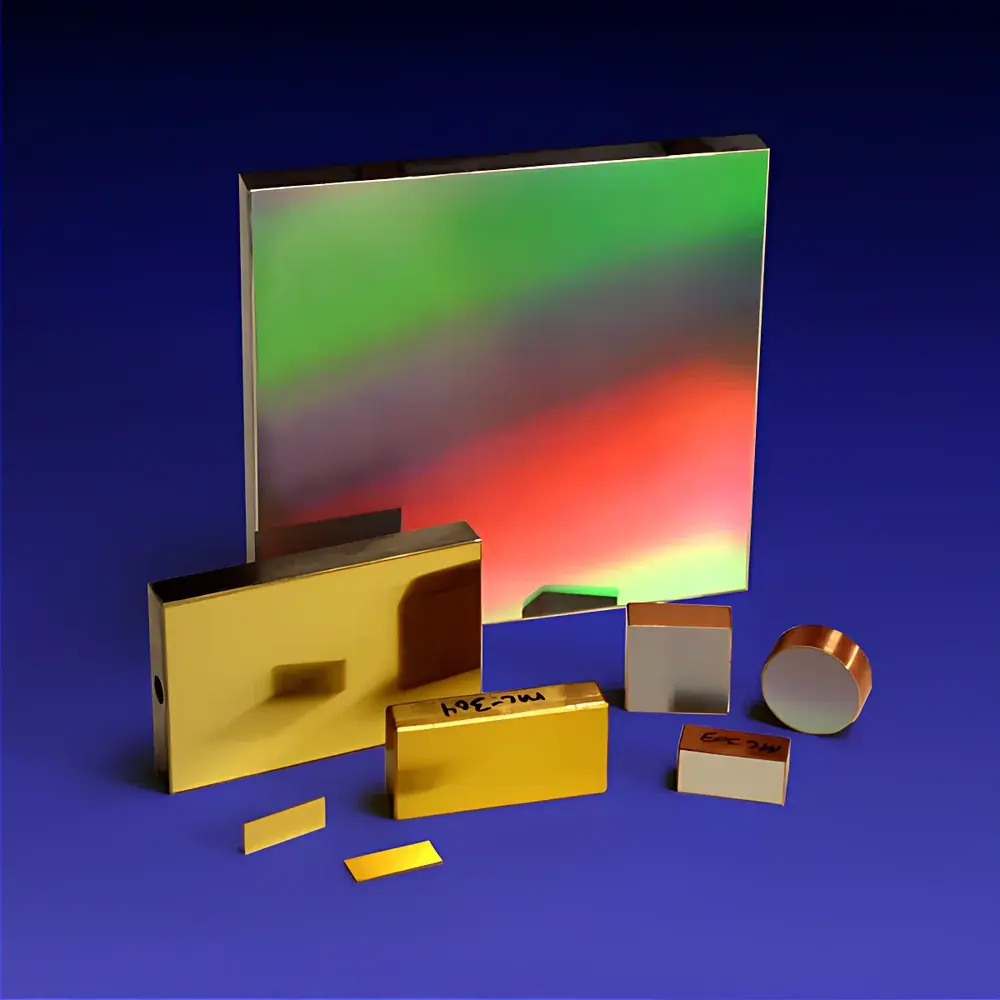
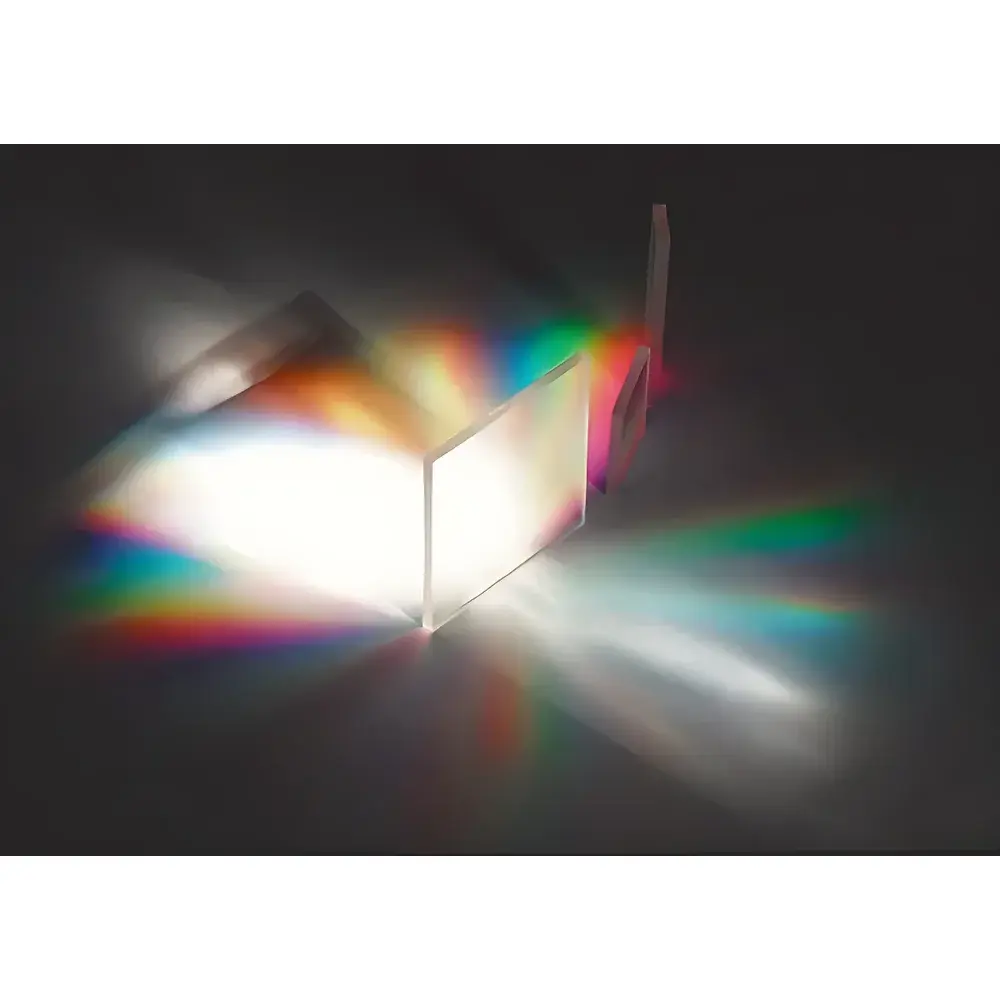
Optometrics GGR Series Precision Diffraction Gratings
| Brand | Optometrics |
|---|---|
| Origin | USA |
| Type | Imported Optical Component |
| Model | GGR |
| Category | Optical Element |
| Available Configurations | Ruled Reflective, Holographic Reflective, Echelle, Grazing-Incidence, Molecular Laser (ML), Transmission, and Beam-Splitting Gratings |
Overview
The Optometrics GGR Series comprises a comprehensive family of high-precision diffraction gratings engineered for demanding spectroscopic, laser tuning, monochromator, and wavelength calibration applications. These gratings operate on the fundamental principle of optical interference—where incident light is spatially dispersed into its constituent wavelengths via periodic microstructure modulation on a reflective or transmissive substrate. Each GGR grating is fabricated using either precision mechanical ruling (for ruled gratings) or interference lithography (for holographic gratings), ensuring exceptional groove uniformity, low wavefront distortion, and minimal stray light generation. Designed for integration into OEM spectrometers, tunable laser cavities, astronomical instrumentation, and metrology-grade optical benches, the GGR series supports operation across ultraviolet (UV: 180–400 nm), visible (VIS: 400–700 nm), and near-infrared (NIR: 700–2500 nm) spectral bands. All gratings are manufactured in accordance with ISO 10110-7 surface quality standards and undergo rigorous spectral efficiency validation at certified wavelengths.
Key Features
- Multiple grating architectures: ruled reflective, holographic reflective, transmission, echelle, grazing-incidence, and beam-splitting configurations
- Wide range of groove densities: from 13 to 3600 grooves/mm, enabling tailored dispersion and resolution for specific optical layouts
- Customizable blaze angles (e.g., 2°34′ to 36°52′) optimized for peak efficiency at designated wavelengths (e.g., 300 nm, 600 nm, 1200 nm, 1800 nm)
- Standard substrates: UV-grade fused silica and BK7 glass; optional coatings include protected aluminum (UV-VIS-NIR), gold (NIR), and dielectric high-reflection stacks
- Precision mounting compatibility: rectangular formats available in 12.7 × 12.7 mm, 25 × 25 mm, and 50 × 50 mm with thicknesses from 3 mm to 9.5 mm
- Traceable calibration data: each grating includes measured efficiency curves referenced to NIST-traceable spectroradiometric standards
Sample Compatibility & Compliance
The GGR Series is compatible with standard kinematic mounts, vacuum-compatible optical tables, and ultra-high-vacuum (UHV) environments when specified with low-outgassing substrates and coatings. All ruled gratings meet MIL-PRF-13830B scratch-dig specifications (typically 20–10), while holographic variants exhibit RMS groove error < 1.5 nm over 1 mm apertures. The product line supports compliance with key international standards including ISO/IEC 17025 (for calibration-lab use), ASTM E275 (spectrophotometer verification), and USP (pharmaceutical spectrometer qualification). For regulated industries, documentation packages—including material certifications, coating deposition logs, and spectral test reports—can be provided upon request to support GLP/GMP audit readiness.
Software & Data Management
While the GGR gratings themselves are passive optical components, Optometrics provides downloadable spectral efficiency datasets (CSV and MATLAB .mat formats) for all stocked configurations. These datasets enable accurate modeling in Zemax OpticStudio, CODE V, and FRED optical design software. Users may also access grating equation calculators (λ = d(sinα ± sinβ)/m) via the Optometrics technical portal, where d (groove spacing), α (incidence angle), β (diffraction angle), and m (order) are pre-populated per part number. For system integrators requiring traceability, full digital records—including interferometric surface maps and scatter measurements—are archived for ≥10 years and available under NDA.
Applications
- Laser cavity feedback control in Ti:sapphire, dye, and diode-pumped solid-state (DPSS) lasers
- High-resolution echelle spectrographs for astrophysical radial velocity measurements
- Compact Czerny-Turner monochromators used in fluorescence lifetime and Raman spectroscopy
- Wavelength reference standards in calibration labs accredited to ISO/IEC 17025
- Grazing-incidence gratings for soft X-ray and EUV beamlines in synchrotron facilities
- Beam-combining/splitting in multi-channel hyperspectral imaging systems
FAQ
Are GGR gratings suitable for ultrafast laser applications?
Yes—holographic gratings in the GGR02 series exhibit low group delay dispersion (GDD) and are routinely deployed in pulse compressor and stretcher configurations for femtosecond Ti:sapphire and Yb:fiber lasers.
Can I request custom groove density or substrate material?
Custom fabrication is available for minimum order quantities ≥10 units; lead time is typically 12–16 weeks for ruled gratings and 8–10 weeks for holographic variants.
Do you provide mounting hardware or kinematic adapters?
Standard SM1- and SM2-threaded mounts, kinematic mirror cells, and vacuum-compatible holders are available as optional accessories under separate part numbers.
Is efficiency data available for non-standard incidence angles?
Yes—upon request, Optometrics can supply angular efficiency maps (±15° around nominal Littrow or blaze condition) generated via calibrated double-monochromator measurement.
What is the typical damage threshold for GGR gratings under CW and pulsed illumination?
For protected Al-coated ruled gratings: >5 J/cm² (10 ns, 10 Hz, 1064 nm); for dielectric-coated holographic variants: >10 J/cm² under identical conditions. Full LIDT reports are provided with high-power orders.





