
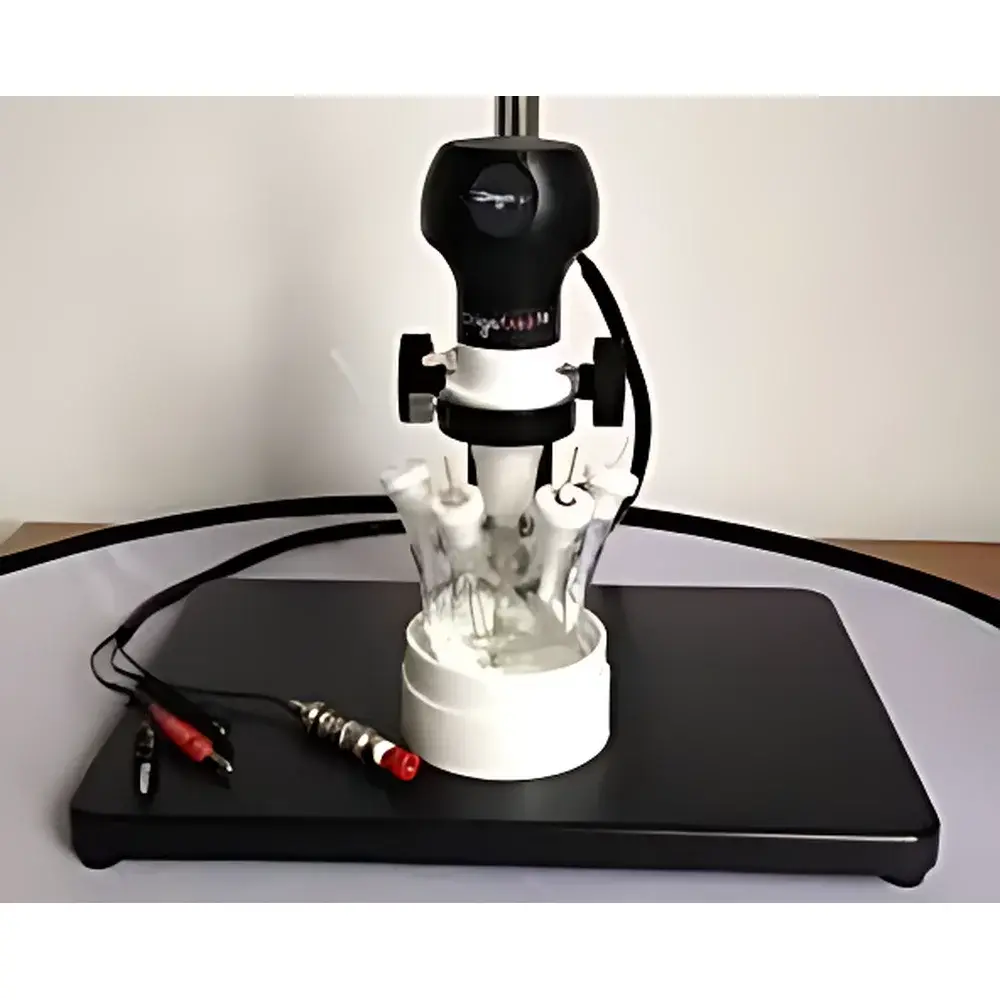
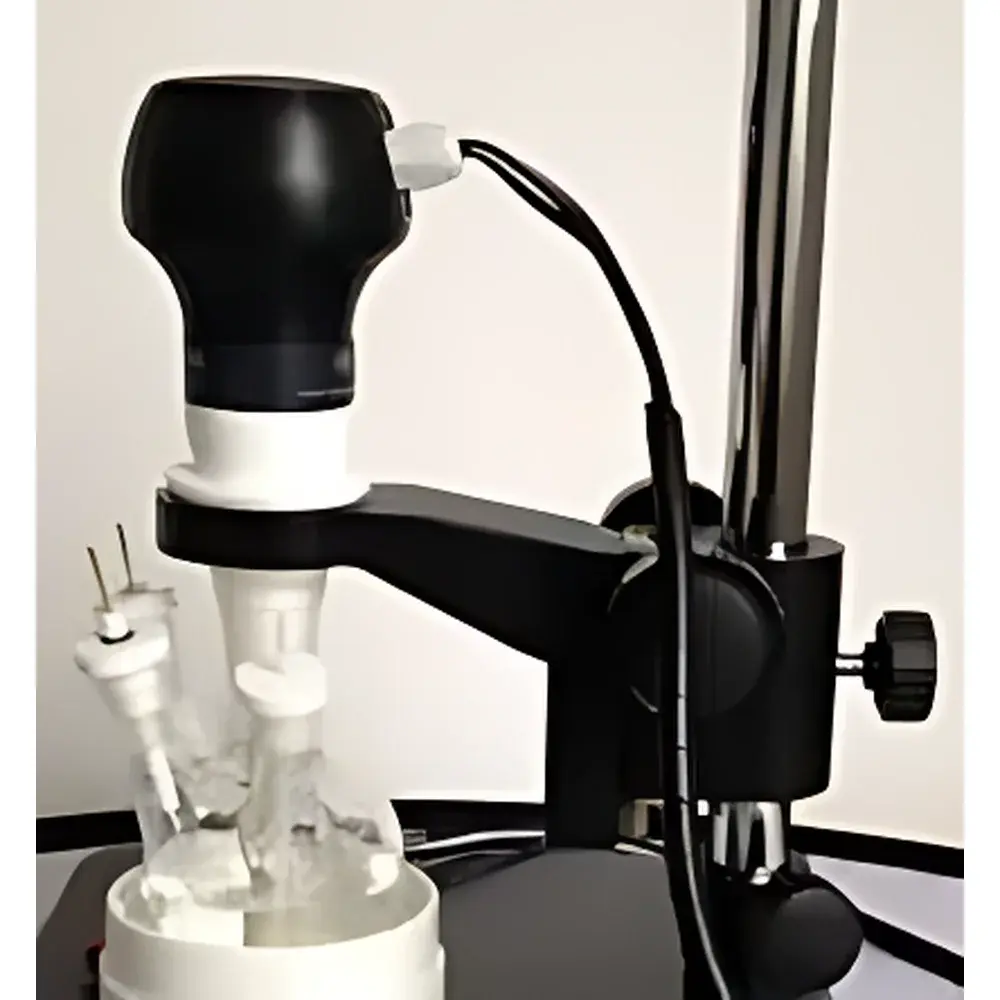
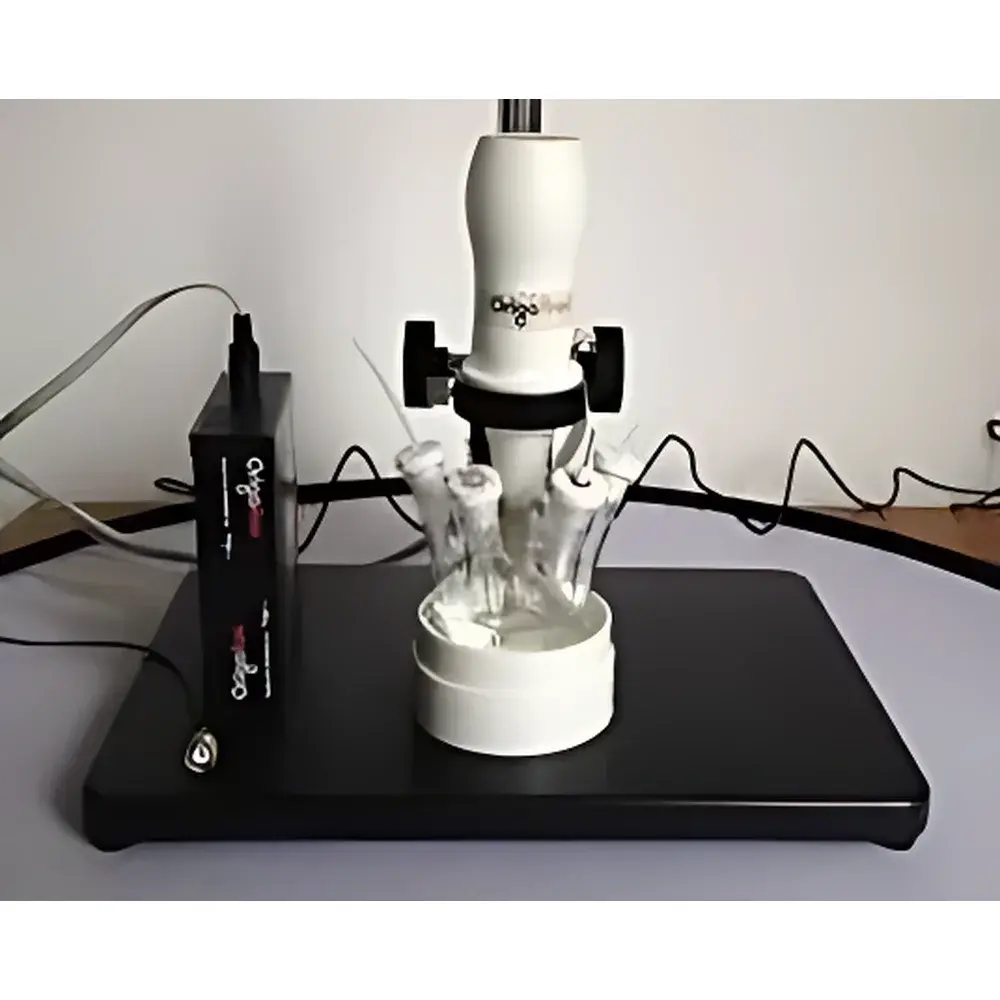
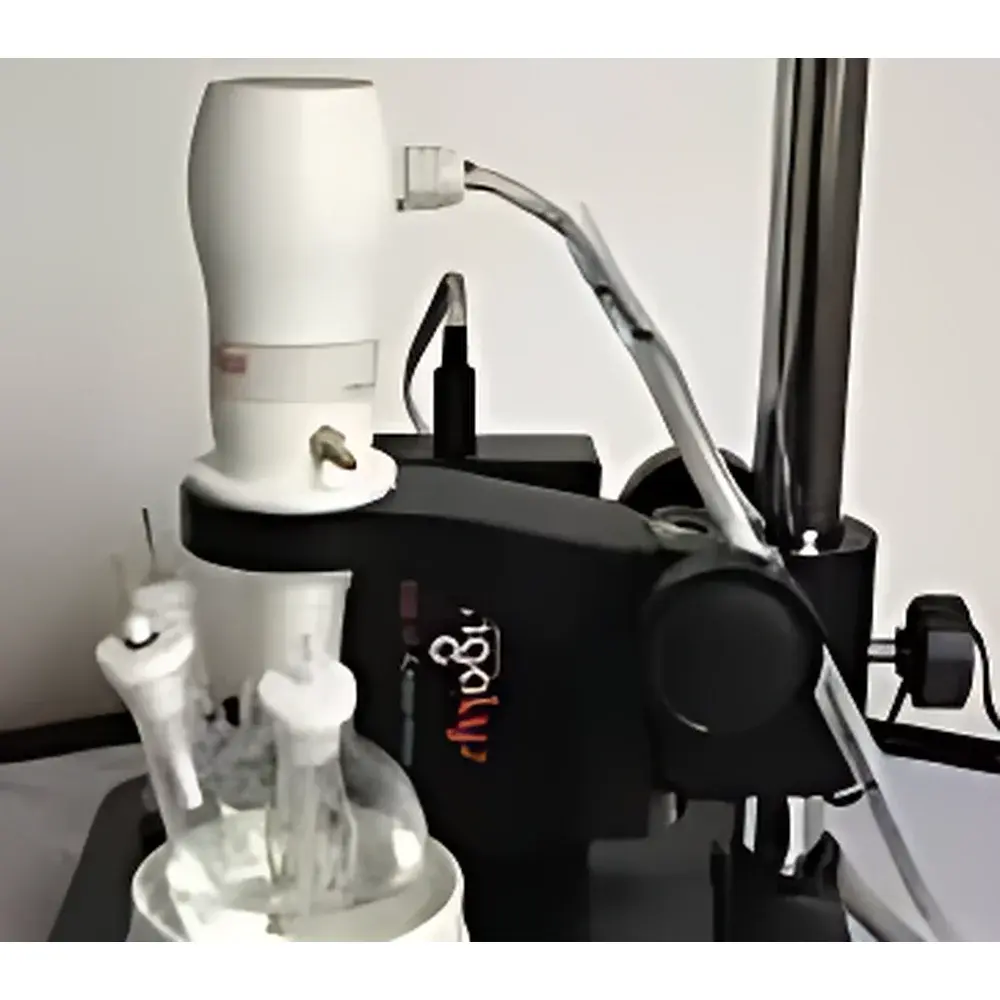
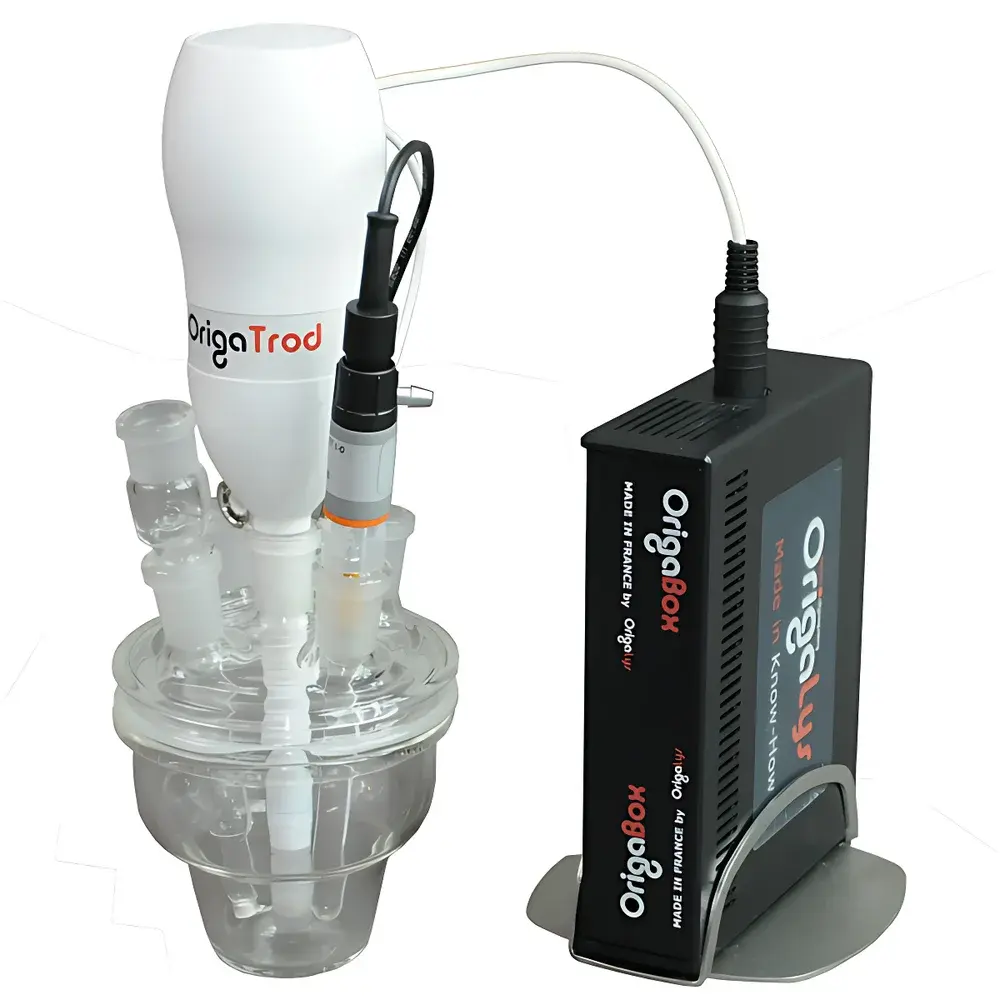
Origalys OrigaTrod Rotating Disk Electrode (RDE)
| Brand | Origalys |
|---|---|
| Origin | France |
| Model | OrigaTrod |
| Electrode Materials | Pt, Au, Glassy Carbon, Cu, Pd, Rh, W |
| Rotation Speed Range | 100–10,000 rpm |
| Shaft Eccentricity | < 0.1 mm |
| Housing Materials | PETP, PTFE, PEEK |
| Operating Temperature | 5–40 °C |
| Relative Humidity | 20–80 % RH |
| Weight (Electrode Assembly) | 0.325 kg |
| Dimensions (Electrode Assembly) | Ø 5.6 cm × H 24 cm |
| Controller Dimensions | W 14.2 cm × D 12 cm × H 4 cm |
| Controller Weight | 0.23 kg |
| Power Input | DC via 2.1 mm barrel jack |
| Communication Interfaces | USB 2.0, RS-232C (COM), Analog IN (BNC) |
| Electrical Safety & EMC Compliance | EN 61326-1, RoHS Directive 2002/95/EC, EMC Directive 89/336/EEC |
| Contact Design | Silver-coated graphite, mercury-free |
| Gas Purge Port | Yes |
| Bearing Type | Swiss ultra-thin precision ball bearing |
Overview
The Origalys OrigaTrod Rotating Disk Electrode (RDE) is a high-precision electrochemical transducer engineered for controlled hydrodynamic studies in fundamental and applied electrochemistry. Based on the Levich equation and the rotating disk electrode theory developed by G. J. Hills and later refined by R. K. Shube, the OrigaTrod enables quantitative analysis of mass-transport-limited current responses under steady-state laminar flow conditions. Its core function is to impose a well-defined, reproducible convective flux of electroactive species toward the electrode surface—making it indispensable for kinetic parameter extraction (e.g., electron transfer rate constants, diffusion coefficients), catalyst activity evaluation, and mechanistic elucidation in multi-step redox processes. Designed and manufactured in France, the OrigaTrod integrates metrological-grade mechanical stability with chemically inert construction, supporting rigorous experimental protocols in academic laboratories, industrial R&D centers, and quality control environments engaged in fuel cell development, corrosion science, electrodeposition optimization, and sensor validation.
Key Features
- Ultra-low eccentricity shaft (< 0.1 mm) supported by Swiss-sourced ultra-thin precision ball bearings, ensuring rotational stability and minimal vibration across the full 100–10,000 rpm range.
- Mercury-free silver-coated graphite contact system optimized for low-noise signal acquisition—capable of resolving sub-microampere faradaic currents without electromagnetic interference.
- Modular, user-replaceable electrode tip assembly compatible with standard materials including platinum, gold, glassy carbon, copper, palladium, rhodium, and tungsten—enabling rapid adaptation to diverse redox systems and electrolyte chemistries.
- Integrated inert gas purge channel for electrode head enclosure, mitigating oxidative degradation and parasitic side reactions during O2-sensitive measurements (e.g., ORR, CO oxidation).
- Housing fabricated from high-performance thermoplastics—PETP (polyether-polyphthalamide), PTFE (polytetrafluoroethylene), and PEEK (polyether ether ketone)—providing exceptional chemical resistance, dimensional stability, and long-term durability in aggressive aqueous and non-aqueous media.
- Dual-interface controller with isolated analog input (BNC), RS-232C serial port (for legacy instrument integration), and USB 2.0 (for direct PC synchronization and real-time speed logging).
Sample Compatibility & Compliance
The OrigaTrod is compatible with standard three-electrode electrochemical cells (working, counter, reference) and supports both aqueous and non-aqueous electrolytes, including acidic, alkaline, and organic solvent-based systems (e.g., acetonitrile, DMF, propylene carbonate). Its inert housing and mercury-free design comply with EU RoHS Directive 2002/95/EC and meets electromagnetic compatibility requirements per EN 61326-1:2013 for laboratory-use electrical equipment. While not a standalone analytical instrument, the OrigaTrod functions as a critical component within GLP- and GMP-aligned workflows when integrated with potentiostats compliant with IEC 61010-1 and FDA 21 CFR Part 11 data integrity standards. Its mechanical repeatability and thermal stability (5–40 °C operating range, 20–80 % RH) support method validation under ISO/IEC 17025-accredited testing conditions.
Software & Data Management
The OrigaTrod controller operates independently or synchronizes with third-party electrochemical workstations via RS-232C or USB virtual COM port. Speed setpoints and real-time RPM feedback are programmable through ASCII command protocol, enabling script-driven automation in Python, LabVIEW, or MATLAB environments. Analog output (0–5 V) scales linearly with rotational speed, allowing external DAQ systems to log rotation alongside current/potential waveforms. All communication channels support timestamped command logging—facilitating audit-ready traceability required for regulatory submissions. No proprietary software is bundled; instead, the device is designed for interoperability with industry-standard platforms such as BioLogic EC-Lab, Pine AfterMath, Metrohm Autolab NOVA, and CH Instruments software suites.
Applications
- Kinetic analysis of oxygen reduction reaction (ORR) and hydrogen evolution reaction (HER) in PEM and alkaline fuel cell catalyst screening.
- Quantitative assessment of metal ion reduction mechanisms during electroplating bath formulation and additive performance testing.
- Corrosion rate determination via limiting current measurements in chloride-containing electrolytes (e.g., ASTM G59, G102).
- Diffusion coefficient determination of redox-active species using Levich and Koutecký–Levich analyses.
- Electrocatalyst stability evaluation under accelerated stress tests (ASTs) involving potential cycling at controlled rotation rates.
- Development and calibration of rotating ring-disk electrode (RRDE) configurations when paired with compatible ring assemblies.
FAQ
What electrode materials are supplied standard with the OrigaTrod?
Standard configurations include disk electrodes made from platinum, gold, and glassy carbon. Custom disks in copper, palladium, rhodium, or tungsten are available upon request and subject to lead time and material certification requirements.
Is the OrigaTrod compatible with bipotentiostats for RRDE operation?
Yes—the OrigaTrod’s mechanical and electrical architecture supports integration with commercial bipotentiostats. The shaft is electrically isolated, and the BNC analog output allows synchronized speed-current correlation during dual-potential experiments.
Does the controller support closed-loop speed regulation?
No—the OrigaTrod uses open-loop DC motor control with high-precision tachometric feedback. Speed stability is maintained within ±0.5 % of setpoint across the operating range due to the low-inertia rotor and bearing design.
Can the electrode head be cleaned in an ultrasonic bath?
Ultrasonic cleaning is permitted only for glassy carbon and platinum tips using mild aqueous detergent or ethanol; gold and reactive metals (e.g., Pd, Rh) require manual polishing with alumina slurry to avoid surface damage or contamination.
What safety certifications apply to the OrigaTrod system?
The controller complies with EN 61326-1 (EMC) and carries CE marking per the Low Voltage Directive (2014/35/EU); full IEC 61010-1 certification applies to the complete measurement setup when used with a certified potentiostat and grounded lab infrastructure.





