
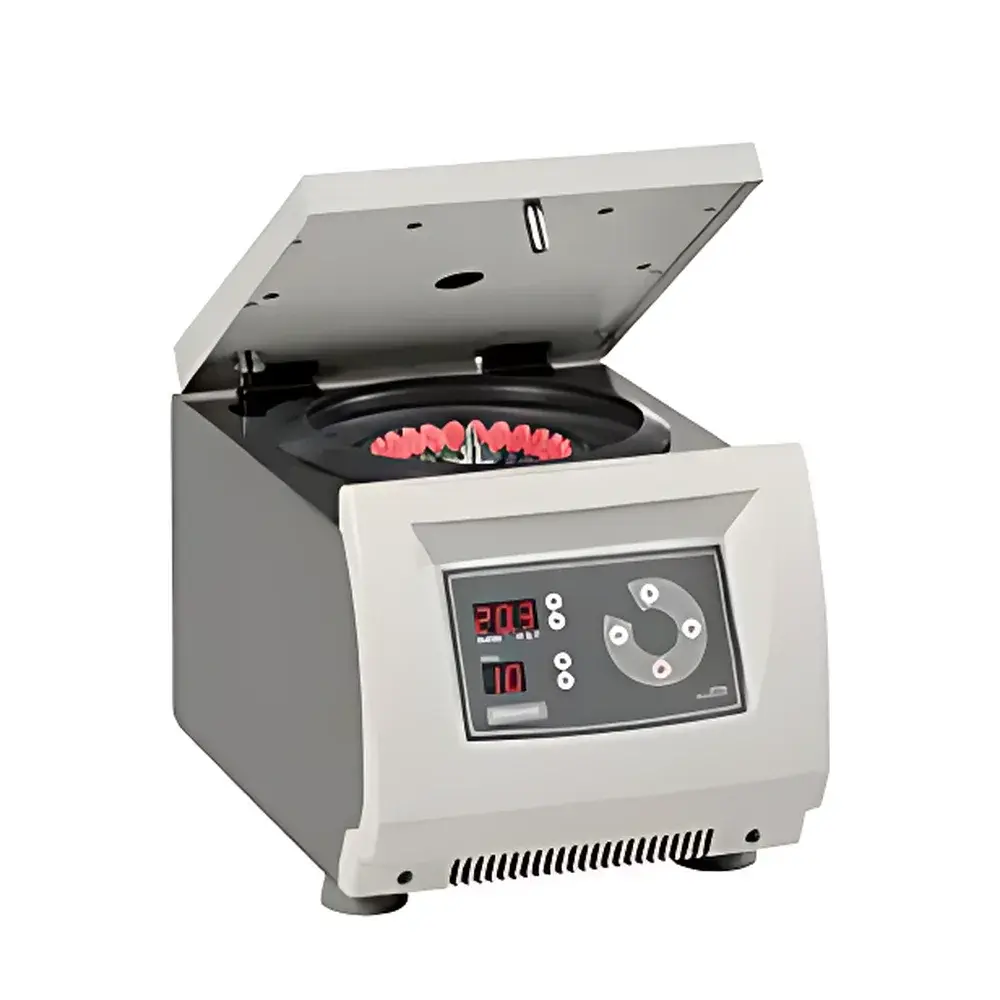
Ortoalresa Minicen Compact Benchtop Centrifuge
| Brand | Ortoalresa |
|---|---|
| Origin | Spain |
| Model | Minicen |
| Instrument Type | Palm-Sized Centrifuge |
| Max Speed | 15,000 rpm |
| Max RCF | 15,596 × g |
| Max Capacity | 12 × 2 mL |
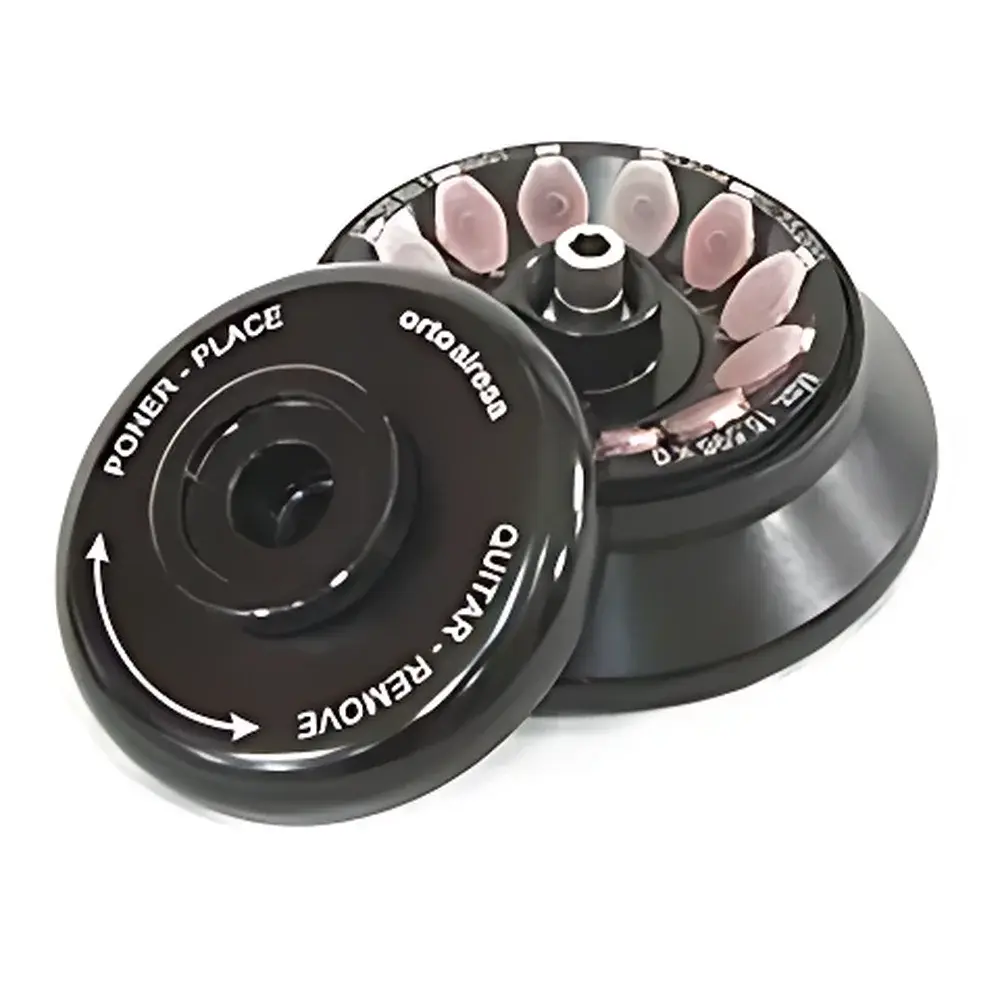
| Rotor Configuration | Fixed-angle rotor (12-position, for 1.5–2.0 mL tubes) |
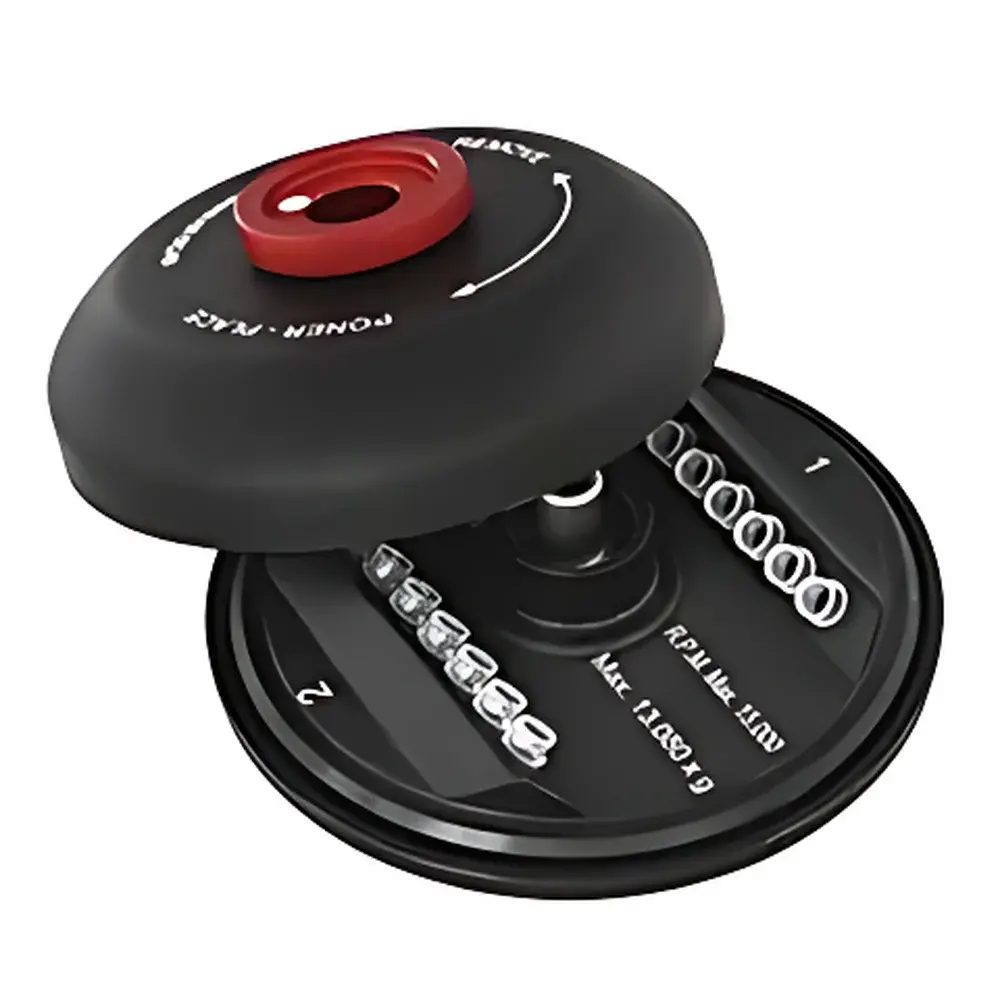
| Adapters Available | For 0.2–0.4 mL and 0.5–0.6 mL microtubes |
| Dimensions (W×D×H) | 260 × 230 × 130 mm |
| Net Weight | 4 kg |
| Power Supply | 230 V / 110 V, 50–60 Hz |
| Power Consumption | 180 W |
| Noise Level | <60 dB(A) |
| Timer Range | 30 s – 999 min (1 s resolution) |
| Acceleration/Deceleration Control | Programmable stepwise (100 rpm / 100 × g increments) |
| Safety Compliance | EN 61010-1, EN 61010-2-020, EN 61326-1, EN 61326-2-6 |
| Regulatory Directives | 2011/65/EU (RoHS), 2012/19/EU (WEEE), 2014/30/EU (EMC), 2014/35/EU (LVD), 98/79/EC (IVDD) |
Overview
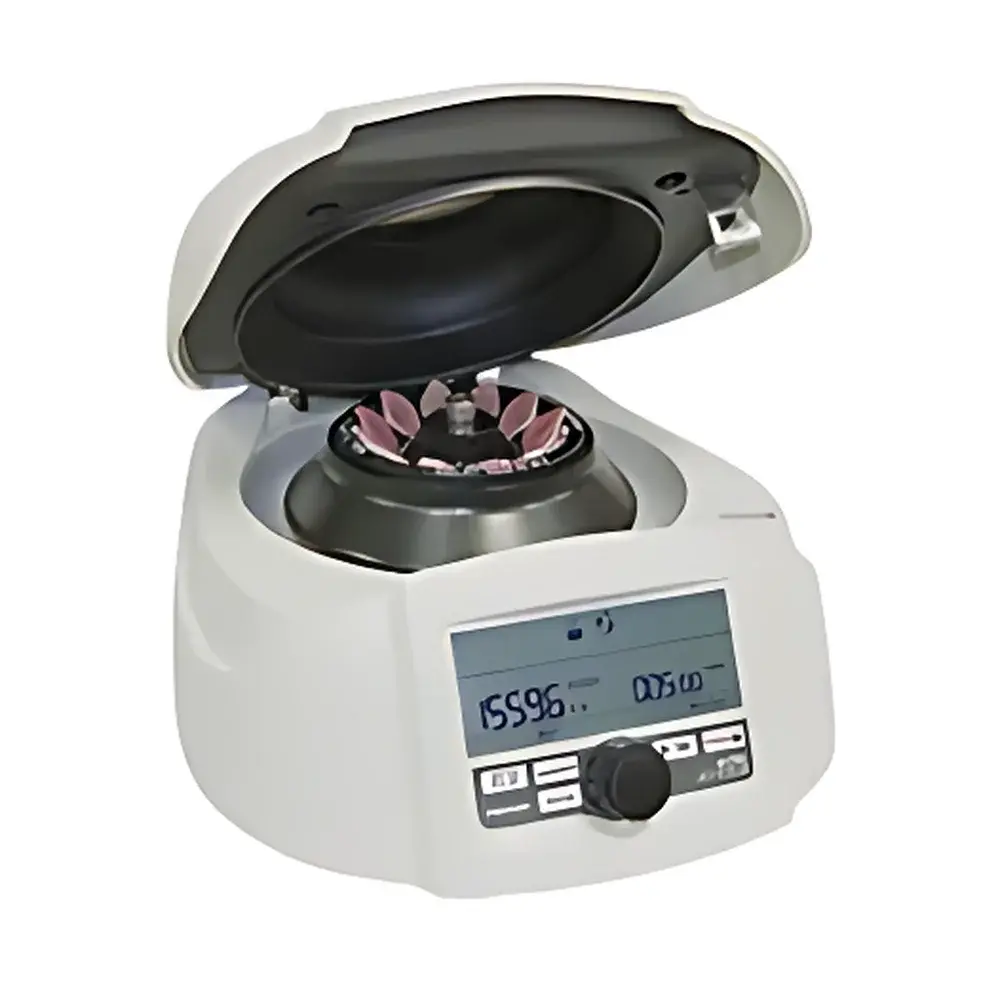
The Ortoalresa Minicen is a compact, microprocessor-controlled benchtop centrifuge engineered for precision, safety, and operational efficiency in demanding laboratory environments. Designed and manufactured in Spain with over three decades of centrifugation expertise, the Minicen applies fixed-angle rotor geometry to generate high relative centrifugal force (RCF) within a minimal footprint—ideal for routine nucleic acid extraction, protein precipitation, cell pelleting, and reagent clarification in molecular biology, clinical diagnostics, and pharmaceutical QC labs. Its core architecture leverages brushless induction motor technology, eliminating carbon brushes and ensuring long-term mechanical stability without scheduled maintenance. The device operates on the principle of radial acceleration: rotation induces sedimentation of suspended particles according to their mass, density, and shape—governed by Stoke’s law and sedimentation coefficient (S-value) relationships. With a maximum speed of 15,000 rpm and peak RCF of 15,596 × g, it delivers reproducible separation performance across microliter-scale samples while maintaining thermal management via forced-air ventilation.
Key Features
- Compact footprint (260 × 230 × 130 mm) and lightweight design (4 kg) suitable for biosafety cabinets, laminar flow hoods, or crowded benchtops.
- High-resolution LCD display showing real-time rpm, RCF, countdown timer, rotor status, and lid position.
- Programmable acceleration/deceleration in 100 rpm / 100 × g increments; timer range from 30 seconds to 999 minutes with ±1 second accuracy.
- Intuitive push-button interface with dedicated controls for start/stop, lid release, and short-spin (“pulse”) mode; all parameters retained in non-volatile memory after power-off.
- Low-noise operation (<60 dB[A]) achieved through balanced rotor dynamics and vibration-damping housing.
- USB interface enables firmware updates and optional PC-based parameter logging (no proprietary software required).
Sample Compatibility & Compliance
The Minicen accommodates standard microcentrifuge tubes (1.5–2.0 mL) using its integrated fixed-angle rotor. Optional adapters support 0.2–0.4 mL PCR tubes and 0.5–0.6 mL microtubes—ensuring full compatibility with common consumables used in genomic workflows. All rotors and adapters are autoclavable (121°C, 20 min, saturated steam), facilitating strict contamination control in GLP and GMP-regulated environments. The instrument complies with EN 61010-1 (safety requirements for electrical equipment) and EN 61010-2-020 (particular safety requirements for centrifuges), as well as electromagnetic compatibility (EN 61326-1/-2-6) and low-voltage directives (2014/35/EU). It meets RoHS (2011/65/EU) and WEEE (2012/19/EU) standards, and carries CE marking per IVDD 98/79/EC for in vitro diagnostic applications where applicable.
Software & Data Management
While the Minicen operates as a standalone instrument, its USB port supports direct connection to Windows- or macOS-based PCs for firmware upgrades and audit-ready configuration backup. No cloud dependency or subscription model is required. Parameter logs—including run history, speed, RCF, duration, and error codes—are locally stored and exportable as CSV files for internal QA documentation. The system supports 21 CFR Part 11-compliant workflows when integrated into validated laboratory information management systems (LIMS); user access control, electronic signatures, and audit trail generation are managed externally at the LIMS level. All operational states—including lid lock status, imbalance detection events, and motor temperature thresholds—are recorded with timestamps for traceability during regulatory inspections.
Applications
- Routine pelleting of bacterial and mammalian cells (e.g., E. coli harvesting at 12,000 rpm, 13,000 × g, 5 min).
- Nucleic acid purification workflows requiring rapid spin-down of silica-membrane columns or magnetic beads.
- Clarification of enzymatic reaction mixtures prior to HPLC or mass spectrometry analysis.
- Pre-analytical sample preparation in clinical chemistry, including serum/plasma separation from whole blood (capillary tubes compatible via adapter).
- Small-volume solvent extraction protocols in organic synthesis and environmental testing labs.
FAQ
Is the Minicen suitable for continuous operation?
Yes—the brushless motor and active cooling system permit extended runtime up to 999 minutes per cycle, with automatic thermal cutoff protection preventing overheating.
Can I calibrate the speed or RCF values myself?
No field calibration is required or permitted. Factory calibration is traceable to national metrology institutes; verification is performed via lid-port diagnostic interface per EN 61010-2-020.
Does the rotor require balancing before each run?
The fixed-angle rotor is statically and dynamically balanced at manufacture. Load symmetry is enforced by the 12-position geometry—no manual balancing is needed if tubes are loaded symmetrically.
What happens during an imbalance event?
The microprocessor detects vibration amplitude exceeding ISO 1940-1 G2.5 limits and initiates immediate deceleration while triggering visual and audible alarms.
Is the Minicen compliant with ISO/IEC 17025 requirements for accredited testing labs?
Yes—its documented traceability, built-in self-diagnostics, and audit-ready parameter retention support method validation and equipment qualification per ISO/IEC 17025:2017 Clause 6.4.1.



