
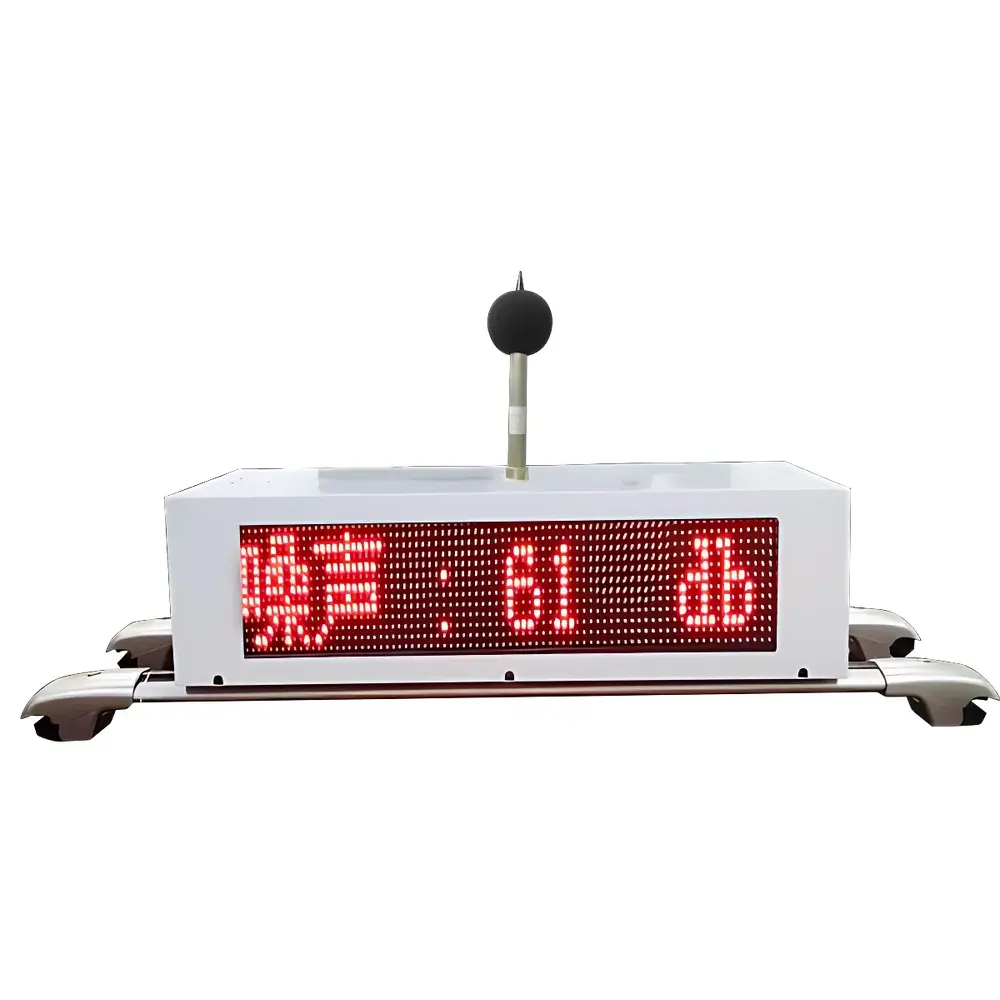
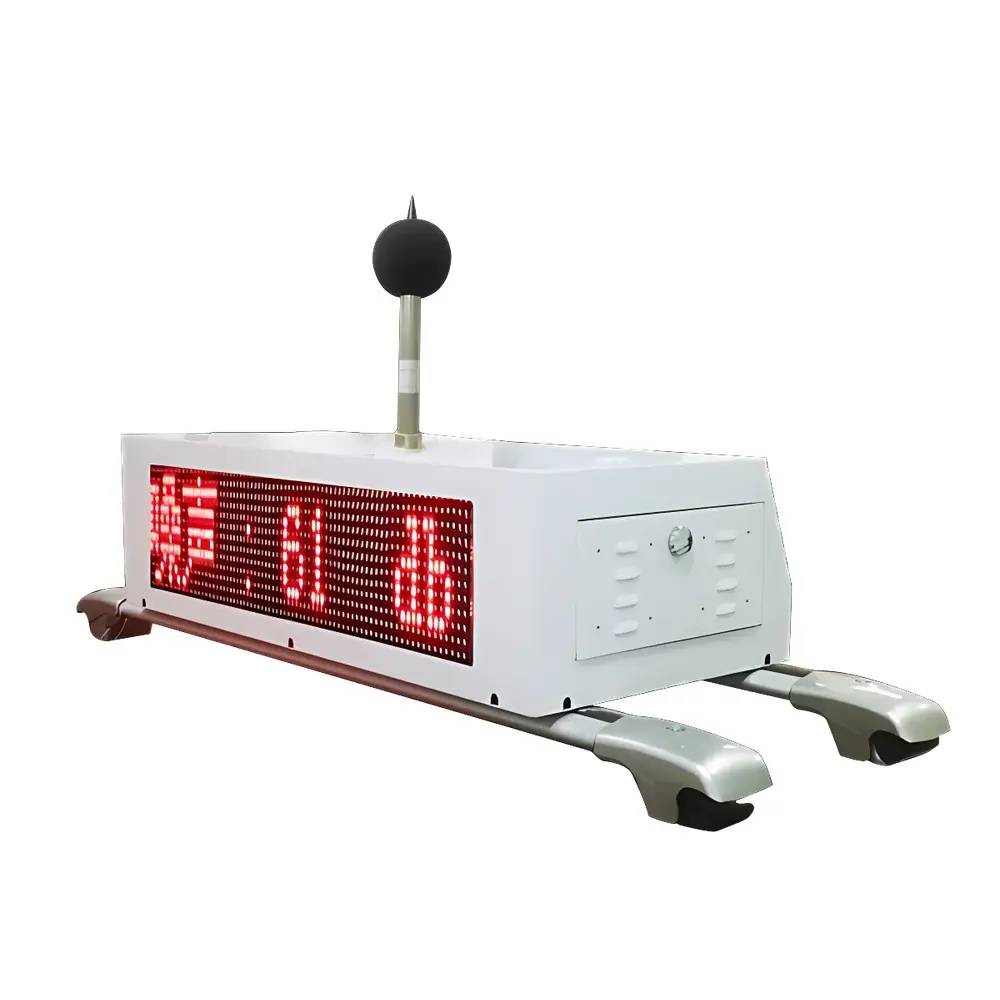
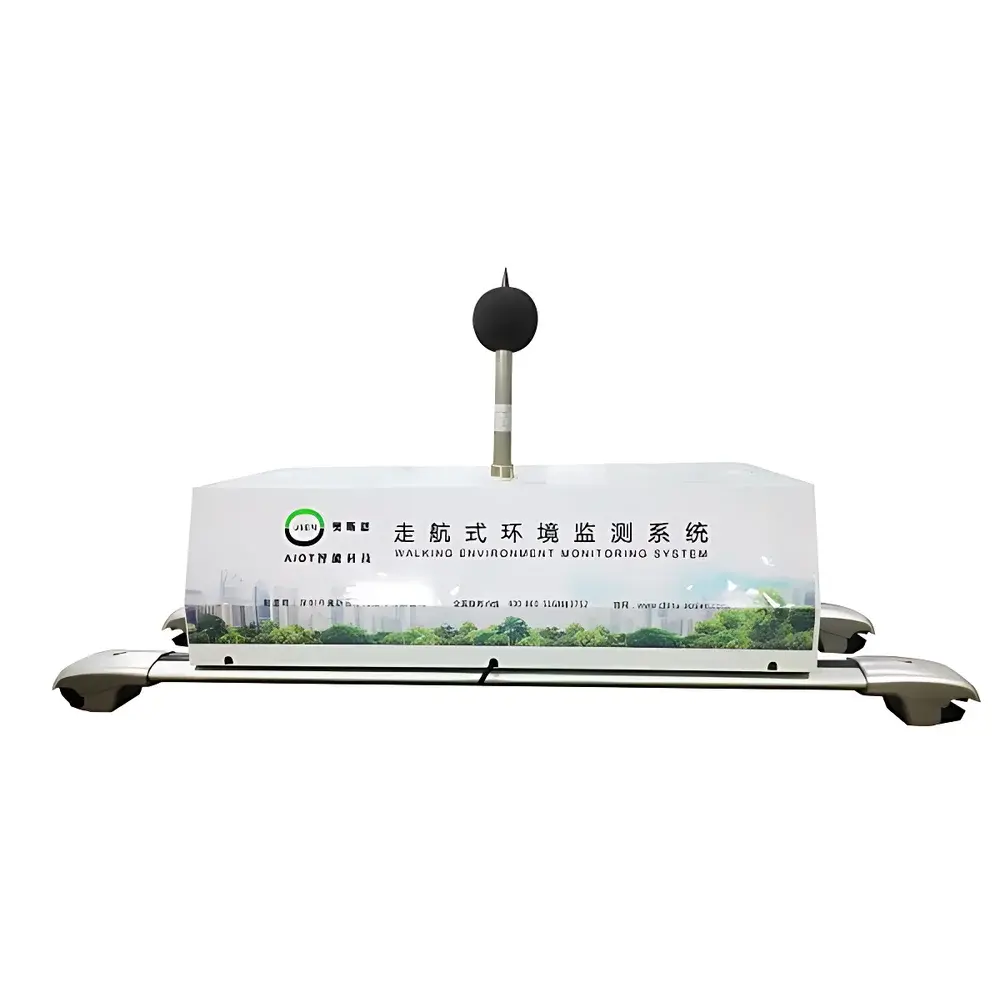
OSEN-Z-28 Mobile Vehicle-Mounted Real-Time Noise Monitoring System
| Brand | OSEN |
|---|---|
| Origin | Guangdong, China |
| Model | OSEN-Z-28 |
| Compliance | GB/T 3785.1–2010 Class 2 / IEC 61672-1:2013 Class 2 |
| Measurement Range | 30–130 dBA |
| Frequency Range | 20 Hz–12.5 kHz |
| Frequency Weighting | A, C, Z |
| Time Weighting | F (Fast), S (Slow), I (Impulse) |
| Output Interface | RS485, GPRS/4G |
| Data Storage | Local SD card (≥6 months of minute-level data) |
| Power Supply | AC 220 V |
| Video Integration | 1080P H.265 streaming, 360° pan-tilt-zoom (PTZ) camera |
| GPS Logging | Real-time vehicle trajectory mapping with synchronized noise value overlay |
| Communication Protocol | HJ 212–2017 (China EPA Standard) |
Overview
The OSEN-Z-28 Mobile Vehicle-Mounted Real-Time Noise Monitoring System is an engineered solution for dynamic, spatially resolved environmental noise assessment in urban and industrial settings. Designed for integration onto municipal fleets—including buses, taxis, and emergency response vehicles—it implements precision acoustic measurement based on the principles of electret condenser microphone transduction and digital signal processing compliant with IEC 61672-1:2013 Class 2 and GB/T 3785.1–2010 Class 2 standards. Unlike static monitoring stations, the OSEN-Z-28 enables high-resolution spatiotemporal profiling of noise exposure across heterogeneous environments—capturing transient events such as construction activity, traffic flow variations, and industrial operations while correlating acoustic intensity with georeferenced vehicle position. Its embedded architecture supports continuous operation under mobile mechanical stress, including vibration isolation via magnetic-mount hardware rated to ISO 5344:2004 vehicular shock specifications.
Key Features
- Class 2-certified acoustic sensor with 30–130 dBA dynamic range, 20 Hz–12.5 kHz frequency response, and selectable A/C/Z frequency weighting and F/S/I time weighting
- Integrated 1080P H.265 video module with 360° PTZ capability; real-time video streaming and on-board video annotation with synchronized noise values and GPS coordinates
- Embedded GPS module enabling centimeter-level trajectory logging; noise data is time-stamped and geotagged at ≤1 Hz resolution for spatial interpolation and hotspot identification
- On-device auto-calibration algorithm compensating for thermal drift and electromagnetic interference—eliminating requirement for manual field calibration per ISO 9612:2009 Annex B
- Modular expansion interface supporting concurrent monitoring of PM₂.₅/PM₁₀, gaseous pollutants (SO₂, NO₂, CO, O₃), and meteorological parameters (wind speed/direction, temperature, humidity, pressure)
- GPRS/4G LTE dual-mode telemetry with HJ 212–2017 protocol compliance for secure, authenticated data transmission to central environmental information platforms
- Local SD card storage retaining ≥6 months of minute-averaged noise statistics (LAeq, Lmax, Lmin, L10, L50, L90) with CRC-32 integrity verification
Sample Compatibility & Compliance
The OSEN-Z-28 is validated for outdoor deployment in ambient temperature ranges of −20 °C to +50 °C and relative humidity up to 95% non-condensing. Its IP65-rated enclosure ensures operational integrity during rain, dust exposure, and road-spray conditions typical of municipal fleet operation. All acoustic measurements adhere strictly to ISO 1996-2:2017 (acoustics — description, measurement and assessment of environmental noise) and national regulatory frameworks governing community noise limits. Data provenance meets GLP-aligned audit requirements: each transmitted record includes device ID, firmware version, calibration timestamp, GPS fix quality indicator, and cryptographic hash of raw waveform segments. The system supports traceable chain-of-custody documentation required under China’s “Environmental Monitoring Data Quality Management Measures” (MEP Order No. 39).
Software & Data Management
Data acquisition, visualization, and reporting are managed through a cloud-native SaaS platform accessible via web browser or dedicated WeChat Mini Program client. Raw sensor streams undergo real-time spectral analysis (1/3-octave band resolution) and statistical aggregation (hourly LAeq, daily noise maps, percentile exceedance reports). Platform APIs conform to RESTful design principles and support integration with third-party GIS engines (e.g., ArcGIS Online, QGIS Server) and regulatory dashboards. Audit logs record all user actions—including configuration changes, calibration events, and data export—with immutable timestamps compliant with ISO/IEC 17025:2017 clause 7.10.2. For offline use, USB-host interface enables local retrieval of encrypted binary archives compatible with MATLAB, Python (SciPy/Pandas), and ENVI for advanced noise modeling and source attribution.
Applications
- Urban noise mapping via municipal transport networks: systematic characterization of temporal and spatial noise gradients across districts, corridors, and land-use zones
- Construction site compliance verification: automated detection of exceedances against local ordinances (e.g., Shanghai Municipal Regulation on Construction Noise Control)
- Roadway noise impact assessment: correlation of vehicle speed, traffic volume, pavement type, and LAeq to inform low-noise asphalt deployment and barrier optimization
- Industrial fence-line monitoring: mobile validation of facility-reported emission controls and identification of unreported intermittent sources
- Event-based noise auditing: rapid deployment for festivals, rallies, or infrastructure commissioning with post-event statistical summary generation
- Acoustic epidemiology support: longitudinal exposure datasets aligned with public health registries for dose–response analysis
FAQ
Does the OSEN-Z-28 meet international Class 2 sound level meter requirements?
Yes. It complies fully with IEC 61672-1:2013 Class 2 and GB/T 3785.1–2010 Class 2 specifications, verified by third-party metrological accreditation.
Can the system operate without cellular connectivity?
Yes. All core measurement, local storage, and GPS logging functions remain active offline; data synchronizes automatically upon network restoration.
Is remote firmware update supported?
Yes. Secure OTA updates are delivered via TLS 1.2-encrypted channels with signature verification using ECDSA-P256.
What meteorological parameters can be added via expansion?
Wind speed/direction (ultrasonic anemometer), ambient temperature and relative humidity (capacitive sensor), and barometric pressure (MEMS piezoresistive transducer).
How is data security ensured during transmission?
All telemetry uses AES-256 encryption in transit and at rest; authentication follows HJ 212–2017 mutual certificate exchange protocol.
Is the mounting hardware compatible with curved vehicle surfaces?
Yes. The neodymium magnetic base accommodates curvature radii ≥500 mm and maintains retention force >45 N under ISO 5344-defined vibration spectra.
Related Products







