
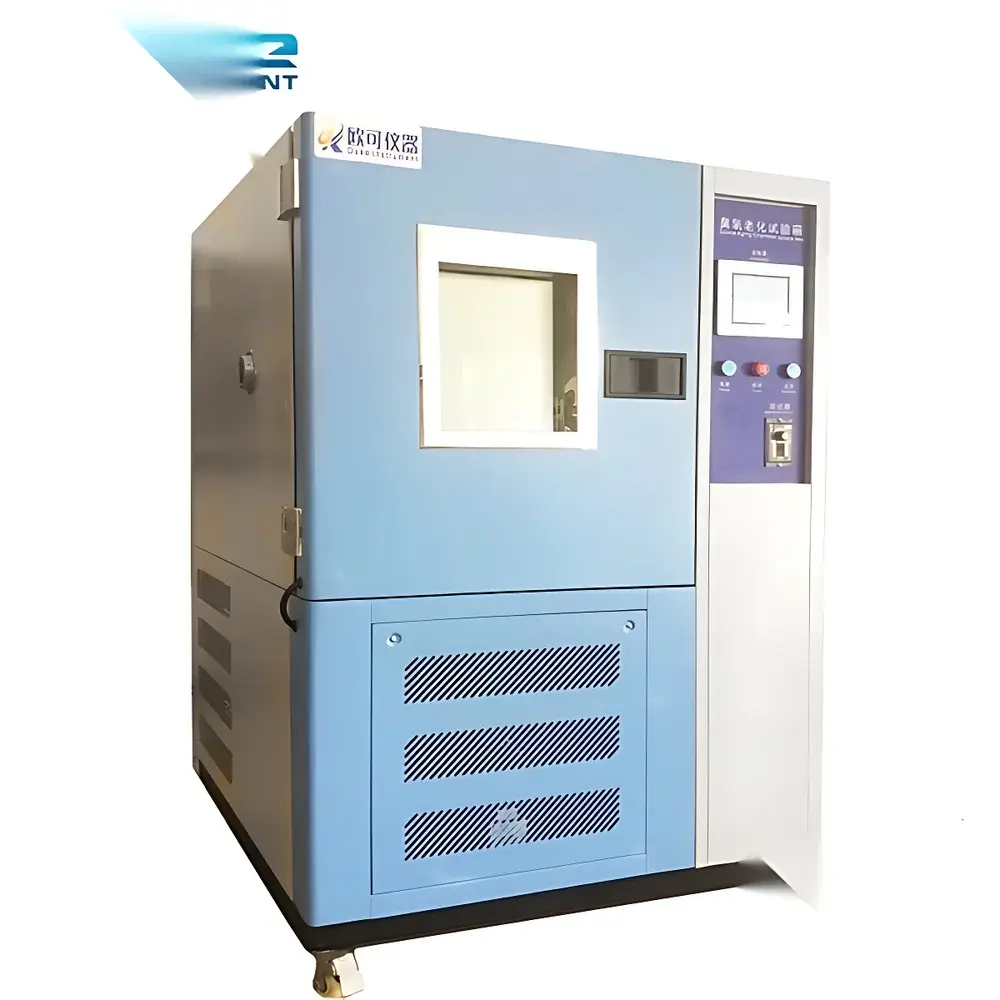
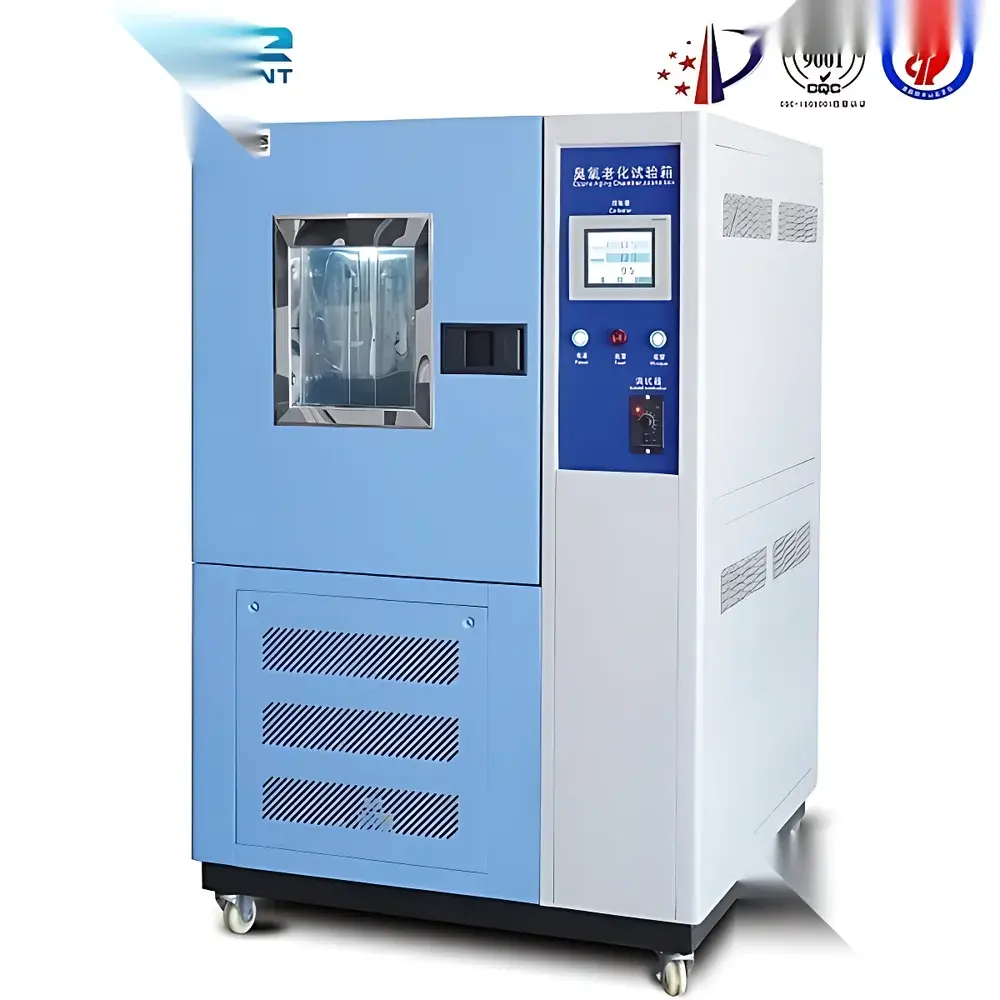
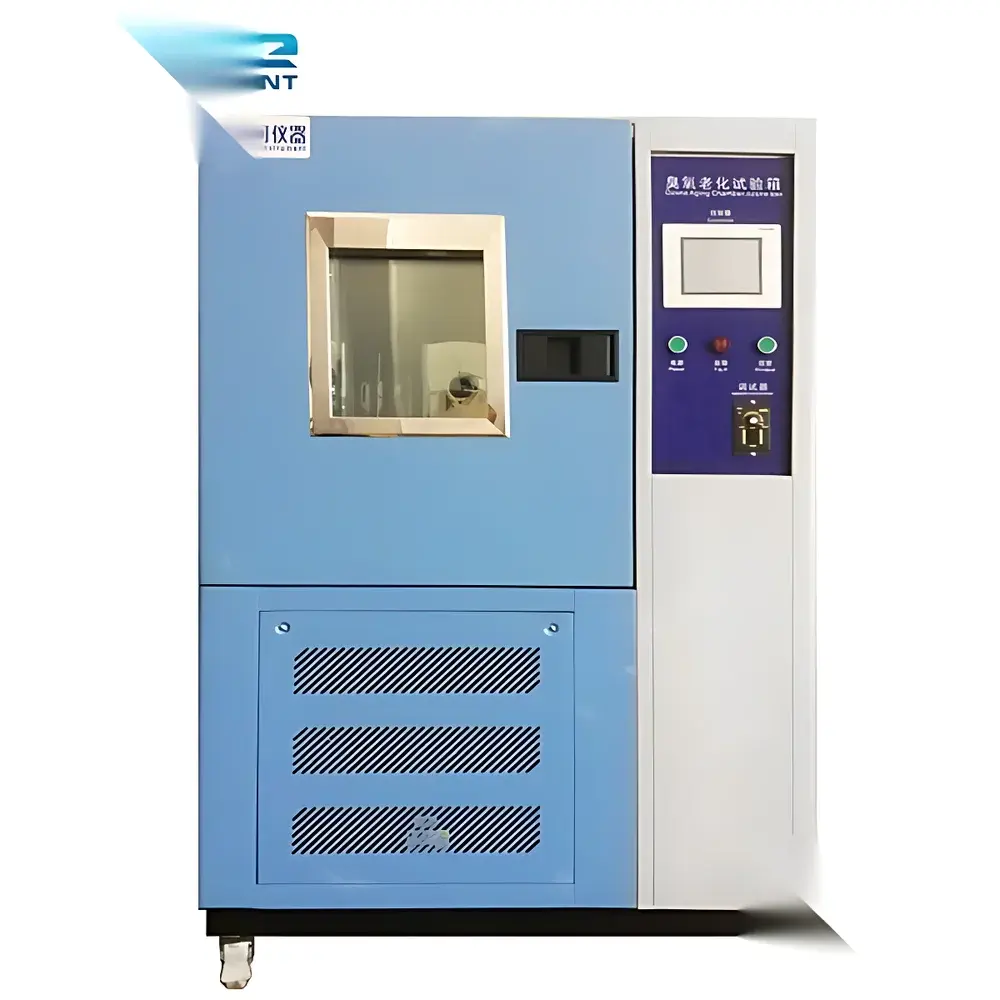
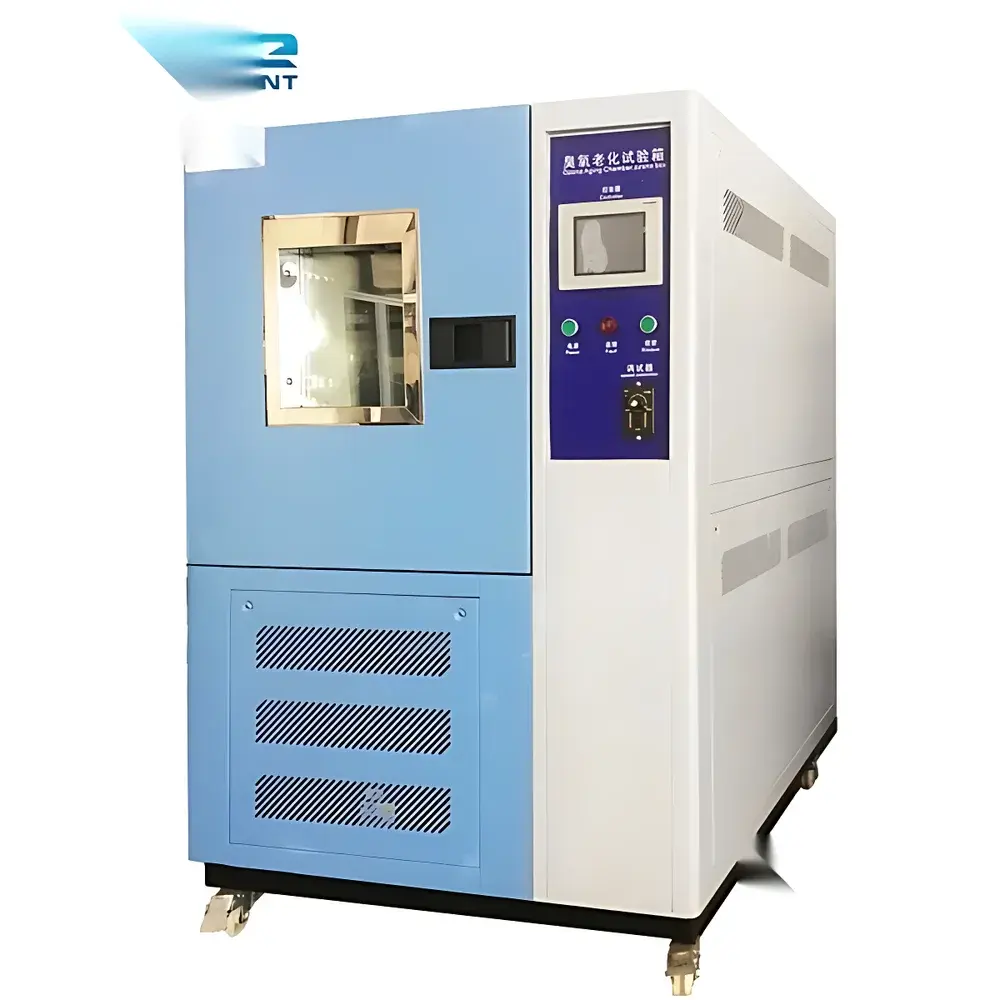
Ozone Accelerated Aging Test Chamber QY-Series
| Brand | Other Brands |
|---|---|
| Origin | Imported |
| Manufacturer Type | General Distributor |
| Price | USD 4,950 (FOB) |
| Temperature Range | 25–40 °C |
| Humidity Range | 30–65 %RH |
| Ozone Concentration Range | 50–1500 pphm |
| Temp. Uniformity | ±0.5 °C |
| Sample Rack | 360° continuous rotation at 1 rpm |
| Gas Flow Velocity | 8–16 mm/s |
| Control System | Weilun color touchscreen + Siemens PLC |
| Ozone Sensor | Non-dispersive UV absorption type, ≥5 yr service life |
| Compliance Standards | GB/T 7762–2003, GB/T 2951.21–2008, GB/T 11206–2009, ISO 1431-1:2004 |
Overview
The QY-Series Ozone Accelerated Aging Test Chamber is an engineered environmental simulation system designed to evaluate the ozone resistance of elastomeric materials—including natural rubber, SBR, NBR, EPDM, and silicone compounds—under controlled, reproducible atmospheric conditions. It operates on the principle of accelerated oxidative degradation: ozone molecules (O₃) react selectively with unsaturated carbon–carbon double bonds in polymer chains, inducing surface cracking under strain. The chamber integrates a closed-loop, leak-tight gas circulation system featuring silent discharge ozone generation and real-time non-dispersive ultraviolet (UV) photometric detection. This architecture ensures stable, traceable ozone concentration control within 50–1500 pphm—well aligned with ISO 1431-1:2004 and GB/T 7762–2003 requirements for static and dynamic testing protocols. Temperature and humidity are independently regulated within narrow tolerances (±0.5 °C, 30–65 %RH), minimizing confounding thermal or hygroscopic effects during exposure.
Key Features
- Closed-loop ozone generation and recirculation system with stainless-steel test chamber and fully sealed gas path—eliminates ambient leakage and enhances operator safety.
- Adjustable ozone concentration from 50 to 1500 pphm via digital PID-controlled silent discharge ozone generator; calibrated output traceable to NIST-traceable reference standards.
- Motor-driven sample rack providing continuous 360° rotation at precisely 1 rpm—enabling uniform exposure per ISO 1431-1 Annex A (dynamic method) or static tensile loading via optional fixture integration.
- Integrated non-dispersive UV ozone analyzer with auto-zero function, 5-year minimum sensor lifetime, and linear 4–20 mA analog output plus RS232 digital interface for external data logging.
- Weilun color touchscreen HMI paired with Siemens S7-1200 PLC for deterministic logic control, dual-loop PID temperature/humidity regulation, and intuitive parameter setting with password-protected configuration modes.
- Comprehensive safety architecture: over-temperature cutoff, motor overload protection, ozone leak detection interlock, earth leakage circuit breaker, and dedicated metrology port for third-party calibration verification.
Sample Compatibility & Compliance
The QY-Series accommodates standard dumbbell-shaped specimens (e.g., ISO 37 Type 1, ASTM D412 Die C), corded rubber strips, molded O-rings, and extruded profiles—up to 100 cm × 100 cm × 100 cm internal volume (QY-1000 model). All configurations support both static (fixed-strain) and dynamic (rotating/oscillating) test modes as defined in ISO 1431-1:2004 Clause 6 and GB/T 7762–2003 Section 5. The chamber’s thermal and humidity stability meets Class II requirements per IEC 60068-3-5 for environmental testing equipment. Full documentation—including factory calibration certificates, ozone sensor linearity reports, and electrical safety test records—is supplied to support GLP-compliant laboratory audits and ISO/IEC 17025 accreditation readiness.
Software & Data Management
While the embedded PLC-based controller provides standalone operation, the RS232 serial interface enables bidirectional communication with host PCs running custom SCADA or LIMS platforms. Real-time ozone concentration, chamber temperature, relative humidity, and elapsed test time are streamed at 1 Hz resolution. All setpoints, alarms, and system events are timestamped with millisecond precision and stored locally for ≥30 days. Optional software modules support automated report generation compliant with FDA 21 CFR Part 11 requirements—including electronic signatures, audit trails, and user access level management (Operator, Technician, Administrator). Raw data exports are available in CSV and XML formats compatible with statistical process control (SPC) tools.
Applications
This chamber is routinely deployed in R&D laboratories and quality control departments across tire manufacturing, automotive sealing systems, aerospace elastomer suppliers, and cable insulation producers. Typical use cases include: comparative ranking of antioxidant package efficacy in NR/SBR blends; validation of EPDM gasket performance under urban ozone exposure profiles; failure analysis of cracked rubber bushings in suspension systems; and regulatory submission testing for medical device tubing per ISO 10993-12. Its design supports both short-term screening (24–168 h) and long-duration aging studies (≥1000 h) with minimal drift in critical parameters.
FAQ
What ozone concentration range is supported, and how is it verified?
The system delivers 50–1500 pphm with ±5 pphm repeatability over 72 h. Verification is performed using factory-calibrated UV absorption sensor with annual recalibration recommended against certified ozone standard gases.
Can the chamber operate in static mode only, without rotation?
Yes—static testing is enabled by disabling the sample rack drive motor and installing fixed-strain fixtures (available as optional accessories per ISO 1431-1 Annex B).
Is the ozone sensor field-replaceable, and does it require consumables?
The UV lamp and detector assembly is modular and replaceable in <15 minutes; no consumables or reagents are required—the optical path remains stable over 5 years under normal operation.
How is compliance with ISO 1431-1 ensured during installation and qualification?
IQ/OQ documentation templates, temperature/humidity mapping protocols, ozone distribution uniformity test procedures, and PQ acceptance criteria are provided. On-site qualification support is available upon request.
What power supply and exhaust requirements must be met prior to installation?
Unit requires dedicated 380 V ±5 %, 50 Hz ±0.5 Hz, 3-phase + PE supply. No external exhaust is needed—the closed-loop design recirculates and destructs residual ozone internally via catalytic converter.



