
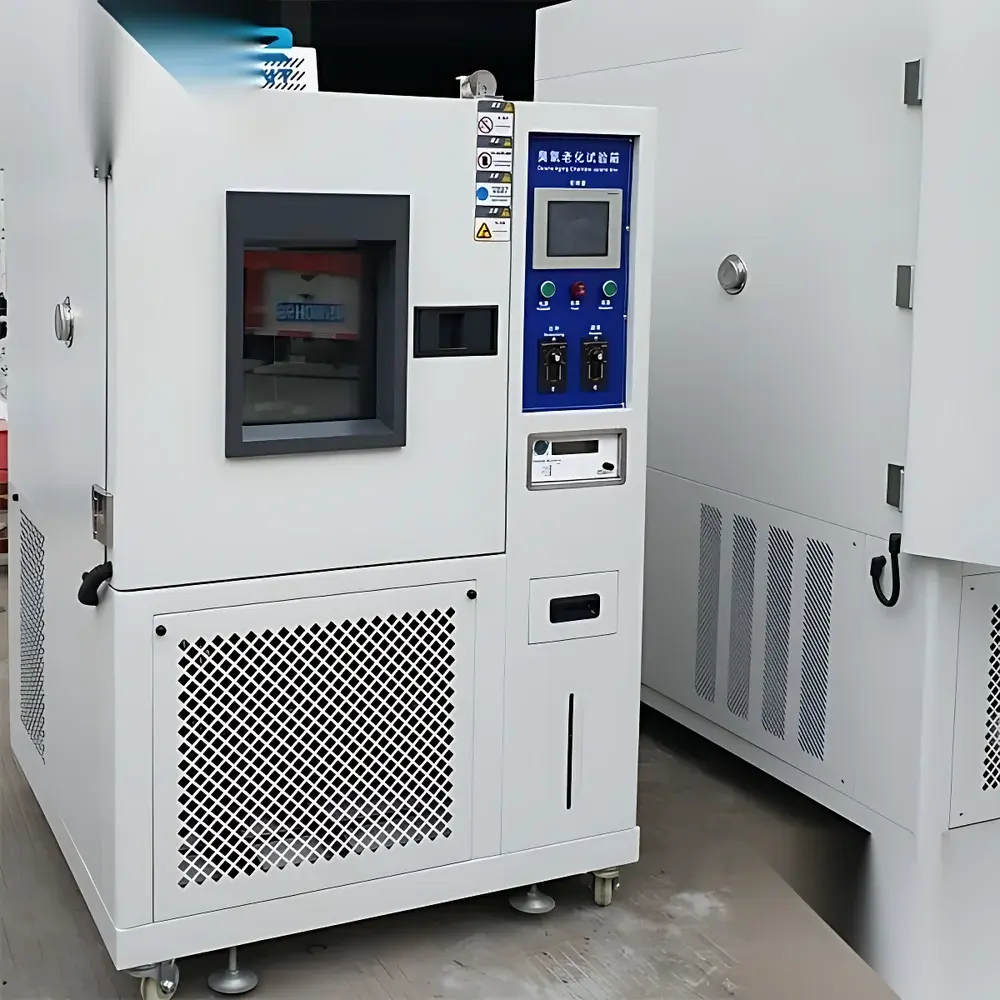
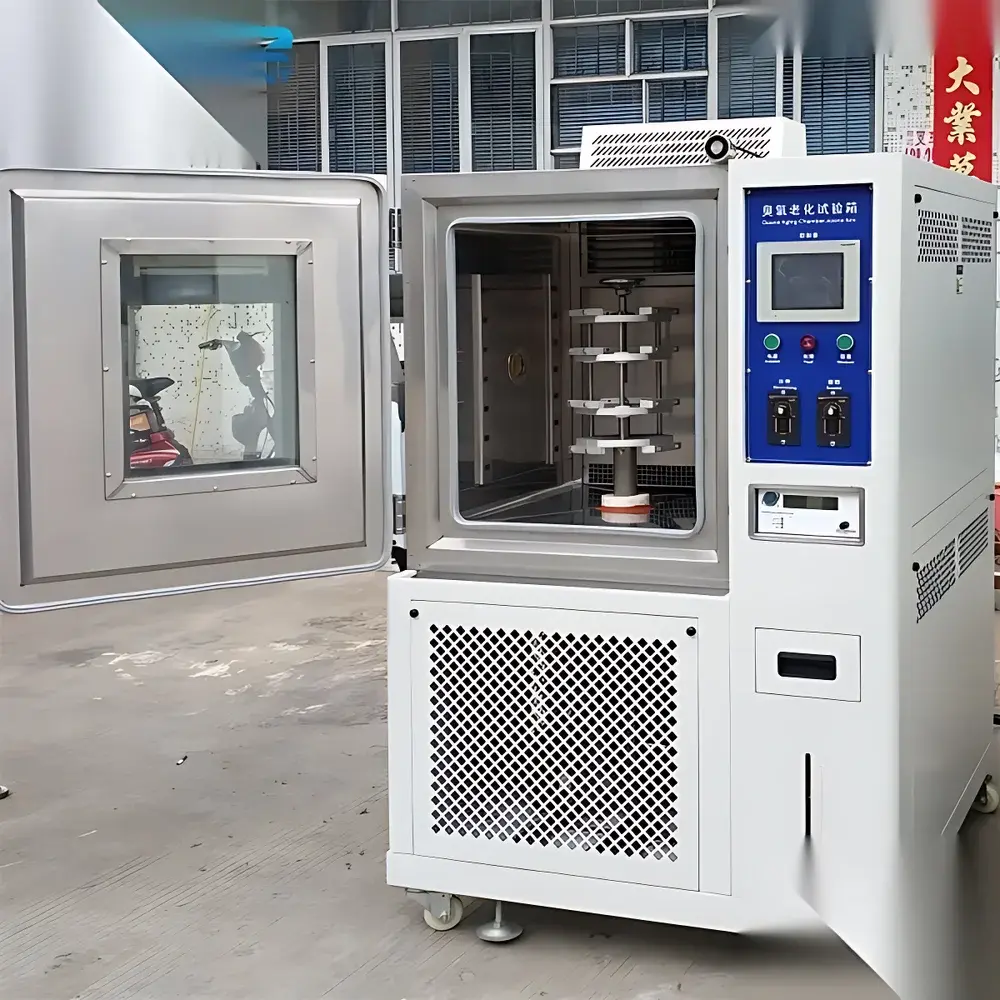
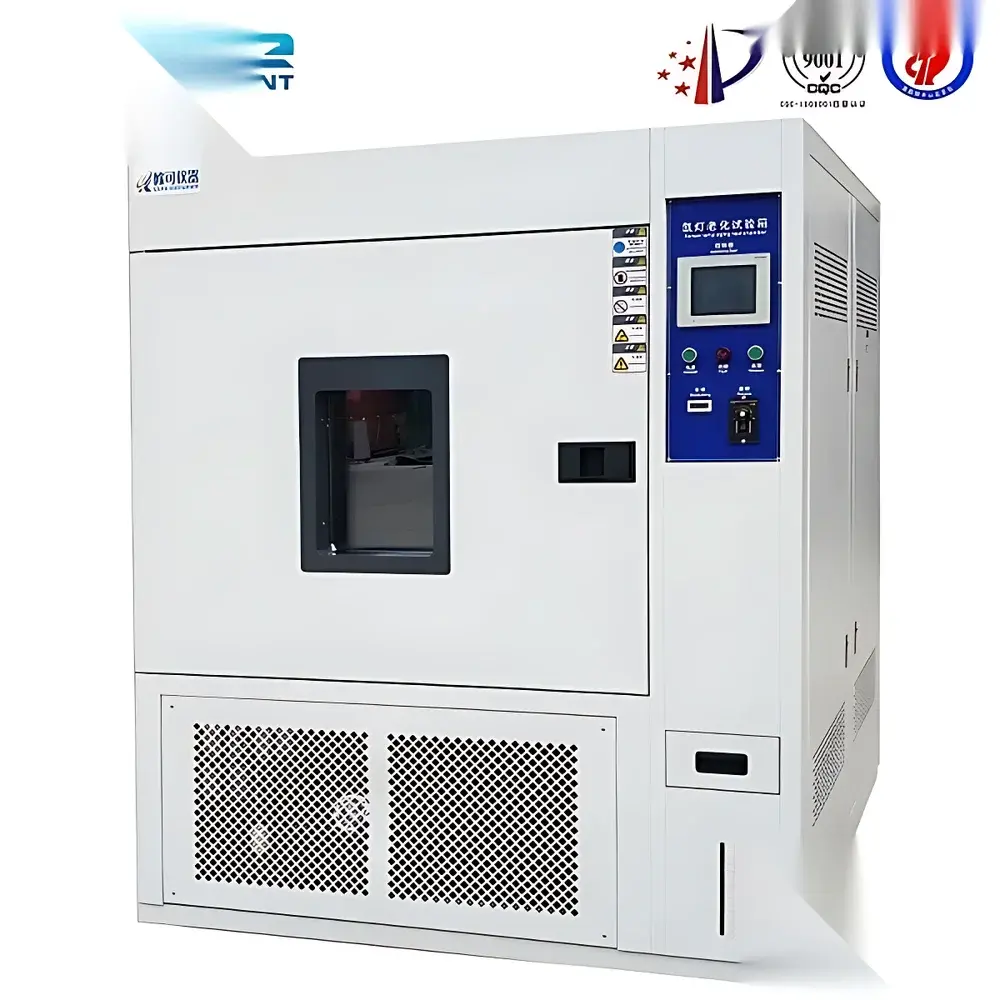
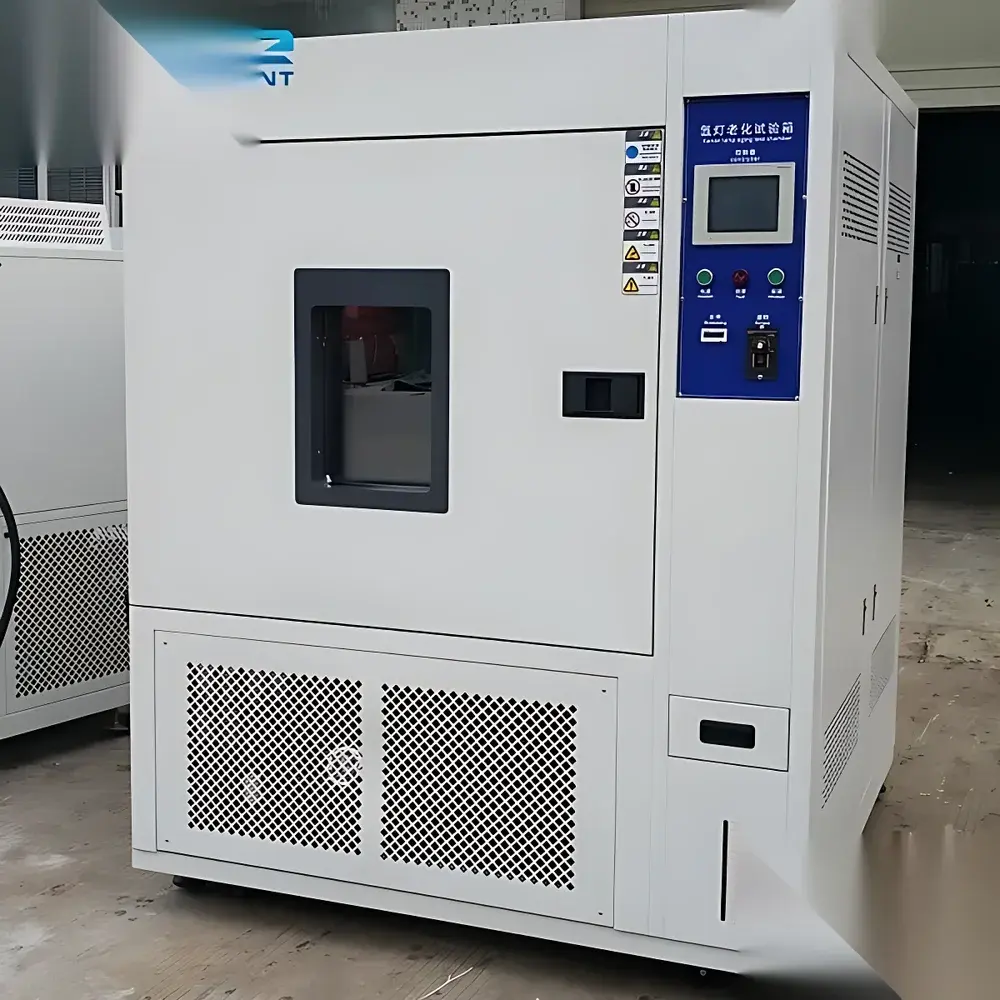
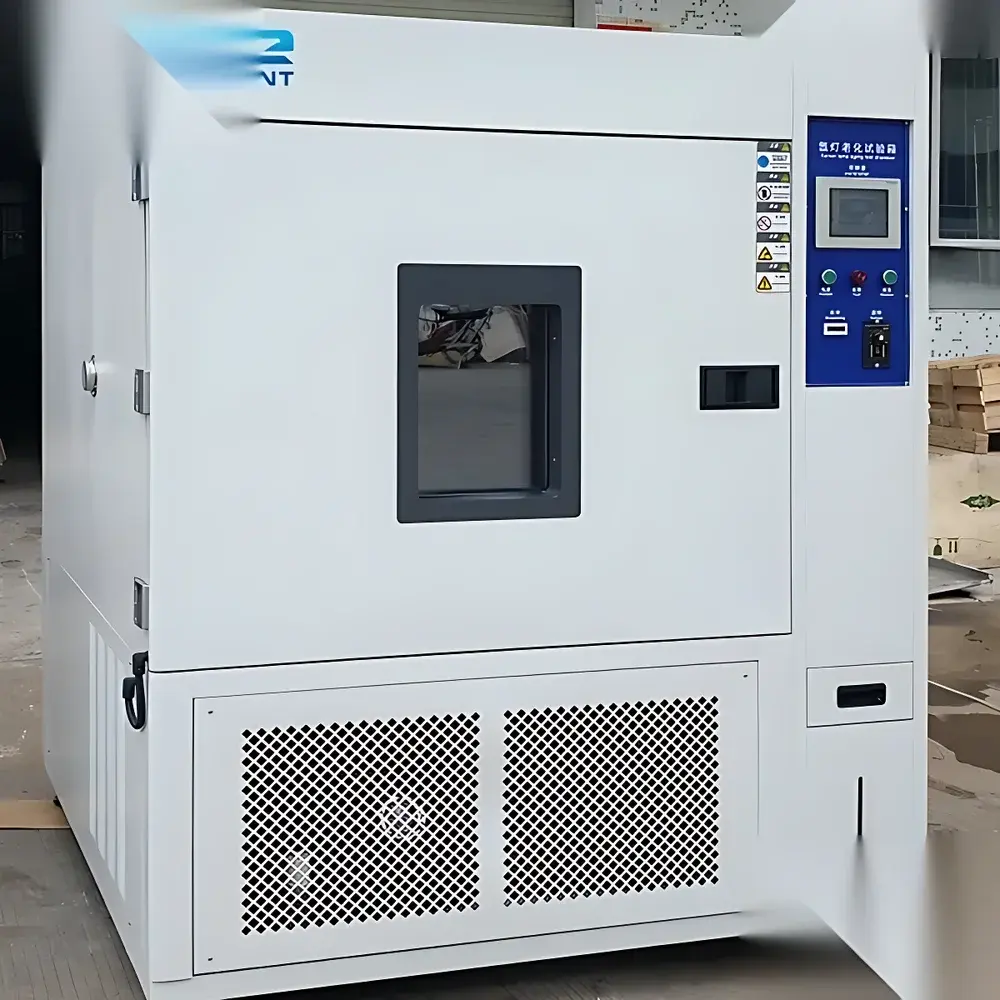
Ozone Aging Test Chamber QY-Series
| Brand | Other Brands |
|---|---|
| Origin | Imported |
| Manufacturer Type | General Distributor |
| Price | USD 6,300 (approx.) |
| Chamber Volume Options | 80 L / 225 L / 500 L / 1000 L |
| Temperature Range | 25–40 °C |
| Humidity Range | 30–65 % RH |
| Ozone Concentration Range | 50–1500 pphm |
| Temp. Uniformity | ±0.5 °C |
| Sample Rack | 360° continuous rotation at 1 rpm |
| Gas Flow Velocity | 8–16 mm/s |
| Ozone Generation | Silent Discharge Tube |
| Ozone Detection | Non-Dispersive UV Absorption Analyzer (≥5 yr lifespan) |
| Control System | Weilun Color Touchscreen + Siemens PLC |
| Compliance Standards | GB/T 7762–2003, GB/T 2951.21–2008, GB/T 11206–2009, ISO 1431-1:2004 |
Overview
The QY-Series Ozone Aging Test Chamber is an engineered environmental test system designed to evaluate the resistance of elastomeric and polymeric materials to oxidative degradation under controlled ozone exposure. It operates on the principle of accelerated aging via atmospheric ozone (O₃) generation and precise environmental regulation—specifically targeting surface cracking induced by ozone-induced chain scission in unsaturated rubber compounds (e.g., natural rubber, SBR, NBR). Unlike ambient exposure testing, this chamber maintains a closed-loop, fully sealed gas circulation system to ensure operator safety, measurement integrity, and repeatability across laboratory and quality assurance settings. The system complies with internationally recognized standards for ozone resistance evaluation—including ISO 1431-1:2004 (Rubber—Determination of resistance to ozone cracking—Part 1: Static strain method) and multiple Chinese national standards (GB/T 7762, GB/T 2951.21, GB/T 11206), enabling direct correlation with regulatory submissions and material certification workflows.
Key Features
- Sealed stainless-steel test chamber with integrated silent-discharge ozone generator—ensuring zero ambient leakage and consistent O₃ concentration stability.
- Non-dispersive ultraviolet (ND-UV) ozone analyzer with real-time digital display, continuous online monitoring, and ≥5-year operational lifetime—calibrated traceably to NIST-traceable reference standards.
- Precise ozone concentration control from 50 to 1500 pphm (parts per hundred million), adjustable via PID auto-tuning algorithm for minimal overshoot and steady-state deviation < ±15 pphm.
- Motor-driven rotating sample rack (1 rpm, 360° continuous rotation) engineered to emulate dynamic flexing per ISO 1431-1 Annex B; optional static fixture kits available for GB/T 7762-compliant static strain testing.
- Dual environmental control: independent PID-regulated temperature (25–40 °C, ±0.5 °C uniformity) and relative humidity (30–65 % RH) modules, both monitored and logged synchronously with ozone data.
- Industrial-grade control architecture: Weilun color touchscreen HMI paired with Siemens S7-1200 PLC—supporting recipe storage, alarm history, and audit-ready event logging.
- Gas flow velocity regulated between 8–16 mm/s to maintain laminar, uniform ozone distribution across specimen surfaces—critical for reproducible crack initiation timing.
- Integrated metrology interface compliant with ISO/IEC 17025 calibration requirements, allowing third-party verification of ozone concentration, temperature, and humidity sensors without system disassembly.
Sample Compatibility & Compliance
The QY-Series accommodates a wide range of specimen geometries through customizable internal dimensions (80 L to 1000 L working volumes), supporting standard dumbbell-shaped tensile specimens (ISO 37, ASTM D412), molded rings, extruded profiles, and finished components such as seals, gaskets, and cable jackets. All configurations meet mechanical and electrical safety requirements per IEC 61000-6-2 (EMC immunity) and IEC 61010-1 (safety of laboratory equipment). The sealed ozone loop design eliminates operator exposure risk and satisfies OSHA 29 CFR 1910.1200 (Hazard Communication) and EU Directive 2004/37/EC (carcinogen/mutagen exposure limits). Full compliance documentation—including test reports against ISO 1431-1, GB/T 7762, and USP (for pharmaceutical elastomer qualification)—is provided upon delivery.
Software & Data Management
Data acquisition and system operation are managed via embedded firmware with dual communication protocols: analog 4–20 mA output for integration into plant-wide SCADA systems, and RS232 serial interface for local PC-based logging. Time-stamped measurement records include ozone concentration (pphm), chamber temperature (°C), relative humidity (% RH), elapsed test time (hh:mm:ss), and rack rotation status—all stored internally for ≥30 days and exportable as CSV or PDF. Optional software add-ons support 21 CFR Part 11 compliance, including electronic signatures, audit trails, user role-based access control (admin/operator/viewer), and automatic backup to network drives. Raw sensor outputs are retained with full metadata (sensor ID, calibration date, uncertainty budget), satisfying GLP and GMP documentation requirements for QC laboratories.
Applications
- Evaluation of ozone resistance in automotive rubber components (hoses, bushings, CV joint boots) per SAE J2236 and OEM-specific specifications.
- Quality conformance testing of wire & cable insulation (PVC, EPDM, silicone) in accordance with IEC 60811-506 and UL 1581.
- Material development screening for synthetic elastomers (e.g., CR, FKM, ACM) where unsaturation level dictates susceptibility to ozonolysis.
- Pharmaceutical packaging component validation (rubber stoppers, plungers) under USP ozone stress conditions.
- Accelerated aging studies for aerospace sealing systems operating in high-altitude ozone-rich environments.
- Research into antioxidant efficacy and protective wax migration kinetics in tire tread compounds.
FAQ
What ozone concentration range is supported, and how is accuracy verified?
The chamber delivers 50–1500 pphm with ND-UV detection calibrated against primary ozone standards. Certificate of calibration includes uncertainty budget per ISO/IEC 17025.
Can the system perform both static and dynamic testing per ISO 1431-1?
Yes—standard configuration includes motorized 360° rotation (dynamic mode); static fixtures are supplied as optional accessories for strain-controlled static tests.
Is the ozone generation method safe for routine lab use?
Silent discharge ozone generation occurs within a fully enclosed, grounded stainless-steel loop with redundant safety interlocks (leak detection, over-concentration shutdown, thermal cutoff). No UV radiation or NOₓ byproducts are generated.
How is humidity controlled independently of ozone concentration?
A dedicated humidification module with PID-regulated steam injection and chilled-mirror RH sensor ensures stable moisture content without interfering with ozone stability or UV detection path integrity.
Does the system support remote monitoring and data export for LIMS integration?
Yes—RS232 enables ASCII protocol communication; optional Ethernet module supports Modbus TCP and OPC UA for seamless LIMS/ELN connectivity.



