
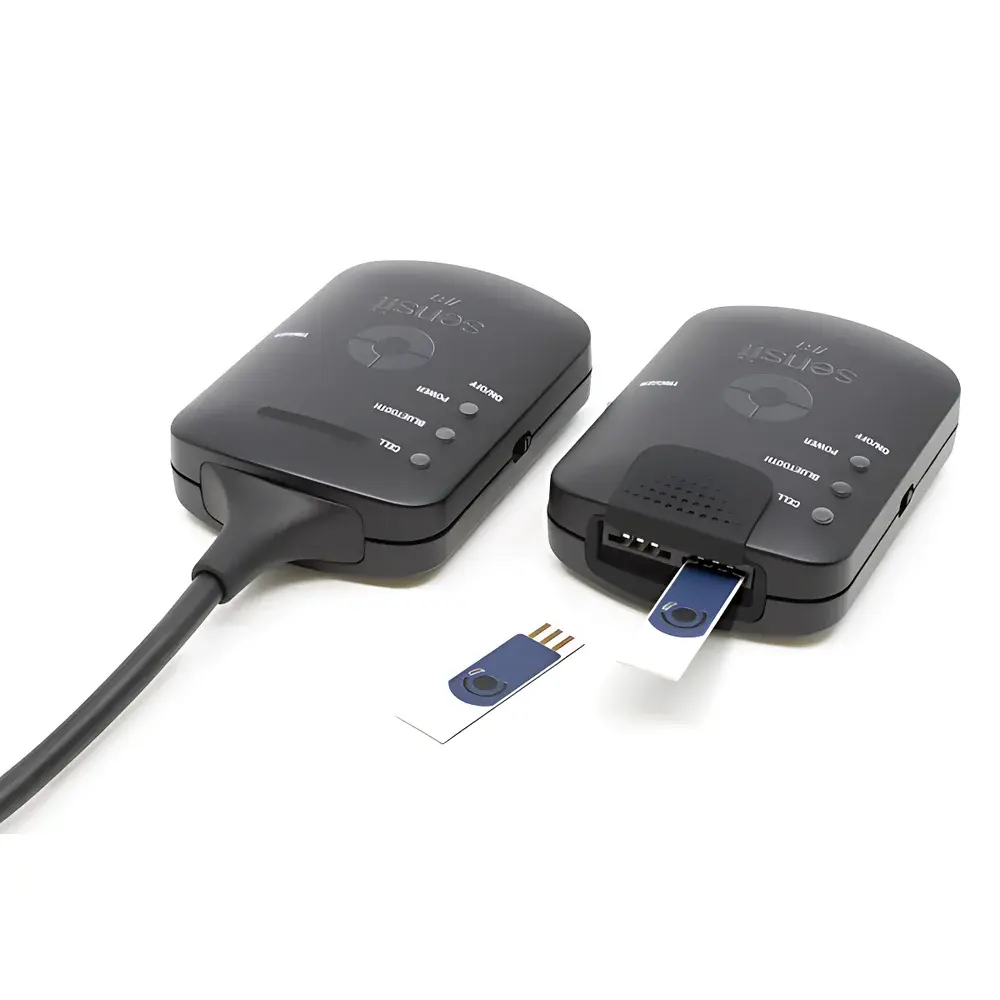
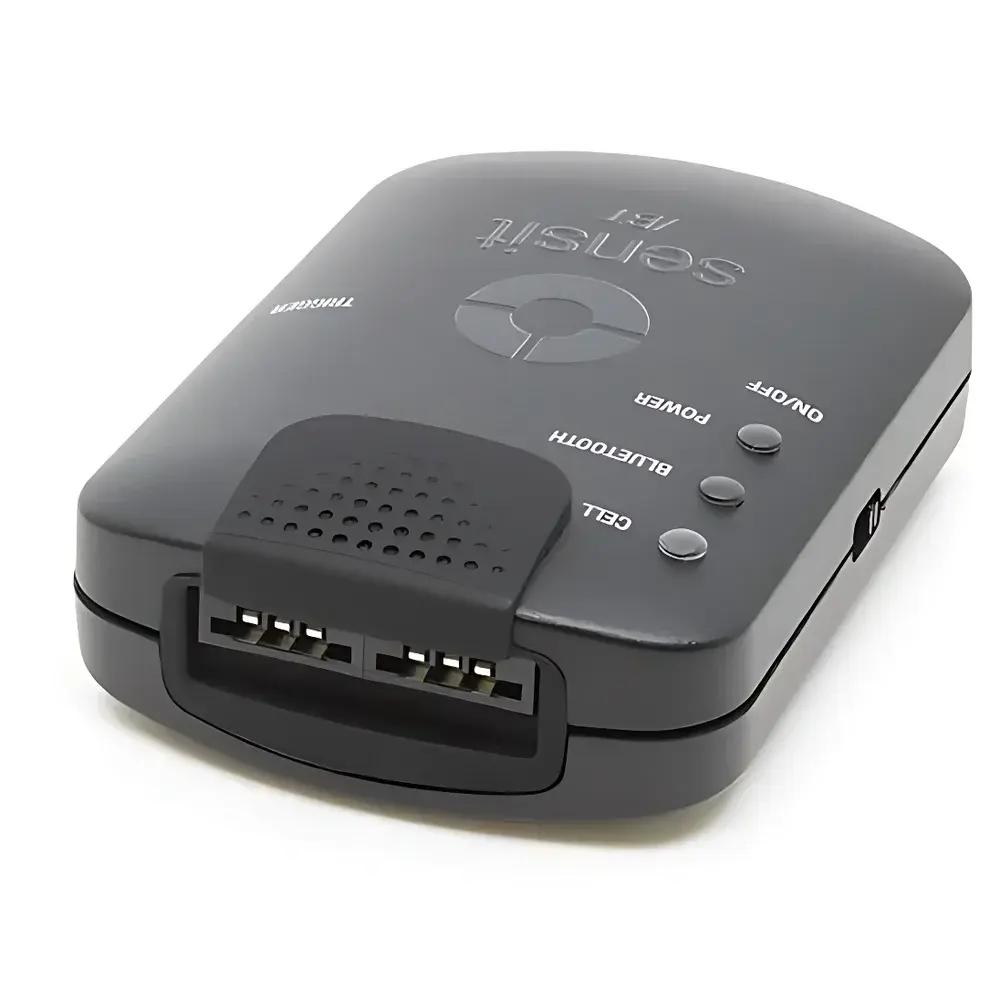
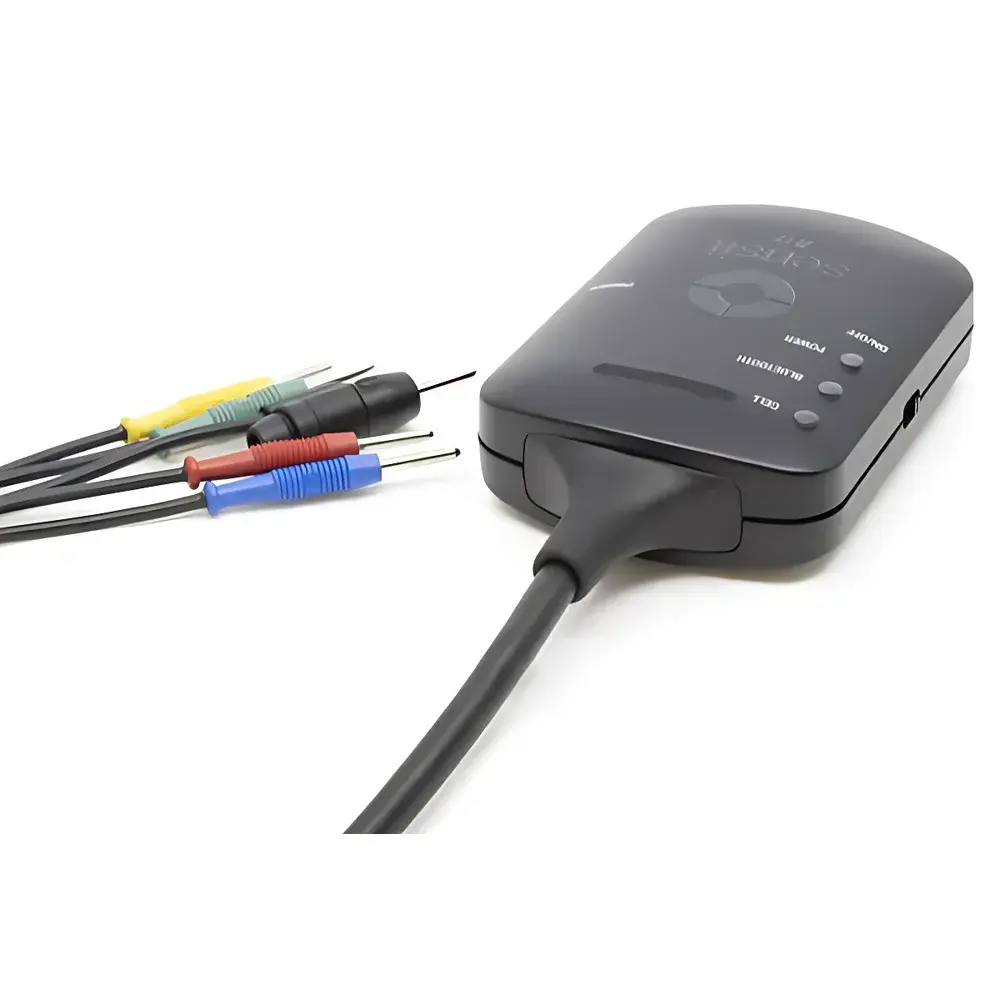
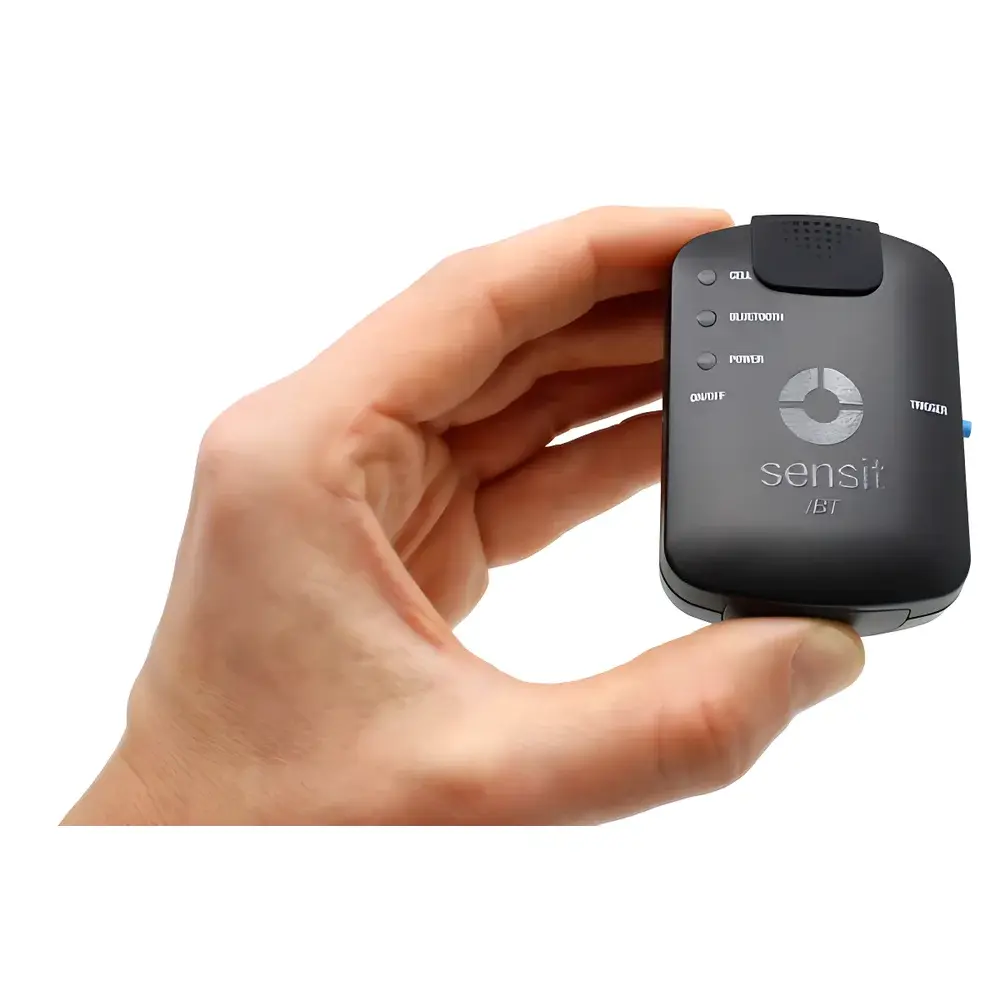
PalmSens Sensit_BT Portable Dual-Channel Electrochemical Workstation with Bluetooth and Rechargeable Li-ion Battery
| Brand | PalmSens |
|---|---|
| Origin | Netherlands |
| Model | Sensit_BT |
| Instrument Type | Portable Electrochemical Workstation |
| Current Range | 100 nA to 3 mA |
| Current Accuracy | < 1% of selected current range |
| Potential Accuracy | ≤ 0.5% |
| Potentiostatic Range | −1.7 V to +2.0 V |
| Electrochemical Impedance Spectroscopy (EIS) Frequency Range | 0.016 Hz to 200 kHz |
Overview
The PalmSens Sensit_BT is a compact, dual-channel potentiostat/galvanostat engineered for high-fidelity electrochemical measurements in resource-constrained or field-deployed environments. Built upon a low-noise analog front-end and precision digital control architecture, it implements standard three-electrode electrochemical techniques—including cyclic voltammetry (CV), linear sweep voltammetry (LSV), chronoamperometry (CA), chronopotentiometry (CP), and electrochemical impedance spectroscopy (EIS)—with full compliance to fundamental electrochemical measurement principles. Its embedded 32-bit ARM microcontroller ensures deterministic timing, minimal signal drift, and robust synchronization between voltage excitation and current response acquisition. The device operates as a true bipotentiostat, enabling independent control of two working electrodes against a shared reference and counter electrode—ideal for comparative sensor studies, differential pulse analysis, or dual-sensor calibration protocols. With dimensions of only 75 × 55 × 23 mm and an integrated rechargeable lithium-ion battery delivering up to 12 hours of continuous operation, the Sensit_BT eliminates reliance on external power supplies or tethered USB connections, making it suitable for unattended monitoring, mobile lab workflows, and point-of-need diagnostics.
Key Features
- Dual-channel potentiostat/galvanostat architecture supporting simultaneous or independent electrochemical measurements on two working electrodes
- Integrated Bluetooth 4.2 (BLE) module compliant with Bluetooth SIG standards for secure, low-latency wireless communication with host devices
- Rechargeable lithium-ion battery with smart charging circuitry, overvoltage/overcurrent protection, and real-time state-of-charge monitoring via firmware
- Wide dynamic current range spanning eight decades (100 nA to 3 mA) with auto-ranging capability and programmable gain selection
- Precise potential control within ±1.7 V to +2.0 V vs. reference, with resolution better than 100 µV and long-term stability < 10 µV/hour
- Full EIS support from ultra-low frequency (0.016 Hz) to high-frequency (200 kHz), implemented using digital sine-wave synthesis and lock-in detection algorithms
- Ruggedized ABS+PC housing rated IP54 for dust resistance and limited water splashing protection—designed for laboratory, industrial, and outdoor use
Sample Compatibility & Compliance
The Sensit_BT interfaces seamlessly with standard electrochemical cells using conventional Ag/AgCl, SCE, or pseudo-reference electrodes and carbon, platinum, or screen-printed electrode (SPE) configurations. It supports common aqueous and non-aqueous electrolytes and is compatible with disposable and reusable sensor platforms used in food safety (e.g., pesticide residue detection), environmental monitoring (e.g., heavy metal quantification in surface water), clinical biosensing (e.g., glucose or lactate detection), and wearable electrochemical patch development. From a regulatory standpoint, its hardware design and firmware architecture align with IEC 61326-1 (EMC for laboratory equipment) and IEC 61010-1 (safety requirements for electrical equipment). While not certified as a medical device, its performance characteristics meet typical validation criteria referenced in ISO 17025-accredited laboratories and support data integrity practices consistent with GLP and FDA 21 CFR Part 11 when used with audit-trail-enabled software.
Software & Data Management
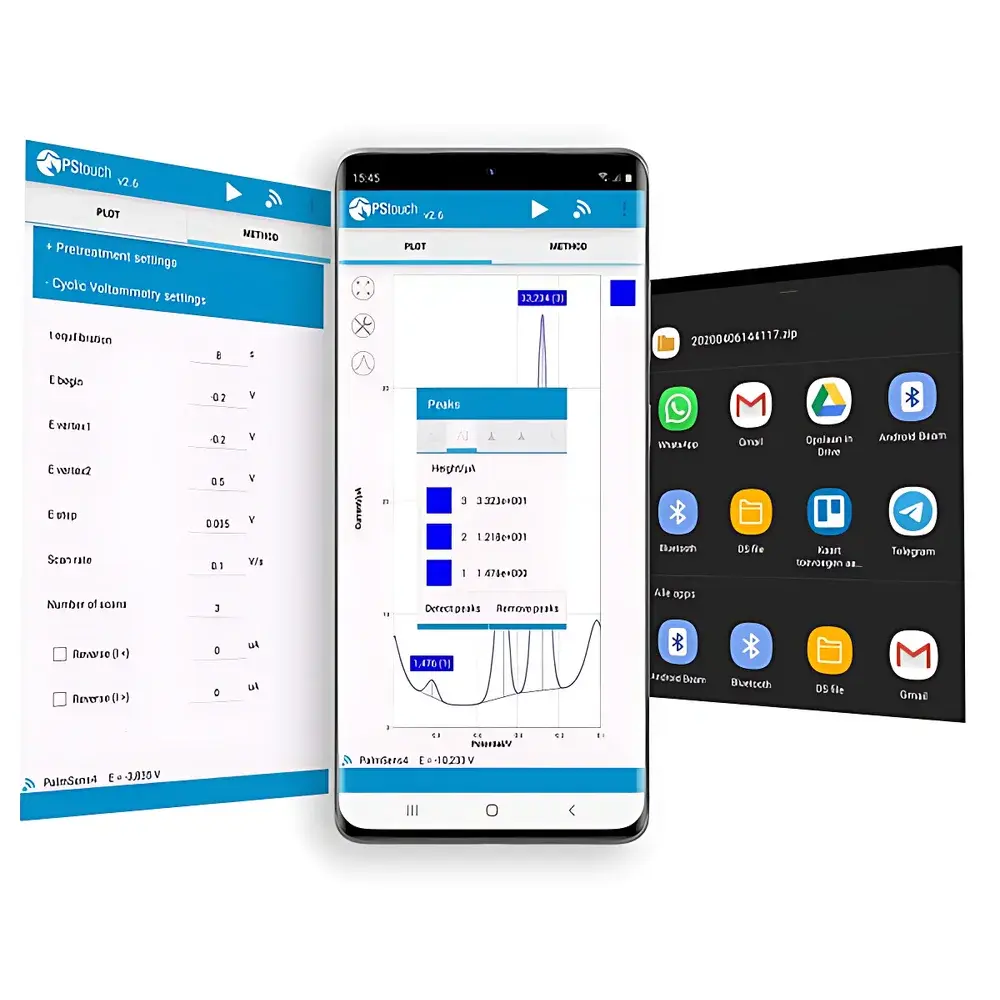
The Sensit_BT is fully supported by two native applications: PSTrace (Windows/macOS desktop) and PSTouch (Android). Both implement identical measurement protocols, parameter scripting, real-time visualization, and post-processing tools—including background subtraction, peak integration, equivalent circuit modeling (via ZView-compatible export), and Nyquist/Bode plot generation. PSTrace includes advanced features such as sequence-based experiment automation, multi-step waveform definition, and raw binary data export in HDF5 format for traceability and third-party analysis. PSTouch provides intuitive touchscreen controls, offline data capture with local SQLite storage, and encrypted Bluetooth pairing. All software versions enforce user authentication, session logging, and timestamped metadata embedding—enabling reproducible workflows and facilitating compliance with quality management systems requiring electronic record retention.
Applications
- On-site water quality assessment: rapid detection of Cu²⁺, Pb²⁺, Cd²⁺, and As(III) via anodic stripping voltammetry (ASV) without sample transport
- Food authenticity and contaminant screening: quantification of nitrite, sulfite, or histamine in meat, dairy, and seafood matrices using amperometric biosensors
- Point-of-care diagnostics: integration with microfluidic chips for label-free detection of cardiac biomarkers (e.g., troponin I) or infectious disease antigens
- Corrosion monitoring in infrastructure: in-situ EIS evaluation of coating degradation on steel rebar embedded in concrete
- Academic teaching labs: hands-on instruction in electroanalytical fundamentals with portable, student-safe instrumentation
- Wearable electrochemical sensing: battery-powered, low-power operation enables integration into flexible electronics for sweat metabolite tracking
FAQ
Is the Sensit_BT compatible with custom electrodes or third-party sensor strips?
Yes—the device uses standard banana-jack and BNC connectors for WE, RE, and CE terminals, supporting all common electrode geometries and commercial screen-printed electrode (SPE) formats.
Can EIS measurements be performed without a computer or smartphone?
No—real-time control, parameter configuration, and data acquisition require connection to PSTrace or PSTouch; however, measurements can be initiated remotely and logged autonomously once started.
What is the battery lifetime under continuous EIS operation at 1 kHz?
Typical runtime is 8–10 hours at moderate sampling rates; battery life scales inversely with EIS frequency sweep density and active channel count.
Does the firmware support user-defined waveform generation?
Yes—PSTrace allows creation of arbitrary potential/time profiles via CSV import or graphical editor, with execution fidelity maintained across the full −1.7 V to +2.0 V range.
How is data security ensured during Bluetooth transmission?
All BLE communication uses AES-128 encryption, device-pairing authentication, and session-key rotation—meeting Bluetooth SIG v4.2 security recommendations for sensitive scientific data.
Related Products





