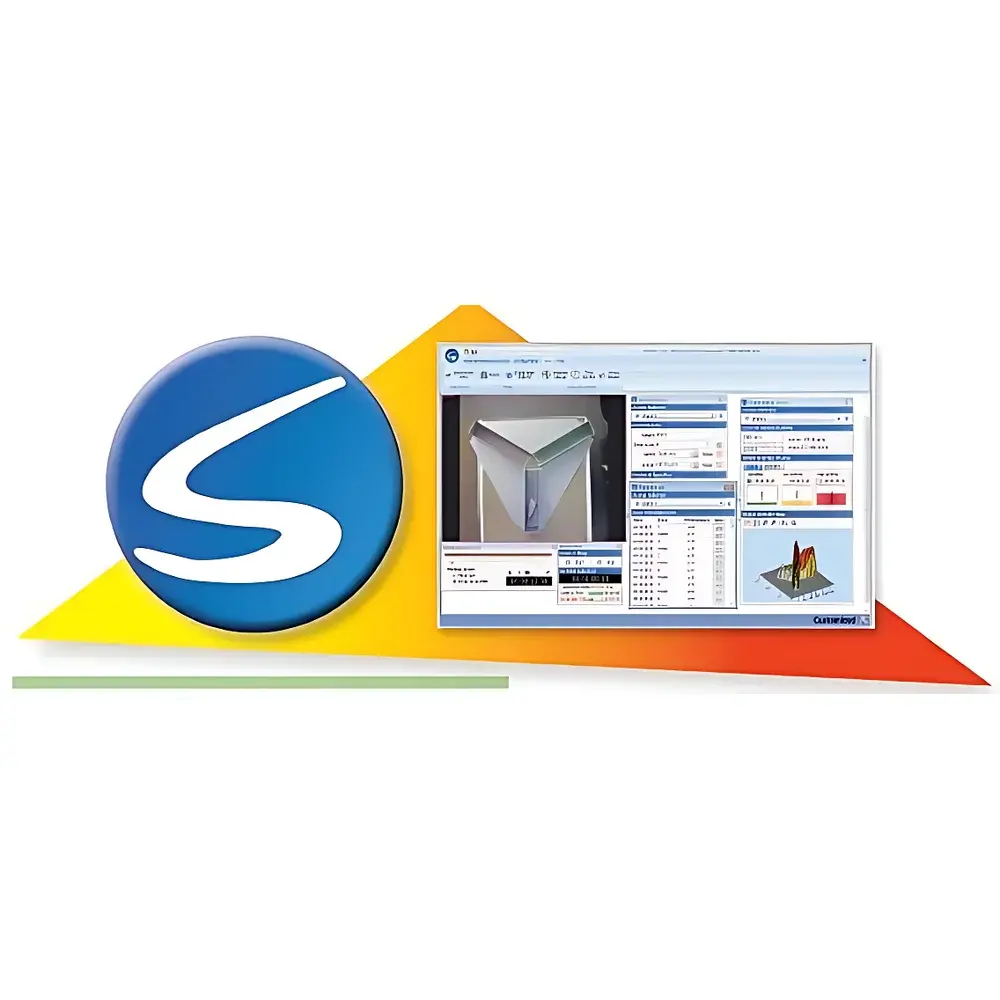
Panlab SMART V3.0 Animal Behavior Tracking Software System
| Brand | Panlab |
|---|---|
| Origin | Spain |
| Model | SMART V3.0 |
| Operating System | Windows 7 (32/64-bit) |
| Modular Architecture | CS, WM, PM, OF, CPP, TY, FST, MA, GA, SI, TW, IO |
| Max Simultaneous Zones | 100 |
| Supported Species | Rodents (mice, rats), Zebrafish (larvae), Social Cohorts (up to 8 subjects) |
| Video Input Compatibility | USB, FireWire, Analog (via CONVANAUSB converter), Built-in Webcam |
| Real-time Analysis | Yes |
| Data Export Format | CSV, Excel-compatible, Graphical Plots (Line, Bar, Heatmap) |
| Compliance | GLP-supportive metadata logging, FDA 21 CFR Part 11–ready audit trail (with optional secure user authentication module) |
Overview
The Panlab SMART V3.0 Animal Behavior Tracking Software System is a modular, research-grade video analysis platform engineered for quantitative ethological assessment in preclinical neuroscience, pharmacology, and behavioral genetics. Built upon 15+ years of iterative development in computer vision–based behavioral phenotyping, SMART V3.0 implements dual-algorithmic detection: background-subtraction–driven trajectory tracking for spatial metrics (e.g., distance traveled, zone transitions, velocity profiles), and frame-difference–based Global Activity (GA) analysis optimized for immobility quantification in depression- and anxiety-related paradigms. Its architecture supports both single-subject high-fidelity tracking and high-throughput multi-zone experiments—such as zebrafish larval screening in 96-well plates—without compromising temporal resolution or analytical reproducibility. Designed explicitly for compliance-conscious laboratories, SMART V3.0 embeds experiment-level metadata (investigator ID, subject cohort, treatment group, arena configuration, timing protocol) directly into each data file, enabling traceable, auditable workflows aligned with GLP and ISO/IEC 17025 documentation standards.
Key Features
- Modular software architecture: Base platform + 11 optional functional modules (SMART-CS, SMART-WM, SMART-PM, SMART-OF, SMART-CPP, SMART-TY, SMART-FST, SMART-MA, SMART-GA, SMART-SI, SMART-TW) plus SMART-IO digital I/O interface
- Triwise™ three-point recognition engine: Robust head–body–tail identification for automated scoring of rearing, rotation, and stretching behaviors in rodents—validated against manual observer consensus under variable lighting and contrast conditions
- Multi-zone concurrent analysis: Up to 100 independently defined arenas per session; grid-based zone editor optimized for multi-well zebrafish assays
- Dual-mode motion quantification: Trajectory-based path analysis + frame-difference–derived activity index—enabling precise immobility detection in forced swim test (FST), tail suspension test (TST), and fear conditioning
- Real-time runtime panels: Live display of zone entries, speed histograms, event logs (e.g., freezing bouts), and behavior-specific counters during acquisition
- Cross-platform video compatibility: Native support for USB 2.0/3.0, FireWire, analog cameras (via included CONVANAUSB converter), and integrated laptop webcams
- Configurable experimental logic: User-defined stop conditions based on zone entry count, sequence, dwell time, or cumulative activity thresholds
Sample Compatibility & Compliance
SMART V3.0 is validated for use with murine models (C57BL/6, BALB/c, Sprague-Dawley, Wistar), larval zebrafish (Danio rerio), and small avian or invertebrate models where contrast-based segmentation remains reliable. It accommodates standard behavioral apparatus—including Morris water maze, elevated plus maze, open field, light-dark box, Barnes maze, T/Y-maze, and conditioned place preference chambers—with geometry-agnostic arena definition tools. The software adheres to core principles of Good Laboratory Practice (GLP): all experimental parameters, calibration settings, and region-of-interest definitions are saved within the native .smr data container. Optional secure login and electronic signature modules enable alignment with FDA 21 CFR Part 11 requirements for regulated neuropharmacology studies. No proprietary hardware lock-in: third-party HD cameras and frame grabbers meeting DirectShow/WDM specifications operate without driver modification.
Software & Data Management
Data integrity is enforced via embedded metadata tagging: each exported dataset includes timestamps, operator credentials, subject identifiers (with customizable database fields for sex, strain, treatment history), and full configuration snapshots. Statistical outputs export natively to CSV and Excel-compatible formats; graphical summaries (line plots, heatmaps, bar charts) are generated in real time and fully customizable—no external spreadsheet manipulation required. The SMART-GA module produces 2D activity distribution maps, while SMART-MA enables parallel statistical aggregation across hundreds of micro-arenas. All modules share a unified file structure; upgrades (e.g., adding SMART-SI after initial purchase of SMART-CS) require only license activation—no reinstallation or data migration. Backup and version control are supported through standard Windows file system protocols; raw video streams may be archived locally or routed to network-attached storage via RECORD-IT integration.
Applications
- Locomotor activity & exploratory behavior: Open field, novel object recognition, wall-rearing, thigmotaxis
- Anxiety-related phenotypes: Elevated plus maze, zero maze, light-dark transition, open field center avoidance
- Depression-like endpoints: Forced swim test, tail suspension test, sucrose preference (via activity-correlated consumption inference)
- Spatial learning & memory: Morris water maze, radial arm maze, Barnes maze, contextual/cued fear conditioning
- Addiction & reward processing: Conditioned place preference (CPP), odor preference, drug-induced locomotor sensitization
- Social interaction dynamics: Resident-intruder, three-chamber sociability, reciprocal social interaction (up to 8 tracked subjects)
- Zebrafish larval screening: Multi-well photomotor response, thigmotaxis, scototaxis, habituation assays
- Translational biomarker discovery: Quantitative gait analysis, circadian activity profiling, seizure-induced hyperactivity modeling
FAQ
Does SMART V3.0 require dedicated hardware or proprietary cameras?
No. SMART V3.0 operates with standard USB, FireWire, or analog video sources. The included CONVANAUSB converter enables plug-and-play integration with legacy analog systems.
Can I upgrade modules incrementally after initial purchase?
Yes. All modules are licensed independently and fully interoperable; no software reinstallation is needed when adding SMART-TW, SMART-SI, or SMART-MA post-deployment.
Is real-time behavioral scoring possible during acquisition?
Yes. Runtime Panels provide live visualization of zone occupancy, speed distribution, freezing episodes, and Triwise-detected rearing events—enabling immediate experimental intervention if required.
How does SMART handle low-contrast or unevenly lit arenas (e.g., elevated plus maze open arms)?
Its adaptive background subtraction algorithm allows per-zone contrast and threshold tuning, ensuring stable tracking across heterogeneous illumination gradients without manual frame-by-frame correction.
What level of validation documentation is provided for regulatory submissions?
Panlab supplies IQ/OQ documentation templates, algorithm verification reports, and traceability matrices. With optional audit-trail configuration, SMART V3.0 meets baseline requirements for GLP-compliant study reporting and 21 CFR Part 11–aligned electronic records.