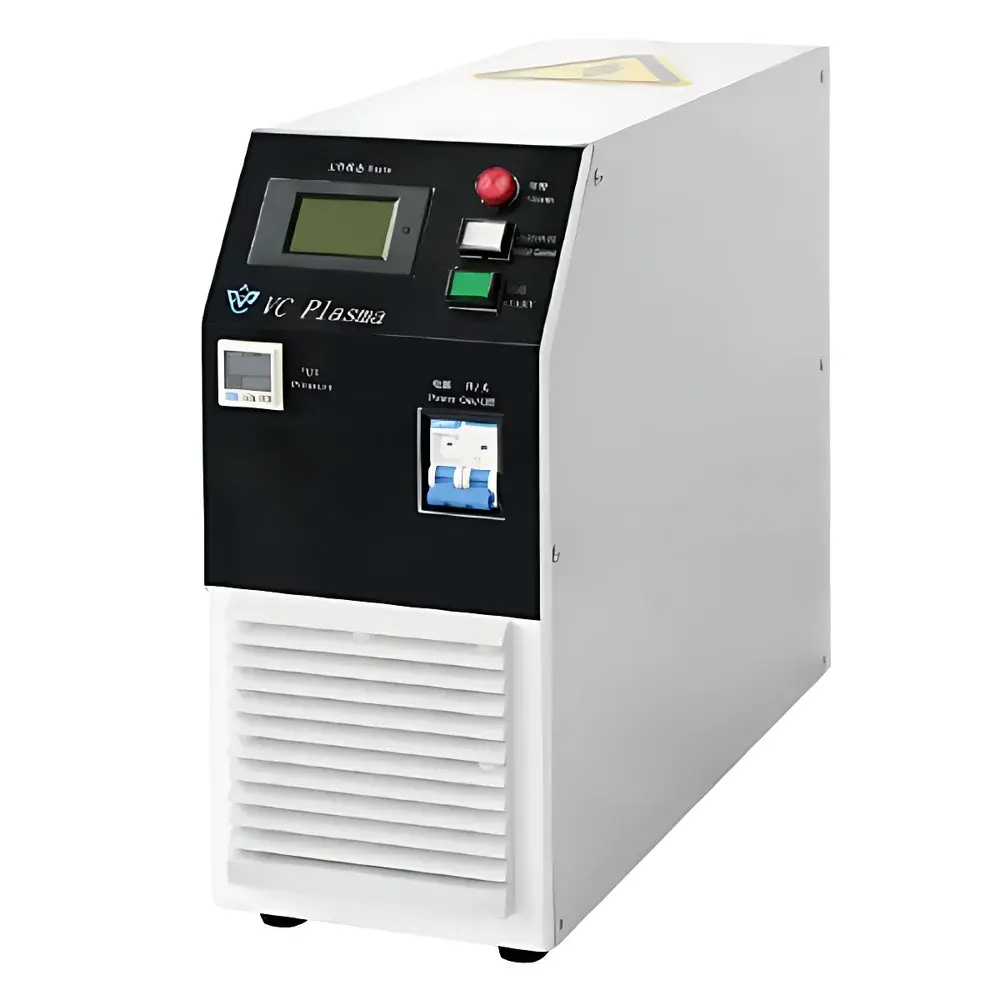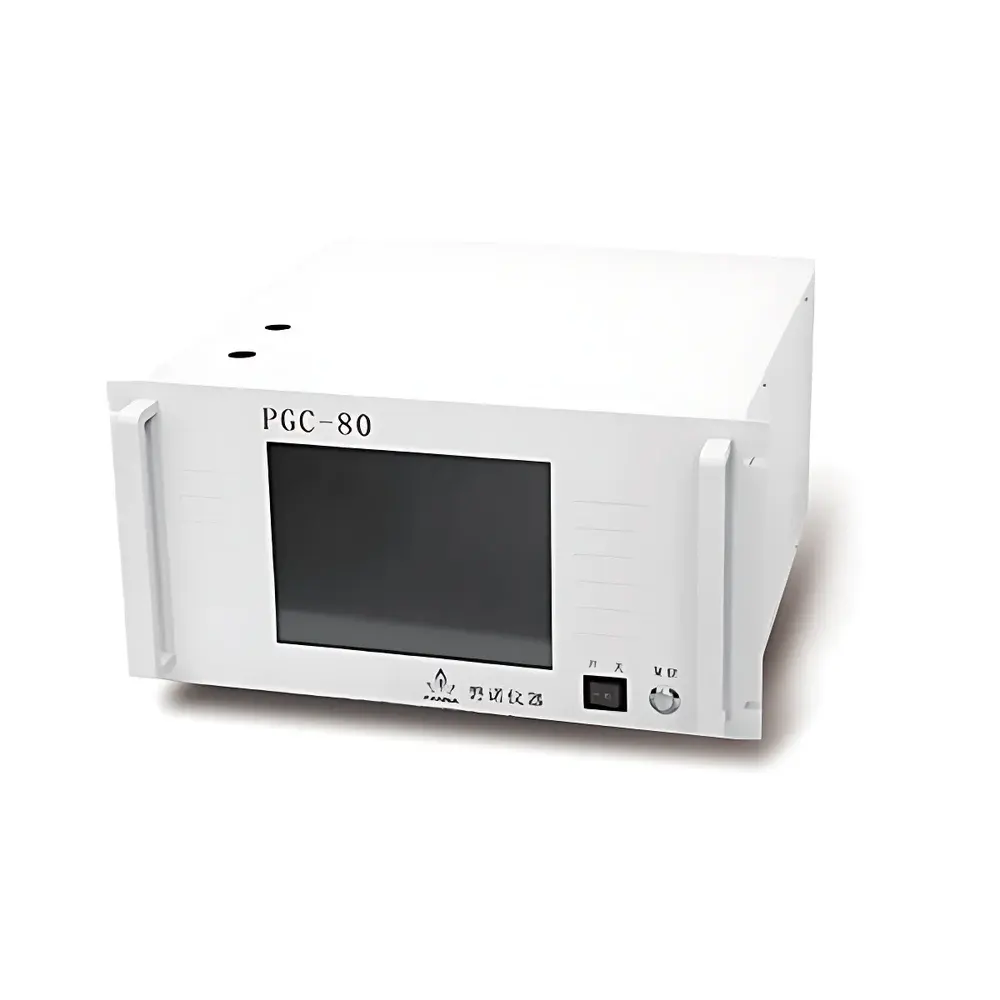
Pannatek PGC-80 Online Gas Chromatograph System for C₂–C₅ Low-Carbon VOCs Analysis
| Brand | Pannatek |
|---|---|
| Origin | Jiangsu, China |
| Manufacturer Type | Original Equipment Manufacturer (OEM) |
| Country of Origin | China |
| Model | PGC-80 / Low-Carbon VOCs Analysis |
| Price Range | USD 14,000 – 70,000 |
| Detection Range | 0–300 ppb (cryo-trap mode) |
| Detection Limit | ≤0.05 ppb (propane, FID) |
| Repeatability | RSD ≤3% (at 10 ppb propane) |
| Cycle Time | 15–30 min |
| Cryogenic Trap Temperature | −20 °C |
| Flash Heating Rate | up to 40 °C/s |
| Detector | Flame Ionization Detector (FID) |
| Carrier Gas | Ultra-High-Purity Nitrogen or Zero-Air (≥99.999%) |
| Fuel Gas | Ultra-High-Purity Hydrogen (≥99.999%) |
| Make-up/Support Air | Zero-Air (hydrocarbons <20 ppb) |
| Power | <800 W, 220 V AC / 50 Hz |
| Output Interfaces | 4–20 mA, RS232/RS485, Ethernet |
| Enclosure | 19″ rack-mount, 6U height |
| Flow Control | Electronic Pressure Control (EPC), resolution 0.01 psi |
| Sample Introduction | Diaphragm pump + precision Mass Flow Controller (MFC) |
| Column Configuration | Pre-column with backflush capability |
| Surface Treatment | Deactivated and passivated flow path |
Overview
The Pannatek PGC-80 Online Gas Chromatograph System is an industrial-grade, fully automated analytical platform engineered for continuous, real-time quantification of low-boiling volatile organic compounds (VOCs) in the C₂–C₅ range—including ethane, ethene, propane, propene, n-butane, isobutane, butenes, pentanes, and isopentane. Built upon proven gas chromatographic separation principles, the system integrates cryogenic preconcentration, rapid thermal desorption, and selective column backflushing to achieve high sensitivity, robustness, and operational stability under unattended field conditions. Unlike conventional grab-sampling or thermal desorption GC systems, the PGC-80 employs a −20 °C semiconductor-cooled trap to concentrate trace-level hydrocarbons from ambient or stack air—delivering effective enrichment factors >50× over room-temperature trapping. This enables reliable detection at sub-ppb levels without compromising cycle time or column longevity.
Key Features
- Cryogenic enrichment at −20 °C using solid-state thermoelectric cooling—optimized for retention and recovery of highly volatile C₂–C₅ species with minimal breakthrough.
- Ultra-rapid flash desorption with programmable heating rates up to 40 °C/s, yielding narrow injection bands (<50 ms width) and improved chromatographic resolution.
- Backflush-capable dual-column configuration: non-target C₆⁺ heavy hydrocarbons are actively diverted prior to the analytical column, reducing analysis time by 30–40% and preventing column fouling.
- Fully deactivated flow path—including fused silica transfer lines, passivated stainless-steel valves, and silanized traps—to eliminate adsorption artifacts and ensure quantitative accuracy across the full dynamic range.
- Electronic Pressure Control (EPC) for carrier gas, hydrogen, and zero-air streams—maintaining pressure stability within ±0.01 psi for superior retention time reproducibility (RSD <0.1% over 72 h).
- Integrated diaphragm sampling pump and mass flow controller (MFC) for precise, temperature-compensated volumetric intake—supporting both ambient air and ducted exhaust stream analysis.
Sample Compatibility & Compliance
The PGC-80 is validated for direct analysis of unmodified gaseous samples including ambient urban air, fence-line emissions, process vent streams, and refinery off-gas matrices. It meets functional requirements outlined in EPA Method TO-15 (for VOCs), ASTM D6420-18 (for gaseous hydrocarbon analysis), and ISO 16017-1:2000 (indoor air—part 1). The system supports GLP-compliant data integrity through audit-trail-enabled firmware, timestamped raw chromatograms, and user-access-level controls aligned with FDA 21 CFR Part 11 principles. All wetted materials comply with USP Class VI biocompatibility standards, and surface passivation adheres to ASTM A967 for stainless-steel deactivation.
Software & Data Management
The embedded Linux-based acquisition engine runs Pannatek ChromaView™ v3.x software, offering real-time chromatogram visualization, automated peak integration using iterative Gaussian deconvolution, and customizable calibration curve management (linear, quadratic, or multi-point weighted). Data export supports CSV, XML, and netCDF formats; alarm thresholds trigger configurable relay outputs and email/SMS notifications via SMTP/Modbus TCP. Remote diagnostics, firmware updates, and method deployment are performed securely over TLS-encrypted Ethernet or optional 4G LTE module. All chromatographic metadata—including valve timing, temperature ramps, EPC setpoints, and MFC flow logs—are archived with SHA-256 hash verification for regulatory review.
Applications
- Continuous ambient air monitoring networks in urban and suburban environments—tracking photochemical precursor concentrations (e.g., propane, isopentane) for ozone modeling and source apportionment.
- Fence-line and stack emission monitoring at petrochemical plants, refineries, and polymer manufacturing facilities—supporting compliance with local VOC emission limits (e.g., China’s GB 31571–2015, EU IED BREFs).
- Process safety and leak detection systems—deployed in compressor stations, LNG terminals, and catalytic cracking units for early warning of hydrocarbon leaks exceeding 100 ppb.
- Research-grade kinetic studies requiring high-frequency C₂–C₅ speciation—such as atmospheric oxidation mechanisms or catalyst deactivation profiling under realistic feed compositions.
FAQ
What sample matrices are compatible with the PGC-80?
Ambient air, diluted stack gas (dilution ratio ≥10:1), and clean synthetic air standards. Humidity must be <80% RH non-condensing; particulate filtration (0.3 µm) is required upstream.
Can the system operate unattended for extended periods?
Yes—designed for 30-day maintenance intervals. Includes self-diagnostics for trap efficiency, detector baseline drift, and column bleed; alerts notify users via SNMP traps or Modbus register flags.
Is method validation support available?
Pannatek provides IQ/OQ documentation templates, certified reference gas protocols (NIST-traceable), and on-site PQ execution support per ISO/IEC 17025 guidelines.
How is calibration maintained over time?
Automated span-check routines inject certified standard gases at user-defined intervals (e.g., every 6 or 24 hours); software calculates correction factors and logs all calibration events with electronic signatures.
Does the system meet cybersecurity requirements for industrial OT networks?
Yes—supports IEEE 802.1X authentication, TLS 1.2+ encryption, and configurable firewall rules. Firmware signing prevents unauthorized code execution; secure boot is enabled by default.
Related Products