
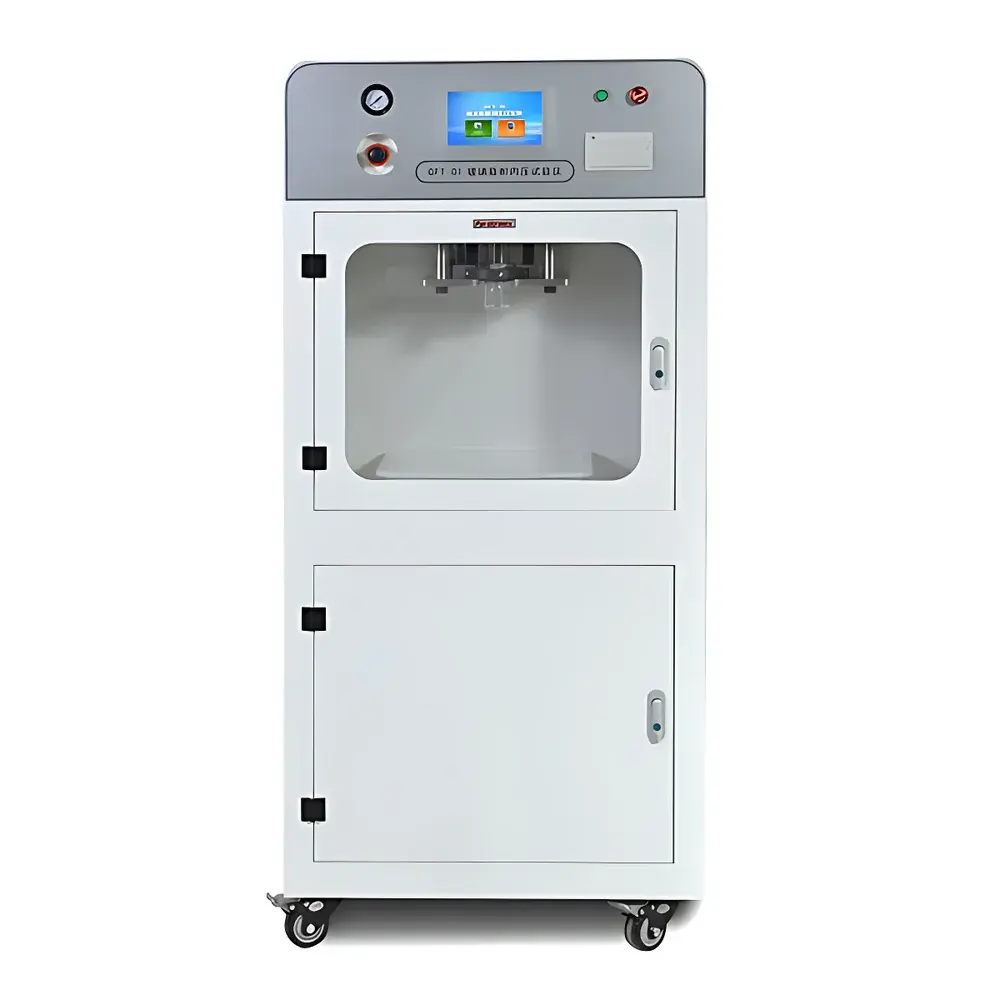
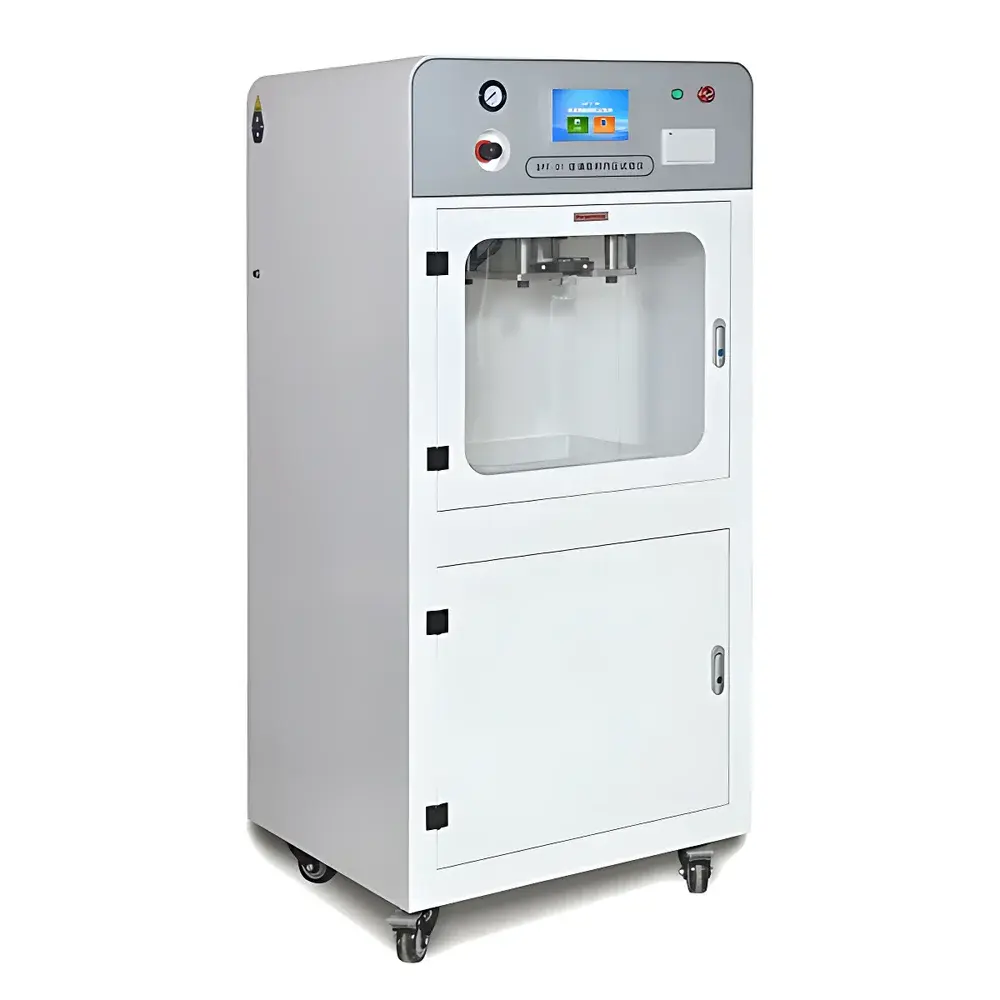
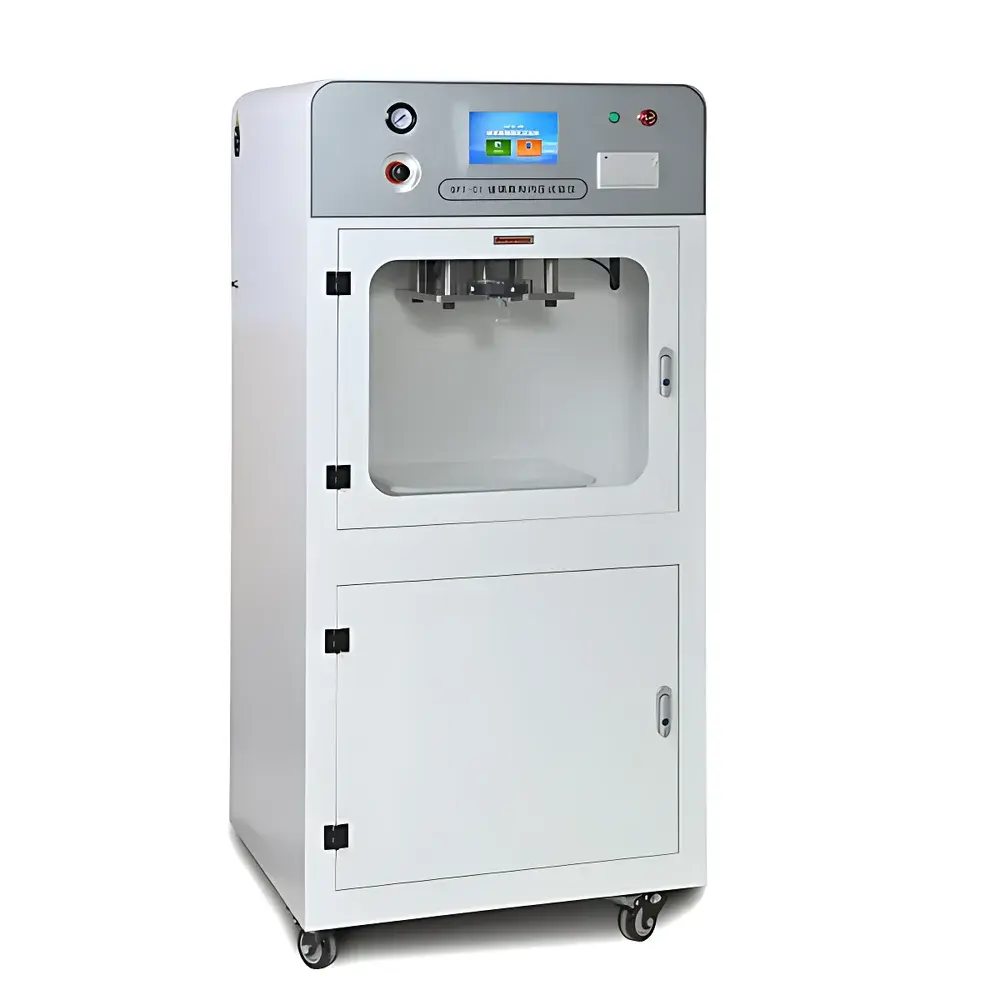
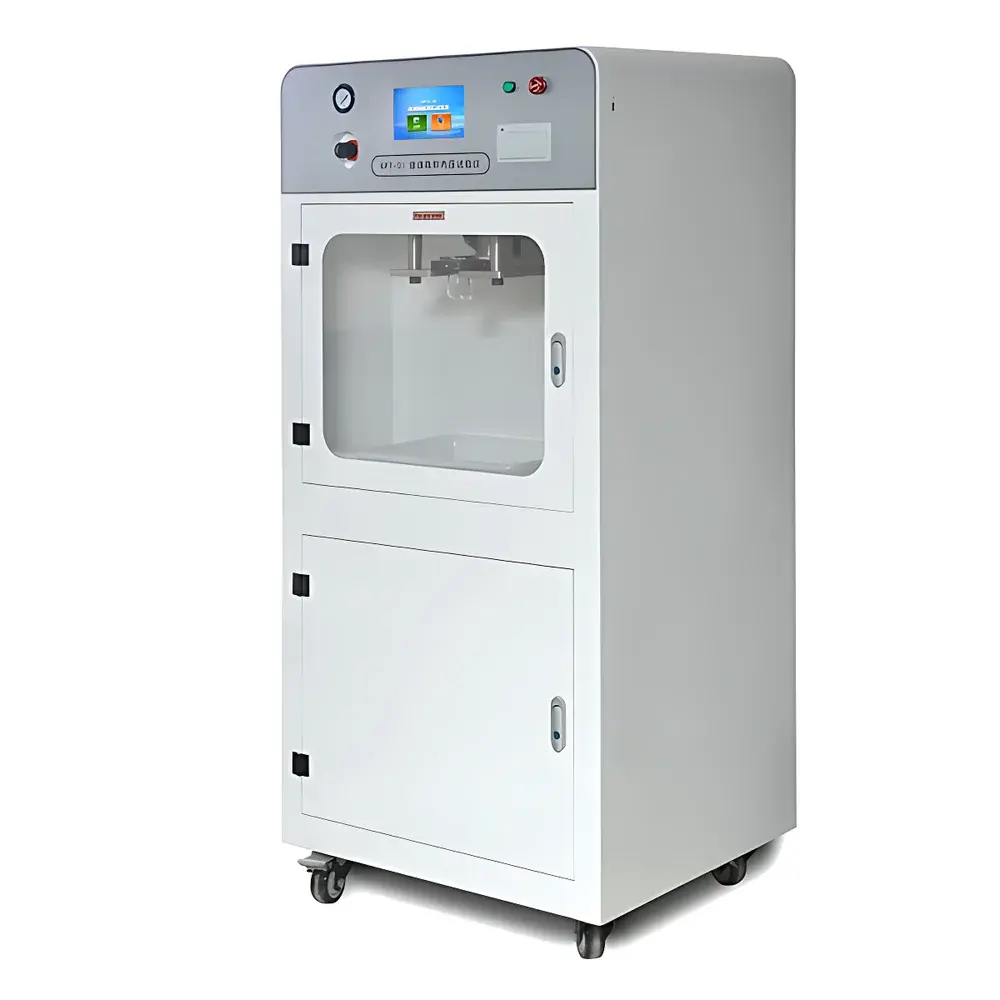
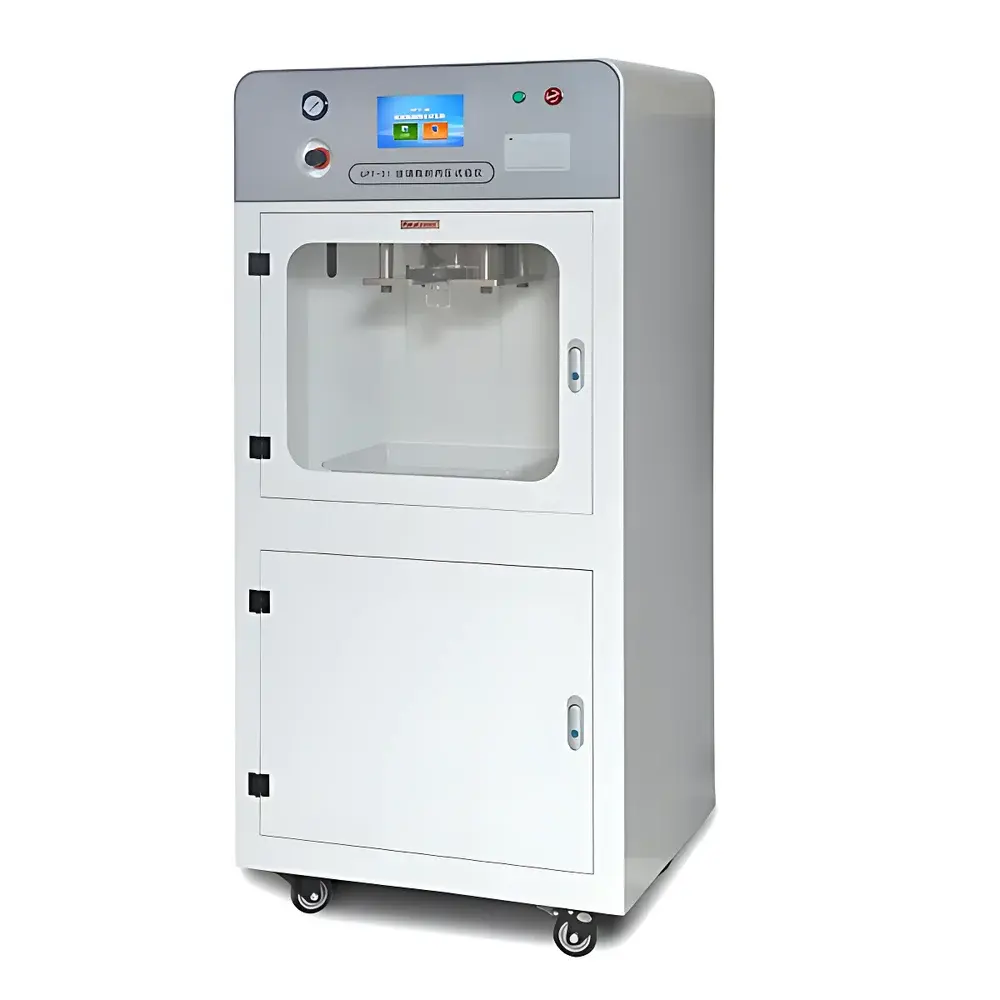
Paratronix GPT-01 Glass Bottle Internal Pressure Tester
| Brand | Paratronix |
|---|---|
| Origin | Shandong, China |
| Manufacturer Type | Direct Manufacturer |
| Model | GPT-01 |
| Max Test Pressure | 6.00 MPa |
| Pressure Ramp Rate | 0.4 MPa/s ± 0.1 MPa/s |
| Pressure Range | 0.50–6.00 MPa |
| Pressure Resolution | 0.01 MPa |
| Pressure Accuracy | < ±1.5% F.S. |
| Ramp Rate Accuracy | < ±5% |
| Cycle Time (to 1.60 MPa) | ~4 s |
| Throughput | 5–10 bottles/min |
| Bottle Neck Diameter Compatibility | Φ24–29 mm (customizable) |
| Operating Temp | 0–40 °C |
| RH Limit | < 95% |
| Power Supply | 220 VAC ±5%, grounded |
| External Air Supply Required | 0–0.8 MPa |
| Safety Enclosure | Integrated tempered safety glass |
Overview
The Paratronix GPT-01 Glass Bottle Internal Pressure Tester is a precision-engineered benchtop testing system designed to evaluate the structural integrity of rigid glass containers under controlled internal hydrostatic pressure. It operates on the principle of linear pressure ramping—applying a continuous, programmable increase in internal fluid pressure until failure or a preset threshold is reached—fully compliant with ASTM C147-76 (reapproved 1981) Method B, GB/T 4546-2008, YBB00172003-2015, and ISO/CD 7458. The instrument is purpose-built for quality assurance in pharmaceutical, beverage, and packaging manufacturing environments where regulatory traceability, repeatability, and mechanical robustness are critical. Its architecture integrates a high-fidelity pressure transducer, closed-loop pneumatic control, and fail-safe mechanical containment—ensuring consistent test execution across high-volume production lots.
Key Features
- High-accuracy pressure measurement with 0.01 MPa resolution and < ±1.5% full-scale error, validated against NIST-traceable reference standards.
- Programmable ramp rates—including default 0.4 MPa/s ±0.1 MPa/s—with optional user-defined profiles (e.g., 0.58 MPa/s ±0.1 MPa/s, 1.0 MPa/s ±0.2 MPa/s) to match application-specific test protocols.
- Automated bottle clamping mechanism with adjustable neck seal range (Φ24–29 mm), accommodating standard beer, soft drink, infusion, and pharmaceutical vial geometries; custom adapters available upon request.
- Integrated safety enclosure constructed from tempered safety glass and reinforced steel frame, meeting EN ISO 13857 minimum safety distance requirements for operator protection during burst events.
- Self-diagnostic firmware with real-time fault logging—including pressure sensor drift, air supply interruption, seal leakage, and overpressure conditions—displayed via intuitive LCD interface with multilingual support (English, Spanish, German).
- Thermal-stable design rated for continuous operation within 0–40 °C ambient and ≤95% relative humidity, suitable for QC labs and factory floor deployment without climate control.
Sample Compatibility & Compliance
The GPT-01 is validated for testing monolithic soda-lime and borosilicate glass containers used in regulated industries. Typical specimens include 250–1000 mL carbonated beverage bottles (e.g., PET-lined or fully glass), 500–2000 mL infusion bottles per USP <797> and EU Annex 1 requirements, and 10–100 mL pharmaceutical ampoules. All test methods align with Good Manufacturing Practice (GMP) and Good Laboratory Practice (GLP) documentation frameworks. The system supports audit-ready reporting per FDA 21 CFR Part 11 when paired with Paratronix’s optional compliant software module—enabling electronic signatures, data integrity controls, and immutable audit trails for pressure curves, timestamps, operator IDs, and pass/fail outcomes.
Software & Data Management
Standard firmware includes USB export of CSV-formatted test records (timestamp, ramp rate, peak pressure, burst pressure, elapsed time, pass/fail flag). Optional Paratronix TestSuite™ v3.2 provides advanced functionality: multi-user role-based access control, automated report generation (PDF/Excel), statistical process control (SPC) charting (X-bar/R, Cp/Cpk), and integration with LIMS via HL7 or RESTful API. Raw pressure-vs.-time waveforms are stored at ≥100 Hz sampling rate, enabling post-test root-cause analysis of crack initiation patterns and pressure decay kinetics. All data storage complies with ICH M7 and ISO/IEC 17025 clause 7.5 requirements for record retention and retrievability.
Applications
- Pre-release validation of glass container batches prior to sterile filling in pharmaceutical manufacturing (per USP <660> and Ph. Eur. 3.2.1).
- Root-cause investigation of bottle breakage incidents in beverage production lines—correlating pressure failure mode (neck fracture vs. sidewall rupture) with annealing history and thermal stress distribution.
- Supplier qualification testing for glass vial vendors under ISO 8536-1 and ASTM E2212 specifications.
- Method transfer studies between R&D, QC, and contract testing laboratories requiring inter-laboratory reproducibility (RSD < 2.5% at 1.6 MPa per ISO 5725-2).
- Regulatory submission support for DMF filings, including full IQ/OQ documentation packages and metrological traceability certificates for all calibrated subsystems.
FAQ
What external utilities are required for operation?
A clean, oil-free compressed air supply (0–0.8 MPa, ISO 8573-1 Class 3.2.3) is mandatory. The unit does not include an integrated air compressor.
Is calibration certification included with shipment?
Yes—each GPT-01 ships with a factory calibration certificate traceable to CNAS-accredited standards, valid for 12 months under normal use conditions.
Can the system be integrated into a MES or SCADA environment?
Yes—via optional RS-485 Modbus RTU or Ethernet/IP interface modules, supporting real-time pressure telemetry and remote start/stop commands.
What maintenance intervals are recommended?
Quarterly verification of pressure transducer linearity and annual recalibration by an accredited lab; O-rings and sealing gaskets should be replaced every 6 months or after 5,000 cycles, whichever occurs first.
Does the GPT-01 meet CE marking requirements for the European Economic Area?
Yes—the device carries CE marking per Machinery Directive 2006/42/EC, Pressure Equipment Directive 2014/68/EU (PED Category I), and EMC Directive 2014/30/EU, with technical documentation available upon request.
Related Products



