
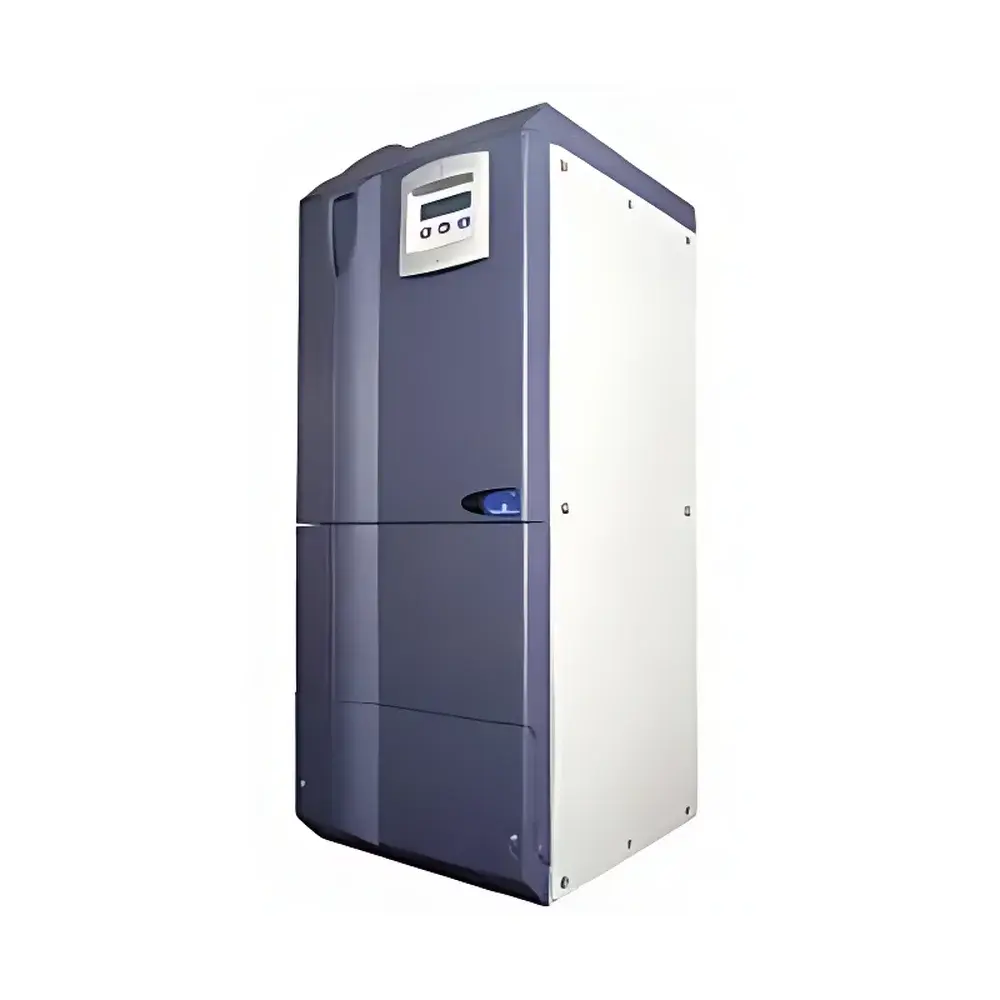
Parker Domnick Hunter DH Series G6/G7 Integrated Nitrogen & Zero-Air Generator
| Brand | Parker DH |
|---|---|
| Origin | United Kingdom |
| Model | G6 / G7 |
| Nitrogen Flow Rate | 0.6 L/min (G6), 3.0 L/min (G7) |
| Air Flow Rate | 1.5–3.0 L/min (G6), 3.0 L/min (G7) |
| Nitrogen Purity | ≥99.999% |
| Dew Point (Air) | ≤–40 °C |
| Outlet Pressure | 5 bar |
| Dimensions (W×H×D) | 345×842×413 mm (G6), 345×874×663 mm (G7) |
| Weight | 54 kg (G6), 80 kg (G7) |
| Integrated Oil-Free Compressor | Yes |
Overview
The Parker Domnick Hunter DH Series G6 and G7 Integrated Nitrogen & Zero-Air Generators are engineered for continuous, on-demand supply of high-purity nitrogen (≥99.999%) and instrument-grade zero air (dew point ≤ –40 °C) from ambient air—eliminating dependence on high-pressure cylinders or liquid nitrogen dewars. These systems employ pressure swing adsorption (PSA) technology with carbon molecular sieve (CMS) beds to selectively remove oxygen, moisture, and CO₂ from compressed air, delivering stable, ultra-high-purity nitrogen suitable for critical analytical applications. The integrated oil-free scroll compressor ensures consistent feed-air quality without external compressed air infrastructure. Designed specifically for laboratory environments where reliability, safety, and space efficiency are paramount, the DH Series meets the stringent gas purity and flow stability requirements of modern chromatographic and spectroscopic instrumentation—including GC carrier gas, ICP-OES purge gas, ELSD nebulizer gas, and mass spectrometry auxiliary gas.
Key Features
- Integrated dual-output architecture: Simultaneous generation of ≥99.999% nitrogen and ≤–40 °C dew point zero air from a single unit—reducing footprint and simplifying lab gas infrastructure.
- Oil-free scroll compressor: Eliminates risk of hydrocarbon contamination and removes dependency on external compressed air sources; ensures long-term CMS bed integrity and system reproducibility.
- PSA-based purification: Dual CMS beds operating in alternating adsorption/desorption cycles provide continuous gas output with minimal pressure fluctuation (15 years under typical lab usage).
- Low-pressure operation: Nitrogen generated at regulated 5 bar output—no high-pressure storage required; inherently safer than cylinder-based systems and compliant with ISO 50001 energy management principles.
- Compact benchtop or under-bench installation: G6 (345 × 842 × 413 mm) and G7 (345 × 874 × 663 mm) dimensions allow integration into constrained lab spaces without sacrificing accessibility or serviceability.
- Intuitive front-panel interface: LED status indicators, real-time flow and pressure monitoring, and automatic fault diagnostics support unattended operation and simplify preventive maintenance scheduling.
Sample Compatibility & Compliance
The DH Series is validated for compatibility with gas-sensitive analytical platforms requiring trace-level inertness and particulate-free delivery—including Agilent, Thermo Fisher, Shimadzu, and Waters GC, GC-MS, LC-MS, and ICP-OES systems. All internal wetted materials comply with USP Class VI and FDA 21 CFR Part 11 requirements for material biocompatibility and extractables control. Gas purity specifications align with ASTM D6349 (for nitrogen used in chromatography) and ISO 8573-1:2010 Class 1.2.1 (compressed air quality). The generator’s firmware supports audit-trail logging and user-access level configuration—enabling compliance with GLP and GMP documentation standards in regulated laboratories.
Software & Data Management
While the DH Series operates as a standalone hardware platform, its embedded controller logs operational parameters—including runtime hours, CMS cycle count, outlet pressure deviation, and alarm history—for export via USB port. Optional RS-232/RS-485 serial interface enables integration into centralized lab infrastructure monitoring systems (e.g., LabVantage, STARLIMS) for automated gas supply status reporting. All data records conform to ALCOA+ principles (Attributable, Legible, Contemporaneous, Original, Accurate, Complete, Consistent, Enduring, Available) and support retrospective review during regulatory inspections.
Applications
- Gas chromatography: Carrier gas (N₂) and make-up gas (zero air) for FID, ECD, and TCD detectors.
- Inductively coupled plasma optical emission spectroscopy: High-purity nitrogen purge gas for torch cooling and optical chamber inerting.
- Evaporative light scattering detection (ELSD): Nebulizer and drying gas with controlled dew point and particulate-free delivery.
- Mass spectrometry: Auxiliary gas for ion source desolvation and collision cell pressurization.
- Elemental analyzers and thermal desorption units: Stable, low-moisture nitrogen for sample transfer and blank reduction.
- Environmental and pharmaceutical QC labs: Continuous gas supply supporting 24/7 operation under ISO/IEC 17025-accredited testing protocols.
FAQ
What is the expected lifetime of the carbon molecular sieve (CMS) beds?
CMS beds are rated for >15,000 hours of continuous operation under standard lab conditions (25 °C, 50% RH inlet air); performance is monitored via built-in pressure differential sensors and scheduled replacement is recommended every 3–5 years based on usage intensity.
Can the G6/G7 be installed in a fume hood or confined cabinet?
Yes—both models meet UL 61010-1 and EN 61010-1 safety standards for laboratory equipment; adequate ventilation (minimum 200 L/min airflow) is required to dissipate heat from the compressor and PSA beds.
Is third-party calibration or certification available?
Parker Domnick Hunter offers factory-certified calibration services traceable to NIST standards, including nitrogen purity verification (via electrochemical O₂ sensor and GC-TCD analysis) and dew point validation (using chilled-mirror hygrometry).
Does the system require routine consumables beyond CMS replacement?
Only the pre-filtration stage (particulate + coalescing filter) requires semi-annual replacement; no catalysts, membranes, or electrolytes are used—minimizing total cost of ownership over the system lifecycle.



