
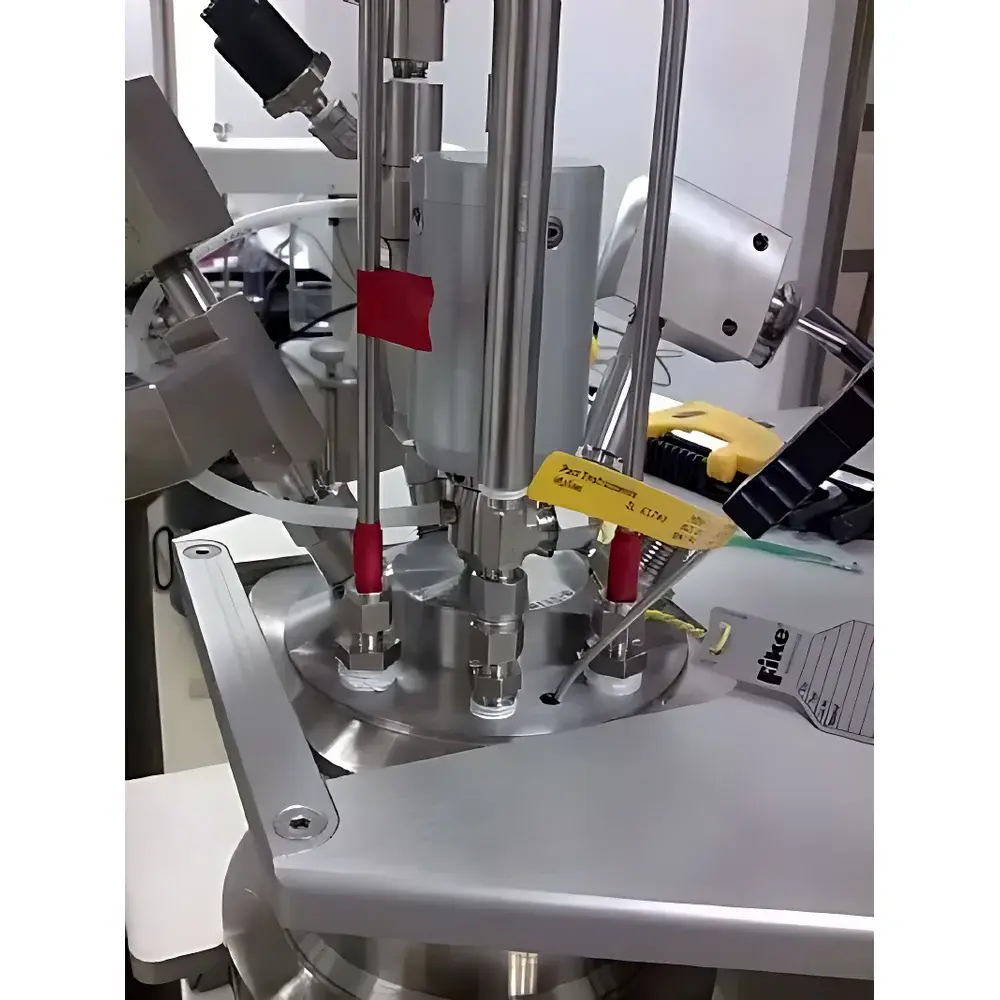
Parr High-Temperature High-Pressure Electrochemical Corrosion Testing System
| Brand | Parr |
|---|---|
| Origin | USA |
| Manufacturer Authorization | Authorized Distributor |
| Import Status | Imported |
| Model | Parr HT/HP Electrochemical Corrosion Test System |
| Pricing | Upon Request |
Overview
The Parr High-Temperature High-Pressure Electrochemical Corrosion Testing System is an engineered platform designed for quantitative evaluation of metallic material degradation under simulated aggressive service conditions. It integrates electrochemical measurement techniques—including potentiodynamic polarization, electrochemical impedance spectroscopy (EIS), and zero-resistance ammetry (ZRA)—with precisely controlled thermal, pressure, and chemical environments. The system operates on the fundamental principle of galvanic coupling in electrolyte media, where dissimilar phases or microstructural heterogeneities drive localized anodic dissolution and cathodic reduction reactions. This enables rigorous assessment of corrosion initiation, propagation kinetics, and passivation behavior—critical parameters for materials selection in oil & gas production, offshore infrastructure, geothermal energy systems, and nuclear coolant circuits. Designed to replicate downhole reservoir conditions, the reactor accommodates temperatures up to 350 °C and pressures up to 20,000 psi (138 MPa), ensuring experimental fidelity aligned with real-world operational envelopes.
Key Features
- Modular high-pressure autoclave reactor with integrated three-electrode electrochemical cell configuration (working, reference, counter electrodes)
- Corrosion-resistant wetted materials: standard construction in ASTM A240 UNS S31603 (316SS); optional liners and components available in Hastelloy® C-276 (UNS N10276), Hastelloy® C-22 (UNS N06022), and Nickel Alloy B-3 (UNS N10003)
- Independent control of temperature (ambient to 350 °C, ±1 °C stability), pressure (up to 20,000 psi), and fluid composition (aqueous brines, CO₂-saturated solutions, H₂S-containing media, organic acid mixtures)
- Real-time data acquisition synchronized across electrochemical signals, thermocouple readings, pressure transducers, and gas flow meters
- Explosion-proof enclosure compliant with Class I, Division 1, Group B/C/D hazardous area requirements per NEC Article 500
- Interlocked safety architecture including rupture disk protection, redundant pressure relief valves, and automated emergency shutdown upon parameter deviation
Sample Compatibility & Compliance
The system supports standardized specimen geometries per ASTM G5, G31, G102, and ISO 9223 for weight-loss and electrochemical corrosion rate determination. Coupons, cylindrical rods, and custom-machined test pieces (including weldments and clad interfaces) are accommodated within the electrode assembly. All wetted surfaces adhere to ASME BPVC Section VIII, Div. 1 certification standards for pressure containment. The electrochemical subsystem meets IEC 61000-4-30 immunity requirements for electromagnetic compatibility. For regulated environments, the system supports audit-ready operation under GLP and GMP frameworks, with optional 21 CFR Part 11-compliant software modules enabling electronic signatures, change control, and full audit trails.
Software & Data Management
Control and analysis are performed via Parr’s proprietary CorrView™ software suite, built on a deterministic real-time kernel. The interface provides simultaneous visualization of Tafel plots, Nyquist/Bode diagrams, and time-domain current/potential transients. Raw data files are stored in HDF5 format with embedded metadata (test ID, operator, timestamp, environmental setpoints, calibration history). Export options include CSV, MATLAB .mat, and ASTM E2937-compliant XML for third-party statistical analysis. Batch processing tools support automated calculation of corrosion rates (mm/y), pitting factor, repassivation potential (Erp), and charge transfer resistance (Rct). Integration with LIMS platforms is supported through OPC UA and RESTful API endpoints.
Applications
- Evaluation of inhibitor performance in high-acid crude oil systems (e.g., naphthenic acid corrosion at >200 °C)
- Screening of candidate alloys for sour service (H₂S/CO₂ coexistence) per NACE MR0175/ISO 15156 qualification protocols
- Investigation of microbiologically influenced corrosion (MIC) mechanisms under nutrient-rich brine conditions
- Long-term immersion testing of weld overlays and corrosion-resistant alloy (CRA) claddings
- Electrochemical noise monitoring for early detection of localized corrosion onset in multiphase flow simulators
- Validation of predictive models (e.g., de Waard-Milliams, CRACK) against empirical high-T/P datasets
FAQ
What electrochemical techniques are supported out-of-the-box?
Potentiodynamic polarization, linear polarization resistance (LPR), electrochemical impedance spectroscopy (EIS), cyclic voltammetry, and zero-resistance ammetry (ZRA) for galvanic current measurement.
Can the system be configured for continuous flow corrosion testing?
Yes—optional recirculating loop modules with precision metering pumps, inline pH/ORP sensors, and gas sparging capability enable dynamic mass transport simulation per ASTM G192.
Is third-party electrochemical hardware (e.g., Gamry, BioLogic) compatible?
The reactor head features standardized BNC and SMB connectors; analog signal outputs (±10 V) and digital trigger I/O allow synchronization with external potentiostats meeting IEEE 488.2 or USB-TMC protocol standards.
What documentation is provided for regulatory validation?
Factory acceptance test (FAT) reports, material traceability certificates (MTRs), pressure vessel nameplate data, and IQ/OQ protocols compliant with ISO/IEC 17025 are included. PQ support documentation is available upon request.
Does Parr offer application-specific method development support?
Yes—Parr Applications Engineering provides collaborative test protocol design, including ASTM/ISO method adaptation, uncertainty budgeting per GUM (JCGM 100), and interlaboratory comparison planning.



