
PCS Instruments HPR High-Frequency Reciprocating In-Situ Tribometer
| Brand | PCS Instruments |
|---|---|
| Origin | United Kingdom |
| Model | HPR |
| Instrument Type | Reciprocating Tribological Tester |
| Maximum Friction Force | 1–10 N |
| Temperature Range | Ambient to 130 °C |
| Load Range | 1–10 N |
| Contact Pressure | 0–1.4 GPa |
| Frequency Range | 10–200 Hz |
| Stroke Length | 20 µm–1.8 mm |
| Chamber Pressure Range | 10⁻⁵ torr to 10 bar |
| Sample Volume Capacity | 15 mL |
| Chamber Design | Fully Sealed, Removable & Pressure/Vacuum-Retentive |
Overview
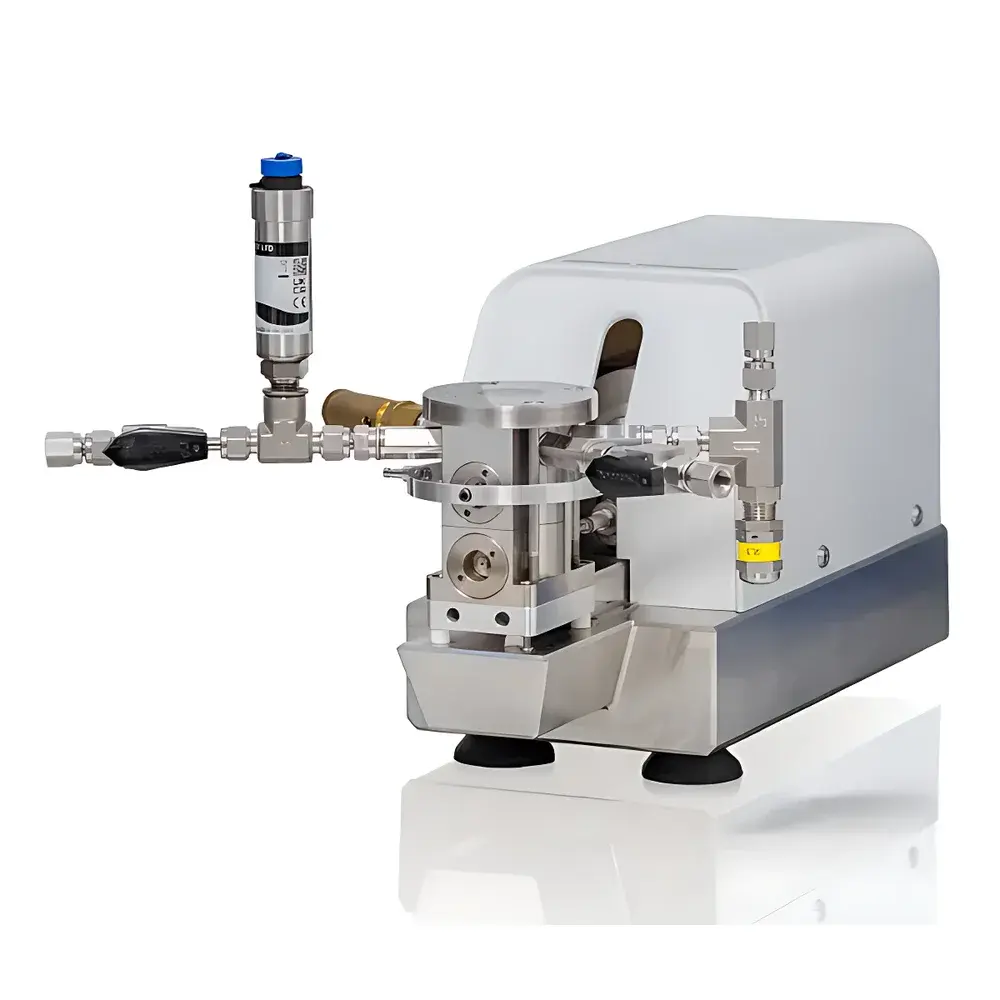
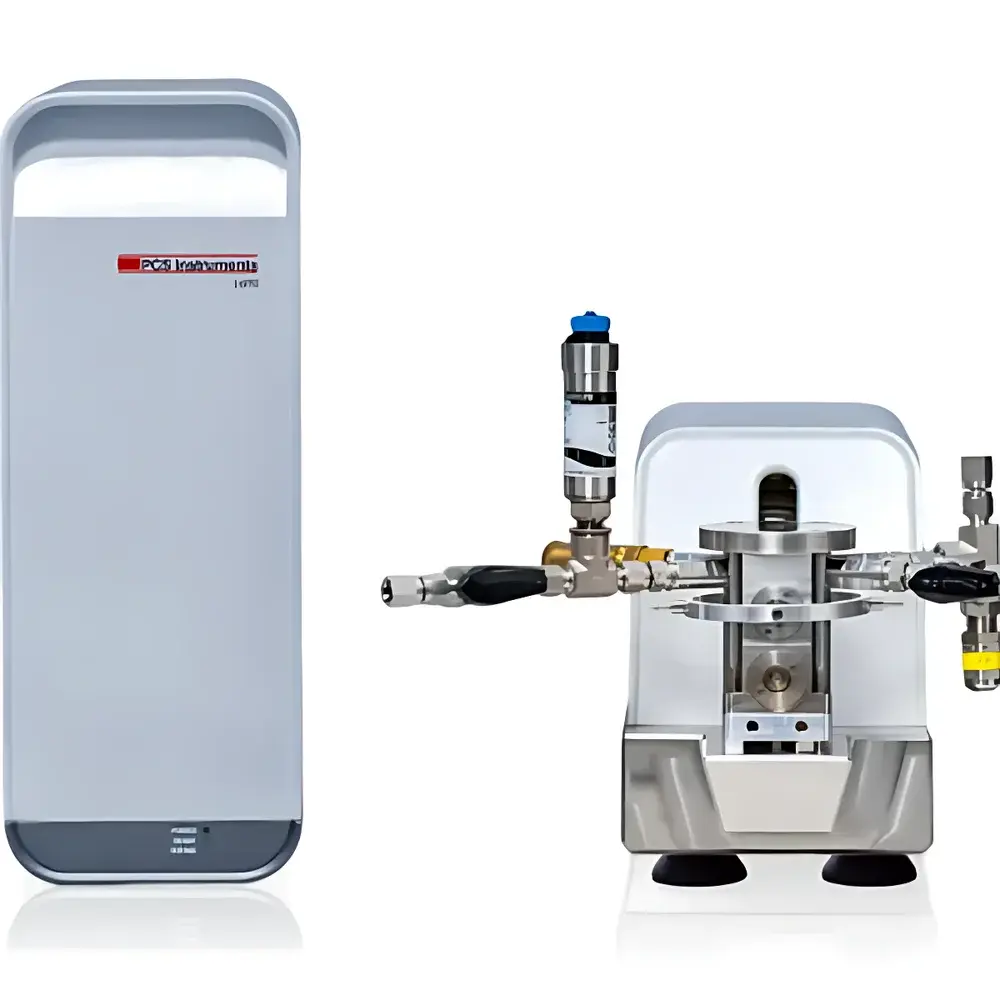
The PCS Instruments HPR High-Frequency Reciprocating In-Situ Tribometer is an engineered solution for controlled, quantitative tribological evaluation of lubricants, fuels, and functional coatings under dynamically relevant service conditions. Operating on the principle of oscillatory reciprocating motion between a stationary counterface (e.g., ball or pin) and a sample surface immersed in test fluid, the HPR employs high-precision piezoelectric actuation and real-time force transduction to measure friction coefficient, wear scar morphology, and boundary film formation kinetics. Its defining feature is a fully sealed, modular sample chamber that maintains prescribed pressure or vacuum environments—up to 10 bar overpressure or down to 10⁻⁵ torr—without interruption during sample exchange. This enables true in-situ testing: pressure/vacuum integrity is preserved even when the chamber is physically removed from the base unit, allowing offline sample handling, post-test analysis, or integration with complementary characterization tools (e.g., Raman spectroscopy, XPS) without system venting.
Key Features
- Fully sealed, removable chamber architecture with active pressure/vacuum retention—enabling uninterrupted environmental control across multiple test cycles and offline sample access.
- High-frequency reciprocating actuation (10–200 Hz) with sub-micron stroke resolution (20 µm–1.8 mm), supporting simulation of high-speed mechanical interfaces such as fuel injector nozzles or valve train components.
- Precision load application (1–10 N) and contact pressure control up to 1.4 GPa, facilitating ASTM D5707-compliant boundary lubrication studies and extreme-pressure additive screening.
- Integrated temperature control from ambient to 130 °C via Peltier-heated stage and calibrated RTD feedback, compliant with ISO 12156-1 thermal ramping protocols for oxidation-sensitive formulations.
- Low sample consumption requirement (15 mL maximum volume), reducing material cost and enabling rapid screening of novel bio-based lubricants or low-volume specialty fuels.
- Modular sensor suite including high-bandwidth friction force transducer, displacement encoder, and optional integrated optical wear monitoring for real-time scar depth estimation.
Sample Compatibility & Compliance
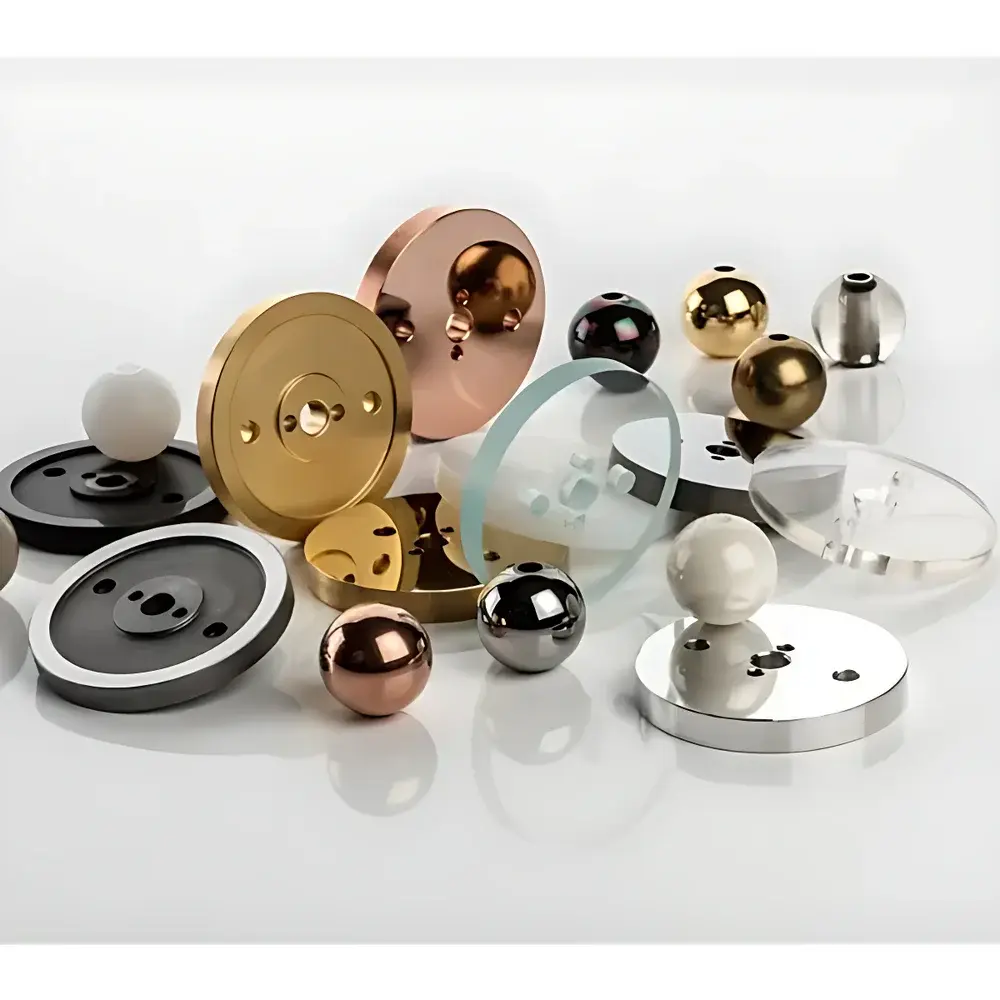
The HPR accommodates standard tribological geometries—including ball-on-flat, pin-on-disk, and custom inserts—and supports both liquid-phase (lubricants, fuels, aqueous formulations) and solid-phase (thin films, DLC, MoS₂-coated substrates) test configurations. Its pressure-tight chamber design conforms to ISO 20482 (tribological testing under controlled atmospheres) and supports method development aligned with ASTM D4172 (lubricant wear testing), ASTM D6079 (fuel lubricity), and ISO 12156-1 (diesel fuel lubricity). The system’s mechanical stability and thermal uniformity meet GLP audit requirements for regulated laboratories, and its hardware architecture permits full traceability under FDA 21 CFR Part 11 when paired with validated software modules.
Software & Data Management
Control and analysis are executed via Tribometer Control Suite (TCS) v4.x, a Windows-based platform offering scriptable test sequences, real-time parameter logging (friction coefficient, normal load, displacement, temperature, pressure), and automated pass/fail threshold evaluation. All raw data are stored in HDF5 format with embedded metadata (operator ID, calibration stamps, environmental setpoints), ensuring FAIR (Findable, Accessible, Interoperable, Reusable) compliance. Audit trails record every user action—including parameter edits, calibration events, and report exports—with time-stamped digital signatures. Export options include CSV, MATLAB .mat, and PDF reports compliant with internal QA documentation standards.
Applications
- Screening of anti-wear and extreme-pressure additives in engine oils and transmission fluids under elevated temperature and pressure.
- Lubricity assessment of ultra-low-sulfur diesel (ULSD), biodiesel blends (FAME, HVO), and synthetic aviation fuels per ASTM D6079 and EN 590 Annex D.
- In-situ evaluation of tribofilm formation kinetics on ferrous and non-ferrous surfaces during boundary lubrication regimes.
- Corrosion-inhibitor efficacy testing in aqueous cooling fluids and hydraulic media under controlled O₂ partial pressure.
- Accelerated wear mapping of protective coatings (e.g., CrN, WS₂) under oscillatory micro-motion conditions representative of MEMS devices or orthopedic implants.
FAQ
Can the HPR operate under inert gas purge without full vacuum capability?
Yes—the chamber supports continuous gas flow mode with mass flow controllers, enabling nitrogen or argon purging at atmospheric pressure or elevated pressure (up to 10 bar) for oxidation-sensitive tests.
Is third-party calibration certification available for the load and temperature sensors?
Yes—traceable calibration certificates (UKAS-accredited where applicable) are provided with initial delivery and can be scheduled annually per ISO/IEC 17025 requirements.
Does the system support automated wear scar measurement post-test?
While optical wear analysis is not built-in, the HPR chamber is compatible with standard profilometers and optical microscopes; TCS exports coordinate-aligned timestamped test logs to synchronize with external imaging workflows.
What maintenance intervals are recommended for long-term reliability?
Critical subsystems—including piezoelectric actuators, load cell electronics, and chamber O-ring seals—are specified for preventive maintenance every 1,500 operational hours or 12 months, whichever occurs first.
Can the HPR be integrated into a laboratory LIMS environment?
Yes—via OPC UA interface and RESTful API endpoints, enabling bidirectional data exchange with major LIMS platforms for automated result ingestion and instrument status monitoring.



