
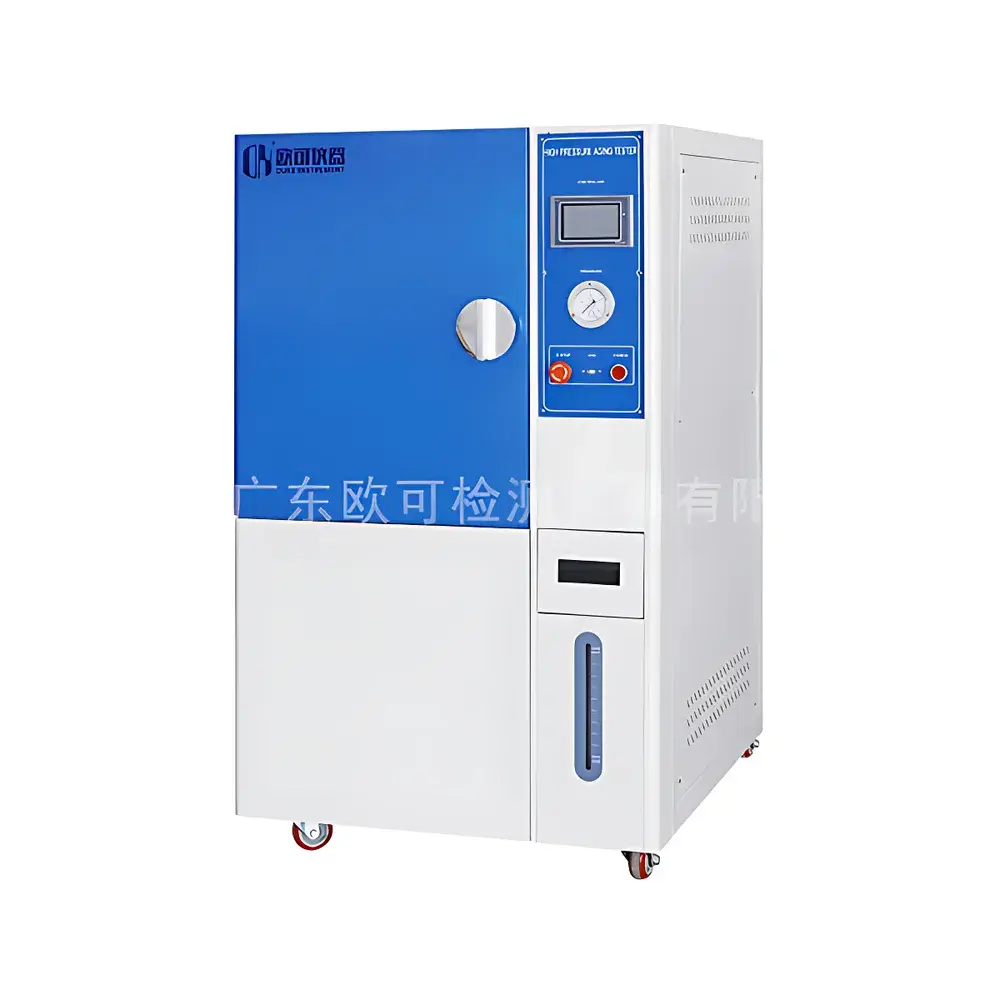
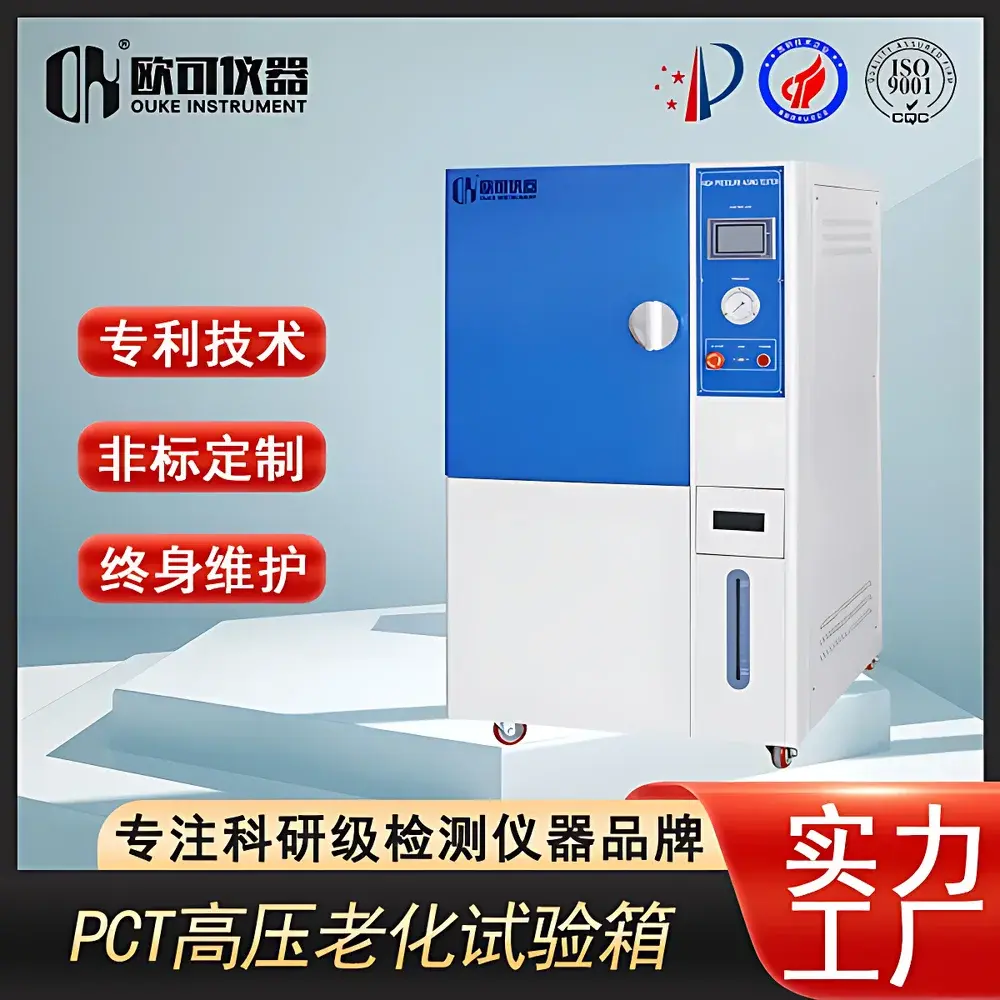
OK-PCT-25 High Pressure Accelerated Aging Test Chamber (HAST)
| Brand | OK Instruments |
|---|---|
| Origin | Guangdong, China |
| Manufacturer Type | Direct Manufacturer |
| Country of Origin | China |
| Model | OK-PCT-25 |
| Temperature Range | 100°C–135°C (147°C optional) |
| Temperature Uniformity | ±2.0°C |
| Temperature Fluctuation | ±1.0°C |
| Temperature Deviation | ±2.0°C |
| Heating Rate | (Ambient +20)°C → 200°C in ≤60 min |
| Cooling Rate | 0.7–1.0°C/min |
| Internal Chamber Dimensions (W×H×D) | 250 mm × 300 mm |
| Power Supply | AC220V/380V, 50/60 Hz |
| Safety Protections | Low-water cutoff, overpressure protection, auto/manual water replenishment, automatic pressure release |
| Humidity Range | 70–100% RH |
| Steam Pressure Range | 0.0–2.0 kg/cm² (gauge) |
| Air Circulation | Forced steam convection |
| Construction | Stainless steel inner chamber, polished finish |
| Door Seal | Integrated silicone gasket with high gas-tightness |
| Standard Accessories | Two stainless steel shelves |
Overview
The OK-PCT-25 High Pressure Accelerated Aging Test Chamber (HAST) is an engineered environmental stress test system designed for accelerated reliability assessment of microelectronic components, printed circuit boards (PCBs), LED modules, photovoltaic cells, magnetic materials, and other moisture-sensitive devices. Unlike conventional temperature-humidity storage or damp heat testing per IEC 60068-2-78, the OK-PCT-25 operates under elevated temperature and saturated (or near-saturated) steam pressure conditions—typically 100–135°C at 1.0–2.0 kg/cm² gauge pressure—to dramatically accelerate moisture diffusion into encapsulants, die attach layers, and intermetallic interfaces. This enables detection of latent failure mechanisms—including corrosion, delamination, wire bond lift-off, and solder joint degradation—in hours or days rather than weeks or months. The chamber implements a non-saturated HAST methodology compliant with JESD22-A110 and JESD22-A118 standards, where controlled steam quality and dynamic pressure regulation ensure reproducible test conditions without condensation-induced thermal shock.
Key Features
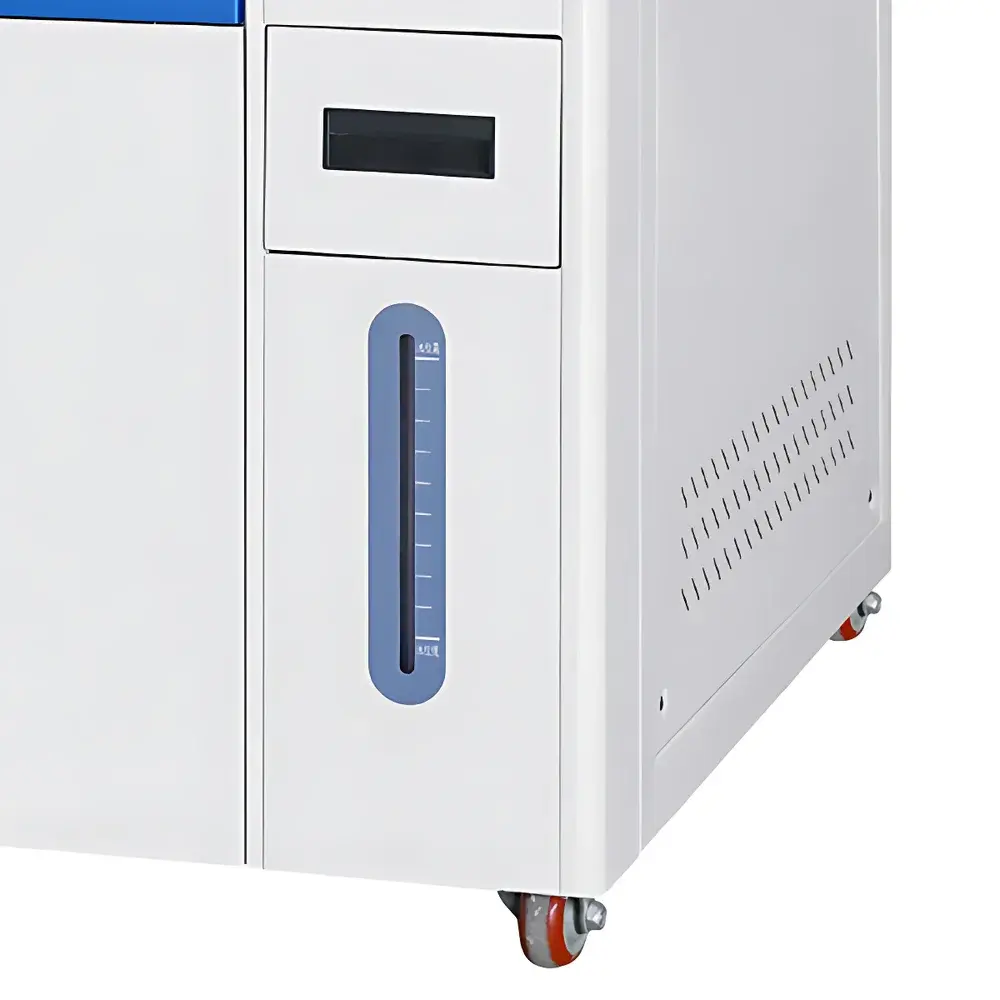
- Automated water level management: Integrated float sensor triggers real-time补水 (water replenishment) during operation to maintain stable steam generation and avoid dry-run shutdowns.
- Digital LED temperature and time controllers: Precision PID-based temperature regulation with user-defined setpoint programming and post-stabilization timer activation—ensuring timing begins only after thermal equilibrium is achieved.
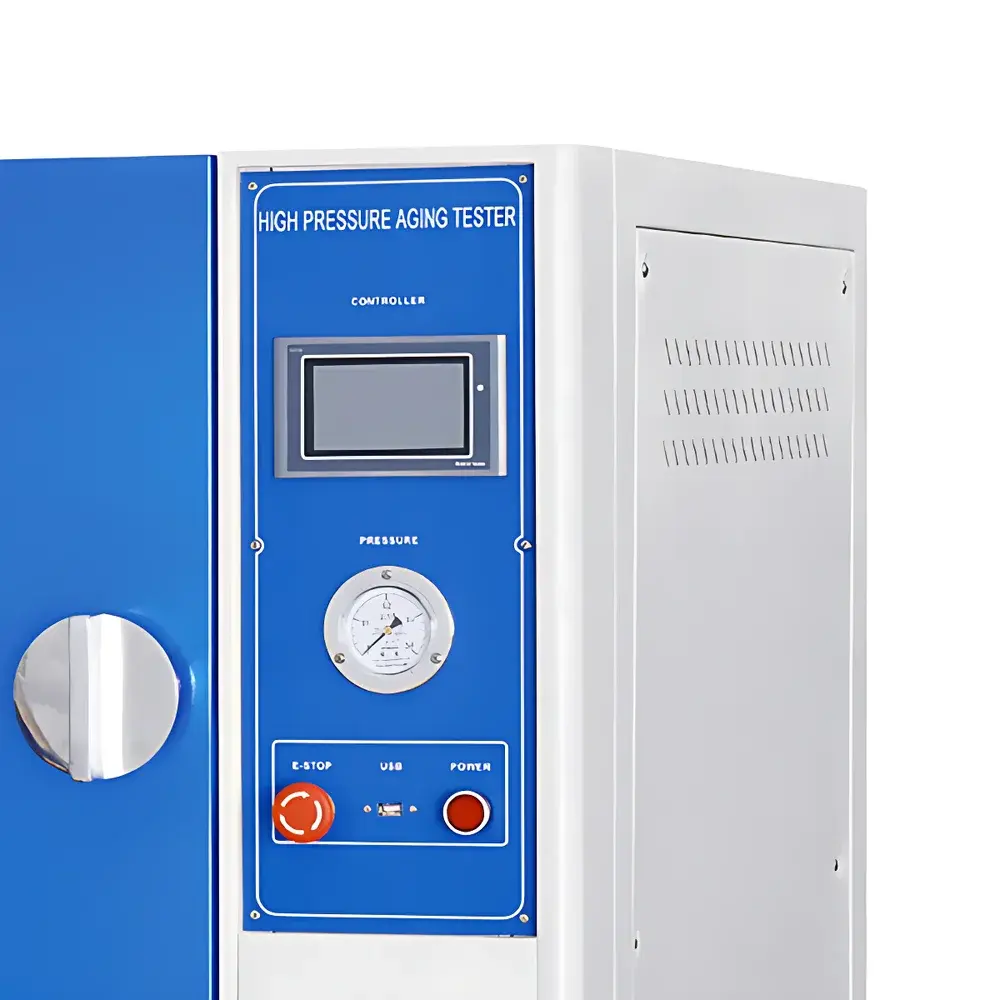
- Real-time dual-parameter monitoring: Simultaneous digital display of chamber pressure (kg/cm²) and corresponding saturation temperature (°C), enabling direct correlation between thermodynamic state and test severity.
- Optimized steam delivery: Dedicated steam purge cycle removes non-condensable gases prior to test initiation; forced convection ensures uniform vapor distribution and minimizes thermal stratification.
- Robust sealing architecture: One-piece molded silicone door gasket provides >99.9% gas-tight integrity across repeated thermal cycling, validated per ISO 10139-1 for long-term seal performance.
- Corrosion-resistant construction: Electropolished stainless steel inner chamber (SUS316L grade) with passivated surface finish resists chloride-induced pitting and facilitates cleaning under GLP-compliant lab protocols.
- Comprehensive safety interlocks: Dual redundant pressure relief valves, low-water cutoff switch, overtemperature cutout, and fail-safe depressurization logic meet EN 61000-6-2 EMC and EN 61010-1 safety requirements.
Sample Compatibility & Compliance
The OK-PCT-25 accommodates standard JEDEC trays (e.g., 330 × 270 mm footprint), component carriers, and bare PCBs up to 200 mm × 250 mm. Its compact internal volume (250 mm diameter × 300 mm depth) supports high-throughput qualification of small-batch prototypes and lot-level screening. The system conforms to industry-standard test methods including JEDEC JESD22-A110 (HAST, unsaturated), JESD22-A118 (HAST, saturated), and AEC-Q200 stress requirements for passive components. Optional calibration traceability to NIST-certified reference sensors is available for labs requiring ISO/IEC 17025 accreditation. All operational logs—including temperature, pressure, elapsed time, and alarm events—are timestamped and stored locally for audit readiness per FDA 21 CFR Part 11 Annex 11 guidelines.
Software & Data Management
While the base model features standalone digital controls, optional PC-based software (OK-DataLink v3.2) enables remote configuration, real-time data streaming (1 Hz sampling), automated report generation (PDF/CSV), and electronic signature support. Data export includes full metadata: operator ID, test method ID, chamber serial number, calibration due date, and environmental ambient conditions. Audit trails record all parameter changes, user logins, and system resets with immutable timestamps—fully compatible with GMP/GLP documentation workflows. Raw data files are encrypted and digitally signed to satisfy ALCOA+ principles (Attributable, Legible, Contemporaneous, Original, Accurate, Complete, Consistent, Enduring, Available).
Applications
- Qualification of IC packaging integrity against moisture-induced popcorning and interfacial delamination.
- Reliability screening of LED phosphor coatings and silicone encapsulants under high-ΔT steam exposure.
- Accelerated life testing of PV module edge seals and backsheet adhesion performance.
- Failure analysis root cause isolation for field-return units exhibiting humidity-related parametric drift.
- Process validation of conformal coating efficacy and reflow soldering process robustness.
- Material compatibility studies for new underfill formulations, molding compounds, and substrate laminates.
FAQ
What distinguishes non-saturated HAST from saturated HAST?
Non-saturated HAST (per JESD22-A110) maintains sub-saturation steam conditions—reducing condensation risk while retaining acceleration factors 10–20× greater than 85°C/85%RH testing. Saturated HAST (JESD22-A118) uses full saturation and yields higher acceleration but requires stricter pressure control.
Is the OK-PCT-25 suitable for automotive-grade AEC-Q100 qualification?
Yes—when configured with 147°C capability, calibrated pressure transducers, and full data logging, it supports stress conditions aligned with AEC-Q100-011 revision D for package moisture sensitivity level (MSL) validation.
Can the chamber be integrated into a central lab monitoring network?
Via optional RS485 Modbus RTU or Ethernet TCP/IP interface, the OK-PCT-25 supports integration with LIMS, SCADA, or MES platforms using standard protocol mapping.
What maintenance intervals are recommended for long-term reliability?
Quarterly verification of pressure sensor linearity, biannual replacement of silicone door gasket, and annual recalibration of temperature sensors against PT100 reference standards are advised per OK Instruments’ Maintenance Protocol MP-HAST-02.



