
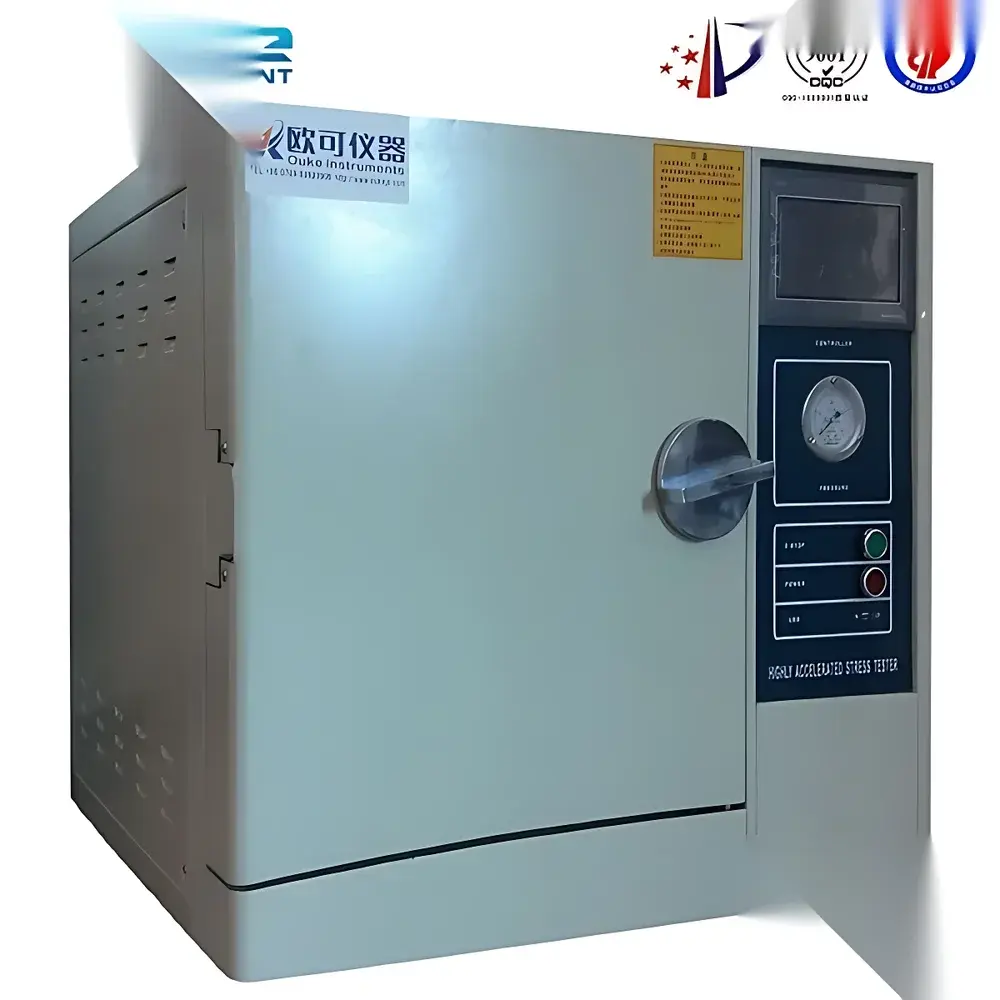
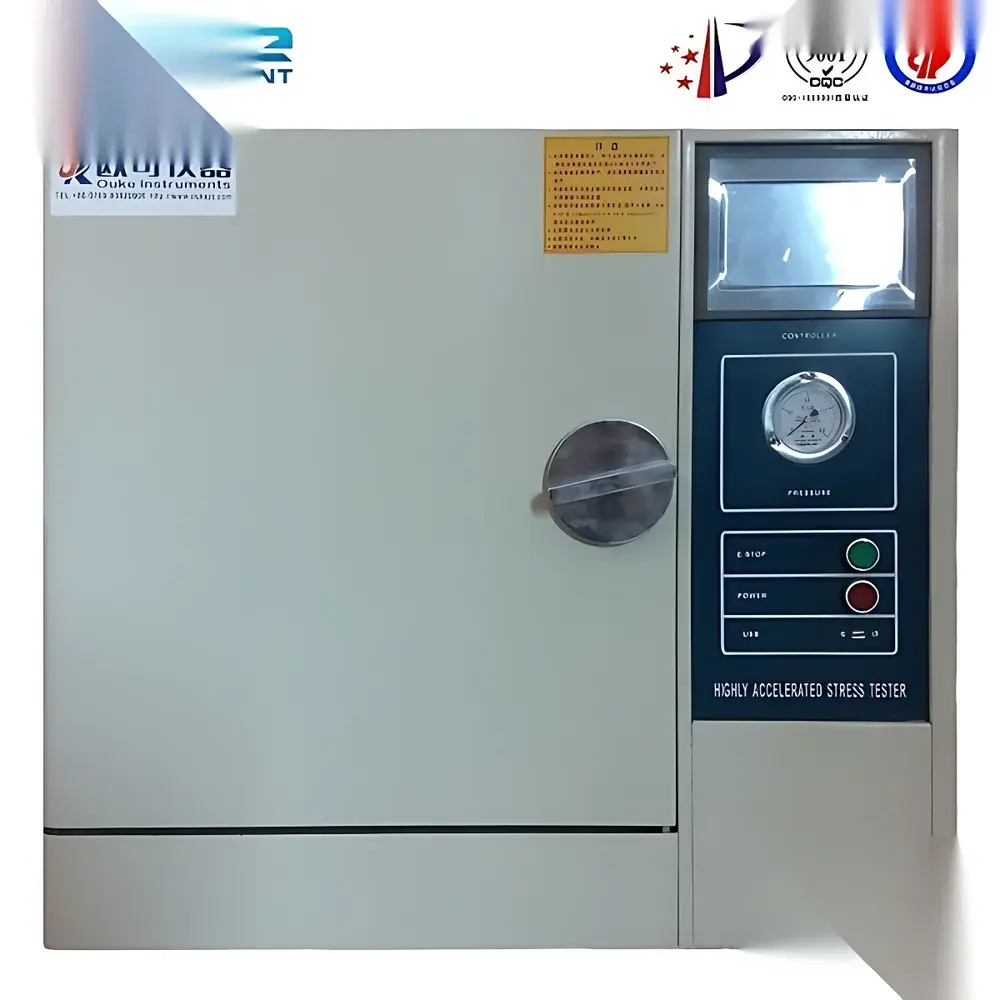
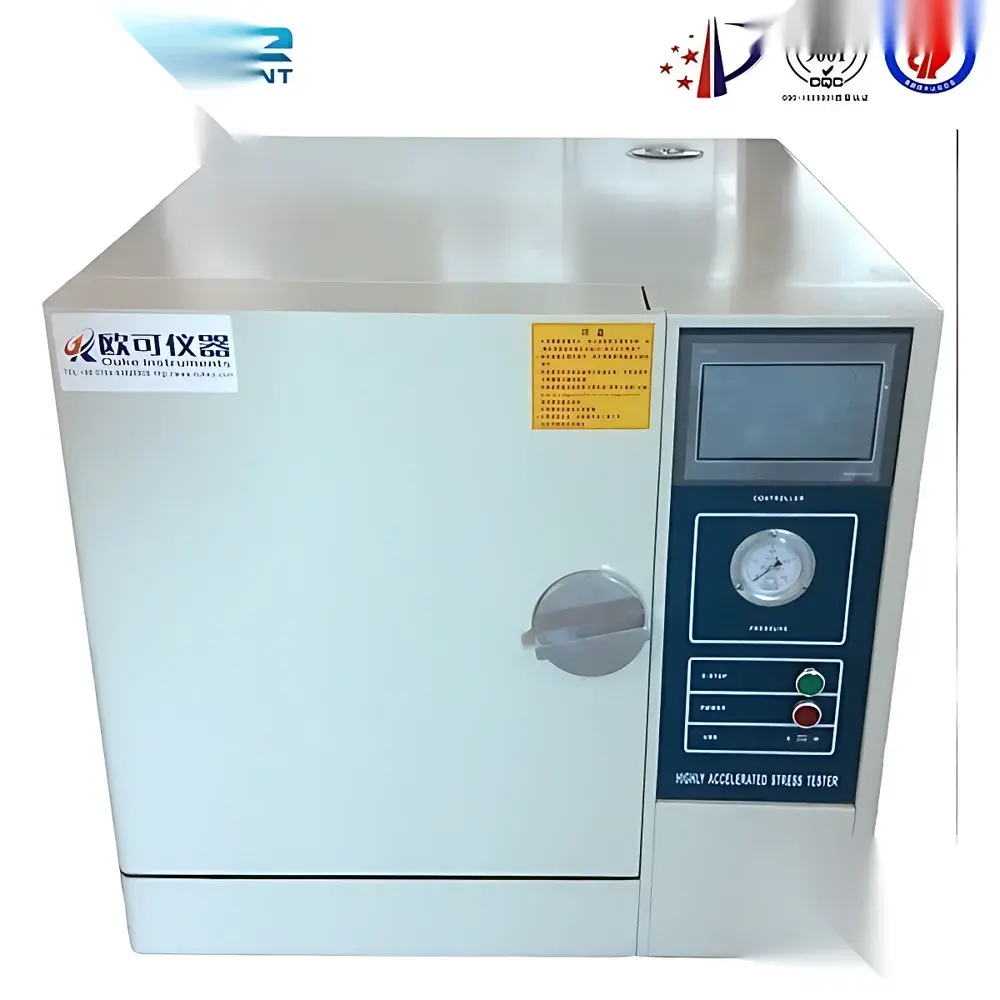
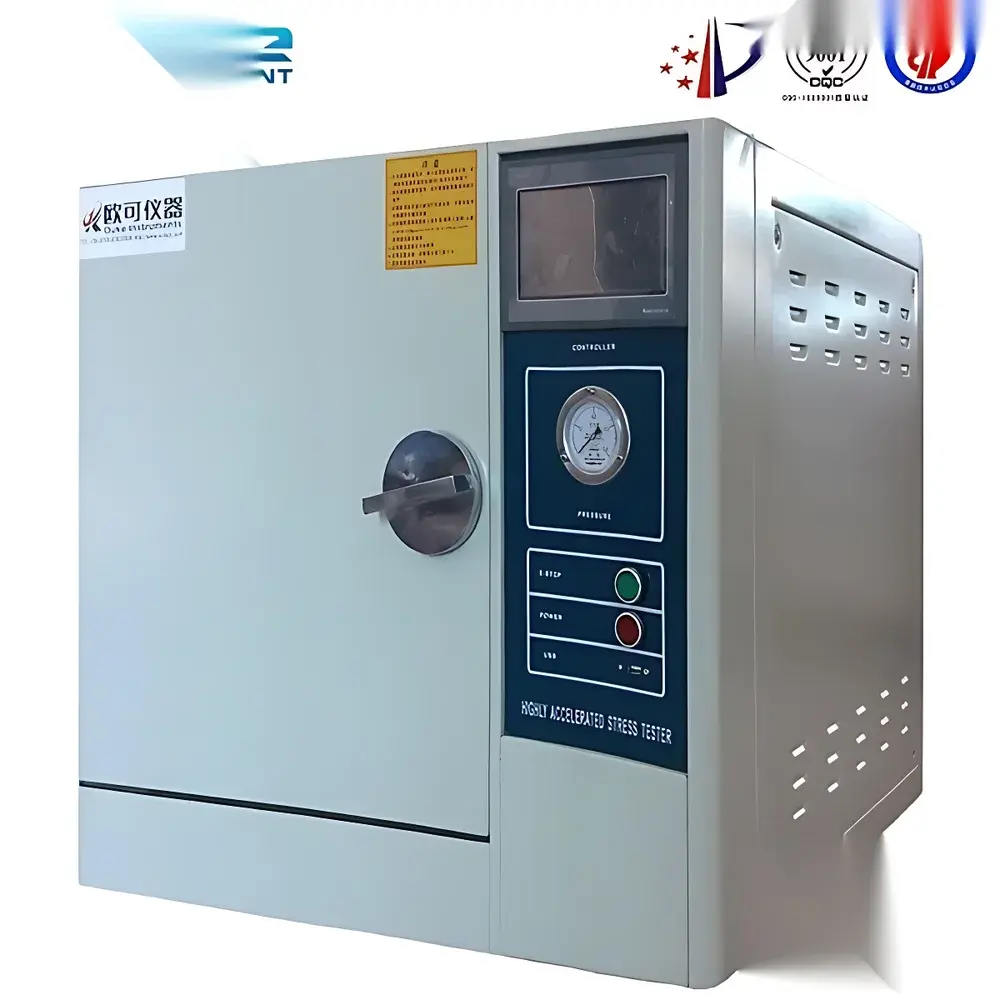
PCT-25 / PCT-30 / PCT-40 / PCT-50 High-Pressure High-Humidity Test Chamber
| Brand | OEM |
|---|---|
| Origin | Imported |
| Manufacturer Type | Authorized Distributor |
| Temperature Range | 100–132 °C |
| Humidity Condition | 100 % RH saturated steam |
| Pressure Range | 0–4 kgf/cm² (gauge) above atmospheric pressure |
| Internal Dimensions (PCT-25) | Φ25 cm × 40 cm |
| Internal Dimensions (PCT-30) | Φ30 cm × 50 cm |
| Internal Dimensions (PCT-40) | Φ40 cm × 60 cm |
| Internal Dimensions (PCT-50) | Φ50 cm × 70 cm |
| Sealing System | Patented dual-contact gasket design |
| Safety Systems | Dual-circuit high-temp solenoid valve, overpressure/overtemperature cut-off, mechanical anti-opening door lock, manual & automatic pressure release |
Overview
The PCT Series High-Pressure High-Humidity Test Chamber is an engineered environmental stress test system designed to accelerate moisture ingress and thermal-mechanical degradation in hermetically sealed and semi-permeable electronic, automotive, and industrial components. Operating on the principle of saturated steam pressurization, it subjects specimens to controlled combinations of elevated temperature (100–132 °C), full saturation humidity (100 % RH), and gauge pressures up to 4 kgf/cm²—equivalent to ~392 kPa absolute—thereby replicating and intensifying failure mechanisms associated with moisture diffusion, intermetallic corrosion, popcorning, wire bond lift, and die attach delamination. Unlike conventional damp heat chambers, the PCT chamber maintains thermodynamic equilibrium between vapor phase and condensed water under pressure, enabling rapid penetration of moisture through packaging interfaces and microcracks—a critical requirement for qualification testing per JESD22-A102 (Failure Mechanism Based Stress Test Qualification), JEDEC Standard No. 22-A110, and MIL-STD-883 Method 1030. Its cylindrical stainless-steel internal chamber conforms to ASME BPVC Section VIII Div. 1 vessel design principles for low-pressure containment, ensuring structural integrity and long-term repeatability across thousands of test cycles.
Key Features
- Cylindrical stainless-steel inner chamber (AISI 316L) engineered to ASME-compliant geometry—minimizes condensate pooling and eliminates corner-driven thermal gradients.
- Annular steam baffle liner that redirects latent heat flow radially, preventing direct impingement of superheated vapor onto test samples and reducing localized thermal shock.
- Patented dual-contact gasket sealing mechanism—replaces conventional compression-type packing—providing uniform radial force distribution, reduced creep deformation, and extended service life (>5,000 cycles without replacement).
- Integrated dual-circuit high-temperature solenoid valve with redundant fail-safe closure logic, ensuring zero pressure leakage during standby and dynamic pressure hold phases.
- Multi-layer safety architecture: real-time overpressure cutoff (mechanical + electronic), dual independent overtemperature sensors, automatic pressure relief via PID-controlled vent valve, manual emergency depressurization port, and interlocked door latch that physically prevents opening under internal pressure >0.05 kgf/cm².
- Optimized water economy: single fill supports continuous operation for up to 400 hours at nominal conditions due to minimized evaporation loss and closed-loop condensate recovery path.
Sample Compatibility & Compliance
The PCT chamber accommodates a wide range of sample formats—including PCB assemblies, IC packages (QFN, BGA, WLCSP), MEMS sensors, automotive ECUs, medical-grade connectors, and coated metallic substrates—within its four standardized cylindrical cavity sizes (PCT-25 to PCT-50). All models comply with IEC 60068-2-66 (Test Db: Damp Heat, Steady State, High Pressure), JEDEC JESD22-A102C (Pressure Cooker Test), and support traceable validation against ISO/IEC 17025 calibration requirements when paired with NIST-traceable PT100 probes and digital pressure transducers. The system’s mechanical interlock and alarm logging meet GLP/GMP documentation prerequisites for regulated industries; event timestamps, setpoint deviations, and fault codes are retained internally for audit readiness.
Software & Data Management
Equipped with embedded 7-inch TFT HMI interface supporting multi-language UI (English, German, Japanese), the controller logs all operational parameters—including chamber temperature, jacket temperature, absolute pressure, elapsed time, and alarm history—at user-configurable intervals (1–60 sec). Data export is supported via USB 2.0 to CSV or Excel-compatible formats. Optional Ethernet connectivity enables remote monitoring and integration into centralized LabVantage or Siemens Desigo CCMS platforms. Audit trail functionality complies with FDA 21 CFR Part 11 requirements when configured with role-based user authentication, electronic signatures, and immutable log archiving—ensuring data integrity throughout product lifecycle validation.
Applications
This chamber serves as a core tool in reliability engineering workflows for semiconductor package qualification, automotive electronics AEC-Q200 stress screening, aerospace component moisture sensitivity level (MSL) verification, and accelerated aging studies of conformal coatings and potting compounds. It is routinely deployed in R&D labs, third-party test houses (e.g., SGS, TÜV Rheinland), and Tier-1 supplier quality centers to validate moisture barrier performance, assess solder joint robustness under thermo-hygro-mechanical load, and generate failure mode distribution data for Weibull analysis. Its reproducible saturation environment also supports comparative evaluation of encapsulant materials per ASTM D570 and IPC/JEDEC-95 standards.
FAQ
What is the maximum allowable test duration per water fill?
Up to 400 hours under standard operating conditions (121 °C, 2 kgf/cm²), verified per manufacturer’s water consumption curve and validated with calibrated mass-loss measurement.
Does the system support automated test sequencing?
Yes—the controller supports up to 99 programmable steps with ramp/soak profiles, including pressure ramping rate control (0.1–1.0 kgf/cm²/min) and conditional branching based on real-time sensor feedback.
Is external calibration required for compliance with ISO/IEC 17025?
While the unit ships with factory calibration certificates, periodic third-party calibration of temperature (±0.3 °C) and pressure (±0.5 % FS) sensors is recommended annually to maintain accreditation scope.
Can the chamber be integrated into a cleanroom environment?
Yes—optional HEPA-filtered air purge kit and non-outgassing interior finish (electropolished 316L) are available to meet ISO Class 5–7 cleanroom compatibility requirements.
What safety certifications does the system carry?
CE marking per Machinery Directive 2006/42/EC and EMC Directive 2014/30/EU; UL/cUL recognition pending upon regional configuration—documentation provided upon request.



