
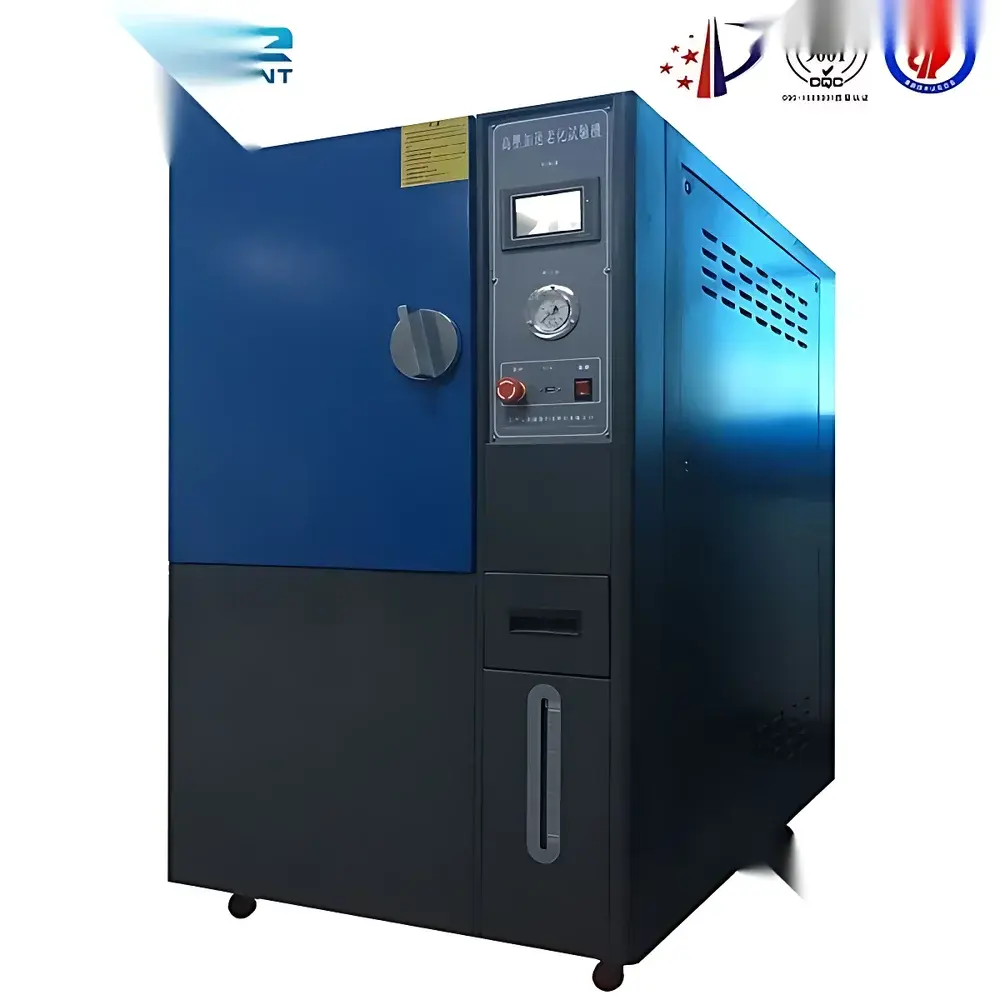
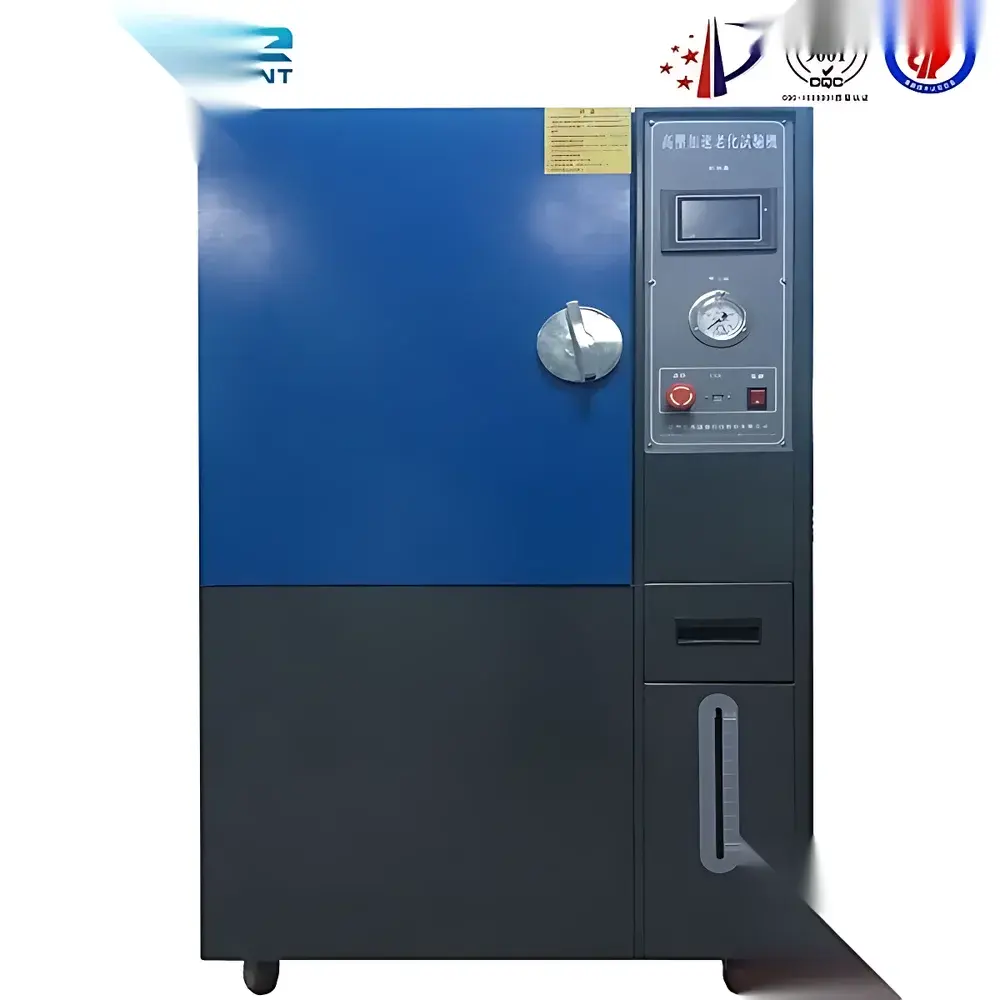
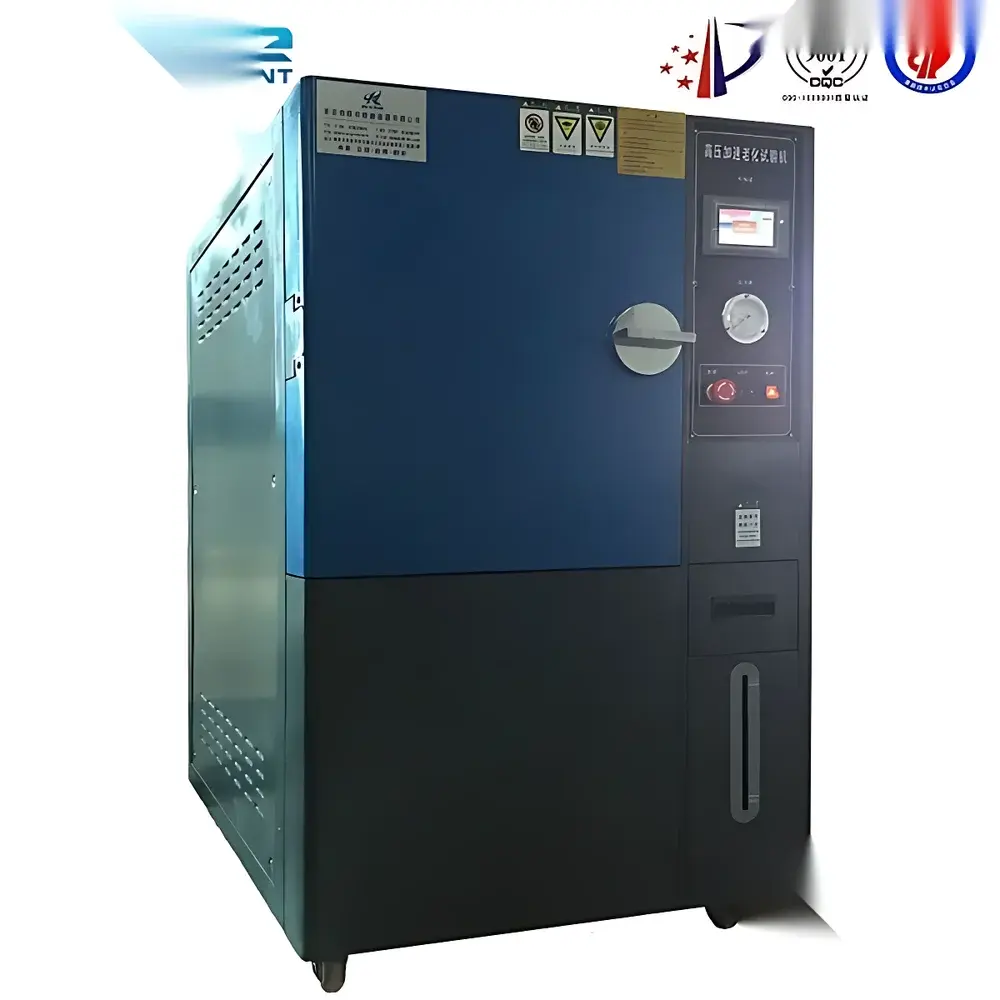
PCT Accelerated Aging Test Chamber for High-Pressure Saturated Steam Testing
| Brand | Other Brands |
|---|---|
| Origin | Imported |
| Supplier Type | Authorized Distributor |
| Price | USD 4,100 (FOB) |
| Compliance | GB/T 10586–1989, GB/T 2423.3–1993 (IEC 60068-2-3), MIL-STD-810D Method 502.2, GJB 150.9–1986, GB/T 2423.34–1986, MIL-STD-883C Method 1004.2 |
Overview
The PCT Accelerated Aging Test Chamber is a precision-engineered environmental stress test system designed for highly controlled, high-pressure saturated steam exposure of electronic components, packaging materials, and hermetic seals. Operating on the principle of Pressure Cooker Test (PCT), it subjects samples to elevated temperature (typically 121 °C or 130 °C), high relative humidity (100 % RH), and pressurized saturated steam (typically 2 bar or 3 bar absolute pressure) to accelerate moisture ingress and evaluate long-term reliability under humid thermal stress. This chamber complies with internationally recognized qualification standards for moisture sensitivity level (MSL) testing, wafer-level reliability screening, and failure analysis of plastic-encapsulated microcircuits (PEMs). Its robust stainless-steel cylindrical chamber architecture, combined with real-time saturation control and fail-safe mechanical interlocks, ensures repeatable, traceable, and auditable test conditions required in ISO/IEC 17025-accredited labs and semiconductor manufacturing environments.
Key Features
- Dual overheat protection system: Audible alarm activation and automatic heating cutoff when internal temperature exceeds preset safety thresholds.
- Microprocessor-based PID temperature controller with ±0.1 °C accuracy; continuously regulates saturated steam temperature via real-time feedback from calibrated PT100 sensors.
- LED digital timer synchronized with temperature stabilization—countdown initiates only after chamber reaches target setpoint, ensuring precise dwell time compliance.
- Integrated auto-water replenishment system maintains consistent water level during extended tests (up to 200 hours per fill), preventing test interruption and eliminating manual intervention.
- Cylindrical stainless-steel inner chamber and arc-shaped liner minimize direct impingement of latent heat on test specimens, improving thermal uniformity and reducing localized condensation.
- ABS-insulated door handle and one-piece molded silicone gasket provide thermal isolation and long-term sealing integrity (>10,000 cycles).
- Positive-pressure interlocked door mechanism: Chamber door remains mechanically locked when internal pressure exceeds atmospheric; increases sealing force proportionally with pressure rise—enhancing gasket longevity and leak-tightness.
- Automatic non-saturated steam purge cycle ensures steam quality meets ASTM E2912 requirements for condensate purity and phase stability.
- Front-panel analog pressure gauge (±0.02 bar resolution) and digital temperature/pressure cross-reference display for immediate verification of thermodynamic equilibrium.
- Multi-stage safety architecture including mechanical safety valve (ASME BPVC Section VIII compliant), door position sensor, and LIMIT-based fault diagnostics with LED status indicators.
Sample Compatibility & Compliance
The chamber accommodates standard JEDEC trays (e.g., 330 mm × 250 mm footprint), QFN, BGA, and stacked-die packages up to 100 mm in height. Internal dimensions support both single-layer and multi-tier sample racks with optimized steam circulation pathways. All operational parameters—including ramp rate, dwell time, pressure decay profile, and cooling sequence—are configurable to meet specific test plans per JESD22-A102 (PCT), JESD22-A110 (HAST), and MIL-STD-883 Method 1004.2. The system is validated for GLP/GMP-aligned workflows and supports 21 CFR Part 11-compliant audit trails when integrated with optional data logging software.
Software & Data Management
While standalone operation is fully functional via front-panel controls, optional PC-based software enables remote monitoring, parameter scripting, real-time graphing (temperature vs. pressure vs. time), and CSV-exportable test logs. Data records include timestamped setpoints, actual values, alarm events, and safety interlock status—each digitally signed and archived with user authentication. Calibration certificates (traceable to NIST standards) and IQ/OQ documentation packages are available upon request for regulated industries.
Applications
- Qualification of moisture-sensitive devices (MSL Level 2a–6) per JEDEC J-STD-020.
- Reliability screening of automotive-grade ICs subjected to AEC-Q200 stress profiles.
- Evaluation of conformal coating adhesion, solder mask integrity, and wire bond corrosion resistance.
- Validation of MEMS package hermeticity and cavity seal performance under accelerated hydrothermal stress.
- Failure mode analysis (FMA) of popcorn cracking, intermetallic growth, and delamination in plastic-encapsulated assemblies.
- Process development support for wafer-level encapsulation and molding compound selection.
FAQ
What is the maximum allowable test duration without manual refilling?
Up to 200 hours under continuous operation at 121 °C / 2 bar, enabled by the high-efficiency water retention design and auto-replenishment system.
Does the chamber support HAST (Highly Accelerated Stress Test) protocols?
Yes—when configured with optional high-temperature/low-humidity modules and enhanced pressure regulation, it meets JESD22-A110 requirements for unbiased HAST testing.
How is temperature and pressure uniformity verified?
Uniformity is validated per IEC 60068-3-5 using nine calibrated PT100 probes across the working volume; typical deviation is ≤±0.5 °C and ≤±0.03 bar across load.
Is third-party calibration and certification available?
Yes—factory-certified calibration reports (including uncertainty budgets) and ISO/IEC 17025-accredited field verification services are offered globally.
Can the system be integrated into an automated test lab environment?
Yes—RS-485 Modbus RTU and optional Ethernet/IP interfaces support integration with MES, SCADA, and LabVantage systems for centralized test orchestration.



