
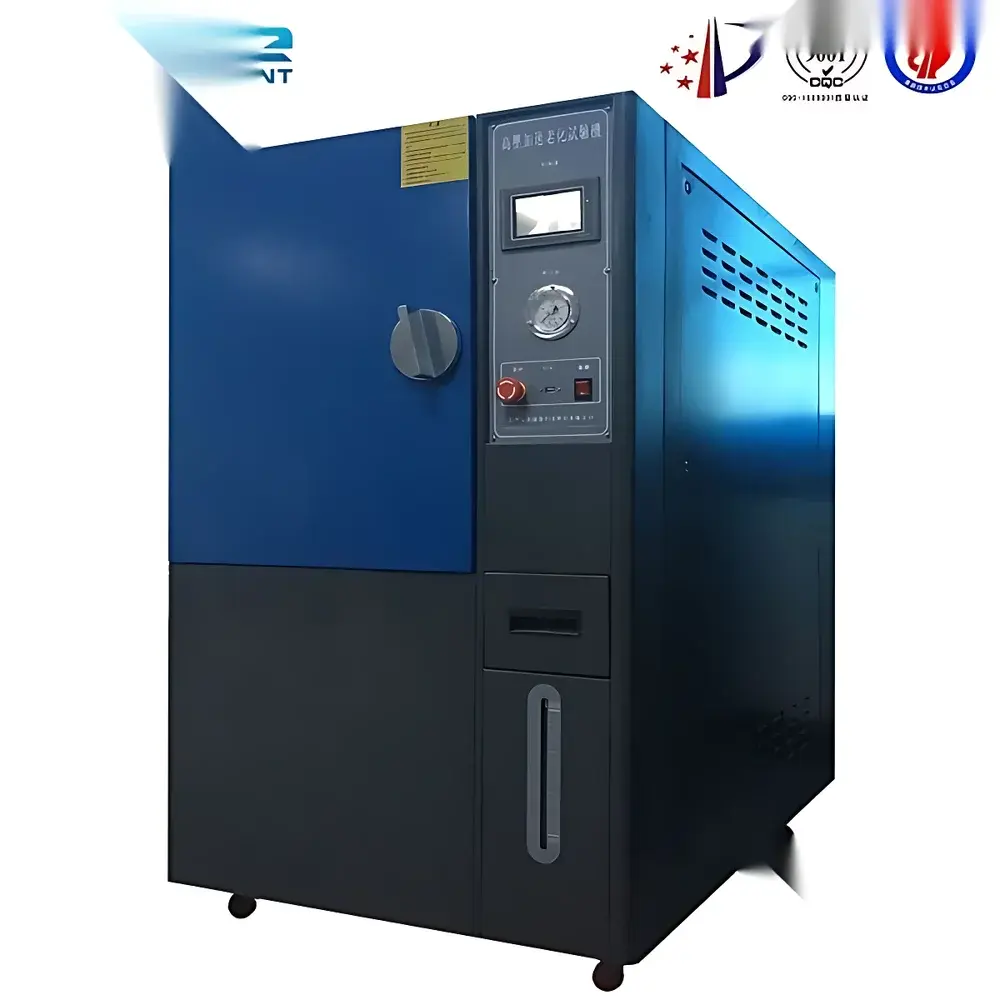
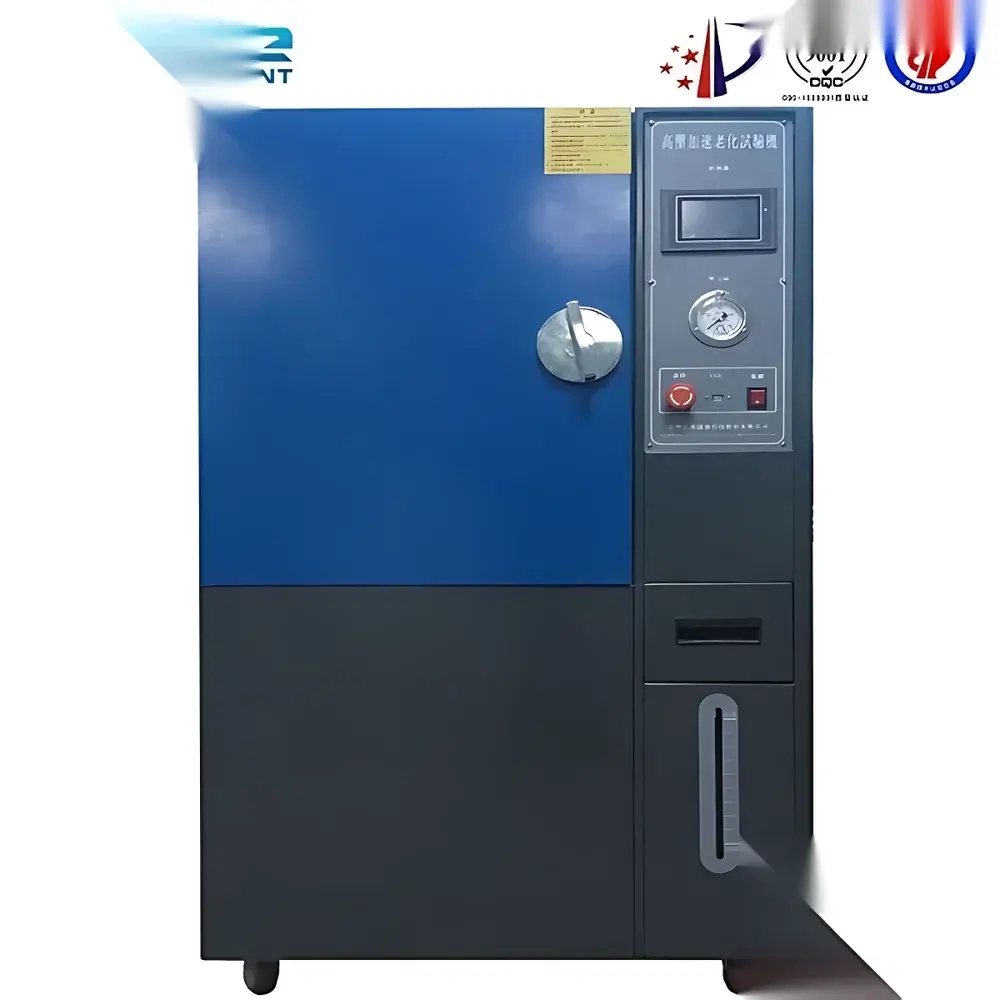
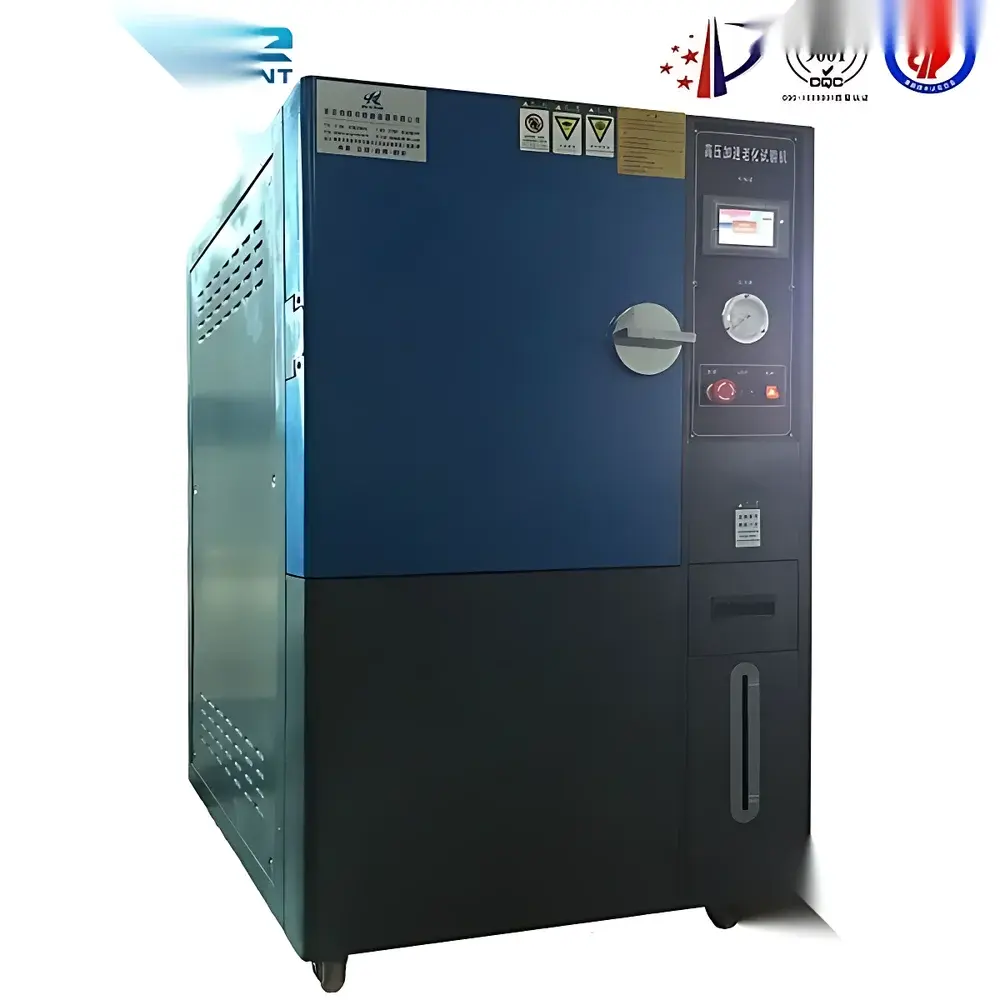
PCT High-Pressure Accelerated Aging Test Chamber (JESD22-A102 Compliant)
| Brand | Other Brands |
|---|---|
| Origin | Imported |
| Manufacturer Type | Authorized Distributor |
| Price | USD 3,950 (FOB) |
| Compliance | JESD22-A102-B, IEC 60068-2-66, EIA/JESD22, GB/T 2423.40–1997 |
Overview
The PCT High-Pressure Accelerated Aging Test Chamber is an engineered environmental stress screening system designed for accelerated reliability evaluation of non-hermetic semiconductor packages under elevated temperature, humidity, and saturated steam pressure conditions. Based on the physical principle of moisture diffusion driven by high partial pressure gradients, this chamber subjects devices to controlled condensing steam environments—typically at 121 °C, 100 % RH, and 2 bar absolute pressure—to accelerate water vapor ingress through micro-defects in mold compounds, die attach interfaces, and passivation layers. Unlike conventional damp heat testing, the PCT method significantly reduces test duration while maintaining mechanistic relevance to field failure modes such as intermetallic corrosion, wire bond degradation, delamination, and electrochemical migration. The system operates in strict accordance with JEDEC Standard JESD22-A102-B, which defines test conditions, sample preparation protocols, and pass/fail criteria for assessing moisture resistance integrity.
Key Features
- Real-time sensor-based monitoring: Integrated PT100 temperature sensors, capacitive humidity probes, and piezoresistive pressure transducers directly measure chamber conditions—eliminating reliance on theoretical saturation tables and ensuring traceable, metrologically valid process data.
- Auto-refill water reservoir: A closed-loop level control system maintains consistent water volume throughout extended test cycles (up to 96 h), preventing interruption due to evaporation or leakage.
- Post-test electric heating dry-out cycle: After test completion, a programmable thermal drying phase (up to 150 °C) rapidly removes residual condensate from test specimens and chamber walls, minimizing oxidation risk and enabling safe handling without desiccant conditioning.
- Dynamic P–T–RH correlation display: On-screen interface simultaneously plots actual pressure vs. temperature vs. relative humidity, verifying conformance to the JESD22-A102-B reference curve (e.g., 121 °C / 200 kPa / 100 % RH) with ±0.5 °C, ±1 kPa, and ±2 % RH accuracy.
- Stainless steel 316L test chamber: Corrosion-resistant construction ensures long-term stability in aggressive steam environments and complies with ISO 14644-1 Class 8 cleanroom compatibility requirements for post-test electrical inspection.
Sample Compatibility & Compliance
This chamber accommodates standard JEDEC trays (JEDEC MO-178), gel packs, and bare-die carriers up to 300 mm × 300 mm footprint. It supports both powered and unpowered biasing configurations via optional feedthrough terminals (rated to 100 V DC). All operational parameters are documented per GLP/GMP-aligned test records, supporting FDA 21 CFR Part 11 compliance when paired with validated electronic log software. Certification documentation includes factory calibration reports (NIST-traceable), IEC 61000-4-2/4-3 EMC verification, and conformity statements for IEC 60068-2-66 and JESD22-A102-B Annex A.
Software & Data Management
The embedded controller logs timestamped temperature, pressure, and humidity values at 1-second intervals, exporting CSV-formatted datasets compatible with JMP, Minitab, and MATLAB for Weibull analysis and acceleration factor modeling. Optional PC-based software enables remote monitoring, alarm notification via SMTP/SNMP, and automated report generation—including deviation alerts if any parameter exceeds ±1.5 σ from target setpoints. Audit trails include user login history, parameter change logs, and firmware version stamps—fully supporting ISO/IEC 17025 accreditation requirements for accredited test laboratories.
Applications
- Qualification of new molding compound formulations against moisture-induced delamination (MID)
- Evaluation of leadframe surface treatments (e.g., NiPdAu plating) for ion migration resistance
- Failure analysis root cause isolation in QFN, BGA, and WLCSP packages exhibiting popcorn cracking or solder joint corrosion
- Process validation for wafer-level packaging (WLP) and fan-out wafer-level packaging (FOWLP) technologies
- Supporting AEC-Q100 stress testing for automotive-grade ICs requiring extended PCT exposure (e.g., 168 h at 130 °C/2.5 bar)
FAQ
What distinguishes PCT testing from HAST (Highly Accelerated Stress Test)?
PCT uses saturated steam at fixed temperature/pressure conditions per JESD22-A102, whereas HAST (JESD22-A110) employs superheated steam with higher temperature flexibility but lower relative humidity—making PCT more sensitive to hydrolytic degradation mechanisms.
Can this chamber perform tests per JESD22-A118 (MSL reflow simulation)?
No—this system is configured exclusively for static PCT conditions; dynamic thermal cycling with reflow profiles requires a separate thermal shock or reflow simulator.
Is third-party calibration support available?
Yes—certified calibration services are offered annually by ISO/IEC 17025-accredited providers, including uncertainty budgets per ISO/IEC 17025:2017 Clause 7.7.
How is safety ensured during high-pressure operation?
Dual redundant pressure relief valves (ASME Section VIII compliant), door interlock switches, and real-time overpressure shutdown logic meet EN 13445-3 and PED 2014/68/EU requirements.
Does the system support custom test profiles beyond JESD22-A102-B?
Yes—user-defined ramp-hold sequences can be programmed for research applications, provided they remain within the chamber’s operational envelope (max 135 °C, 3 bar abs, 100 % RH).



