
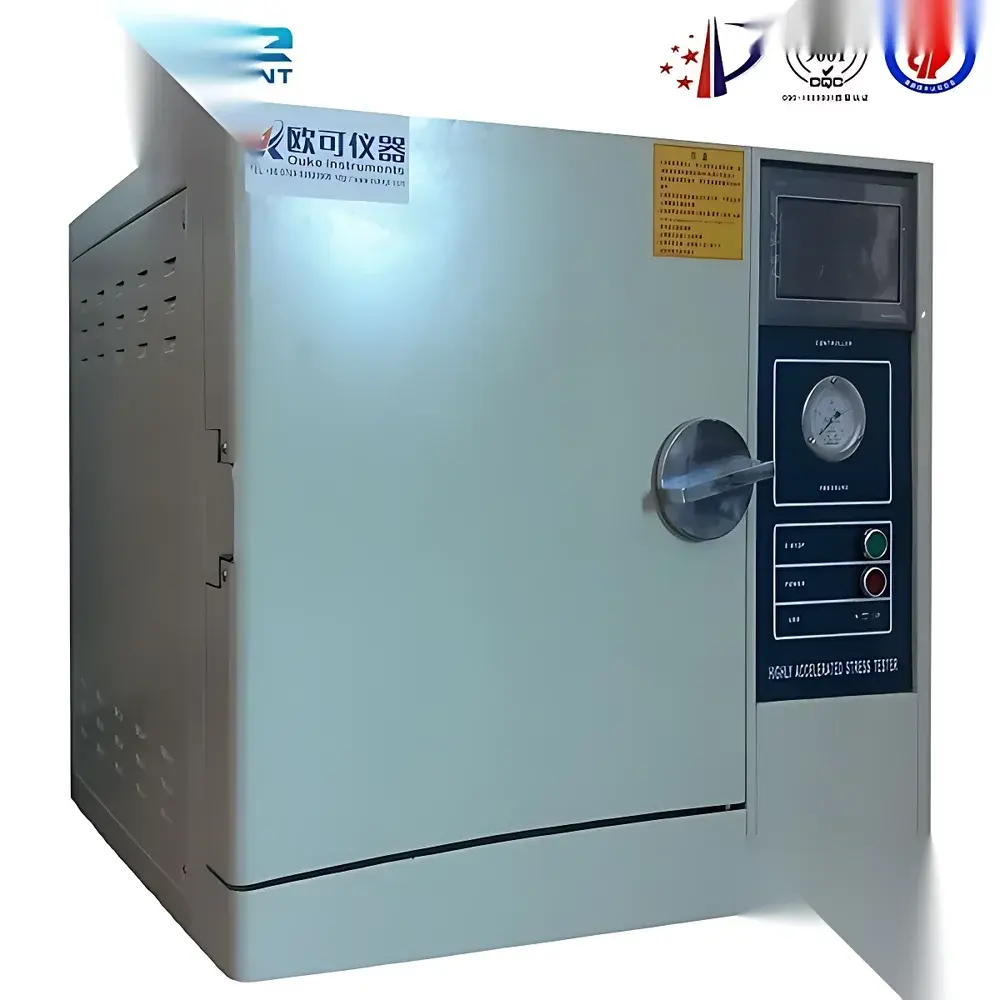
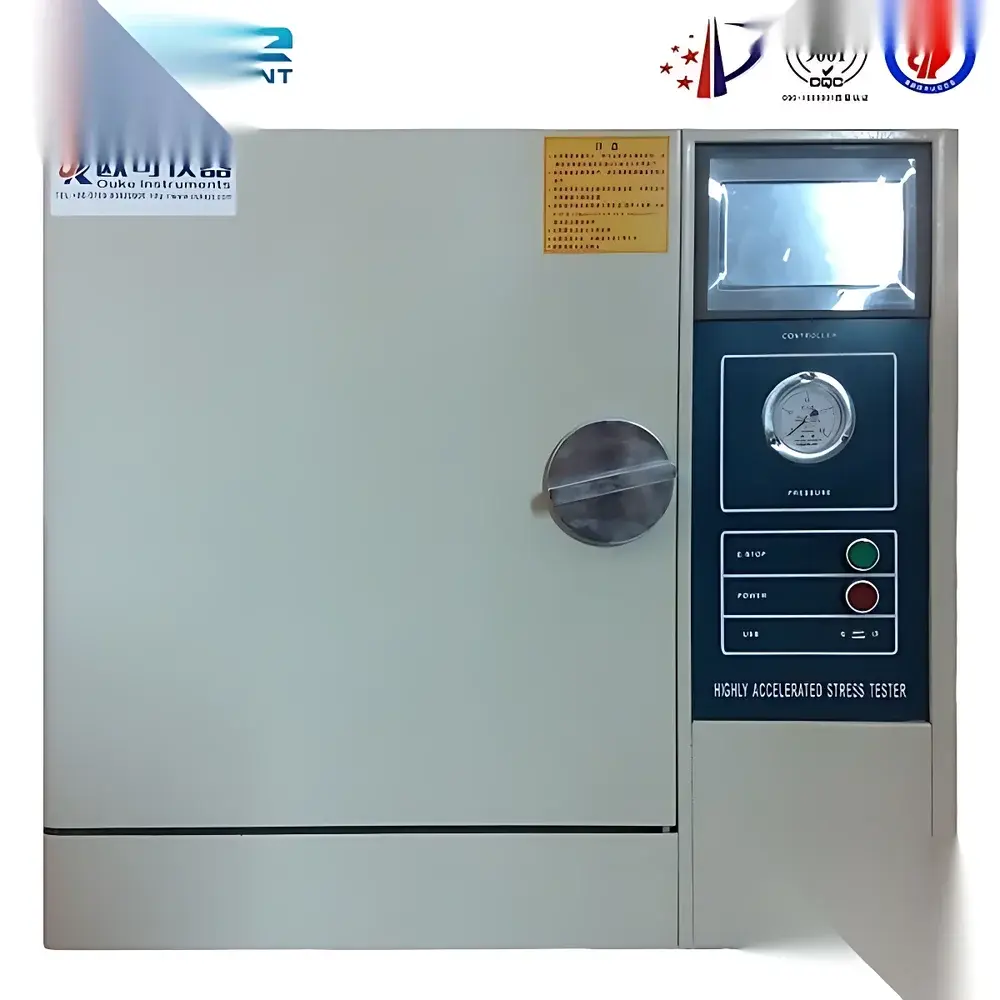
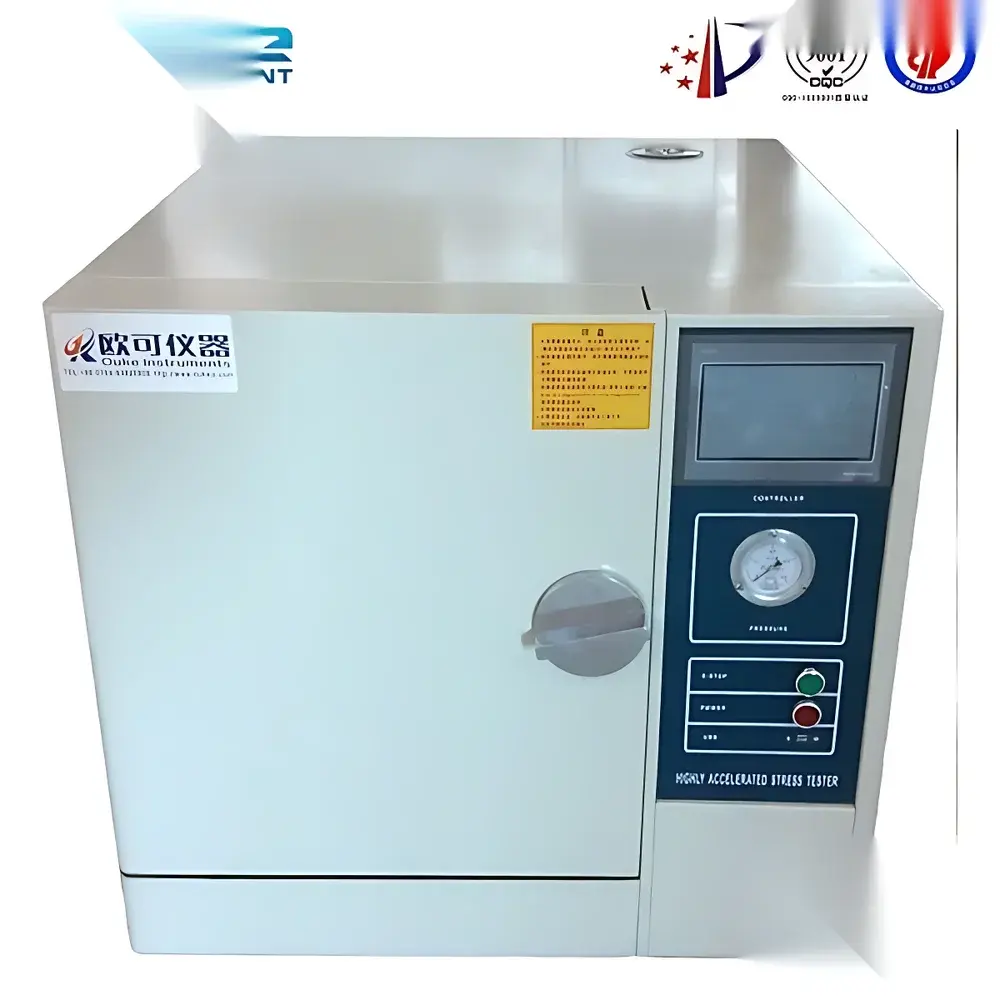
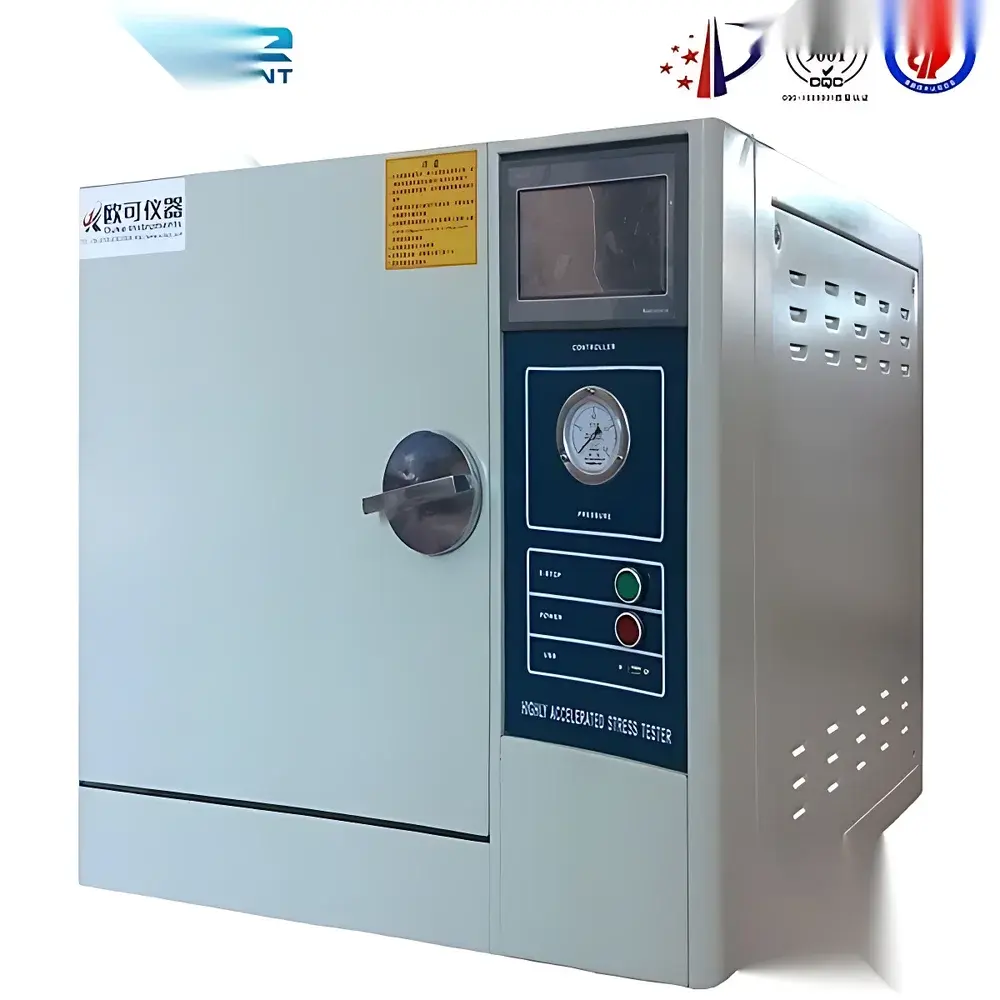
PCT High-Temperature High-Pressure Autoclave Chamber (Imported, General Distributor)
| Brand | Other Brands |
|---|---|
| Origin | Imported |
| Manufacturer Type | General Distributor |
| Price | USD 3,950 (FOB) |
| Internal Chamber Dimensions | Ø300 × 450 mm (D × H) |
| External Dimensions | 660 × 950 × 600 mm (W × H × D) |
| Internal Material | SUS304 Stainless Steel |
| External Finish | Powder-Coated Paint |
| Temperature Range | 100–132 °C (adjustable) |
| Humidity Range | 75–100 % RH (saturated steam) |
| Pressure Range | 0.0–3.00 kg/cm² (gauge) |
| Max Safety Capacity | 3.00 kg/cm² (1 atm + 2 kg/cm²) |
| Timer Range | 0–1000 h |
| Temperature Uniformity | ±2.0 °C at 100 °C |
| Heating Rate | RT to 121 °C in ≤35 min |
| Pressurization Rate | 0.0 to 1.00 kg/cm² in ≤35 min |
| Circulation Method | Natural convection of saturated steam |
| Temperature Sensor | PT-100 RTD (Platinum Resistance Thermometer) |
| Heating Element | Insulated, high-voltage-rated tubular heater |
| Controller | Microprocessor-based LED display with PID + SSR control |
| Temperature Control Accuracy | ±0.5 °C |
| Temperature Resolution | 0.1 °C |
| Pressure Display Accuracy | ±0.15 kg/cm² |
Overview
The PCT High-Temperature High-Pressure Autoclave Chamber is an engineered environmental stress test system designed for accelerated reliability evaluation of electronic components, packaging materials, and hermetic seals under saturated steam conditions. Operating on the principle of pressurized saturated steam exposure, it subjects samples to precisely controlled combinations of elevated temperature (up to 132 °C), high relative humidity (75–100 % RH), and gauge pressure (up to 3.00 kg/cm²). This simulates aggressive moisture ingress environments—such as those encountered during solder reflow or field operation—to accelerate failure mechanisms including corrosion, intermetallic growth, delamination, and popcorning in plastic-encapsulated microcircuits (PEMs). The chamber complies with standardized test methodologies defined in JEDEC JESD22-A102 (Pressure Cooker Test), MIL-STD-883 Method 1008, and AEC-Q200 qualification protocols.
Key Features
- Robust stainless-steel internal chamber (SUS304) with seamless welding and electropolished finish for long-term resistance to steam corrosion and condensate accumulation.
- Microprocessor-based controller with dual-loop PID algorithm and solid-state relay (SSR) output ensures stable thermal and pressure regulation within ±0.5 °C and ±0.15 kg/cm² tolerances.
- Integrated PT-100 platinum RTD sensor mounted in direct contact with chamber atmosphere for high-fidelity temperature feedback and traceable calibration.
- Self-contained heating system using insulated tubular heaters rated for continuous operation under saturated steam conditions—no external boiler or steam generator required.
- Natural convection steam circulation eliminates mechanical fans or pumps, reducing maintenance points and eliminating airflow-induced thermal gradients.
- Dual-display interface: LED digital readout for temperature/time setpoints and real-time values; analog pressure gauge with mechanical pointer for redundant safety monitoring.
- Comprehensive safety architecture including over-temperature cutoff, pressure relief valve (ASME-certified), door interlock switch, and automatic depressurization sequence upon cycle completion.
Sample Compatibility & Compliance
This autoclave accommodates standard test boards, leadframes, bare dies, and molded packages up to Ø300 mm diameter. Its chamber geometry supports uniform steam saturation without dead zones, critical for reproducible moisture diffusion kinetics. The system meets essential regulatory and industry-standard requirements for reliability testing—including ASTM F1876 (for moisture sensitivity level classification), IEC 60749-26, JEDEC J-STD-020, and ISO/IEC 17025-accredited lab validation protocols. While not certified for sterilization per EN 285 or FDA 21 CFR Part 820, its control stability and documentation capabilities support GLP-compliant data recording when paired with external audit-trail software.
Software & Data Management
The embedded controller logs timestamped temperature and pressure values at user-defined intervals (1–60 s). Raw data export is supported via RS-232 serial interface to external PCs running vendor-supplied or third-party logging software (e.g., LabVIEW, MATLAB, or custom SCADA systems). All cycle parameters—including soak time, ramp rates, and final dwell conditions—are fully programmable and recallable. For regulated environments, optional add-ons include USB data logger modules with encrypted storage and CSV-compatible output, enabling full traceability aligned with 21 CFR Part 11 electronic record requirements when deployed with appropriate access controls and audit trail configuration.
Applications
- Moisture Sensitivity Level (MSL) grading per JEDEC J-STD-020 for surface-mount devices prior to reflow assembly.
- Qualification testing of conformal coatings, underfill materials, and wafer-level packaging against steam-induced degradation.
- Failure analysis root cause isolation for humidity-related parametric shifts in MEMS sensors and RF modules.
- Accelerated aging of automotive-grade electronics per AEC-Q100 stress test plans involving high-humidity thermal cycling.
- Validation of hermetic seal integrity in medical device housings and implantable electronics exposed to body-fluid-simulating environments.
FAQ
Is this chamber suitable for sterilization of medical instruments?
No—this unit is designed exclusively for reliability stress testing under saturated steam conditions, not for sterile processing. It lacks the validation protocols, biological indicator compatibility, and regulatory certifications (e.g., ISO 17665) required for sterilization applications.
Can the pressure be controlled independently from temperature?
No—the system operates on saturated steam equilibrium principles; pressure is intrinsically coupled to temperature via the steam saturation curve. Independent control would require superheated steam generation, which is outside the design scope.
What calibration documentation is provided with shipment?
Each unit ships with a factory calibration certificate covering temperature (at 100 °C and 121 °C) and pressure (at 1.00 and 2.00 kg/cm²), traceable to NIST standards via accredited third-party metrology labs.
Does the controller support Ethernet or Modbus communication?
Standard configuration includes only RS-232. Optional upgrades are available for RS-485 (Modbus RTU) and Ethernet/IP interfaces—contact technical sales for OEM integration specifications.
What maintenance is required for long-term operational reliability?
Routine tasks include quarterly inspection of the pressure relief valve, biannual cleaning of the chamber interior with deionized water, and annual verification of RTD sensor drift using a calibrated reference thermometer. No lubrication or consumable parts are required.



