
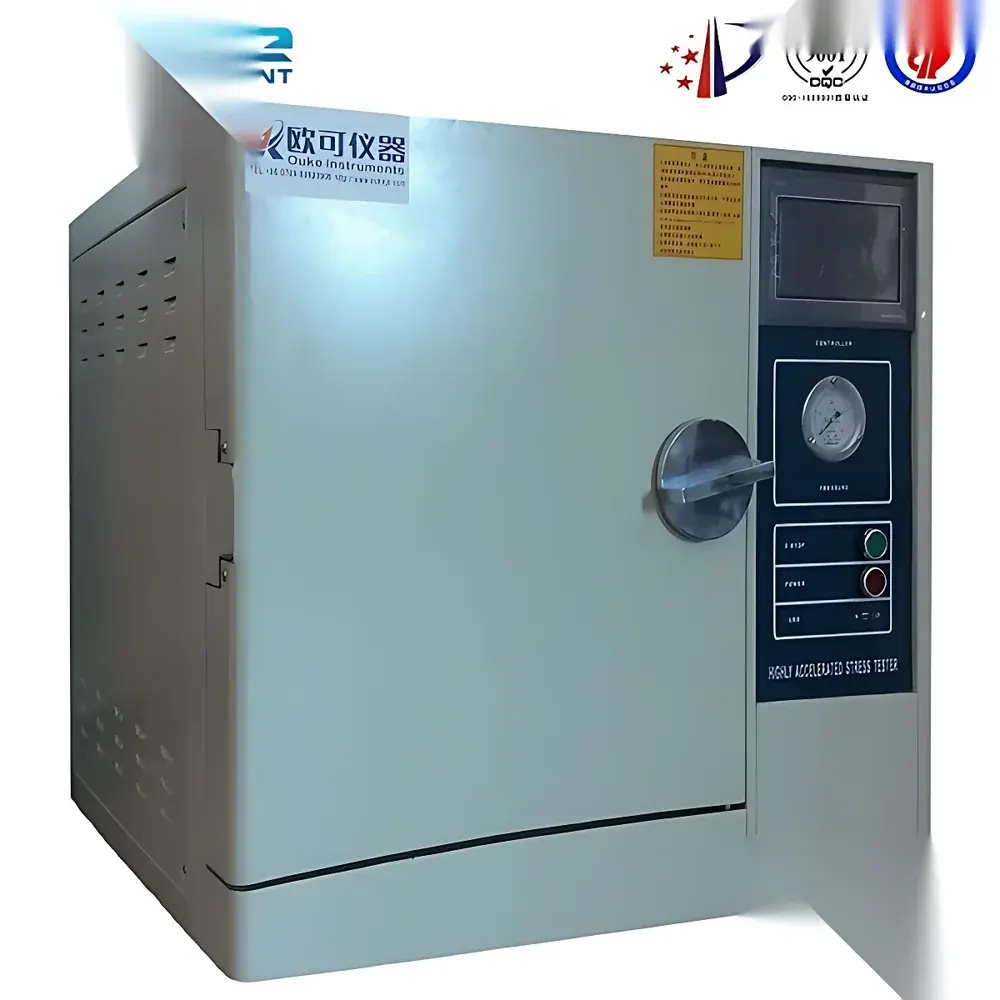
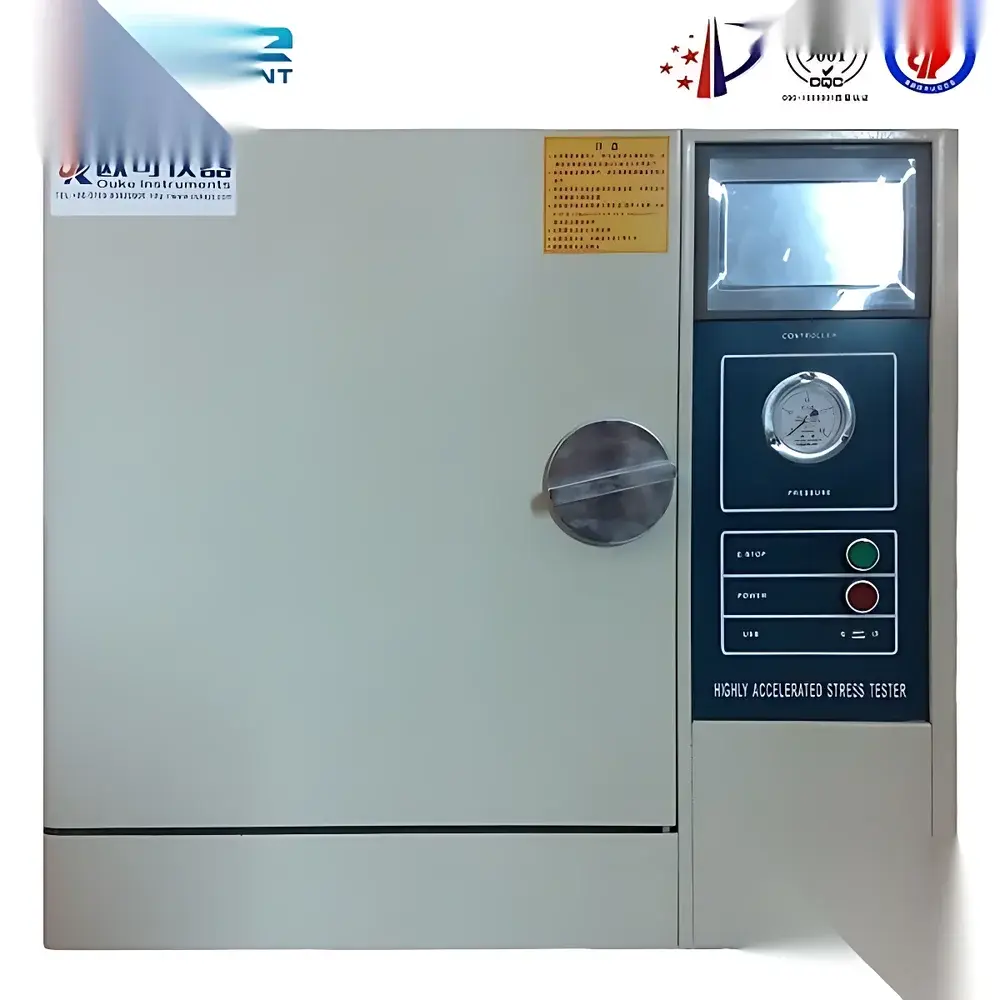
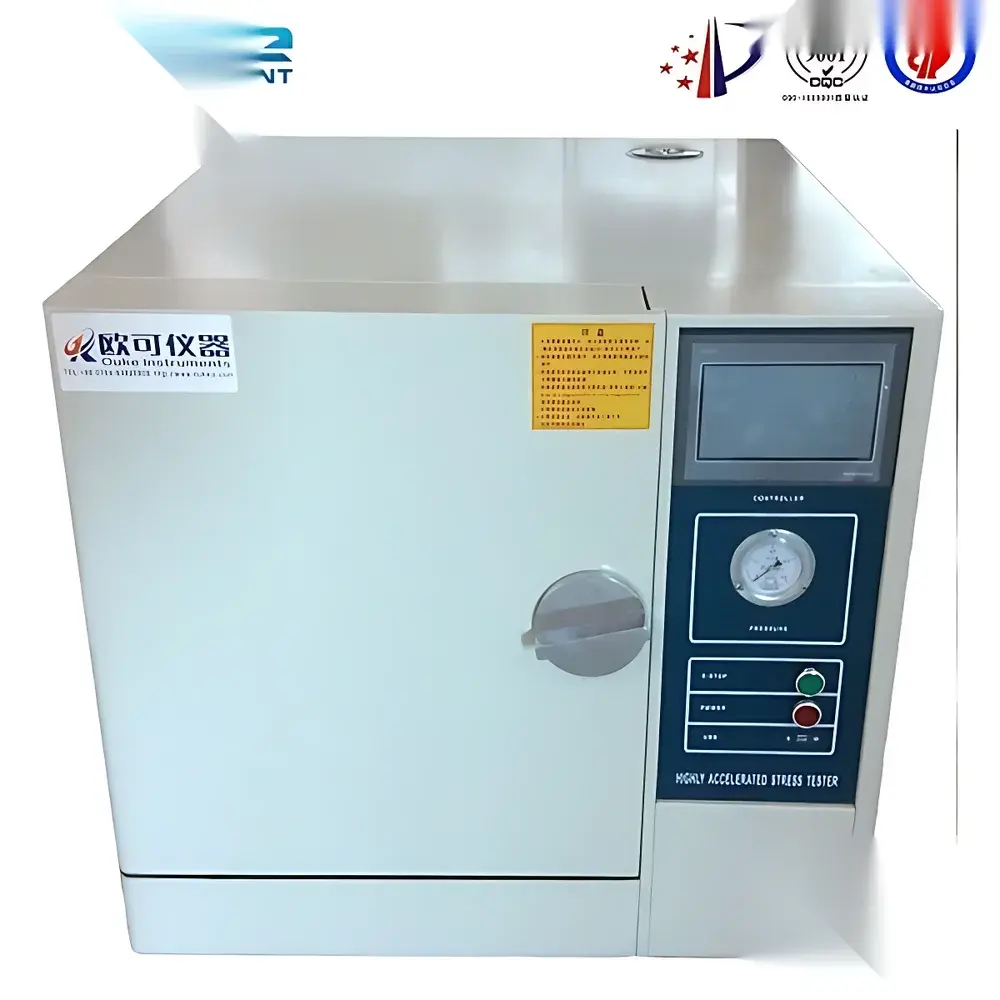
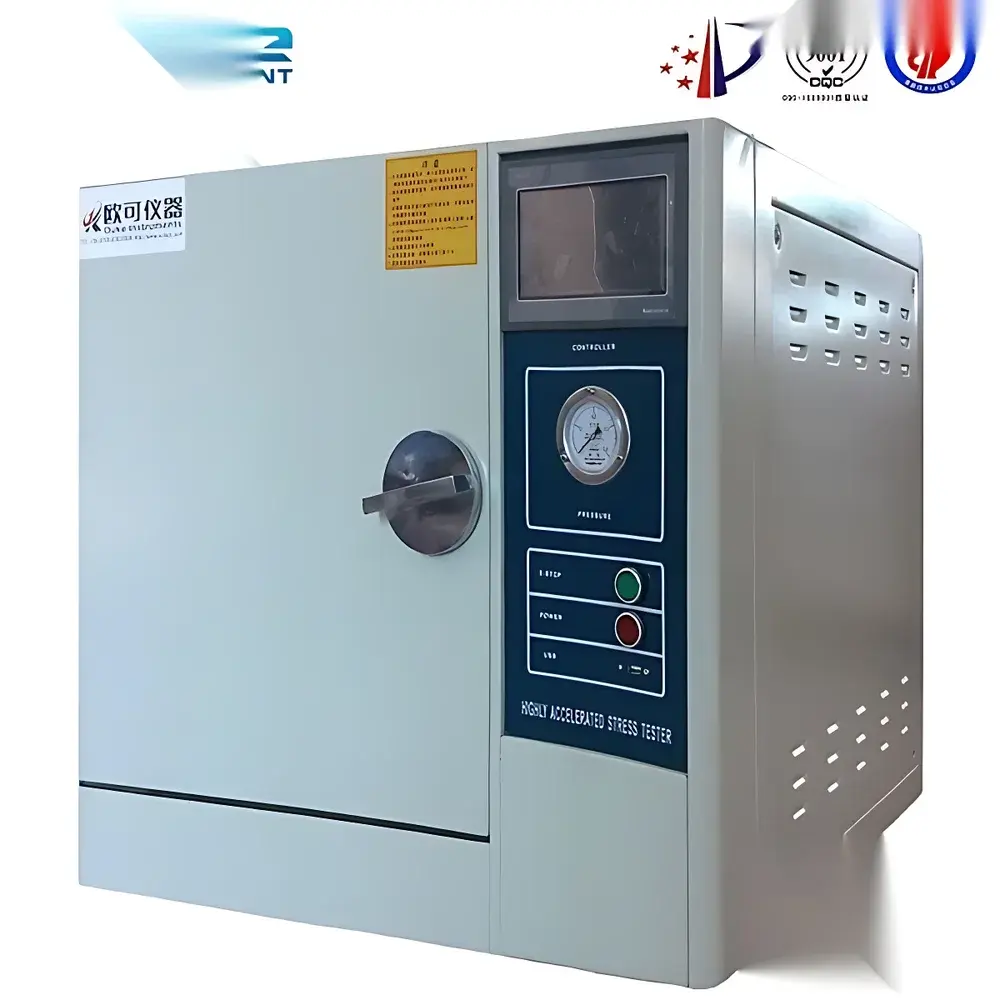
PCT High-Temperature High-Pressure Autoclave Chamber (Saturated Steam Type)
| Brand | Other Brands |
|---|---|
| Origin | Imported |
| Manufacturer Type | Authorized Distributor |
| Price | USD 3,950 (FOB) |
| Internal Chamber Dimensions | Ø300 × 450 mm (D × H) |
| External Dimensions | 660 × 950 × 600 mm (W × H × D) |
| Internal Material | SUS304 Stainless Steel |
| External Finish | Powder-Coated Steel |
| Temperature Range | 100–132 °C (adjustable) |
| Humidity | 100 % RH (saturated steam) |
| Pressure Range | 0.0–3.0 kg/cm² (gauge) |
| Max Safety Rating | 3.0 kg/cm² (g) |
| Time Setting Range | 0–1000 h |
| Temperature Uniformity | ±2.0 °C at 100 °C |
| Heating Rate | RT to 121 °C in ≤35 min |
| Pressurization Rate | 0.0 to 1.0 kg/cm² in ≤35 min |
| Circulation Method | Natural convection of saturated steam |
| Temperature Sensor | PT-100 RTD (Class A) |
| Heating Element | Insulated high-voltage resistance heater |
| Control System | Microprocessor-based PID controller with LED display for temperature/time |
| Temperature Control Accuracy | ±0.5 °C |
| Temperature Resolution | 0.1 °C |
| Pressure Accuracy | ±0.15 kg/cm² |
| Power Supply | AC 220 V, 50/60 Hz, 1-phase, 4 kW |
| Electrical Wiring | 4 mm² copper conductor recommended |
Overview
The PCT High-Temperature High-Pressure Autoclave Chamber is an engineered environmental stress test system designed for accelerated reliability evaluation of electronic components, packaging materials, and hermetic seals under saturated steam conditions. It operates on the principle of pressurized saturated steam exposure—where temperature, pressure, and humidity are intrinsically coupled per the steam saturation curve—enabling precise replication of harsh operational environments such as those encountered in automotive electronics, medical device sterilization validation, and semiconductor package qualification. Unlike conventional dry-heat ovens or humidity chambers, this unit maintains full thermodynamic equilibrium between vapor phase and liquid phase, ensuring consistent moisture ingress kinetics critical for failure mode analysis (e.g., popcorning, wire bond lift, delamination). Its cylindrical stainless-steel chamber complies with ASME BPVC Section VIII Div. 1 design principles for low-pressure vessels and integrates vacuum-assisted air removal prior to cycle initiation—minimizing oxygen content and enhancing reproducibility across test batches.
Key Features
- Cylindrical internal chamber fabricated from electropolished SUS304 stainless steel, optimized for uniform thermal distribution and corrosion resistance in aggressive steam environments.
- Vacuum pre-purge function with HEPA-filtered (≤1 µm particle retention) air reintroduction ensures controlled atmospheric composition before pressurization—critical for oxidation-sensitive samples.
- Self-sealing gasket mechanism utilizing counter-pressure principle: rising internal pressure enhances gasket-to-flange contact force, extending sealing life beyond conventional compression-type designs.
- Dual-stage water management system—manual refill supports up to 1 hour of continuous operation; optional auto-refill enables uninterrupted testing for up to 999 hours per cycle.
- Microprocessor-based PID controller with SSR output delivers stable temperature regulation (±0.5 °C accuracy) and real-time logging of setpoints, actual values, and elapsed time.
- Integrated safety architecture featuring dual independent overpressure relief valves, temperature limit cutoff, and fault-code diagnostics via LED indicators.
Sample Compatibility & Compliance
This autoclave accommodates PCB assemblies, molded IC packages (QFP, BGA, CSP), MEMS sensors, polymer encapsulants, and medical-grade plastic housings. Chamber geometry permits standardized sample rack configurations per JEDEC JESD22-A102 (Pressure Cooker Test) and JESD22-A110 (Highly Accelerated Stress Test – HAST). The system meets structural and procedural requirements of multiple international standards including ASTM F1876 (Moisture Resistance of Plastic-Encapsulated Microcircuits), IEC 60749-18, MIL-STD-883 Method 1008.7, and NACE TM0177 for sour service material screening. All control logic and data handling conform to GLP-compliant audit trail requirements, supporting 21 CFR Part 11 readiness when paired with validated software modules.
Software & Data Management
The embedded controller provides local data storage for up to 100 complete test logs, each recording timestamped temperature, pressure, and duration parameters. Optional RS-485/Modbus RTU interface enables integration into centralized laboratory information management systems (LIMS) or SCADA platforms. Exported CSV files include cycle ID, start/stop times, deviation alerts, and operator annotations—facilitating traceability during ISO/IEC 17025 audits. Firmware supports user-defined profiles with password-protected access levels for engineering, QA, and maintenance personnel.
Applications
- Qualification testing of moisture-sensitive devices (MSL level verification per J-STD-020).
- Failure analysis of plastic-encapsulated microcircuits subjected to thermal-mechanical stress under humid conditions.
- Accelerated aging studies for biocompatible polymers used in implantable medical devices.
- Validation of hermetic seal integrity in MEMS packaging and optoelectronic modules.
- Process development support for reflow soldering, molding compound curing, and conformal coating adhesion assessment.
FAQ
What standards does this PCT chamber support?
It is configured to execute JEDEC JESD22-A102, JESD22-A110, ASTM F1876, IEC 60749-18, and MIL-STD-883 Method 1008.7 protocols out-of-the-box.
Is vacuum capability standard or optional?
Vacuum pre-purge is a built-in feature—not optional—and includes integrated HEPA filtration for clean-air reintroduction.
Can the chamber be integrated into a factory MES or LIMS?
Yes, via RS-485 Modbus RTU communication; custom OPC UA or Ethernet/IP drivers available upon request.
What maintenance intervals are recommended?
Gasket inspection every 200 cycles; pressure transducer calibration annually; full safety valve certification per local jurisdiction requirements.
Does the system include validation documentation?
IQ/OQ documentation templates are provided; PQ execution requires site-specific sensor mapping and protocol approval by the end user’s QA team.
Related Products



