
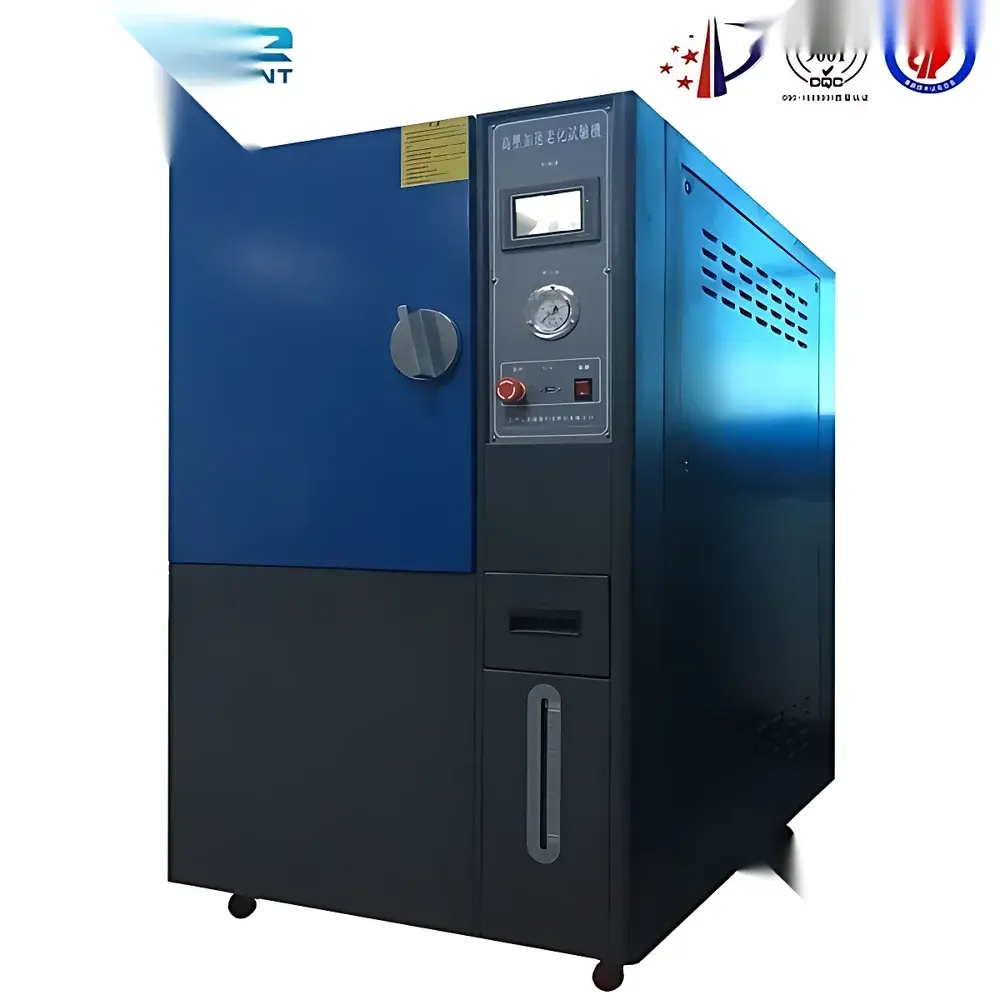
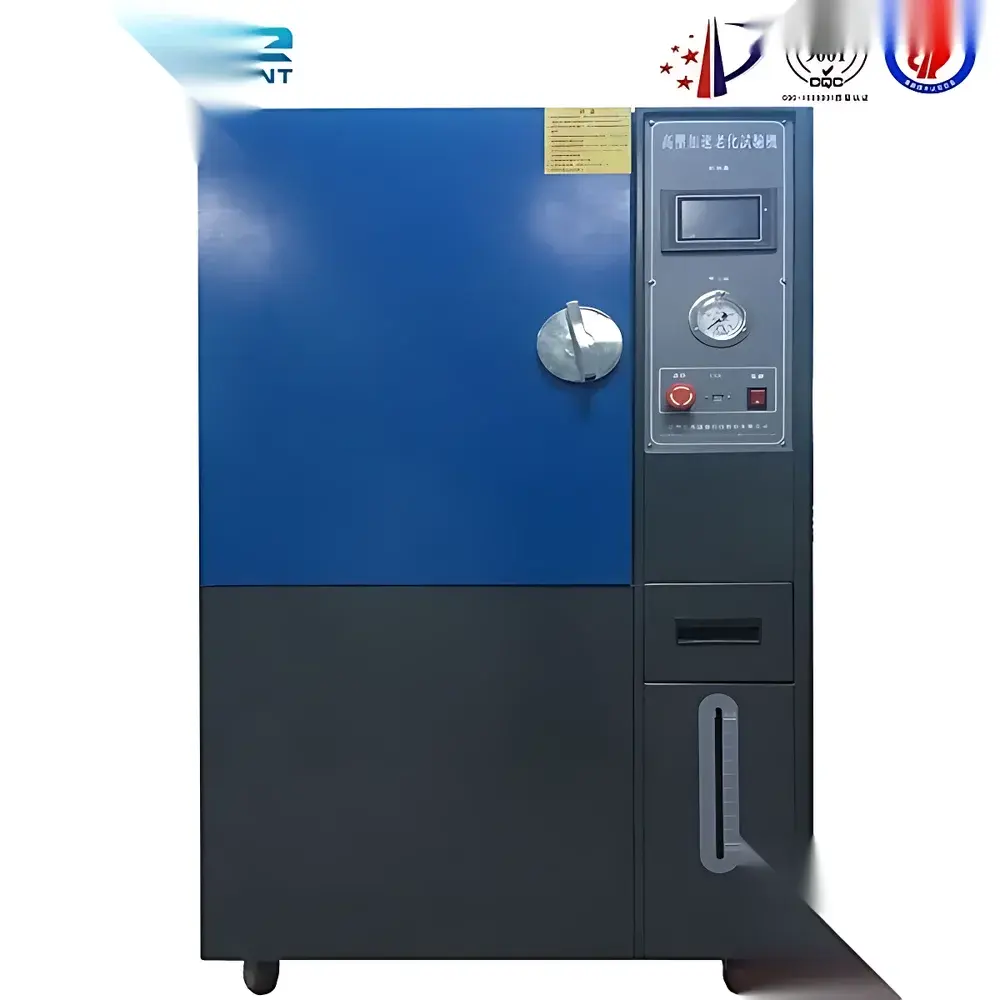
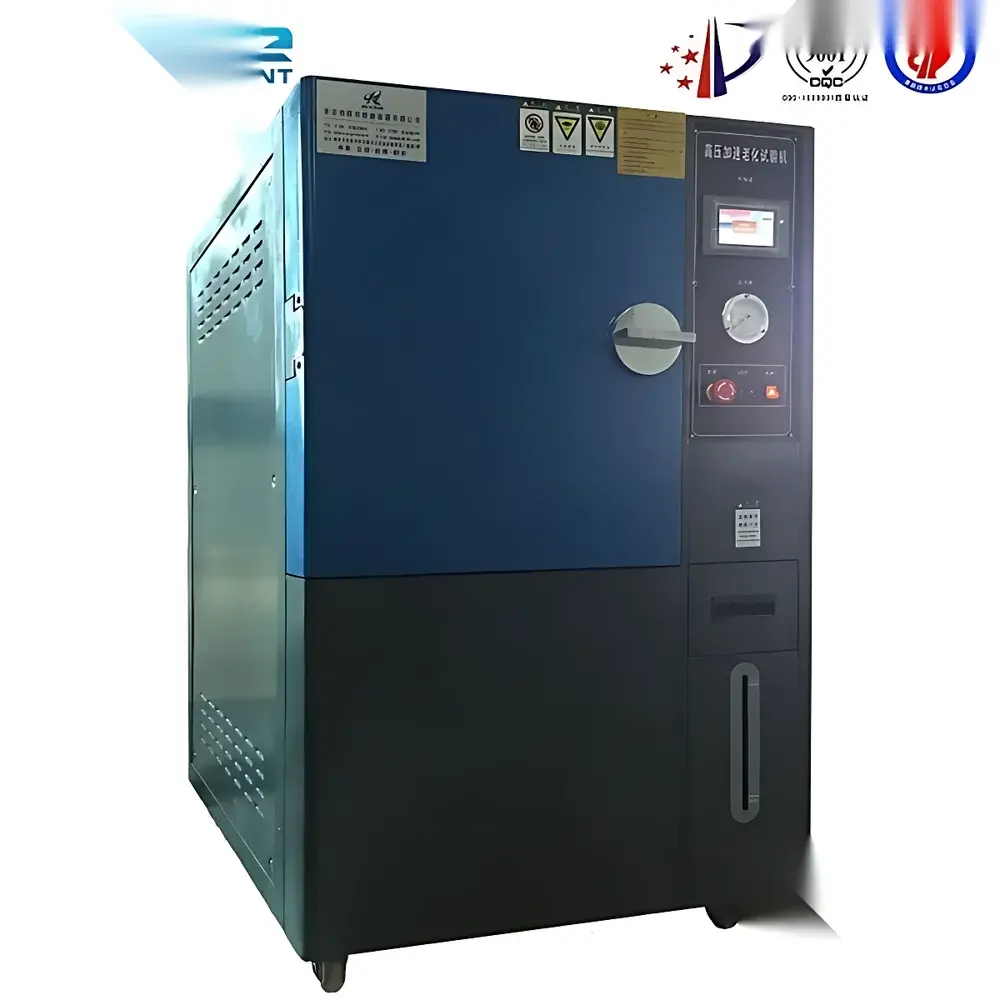
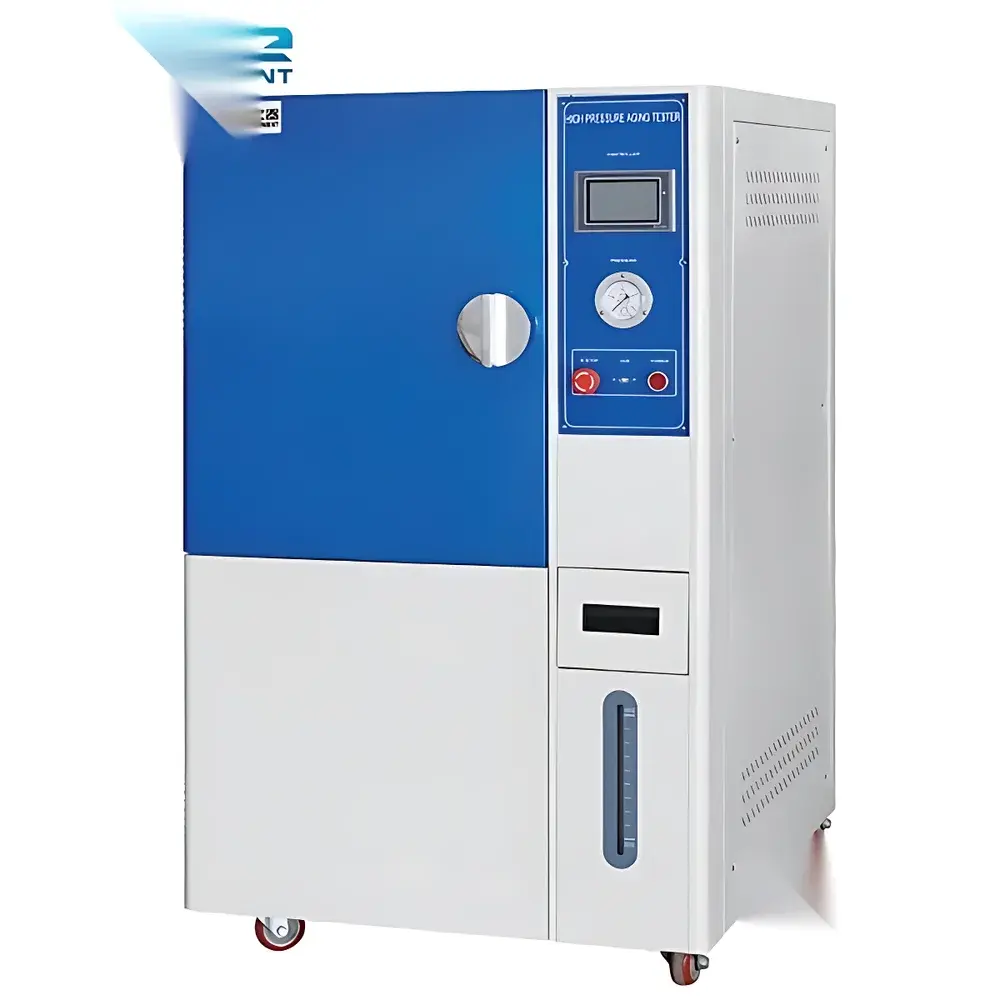
OK-PCT Series High-Pressure Saturated Steam Aging Chamber
| Brand | OK Instruments |
|---|---|
| Origin | Imported |
| Manufacturer Type | Authorized Distributor |
| Price | USD 4,100 (FOB) |
| Internal Dimensions (Φ×D, cm) | 30×45 |
| Temperature Range | 121 °C, 132 °C (143 °C optional) |
| Operating Pressure | 0–200 kPa (gauge), up to 300 kPa (optional) |
| Humidity | 100 % RH (saturated steam) |
| Temperature Uniformity | ≤ ±2 °C |
| Pressure/Temperature Control | PID-controlled microprocessor with digital LED display |
| Safety Features | Dual-pressure relief valve, auto water-level detection, overtemperature cutoff, anti-pressure door lock, dry-run protection |
| Power Supply | AC 220 V ±5 %, 50 Hz ±0.5 Hz |
Overview
The OK-PCT Series High-Pressure Saturated Steam Aging Chamber is an engineered environmental stress test system designed for accelerated reliability evaluation of hermetically sealed and moisture-sensitive components under controlled high-pressure saturated steam conditions. It operates on the fundamental principle of pressurized saturated steam aging—leveraging elevated temperature and partial pressure of water vapor to accelerate hydrolytic degradation, intermetallic diffusion, delamination, and corrosion mechanisms in electronic packages, multilayer PCBs, IC substrates, LED assemblies, medical device housings, and automotive sensors. Unlike conventional thermal or humidity chambers, the OK-PCT chamber maintains precise thermodynamic equilibrium between temperature and steam pressure per the IAPWS-IF97 formulation, ensuring reproducible exposure conditions aligned with industry-standard accelerated test protocols including JESD22-A102 (Pressure Cooker Test), MIL-STD-883 Method 1008, and AEC-Q200 qualification requirements. Its cylindrical stainless-steel pressure vessel architecture conforms to ASME BPVC Section VIII Division 1 design principles for low-pressure vessels, enabling safe, repeatable operation at up to 200 kPa(g) without requiring full ASME stamping—making it suitable for R&D labs, QC departments, and pre-compliance validation environments.
Key Features
- Microprocessor-based PID controller with real-time saturation curve tracking, maintaining setpoint accuracy within ±0.5 °C and ±5 kPa across the operational range.
- Cylindrical 304 stainless-steel inner chamber with seamless weld construction, eliminating crevices and enhancing cleanability and long-term corrosion resistance.
- Patented counter-pressure door locking mechanism: internal overpressure actively enhances gasket compression force, improving seal integrity and extending gasket service life beyond 5,000 cycles.
- Integrated auto-refill system with capacitive water-level sensing; supports continuous operation up to 200 hours per fill under standard test conditions (132 °C / 200 kPa).
- Dual-stage safety architecture: primary mechanical pressure relief valve (ASME-certified), secondary electronic overpressure cutoff, plus independent overtemperature limiter and dry-run interlock.
- Natural convection steam circulation design eliminates forced-air turbulence, preventing localized condensate pooling and ensuring uniform thermal-hygrometric exposure across all sample zones.
- Digital LED time controller activated only after chamber reaches thermal equilibrium—eliminating premature timer start errors common in non-equilibrated systems.
Sample Compatibility & Compliance
The OK-PCT chamber accommodates a broad spectrum of miniaturized and encapsulated components—including QFN, BGA, CSP, and wafer-level packages—as well as assembled PCBs, LED modules, MEMS sensors, and polymer-sealed medical connectors. Its cylindrical geometry minimizes edge effects and supports standardized sample rack configurations (two-tier 304 SS trays included). All operational parameters comply with the measurement traceability requirements of ISO/IEC 17025-accredited laboratories. The system supports audit-ready documentation generation when integrated with compliant data logging software—enabling adherence to GLP, GMP, and FDA 21 CFR Part 11 requirements where electronic records are mandated. Test reports generated from this platform are routinely accepted by third-party certification bodies for IPC-9701, JEDEC J-STD-020, and IEC 60068-2-66 validation submissions.
Software & Data Management
While the base configuration features standalone digital controllers, optional Ethernet-enabled data acquisition modules provide real-time streaming of temperature, pressure, elapsed time, and water level status to external SCADA or LIMS platforms via Modbus TCP or OPC UA protocols. Logged data is timestamped with NTP-synchronized UTC clocks and stored in CSV/CSV-T format for post-test statistical analysis (e.g., Weibull lifetime modeling, Arrhenius acceleration factor calculation). Audit trails include operator ID, parameter change history, alarm events, and calibration verification timestamps—fully supporting 21 CFR Part 11 electronic signature and record retention mandates when deployed with validated software packages.
Applications
- Qualification of moisture sensitivity levels (MSL) per J-STD-020 for surface-mount devices prior to reflow soldering.
- Evaluation of die attach integrity, mold compound hydrolysis resistance, and wire bond corrosion susceptibility in high-reliability electronics.
- Accelerated aging of silicone gaskets, epoxy encapsulants, and conformal coatings used in outdoor lighting and automotive ECUs.
- Validation of hermetic seal performance in implantable medical devices and aerospace-grade sensors.
- Process development support for vapor-phase reflow, steam-assisted curing, and high-humidity preconditioning steps.
FAQ
What standards does the OK-PCT chamber support?
It is configured to meet the physical test conditions specified in JESD22-A102, MIL-STD-883 Method 1008.3, AEC-Q200 Rev H, and IEC 60068-2-66—though final compliance certification requires user-defined test procedure validation.
Can the chamber operate continuously for extended durations?
Yes—its auto-refill system and dual-level water monitoring allow unattended operation for up to 200 hours at 132 °C/200 kPa, provided ambient water supply meets minimum inlet pressure and conductivity specifications.
Is external calibration required for routine use?
Per ISO/IEC 17025 and internal quality procedures, annual verification of temperature and pressure transducers using NIST-traceable reference standards is recommended; onboard self-diagnostics report sensor drift trends.
Does the system support custom test profiles?
The base controller supports fixed-setpoint operation; programmable multi-step profiles require the optional PC-based control interface with scriptable sequence logic.
What maintenance intervals are recommended?
Gasket inspection every 500 cycles, pressure relief valve functional test quarterly, and full chamber interior passivation annually—documented in the included Maintenance Logbook per ISO 9001 clause 7.1.5.



