
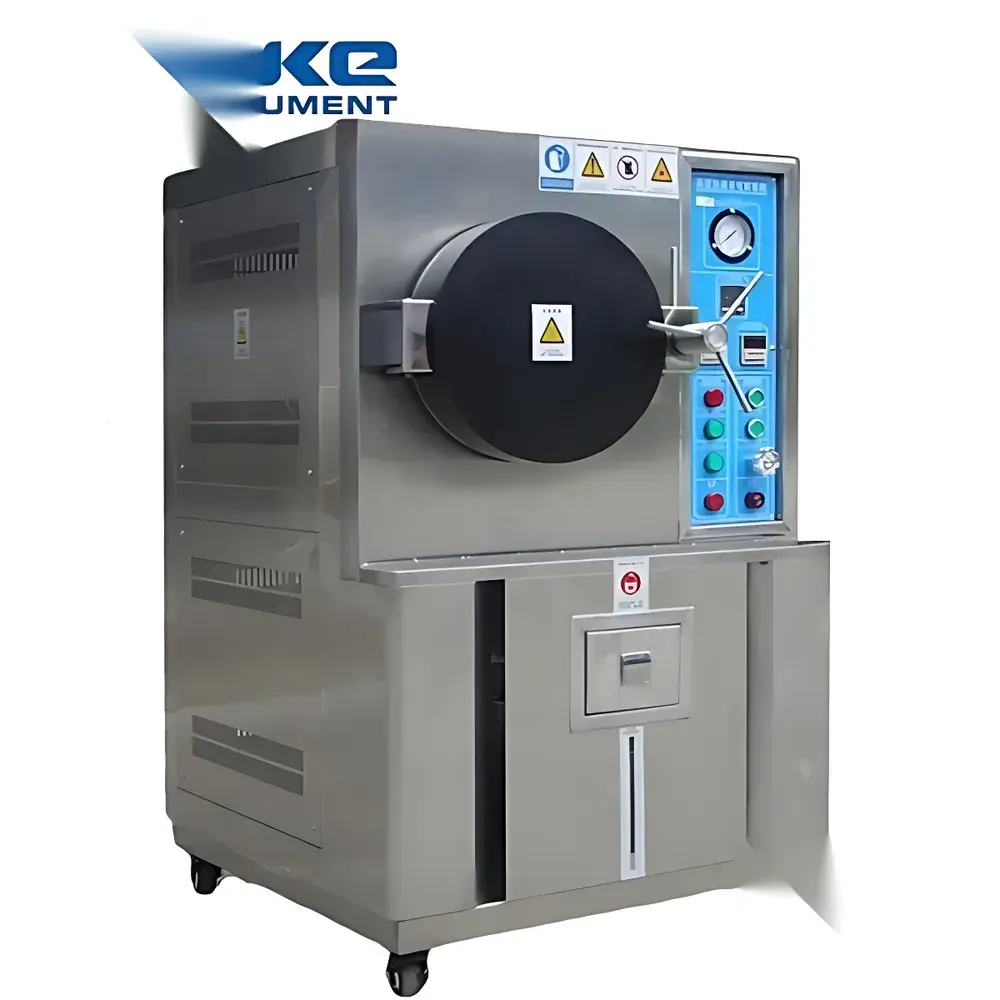
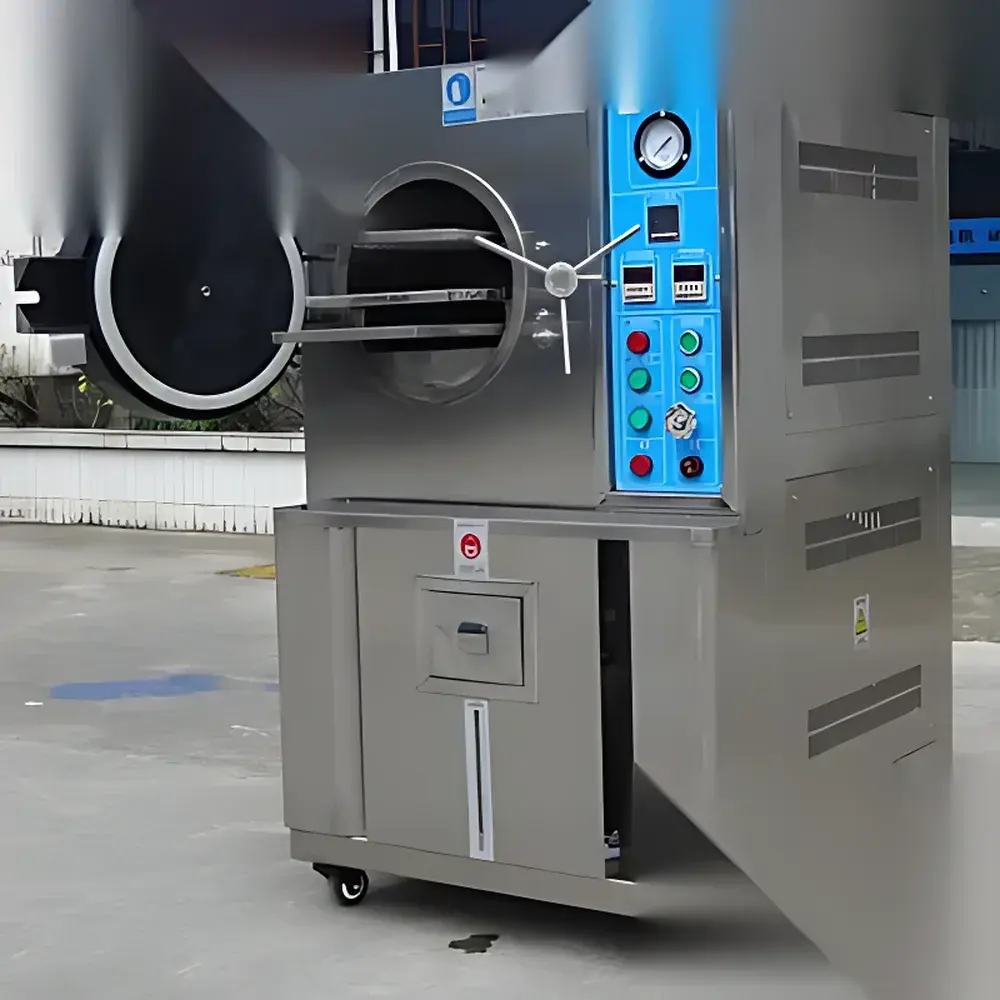
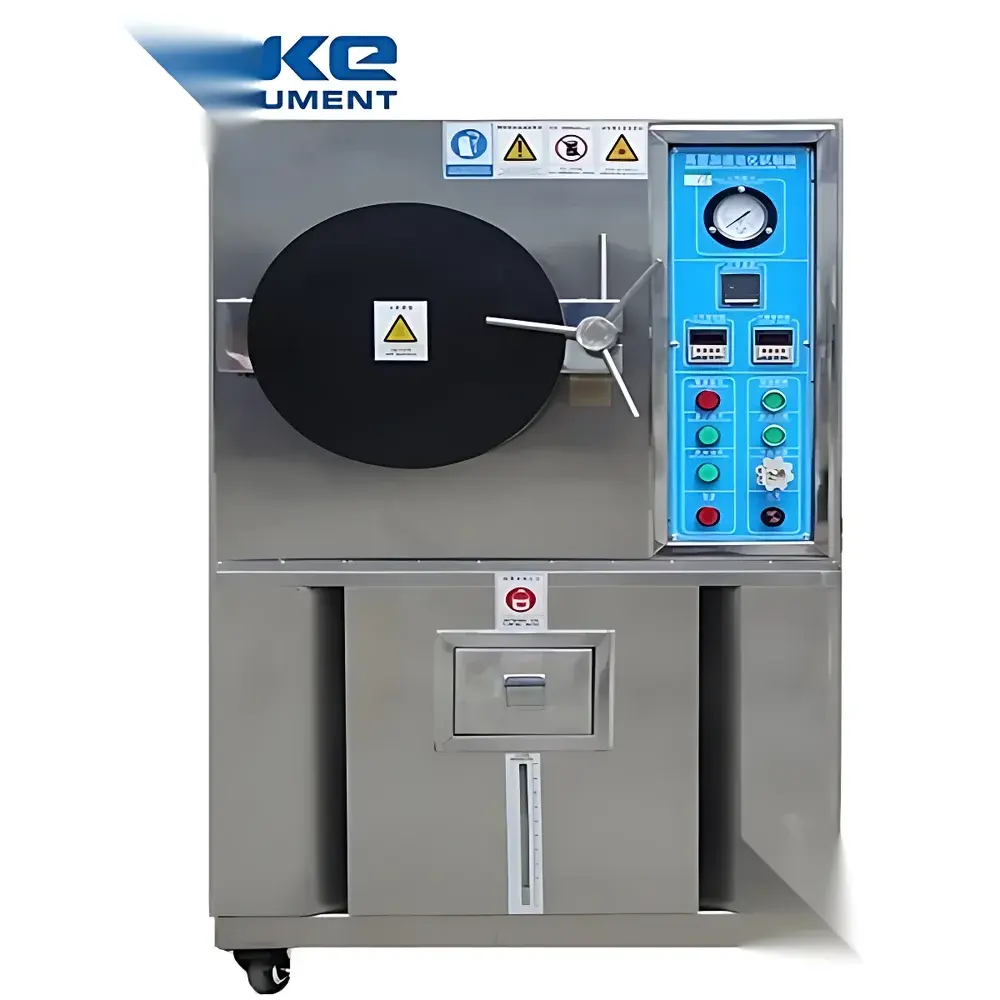
OK-PCT Series High-Temperature High-Pressure Saturated Steam Aging Chamber
| Brand | OK Instruments |
|---|---|
| Origin | Imported |
| Manufacturer Type | Authorized Distributor |
| Temperature Range | 121 °C, 132 °C (143 °C optional) |
| Operating Humidity | 100 % RH (saturated steam) |
| Pressure Range | 0.0–2.0 kg/cm² gauge (3.0 kg/cm² optional) |
| Uniformity | ≤±2 °C / ≤±3 % RH |
| Power Supply | AC 220 V ±5 %, 50 Hz ±0.5 Hz |
| Internal Dimensions (Φ × D) | 30×45 cm to 60×65 cm (model-dependent) |
| Safety Features | Low-water cutoff, overpressure relief, overtemperature shutdown, auto-refill, manual/automatic pressure release |
Overview
The OK-PCT Series High-Temperature High-Pressure Saturated Steam Aging Chamber is an engineered environmental stress test system designed for accelerated reliability evaluation of hermetically sealed and moisture-sensitive components under controlled saturated steam conditions. Operating on the principle of pressurized saturated steam aging—where temperature, pressure, and relative humidity are intrinsically coupled via water’s thermodynamic saturation curve—the chamber subjects samples to rigorously defined thermal-hygrometric stress profiles per industry standards including JESD22-A102 (Failure Mechanism and Test Method Standard for Moisture Resistance), MIL-STD-883 Method 1030, and IPC/JEDEC J-STD-020. Unlike conventional humidity chambers, the OK-PCT maintains true 100 % RH at elevated temperatures (121–143 °C) by generating and regulating saturated steam within a sealed stainless-steel cylindrical vessel, enabling precise simulation of moisture ingress, intermetallic corrosion, wire bond degradation, and delamination mechanisms in microelectronics, multilayer PCBs, LED packages, and medical device enclosures.
Key Features
- 7-inch industrial-grade touchscreen HMI with embedded PID algorithm for real-time saturated steam temperature control and dynamic setpoint stabilization.
- Dual-sensor monitoring: calibrated digital pressure transducer and PT100 RTD-based temperature sensor provide traceable, NIST-referenced feedback for pressure/temperature correlation verification.
- Cylindrical stainless-steel inner chamber (AISI 304) conforming to ASME BPVC Section VIII Div. 1 design criteria for pressure containment; optimized geometry minimizes condensate pooling and eliminates drip contamination on test specimens.
- Automated water management system featuring ultrasonic level sensing, gravity-fed refill reservoir, and fail-safe solenoid valve actuation—enabling uninterrupted operation for up to 200 hours per fill cycle.
- LED-display digital timer synchronized to chamber temperature attainment (not start-of-cycle), ensuring test duration compliance with JEDEC-defined soak requirements.
- Integrated safety architecture: redundant overtemperature cutout (mechanical + electronic), pressure relief valve rated to 3.5 kg/cm², and audible/visual low-water alarm with automatic power hold.
Sample Compatibility & Compliance
The OK-PCT accommodates a broad range of sample geometries—including IC packages (QFN, BGA, CSP), flex-rigid PCB assemblies, automotive sensors, OLED modules, and pharmaceutical packaging—via adjustable stainless-steel dual-tier racks. Its pressure-tight sealing mechanism and uniform steam distribution ensure consistent exposure across all specimen surfaces without localized dry spots or thermal stratification. The system supports full auditability for GLP/GMP environments: all critical parameters (T, P, time) are logged at user-configurable intervals (1–60 sec), with data exportable in CSV format. Optional firmware upgrade enables 21 CFR Part 11-compliant electronic signatures, audit trails, and role-based access control—meeting FDA-regulated validation requirements for medical device accelerated aging protocols.
Software & Data Management
Standard configuration includes OK-LogView PC software for remote monitoring, real-time graphing, and event-triggered data capture. The software archives timestamped pressure/temperature/time logs with metadata tagging (operator ID, test ID, lot number), supports statistical process control (SPC) chart generation (X-bar/R), and exports reports compliant with ISO/IEC 17025 documentation frameworks. For integration into automated test labs, RS-485 Modbus RTU and Ethernet TCP/IP interfaces are available, allowing seamless synchronization with MES or LIMS platforms. All firmware updates are digitally signed and validated to prevent unauthorized modification—ensuring long-term regulatory continuity.
Applications
- Qualification testing of moisture-sensitive devices (MSL levels 2a–6) per J-STD-020D.
- Accelerated life testing of conformal-coated electronics and potting compounds under high-humidity thermal stress.
- Validation of hermetic seal integrity in MEMS oscillators, RF modules, and implantable medical housings.
- Material compatibility assessment of adhesives, encapsulants, and solder mask resists exposed to saturated steam.
- Process development support for reflow profile optimization and cleaning residue analysis in advanced packaging lines.
FAQ
What pressure-temperature combinations are achievable in standard configuration?
The chamber delivers saturated steam conditions from 121 °C (200 kPa abs) to 132 °C (270 kPa abs) as standard; 143 °C (400 kPa abs) requires reinforced vessel and upgraded safety valves.
Is calibration certification included with shipment?
Yes—each unit ships with a factory calibration report traceable to national standards, covering temperature (±0.5 °C), pressure (±1 kPa), and timer accuracy (±0.1 sec/h). On-site IQ/OQ documentation support is available upon request.
Can the chamber be integrated into a cleanroom environment?
Absolutely—the external casing meets ISO Class 5 particulate emission limits when operated with HEPA-filtered makeup air; optional nitrogen purge interface minimizes oxidation during cooldown cycles.
How is condensate managed during extended tests?
The cylindrical chamber geometry, combined with controlled wall temperature gradients and directional steam flow, prevents droplet formation on samples; any residual condensate drains passively to the reservoir without contacting test articles.
What maintenance intervals are recommended?
Monthly inspection of gasket integrity and pressure relief valve function; annual recalibration of sensors and verification of PID tuning parameters using certified reference standards.



