
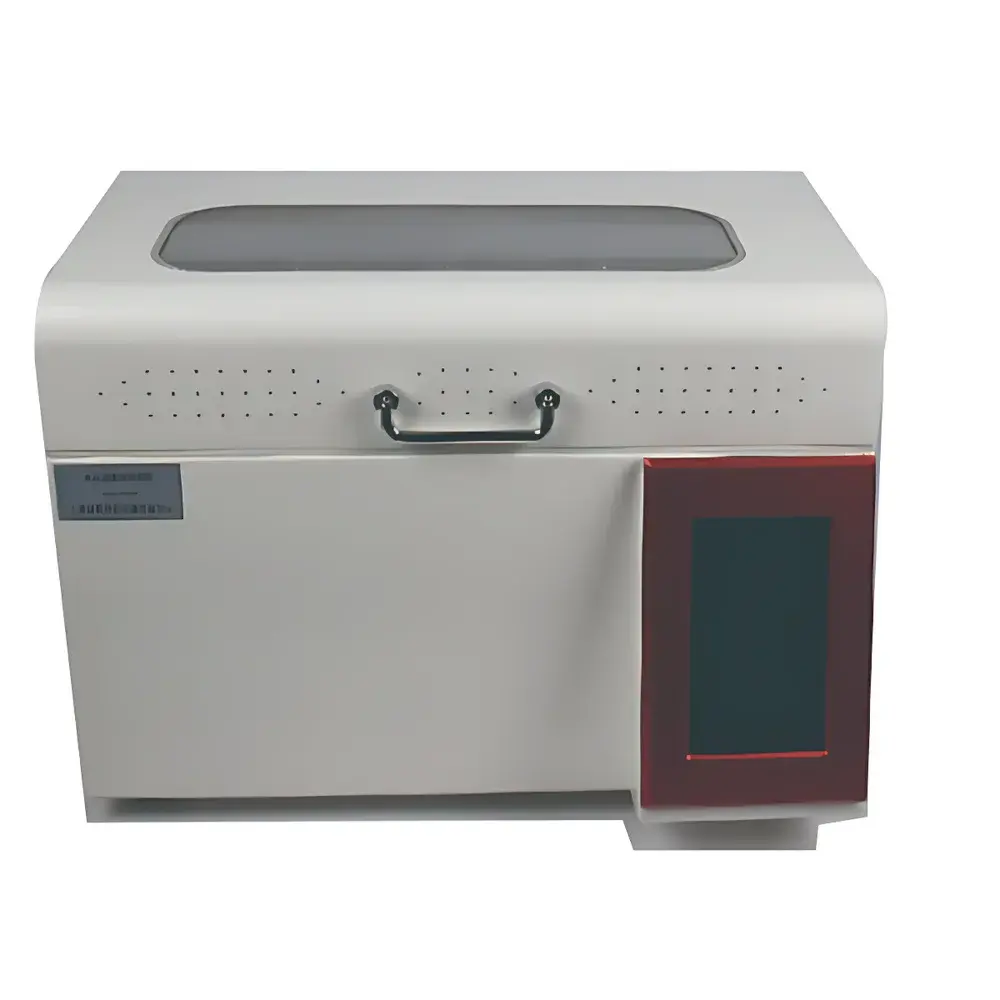
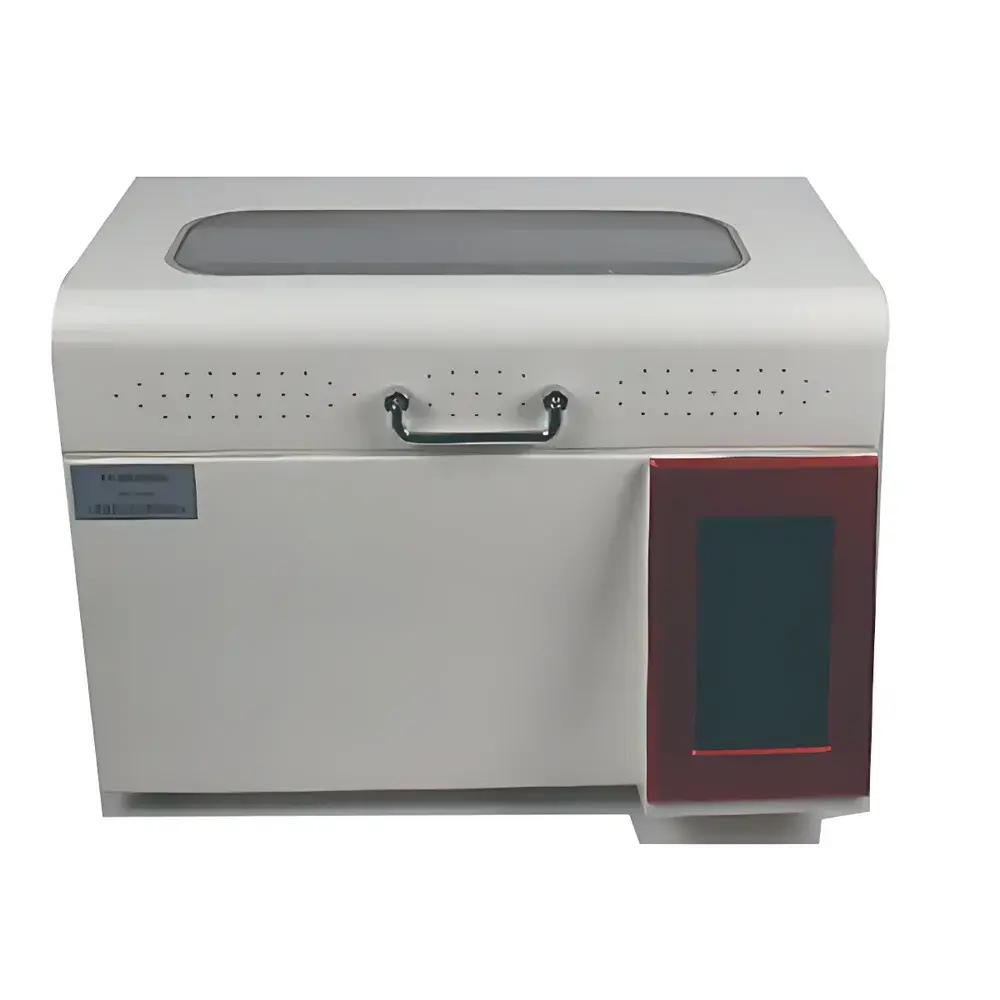
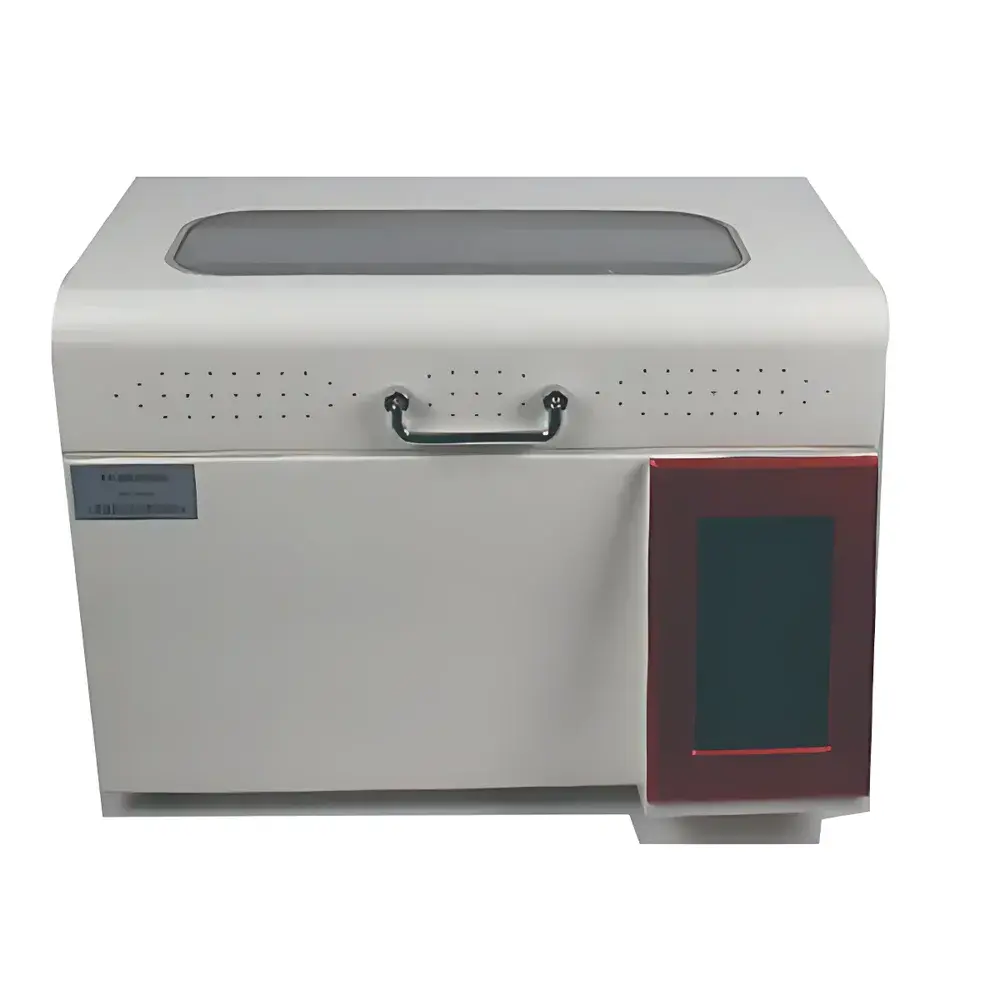
Peiou SDC-1000 Automated Nitrogen Evaporator
| Brand | Peiou |
|---|---|
| Origin | Shanghai, China |
| Model | SDC-1000 |
| Instrument Type | Nitrogen Blow-Down Concentrator |
| Temperature Range | Ambient +5°C to 100°C (±0.3°C) |
| Temperature Control Accuracy | ±0.3°C |
| Sample Capacity | 1–12 positions |
| Nitrogen Pressure Range | 0–0.10 MPa (10 adjustable steps, 0.01 MPa increment) |
| External N₂ Supply Pressure | 0.20–0.80 MPa |
| Max. Gas Consumption | ~500 mL/min per channel at 0.10 MPa |
| Endpoint Detection | Optical dryness sensor per channel |
| Endpoint Volumes | 1.0 mL, 0.5 mL, or near-dry (~0.1 mL) |
| Timer Range | 0–9999 min |
| Heating Power | 2000 W |
| Dimensions | 600 × 540 × 400 mm |
| Weight | 28 kg |
Overview
The Peiou SDC-1000 Automated Nitrogen Evaporator is an engineered solution for precise, unattended concentration of volatile organic solvent extracts in analytical laboratories. It operates on the principle of gentle nitrogen gas sweep across sample surfaces immersed in a precisely controlled water bath, accelerating solvent evaporation while minimizing thermal degradation and analyte loss. Designed for compliance-critical environments—including environmental testing labs, food safety QA/QC facilities, clinical toxicology, and pharmaceutical residue analysis—the SDC-1000 integrates real-time endpoint detection, pressure-stabilized gas delivery, and fail-safe thermal management to ensure reproducible recovery of thermolabile compounds such as pesticides, PAHs, PCBs, steroids, and veterinary drug residues. Its architecture supports GLP-aligned workflows through auditable parameter logging, hardware interlocks, and intrinsic contamination control—key requirements for ISO/IEC 17025-accredited laboratories.
Key Features
- Independent optical endpoint detection per channel: Each of the 12 positions features a dedicated photometric dryness sensor that dynamically identifies solvent depletion based on light transmission changes—enabling accurate termination at user-defined volumes (1.0 mL, 0.5 mL, or near-dry ≈ 0.1 mL), regardless of solvent color or refractive index.
- Stable, adaptive nitrogen pressure regulation: An integrated electro-pneumatic pressure controller maintains setpoint pressure (0–0.10 MPa, 0.01 MPa resolution) across all active channels—even during sequential sample insertion/removal—eliminating flow surges and ensuring uniform evaporation kinetics.
- High-fidelity temperature control: A 2000 W heating system delivers rapid thermal response within a water bath calibrated to ±0.3°C accuracy across the full range (ambient +5°C to 100°C), with automatic low-water level detection, audible/visual alerting, and auto-refill capability.
- Modular sample compatibility: Accommodates 50 mL, 150 mL, and 200 mL concentric tubes simultaneously; custom volume cups available upon request to support method-specific validation protocols.
- Three operational modes: Manual (user-initiated start/stop), Timed Mode (fixed duration), and Volume Mode (sensor-triggered endpoint)—all configurable via a 7-inch color LCD interface with intuitive icon-based navigation.
- Contamination-minimized fluid path: All wetted components—including gas manifolds, tubing, and gaskets—are constructed from phthalate-free silicone and FDA-compliant PTFE, eliminating leachable plasticizers known to interfere with GC-MS and LC-MS/MS analyses.
- Integrated safety architecture: Lid-open interruption logic retains full program state for 60 seconds; resumption requires no reconfiguration. Exhaust ducting routes volatile organics and steam directly to external fume hoods or centralized vent systems, meeting OSHA 29 CFR 1910.1200 and EU Directive 2004/40/EC exposure limits.
Sample Compatibility & Compliance
The SDC-1000 supports standard borosilicate glass test tubes and conical-bottom vials used in EPA Methods 508.1, 525.3, 8081B, and 8270D, as well as AOAC 2007.01 and ISO 17072-1 workflows. Its sealed chassis, certified electrical grounding, and CE-marked power supply comply with IEC 61010-1:2010 for laboratory equipment safety. Optional audit-trail-enabled firmware (v3.2+) provides timestamped records of all parameter changes, endpoint events, and alarm conditions—supporting 21 CFR Part 11 readiness when paired with networked LIMS integration.
Software & Data Management
While the SDC-1000 operates autonomously via its embedded controller, optional RS-232/USB data export enables transfer of session logs—including start time, final volume per channel, cumulative nitrogen usage, and thermal deviation history—to laboratory information management systems (LIMS) or ELN platforms. CSV-formatted output includes ISO 8601 timestamps and channel-specific metadata, facilitating traceability in regulated environments requiring documented evidence of method adherence.
Applications
- Pre-concentration of aqueous and organic extracts prior to GC-FID, GC-MS, or LC-MS/MS analysis
- Residue analysis in soil, sediment, wastewater, and drinking water per EPA SW-846 protocols
- Multi-residue pesticide screening in fruits, vegetables, and animal tissues (EN 15662:2018)
- Pharmaceutical impurity profiling and stability-indicating assays
- Forensic toxicology specimen preparation (urine, blood, hair hydrolysates)
- Environmental monitoring of emerging contaminants including PFAS and microplastic extractants
FAQ
What external nitrogen supply specifications are required?
A regulated inlet pressure between 0.20–0.80 MPa is required; the instrument accepts up to 1.00 MPa maximum input without damage. Internal pressure regulation ensures consistent 0–0.10 MPa delivery per channel.
Can different tube sizes be processed simultaneously?
Yes—50 mL, 150 mL, and 200 mL tubes may be loaded concurrently without mechanical or thermal cross-interference.
Is the endpoint detection affected by colored or turbid solvents?
No—the optical sensors are continuously adjustable in sensitivity, allowing reliable detection across dyed matrices (e.g., chlorophyll-rich plant extracts) and emulsified samples.
How does the system handle partial sample removal during operation?
Lid opening triggers a 60-second hold state; closing the lid resumes the exact remaining time and pressure profile without parameter reset.
What maintenance is required for long-term calibration stability?
Annual verification of water bath temperature uniformity (per ASTM E2251) and optical sensor response using certified reference standards is recommended. No routine recalibration of pressure transducers is needed due to factory-trimmed MEMS sensors.



