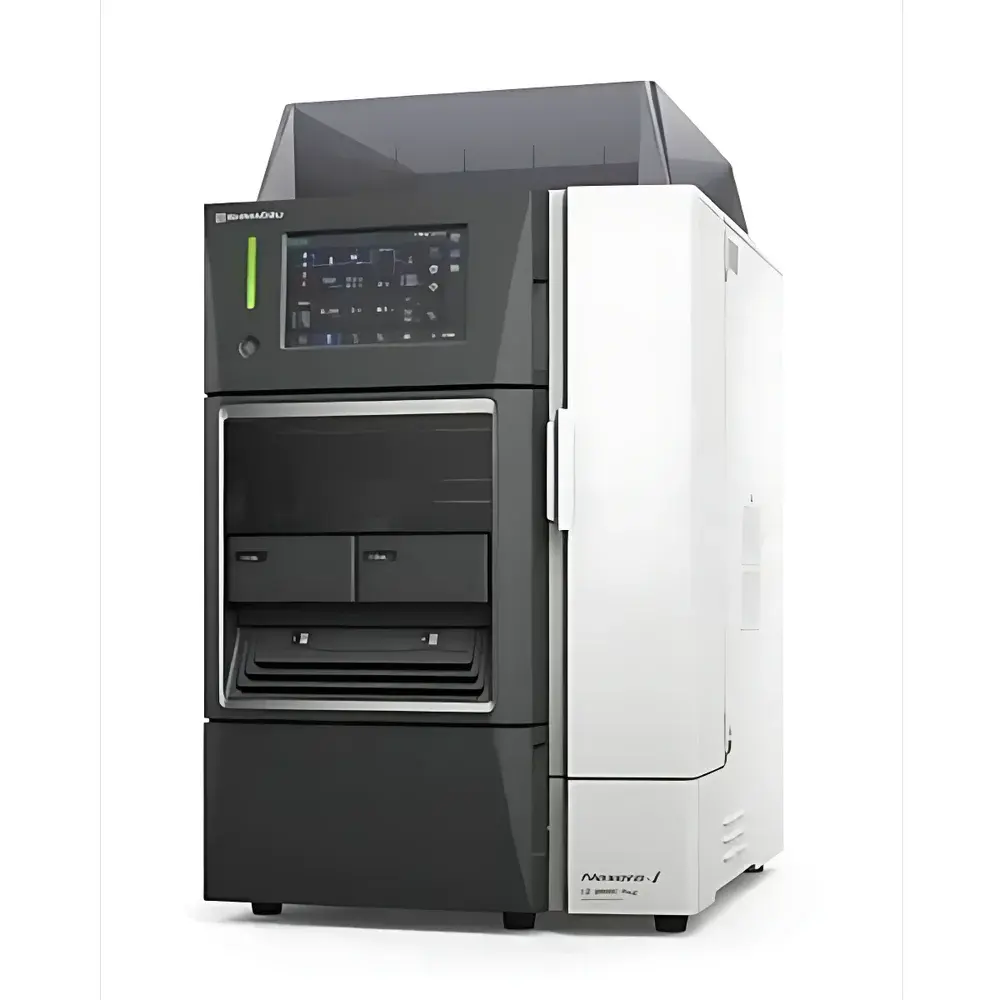
PerkinElmer Optima 5300 DV Inductively Coupled Plasma Optical Emission Spectrometer (ICP-OES)
| Brand | PerkinElmer |
|---|---|
| Origin | USA |
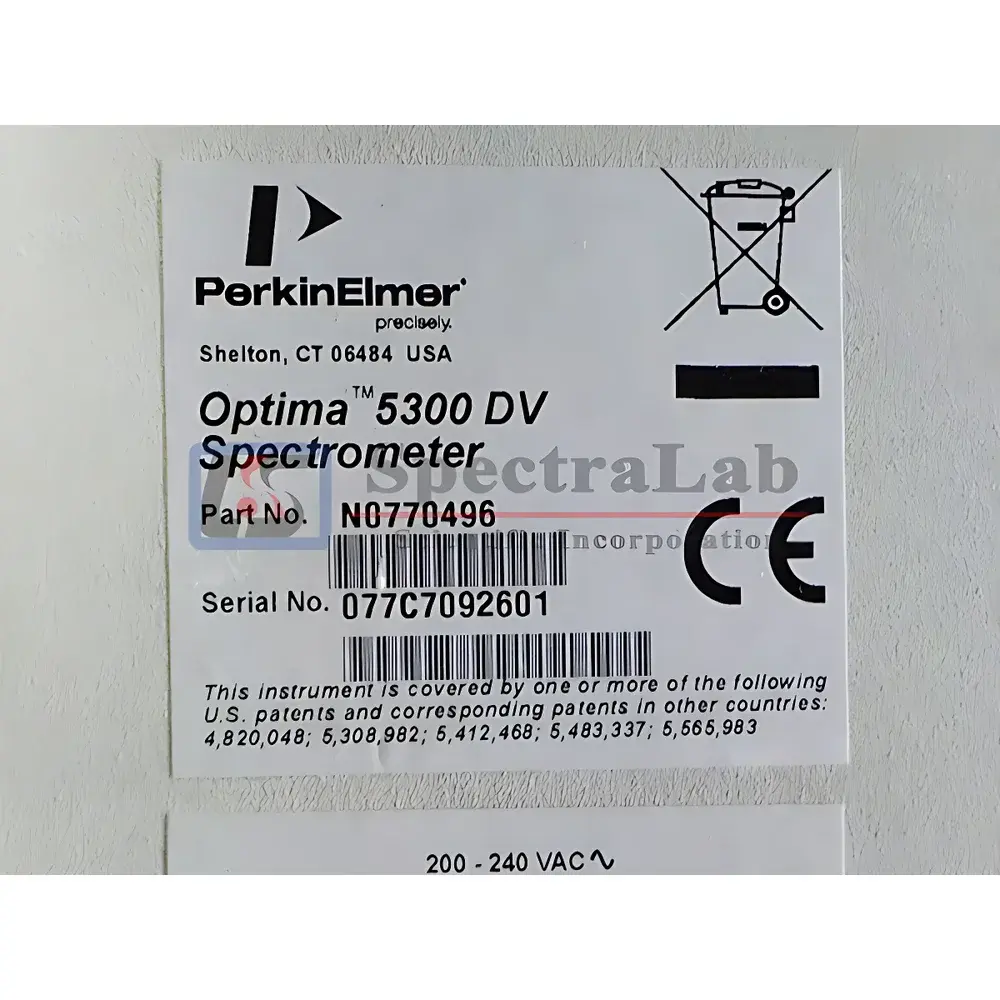
| Model | Optima 5300 DV |
| Instrument Age | 4 years |
| Warranty | 6 months |
| Detection Principle | ICP-OES |
| Sample Introduction | Pneumatic nebulization with peristaltic pump |
| Observation Mode | Dual-view (axial and radial) |
| RF Generator Frequency | 40.68 MHz |
| Cooling System | External recirculating chiller |
| Software Interface | Fully localized Chinese GUI with automated report generation |
| Compliance | Designed to meet ASTM D1976, ISO 11885, USP <232>/<233>, and EPA Methods 200.7 & 6010D requirements |
Overview
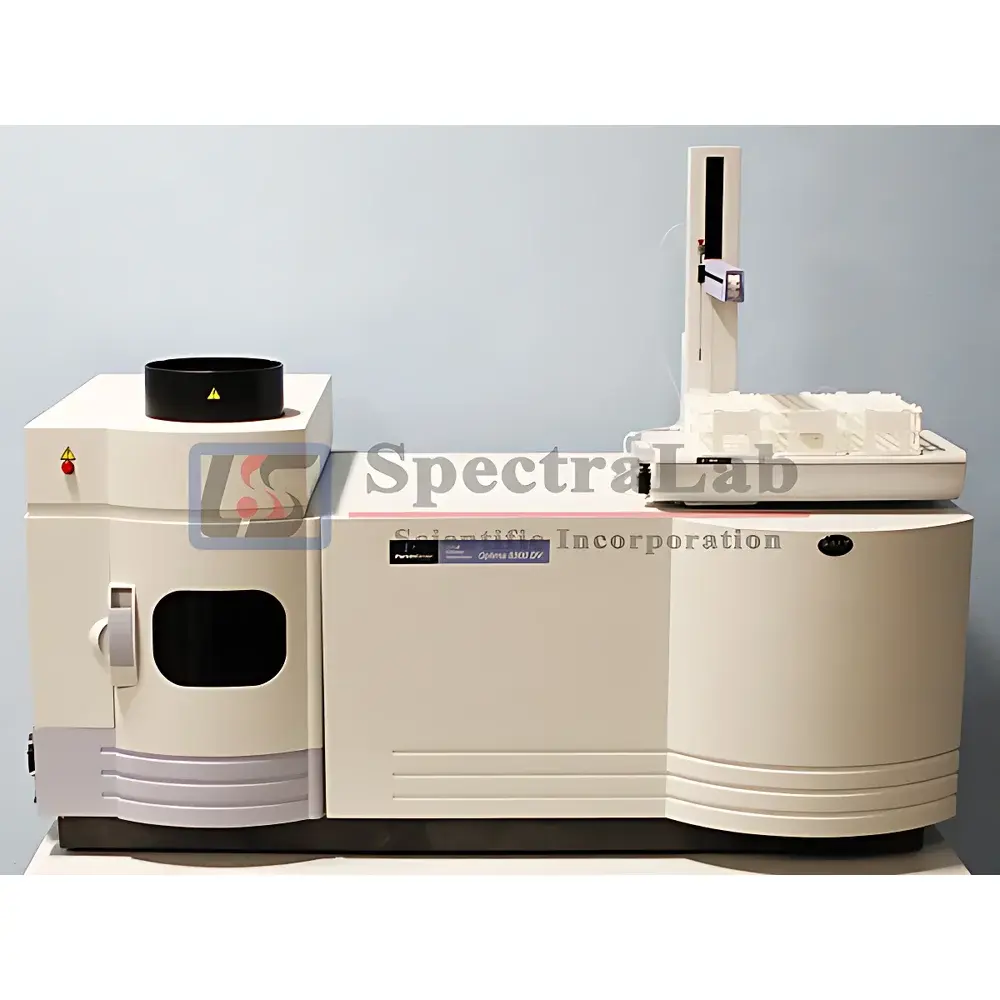
The PerkinElmer Optima 5300 DV is a dual-view inductively coupled plasma optical emission spectrometer engineered for high-precision elemental analysis across environmental, clinical, geological, and industrial laboratories. Utilizing robust 40.68 MHz solid-state RF generation, the system sustains stable plasma conditions at power levels from 750 W to 1500 W, enabling reliable excitation of elements from Li (182.04 nm) to U (367.01 nm). Its unique optical path incorporates a high-efficiency echelle grating and segmented CCD detector with thermoelectric cooling, delivering sub-pixel wavelength registration and enhanced signal-to-noise ratio—particularly critical in the deep UV region (<200 nm), where spectral interferences and atmospheric absorption pose analytical challenges. The instrument operates on the fundamental principle of atomic emission spectroscopy: liquid samples are atomized, ionized, and excited in an argon plasma (~6,000–10,000 K), and emitted photons are dispersed and quantified via wavelength-specific intensity calibration curves.
Key Features
- Dual-view plasma observation architecture enables real-time switching between axial and radial viewing modes, optimizing detection limits for volatile elements (e.g., As, Se, Cd) in axial mode and minimizing matrix effects for high-concentration analytes (e.g., Ca, Mg, Na) in radial mode.
- Self-oscillating solid-state RF generator eliminates need for external impedance matching networks, reducing maintenance intervals and improving long-term power stability (±0.1% over 8 hours).
- Optimized optical train features fused-silica optics and anti-reflective coatings to maximize UV throughput; spectral resolution ≤0.009 nm at 200 nm supports resolution of adjacent lines such as Fe II 238.204 nm and Cr II 238.209 nm.
- Integrated AS-90 autosampler with 240-position sample tray and programmable rinse cycles ensures reproducible sample introduction and minimizes carryover (<0.05% for Ni in 10 mg/L solution).
- WhisperCool recirculating chiller maintains torch box temperature within ±0.5 °C, critical for plasma positional stability and long-term calibration retention.
Sample Compatibility & Compliance
The Optima 5300 DV accepts aqueous solutions (0.1–5% HNO₃ matrix), digested environmental solids (EPA SW-846 Method 3050B/3052), biological tissues (microwave-assisted acid digestion), and organic solvents (with oxygen ashing or microemulsion preparation). It complies with regulatory frameworks governing elemental impurity testing—including USP /, ICH Q3D, and FDA 21 CFR Part 11 when deployed with audit-trail-enabled software configurations. All hardware components meet CE, UL 61010-1, and RoHS directives. Routine performance verification follows PerkinElmer’s PQ/PM protocols aligned with ASTM D1976 (water analysis) and ISO 11885 (wastewater metals).
Software & Data Management
The instrument runs Syngistix for ICP-OES software (v4.5 or later), supporting both English and fully localized Chinese user interfaces. Calibration workflows include linear, quadratic, and internal standard correction models with automatic outlier rejection. Data files adhere to ASTM E1381-compliant .csv and .xml export formats, enabling integration into LIMS environments. Audit trail functionality records all method edits, calibration events, and result modifications with user ID, timestamp, and reason-for-change fields—fully traceable for GLP/GMP audits. Raw spectral data is retained in vendor-neutral HDF5 format for third-party reprocessing.
Applications
- Environmental monitoring: Quantification of regulated metals (Pb, Cd, Hg, As) in drinking water per EPA Method 200.7 and wastewater per Method 6010D.
- Pharmaceutical quality control: Elemental impurity screening in drug substances and excipients per ICH Q3D thresholds.
- Geochemical analysis: Multi-element profiling (Li–U) in rock digests with detection limits ranging from 0.003 µg/L (Sc) to 0.08 µg/L (Ba) under optimized axial view.
- Metallurgical process control: Rapid alloy composition verification (Al, Cu, Zn, Mg) with precision ≤1.2% RSD (n=10) across 10–1000 mg/L ranges.
- Food safety: Screening for toxic elements (As, Pb, Cd) in infant formula and dietary supplements per EU Commission Regulation (EU) No 1881/2006.
FAQ
Is this unit certified for compliance with 21 CFR Part 11?
Yes—when configured with Syngistix v4.5+ and enabled audit-trail settings, the system meets electronic record and signature requirements for regulated environments.
What consumables are included with the system?
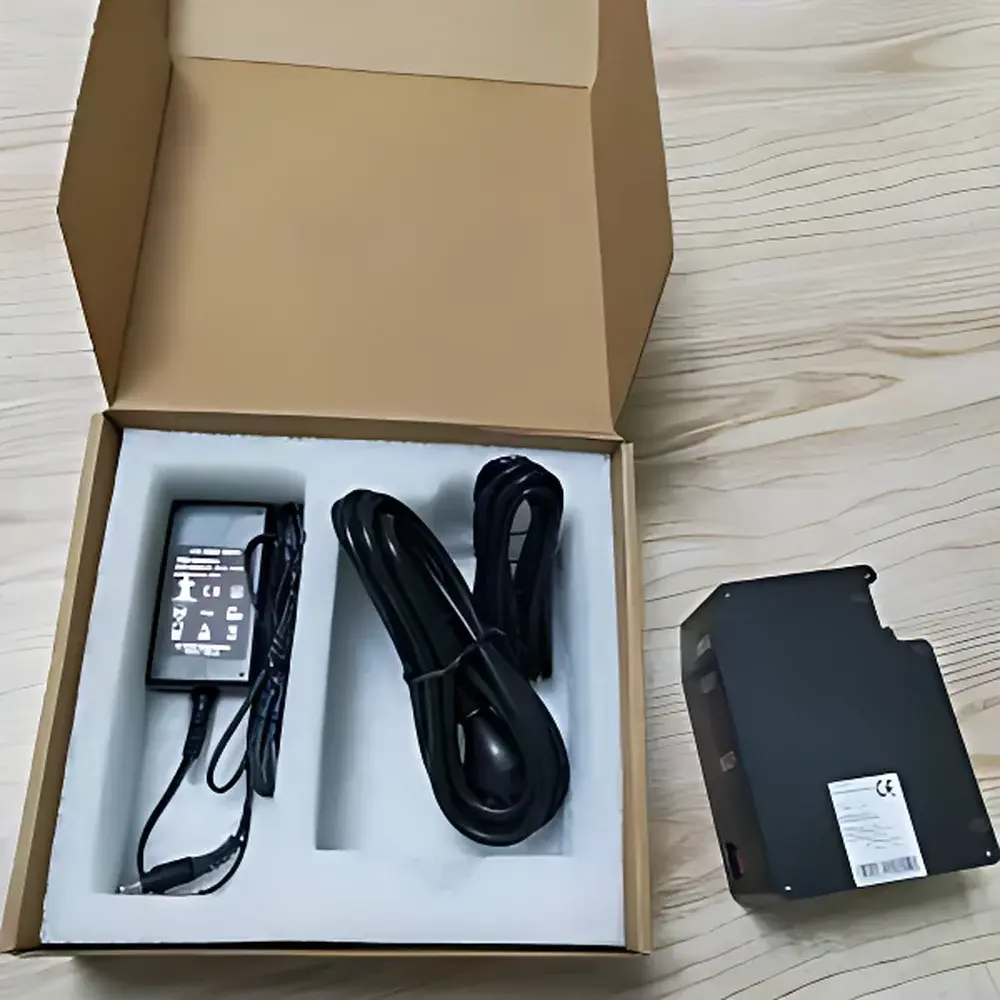
The package includes one complete set of torch components (injector, outer tube, intermediate tube), two nebulizers (concentric glass + cyclonic), and six peristaltic pump tubing sets.
Can the instrument be upgraded to support hydride generation or laser ablation?
The Optima 5300 DV platform supports optional HG-3000 hydride generation module and NWR213 laser ablation interface via factory-installed expansion ports.
What documentation accompanies the refurbished unit?
Each instrument ships with full service history log, post-refurbishment IQ/OQ documentation, calibration certificate traceable to NIST SRMs, and original OEM operation manuals.
Is remote diagnostics supported?
Yes—via secure TLS-encrypted VNC connection through PerkinElmer’s Remote Support Portal, subject to customer network policy approval.