
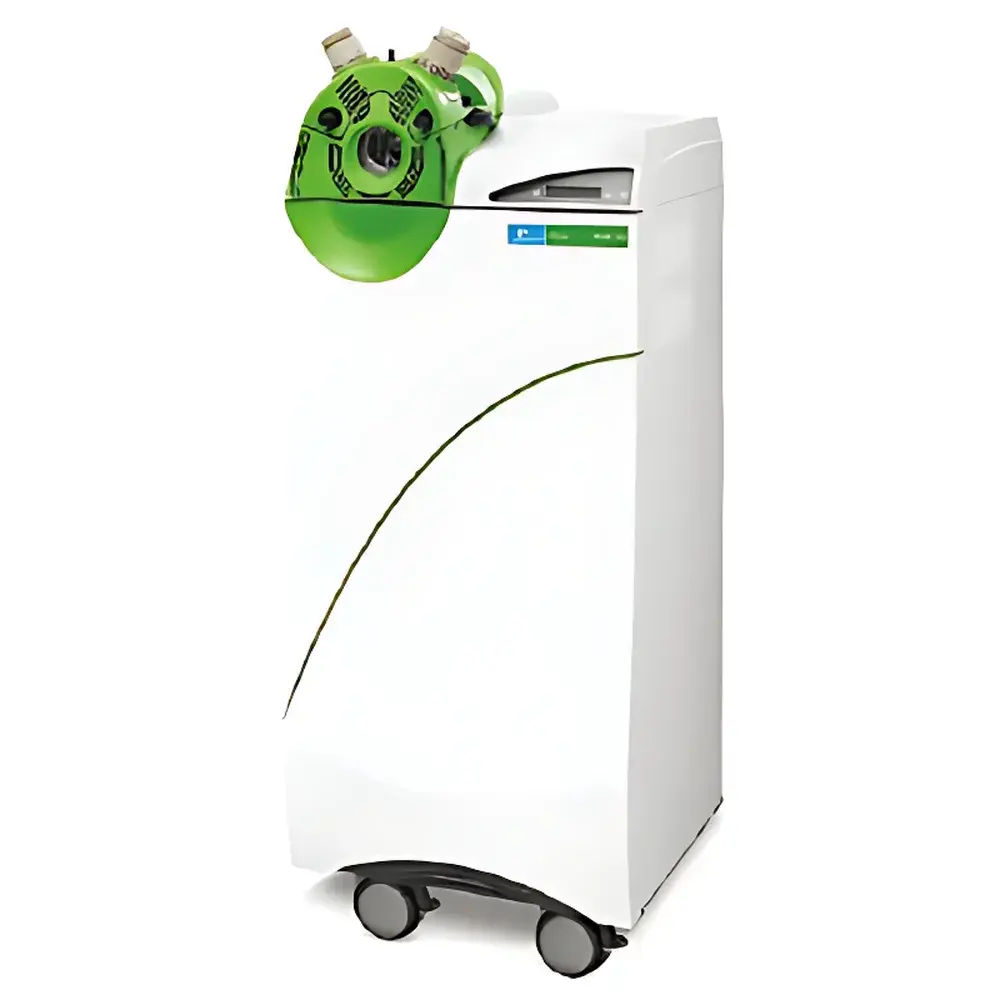
PerkinElmer QSight Triple Quadrupole Liquid Chromatography Mass Spectrometer
| Brand | PerkinElmer |
|---|---|
| Origin | USA |
| Manufacturer Type | Original Equipment Manufacturer (OEM) |
| Import Category | Imported Instrument |
| Model | QSight |
| Instrument Type | Triple Quadrupole LC-MS/MS |
| Application Domain | General-Purpose Quantitative Analysis |
| Ionization Sources | Dual ESI/APCI Configurable |
| Polarity Switching Speed | Microsecond-Level |
| Detection Principle | Electrospray Ionization (ESI) / Atmospheric Pressure Chemical Ionization (APCI) Coupled with Triple Quadrupole Mass Filtering and Collision-Induced Dissociation (CID) |
Overview
The PerkinElmer QSight Triple Quadrupole Liquid Chromatography Mass Spectrometer is a purpose-built, high-throughput quantitative analysis platform engineered for laboratories requiring robust, reproducible, and regulatory-compliant small-molecule detection across food safety, environmental monitoring, industrial R&D, and contract testing environments. Operating on the fundamental principles of electrospray ionization (ESI) and atmospheric pressure chemical ionization (APCI), the QSight system couples liquid chromatographic separation with tandem mass spectrometry using three quadrupole mass filters — Q1 (mass selection), Q2 (collision cell for CID), and Q3 (product ion analysis). This architecture enables highly selective multiple reaction monitoring (MRM), the gold-standard acquisition mode for trace-level quantitation in complex matrices. Unlike single-quadrupole or time-of-flight instruments, the triple quadrupole design delivers superior specificity by filtering precursor ions in Q1, fragmenting them under controlled collision gas conditions in Q2, and detecting diagnostic product ions in Q3 — effectively eliminating isobaric interferences and matrix-derived background signals.
Key Features
- Dual Independent Ion Source Architecture: Supports simultaneous or sequential ESI/ESI, ESI/APCI, or APCI/APCI configurations — enabling comprehensive ionization coverage without method re-injection or hardware reconfiguration.
- UniField™ Detector with Microsecond Polarity Switching: Eliminates high-voltage polarity switching delays; positive and negative ions are detected within a single chromatographic run with <5 µs transition time — critical for co-eluting analytes requiring opposite ionization modes.
- StayClean™ Self-Cleaning Interface with Heated Spray Induced Desolvation (HSID™): Integrates thermal desolvation at the source interface to reduce salt deposition and non-volatile residue accumulation — extending uninterrupted runtime by up to 35 days annually versus conventional interfaces.
- Laminar Flow Ion Transmission: Utilizes pressure-gradient-driven laminar gas flow (not axial electric fields) to transport ions from the source to the analyzer — ensuring stable transmission efficiency independent of voltage drift or ambient fluctuations.
- Orthogonal Spray Geometry: Minimizes solvent cluster formation and enhances desolvation efficiency — resulting in lower chemical noise, improved signal-to-noise ratios, and reduced need for sample pre-concentration.
Sample Compatibility & Compliance
The QSight system is validated for use with a broad range of sample types — including aqueous extracts, organic solvent supernatants, digested biological fluids, and solid-phase extracted environmental samples — without compromising sensitivity or reproducibility. Its hardware and software architecture support full compliance with internationally recognized quality frameworks: data integrity is maintained via audit-trail-enabled acquisition and processing workflows aligned with FDA 21 CFR Part 11 requirements. Method validation protocols conform to ICH Q2(R2), ISO/IEC 17025:2017, and EPA Method 1694 for pharmaceutical residues and emerging contaminants. Routine performance verification follows ASTM D7867-22 (standard practice for LC-MS/MS system suitability testing) and USP chromatographic system suitability criteria.
Software & Data Management
ChromaLink™ software provides an integrated, workflow-driven environment for method development, acquisition control, quantitative data processing, and report generation. All instrument parameters — including MRM transitions, dwell times, collision energies, and source gas settings — are stored as version-controlled, exportable method files. Cross-platform method transfer between QSight systems requires no re-optimization of MS parameters due to hardware standardization and firmware-level calibration consistency. Raw data files adhere to open-format mzML specifications, ensuring long-term archival compatibility and third-party software interoperability (e.g., Skyline, Compound Discoverer, SimGlycan). Built-in GLP/GMP reporting tools generate compliant PDF reports with embedded chromatograms, peak tables, calibration curves, and QC summary statistics — all traceable to user ID, timestamp, and instrument serial number.
Applications
The QSight platform serves as a primary quantitative engine in regulated and research-intensive laboratories. In food safety labs, it quantifies pesticide residues (e.g., organophosphates, neonicotinoids), veterinary drug markers (e.g., fluoroquinolones, β-agonists), and mycotoxins (e.g., aflatoxin B1, ochratoxin A) at sub-ppt levels in cereals, dairy, and infant formula. Environmental applications include multi-residue analysis of PFAS, pharmaceuticals, endocrine disruptors, and flame retardants in wastewater, surface water, and soil leachates per EPA SW-846 Methods 8327 and 1694. Industrial users deploy the system for impurity profiling in API synthesis, extractables/leachables screening in packaging materials, and stability-indicating assays for biologics formulation development.
FAQ
What ionization sources are supported on the QSight system?
The QSight features two fully independent, swappable ion sources — each configurable for ESI or APCI operation — enabling dual-source combinations (e.g., ESI/APCI) and polarity-switched acquisition in a single run.
Does the QSight meet regulatory requirements for GxP laboratories?
Yes — ChromaLink software includes electronic signatures, audit trails, role-based access control, and 21 CFR Part 11–compliant data handling; hardware design supports IQ/OQ/PQ documentation per ISO/IEC 17025 and GMP Annex 11 guidelines.
How does the StayClean™ interface reduce maintenance frequency?
By integrating HSID™ thermal desolvation and orthogonal spray geometry, the interface minimizes non-volatile buildup on the cone and skimmer surfaces — reducing required cleaning intervals and extending mean time between failures (MTBF) by over 25% compared to legacy designs.
Can MRM methods developed on other triple quad platforms be transferred to the QSight?
Method portability is enhanced through standardized collision energy scaling and retention time alignment algorithms; however, minor optimization of dwell times and source parameters may be necessary depending on original instrument vendor and column chemistry.
Is vacuum system maintenance user-serviceable?
The QSight employs a dual-stage turbomolecular pump with automated pressure regulation and real-time status monitoring; routine foreline pump oil changes and filter replacements are field-performable using documented procedures — no specialized vacuum technician certification required.





