
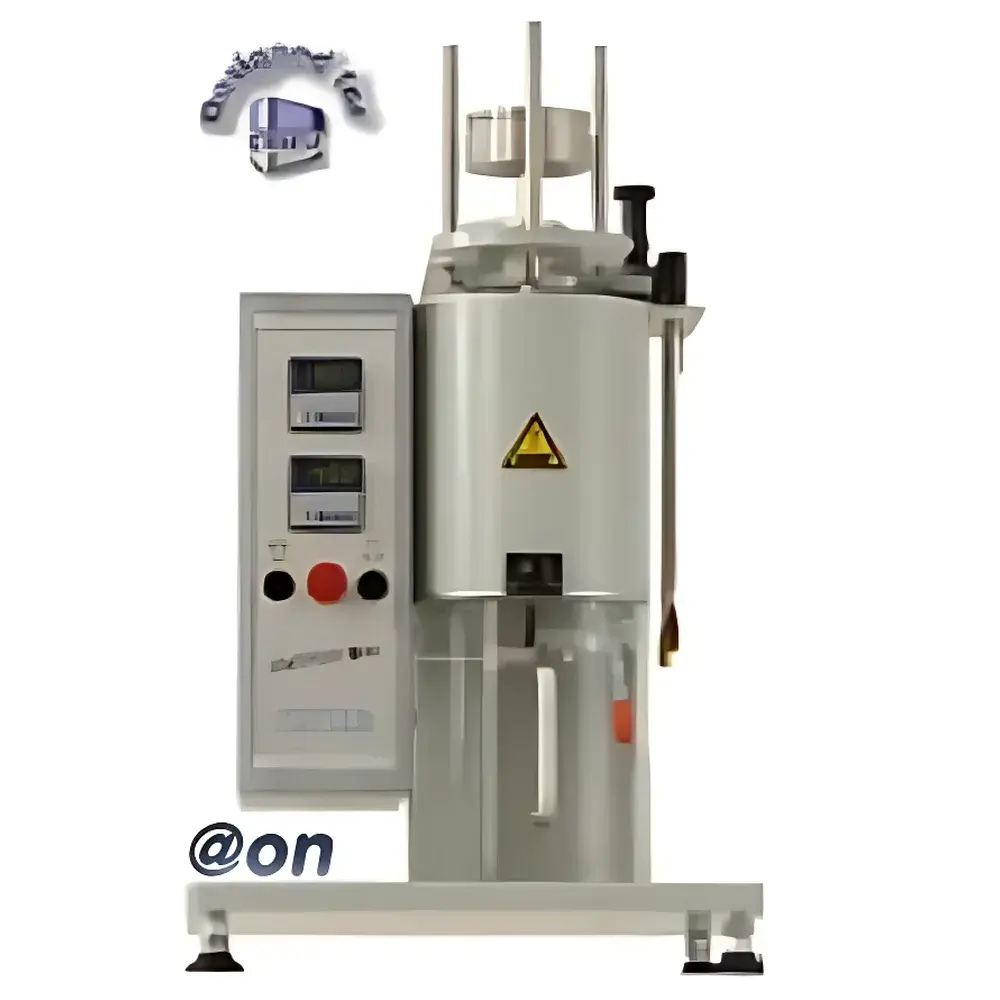
PETFlow IV & Melt Flow Indexer by Kage
| Brand | Kage |
|---|---|
| Origin | Germany |
| Model | PETFlow |
| Standards Compliance | EN ISO 1133 (Methods A/B), ASTM D1238 (Methods A/B) |
| Measurement Modes | MFR (g/10 min), MVR (cm³/10 min), Intrinsic Viscosity (IV, dL/g) |
| Temperature Range | Up to 400 °C |
| Software | K-BASE (Windows-based, GLP-compliant control and calculation platform) |
| Sample Types | PET flakes and pellets |
| Regulatory Context | Supports audit-ready data management per FDA 21 CFR Part 11 requirements (electronic signatures, user access control, change tracking) |
Overview
The PETFlow IV & Melt Flow Indexer is a dual-function analytical instrument engineered for precise, standardized determination of both melt flow rate (MFR) and intrinsic viscosity (IV) of polyethylene terephthalate (PET) materials. It operates on the fundamental principles of capillary rheometry—applying controlled temperature and load to molten polymer extrusion through a standardized die—and integrates gravimetric or volumetric measurement with post-test solution-phase viscometry for IV derivation. Designed specifically for PET flake and pellet feedstocks used in bottle-grade resin production, fiber spinning, and recycling quality assurance, the PETFlow delivers traceable, repeatable results aligned with international regulatory expectations for polymer characterization in high-value manufacturing environments.
Key Features
- Simultaneous MFR/MVR and IV determination within a single platform—eliminating inter-instrument calibration drift and operator-dependent transfer errors.
- Thermally stable heating block with ±0.2 °C uniformity across the 30–400 °C operating range, certified per ASTM E220 and ISO/IEC 17025 thermal validation protocols.
- Load application system with digital force transducer feedback, enabling precise dead-weight equivalence for Methods A (gravimetric) and B (volumetric) per EN ISO 1133 and ASTM D1238.
- Dedicated PET-optimized die geometry (2.095 mm diameter × 8.0 mm length) compliant with ISO 1133 Annex C for PET-specific flow behavior correction.
- Integrated purge and dwell cycle automation to minimize thermal degradation during high-temperature PET testing (e.g., at 285 °C under nitrogen).
- K-BASE software featuring real-time torque monitoring, automatic melt density calculation, and IV derivation via Huggins and Kraemer linear regression from multiple concentration points.
Sample Compatibility & Compliance
The PETFlow accepts standard PET flakes (≤5 mm nominal size) and cylindrical pellets (3–5 mm length) without preprocessing. Its sample chamber design minimizes wall slip and ensures complete melt homogenization prior to extrusion. All test procedures comply with EN ISO 1133-1:2011 (determination of MFR/MVR) and EN ISO 1133-2:2011 (determination of IV in dilute solution using capillary viscometry). The instrument meets essential requirements of the EU Machinery Directive 2006/42/EC and carries CE marking. For regulated environments, K-BASE supports full audit trails, electronic signatures, and role-based user permissions—enabling compliance with FDA 21 CFR Part 11, EU Annex 11, and GLP/GMP documentation standards.
Software & Data Management
K-BASE is a Windows-native, 64-bit application developed exclusively for polymer rheological analysis. It provides method-driven workflow control—including automated preheat, loading, extrusion, and cleaning sequences—with configurable pass/fail thresholds based on ASTM D1238 repeatability limits (±10% RSD for duplicate runs). Raw data (time-stamped mass/volume readings, temperature logs, pressure profiles) are stored in encrypted SQLite databases with SHA-256 hashing. Export options include CSV, PDF reports with embedded metadata (operator ID, calibration certificate IDs, environmental conditions), and XML formats compatible with LIMS integration. All data modifications are logged with immutable timestamps and user attribution.
Applications
- Quality release testing of virgin PET resin in compounding and injection molding facilities.
- In-process monitoring of IV drop during PET solid-state polymerization (SSP) lines.
- Recycled PET (rPET) qualification—assessing chain scission impact from thermal history or contamination.
- R&D formulation development for barrier-enhanced PET grades requiring tight IV distribution control (e.g., ±0.02 dL/g).
- Third-party certification labs performing accredited testing to ISO/IEC 17025 scope requirements.
- Technical support for PET extrusion line troubleshooting—correlating MFR shifts with IV degradation trends.
FAQ
Does the PETFlow require external solvent handling for IV determination?
No—the instrument performs only the melt-phase MFR/MVR measurement; IV determination requires off-line solution preparation and capillary viscometry. K-BASE includes dedicated IV calculation modules that accept manually entered efflux times from Ubbelohde or Cannon-Fenske viscometers.
Can the PETFlow be validated for GMP use?
Yes—Kage supplies IQ/OQ documentation packages, including temperature mapping reports, load verification certificates, and software validation protocols aligned with ASTM E2500 and GAMP5.
Is nitrogen purge integration available as a factory option?
Yes—optional integrated N₂ purge manifold with mass flow controller (0–5 L/min) is available to suppress oxidative degradation during extended high-temperature PET testing.
What calibration standards are supplied with the PETFlow?
Each unit ships with NIST-traceable reference weights (1.2 kg, 2.16 kg, 5.0 kg), certified die geometry report, and certified thermocouple calibration certificate (per ISO 17025).
How is traceability maintained between MFR and IV results?
K-BASE enforces strict sample ID linkage: each MFR run is tagged with a unique batch identifier that persists through IV data entry, ensuring full chain-of-custody from melt extrusion to solution viscometry.




