
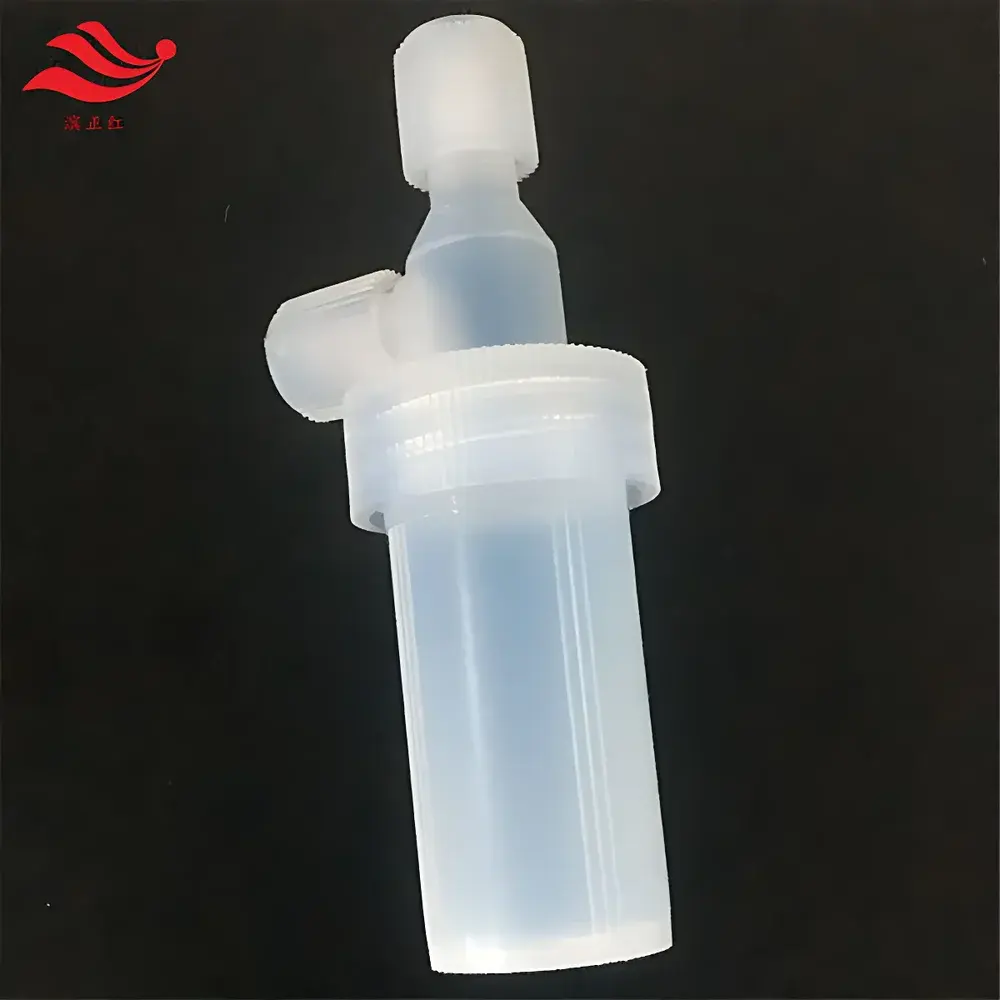
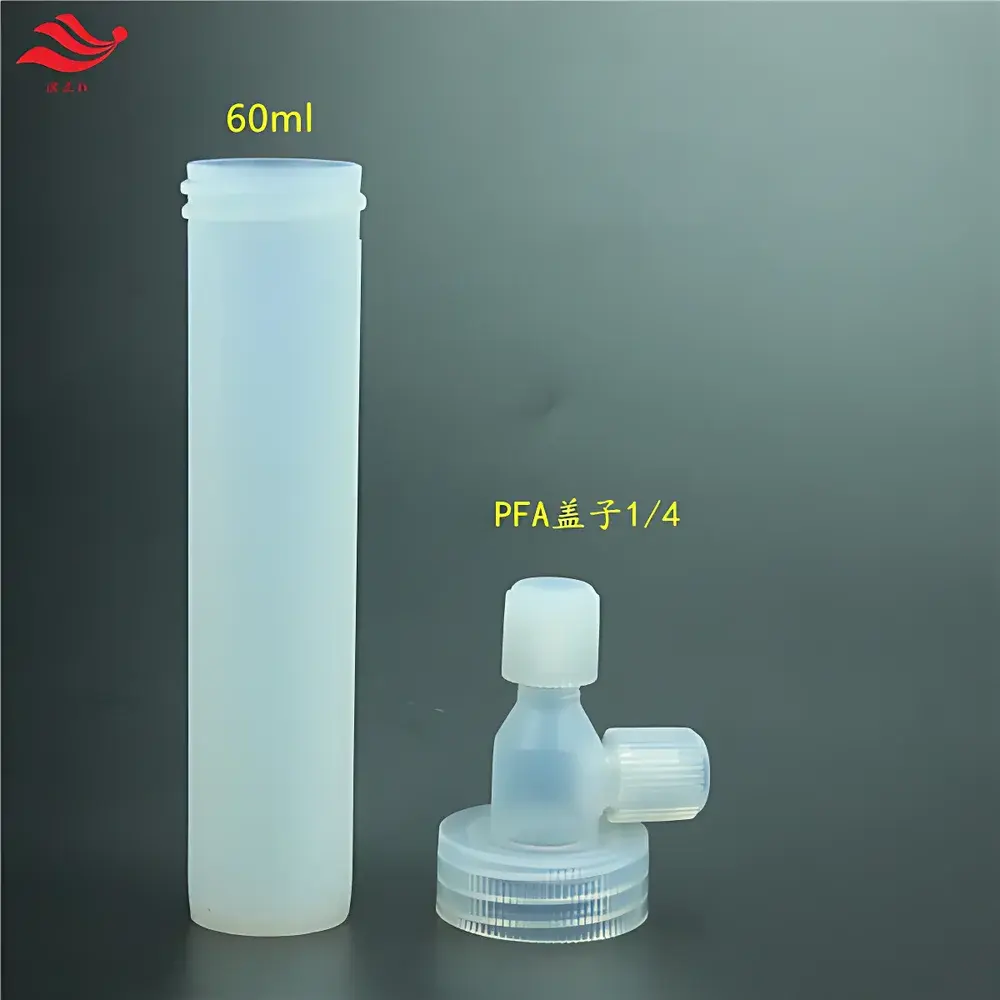
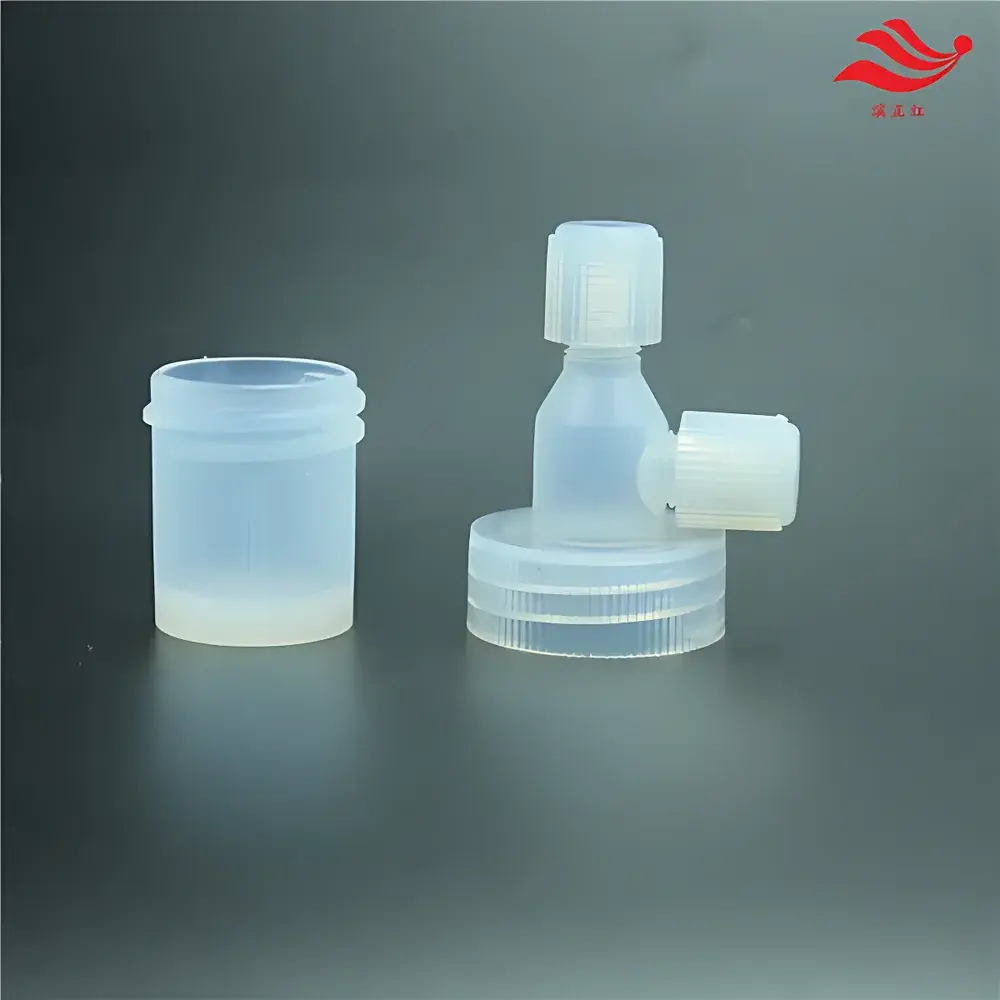
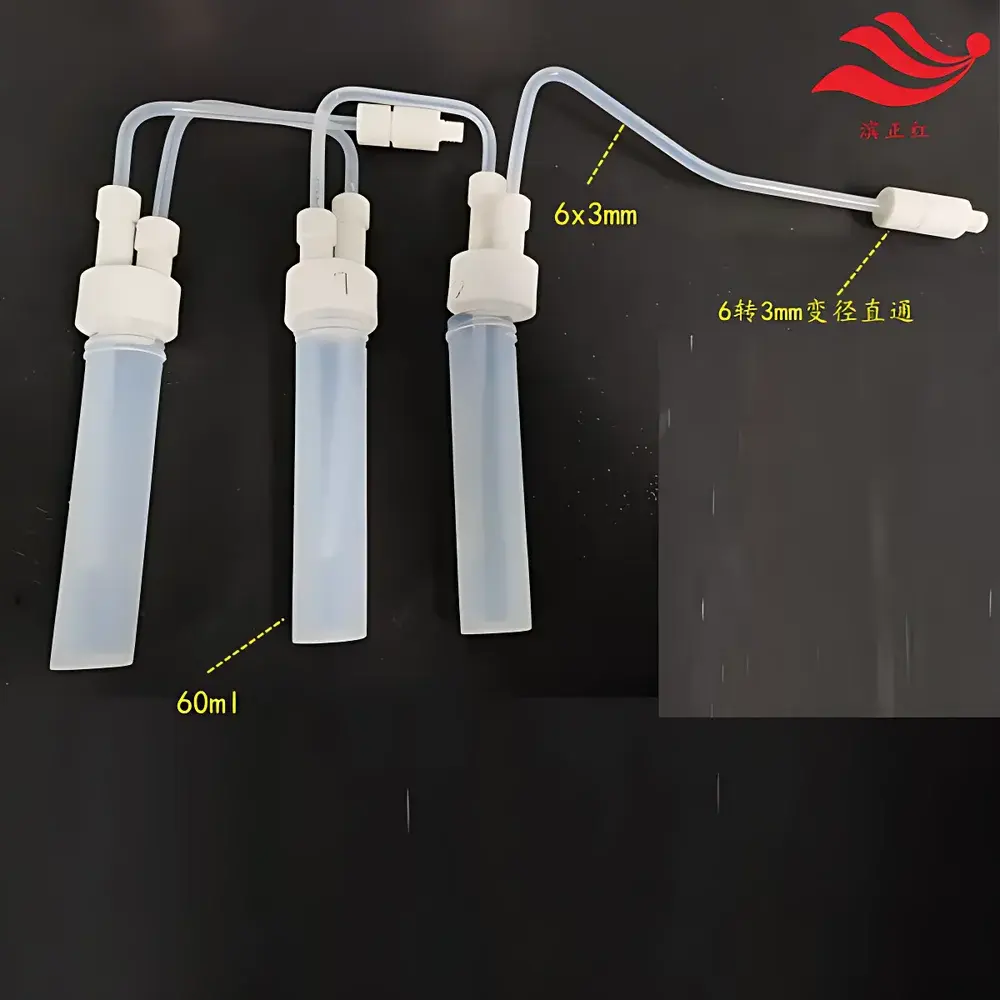
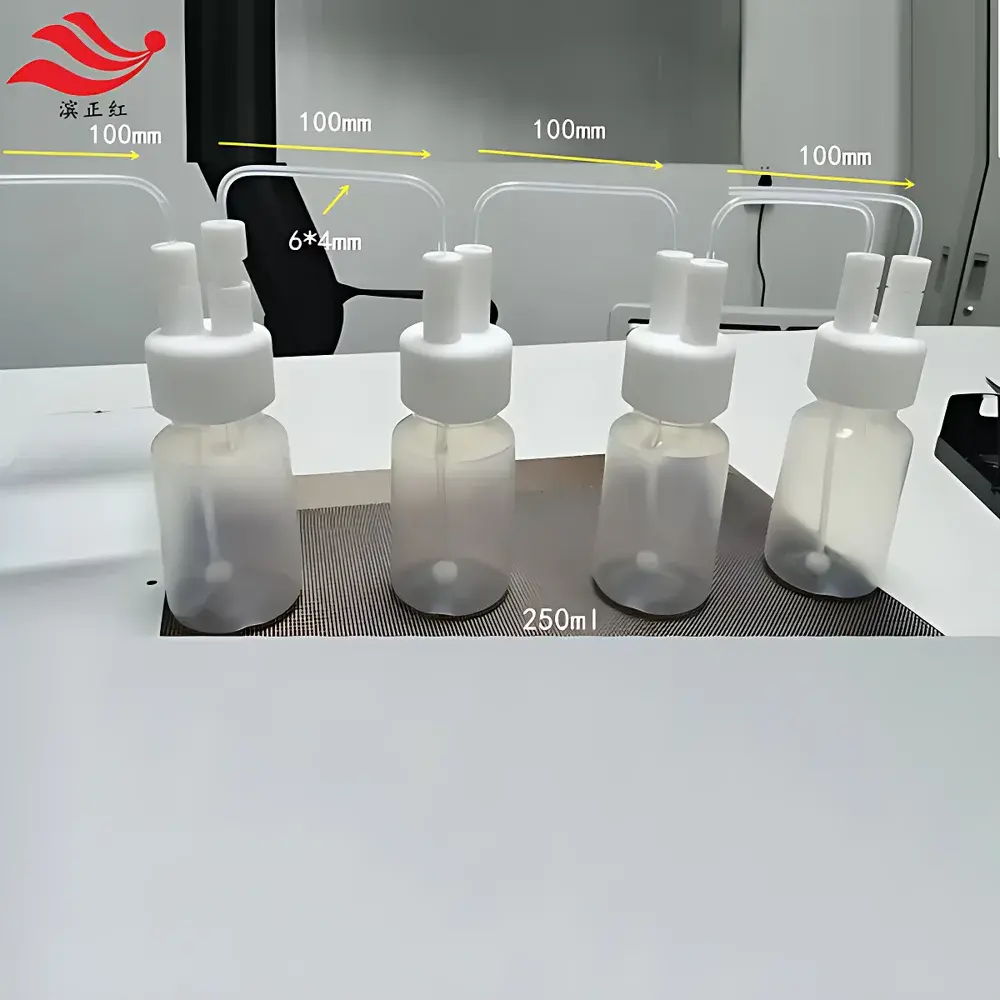
PFA Impact Dust Collector with 30 mL Purge Vial, 15 mL Buffer Vessel, 60 mL Absorption Bottle, and 1/4″ Gas Reaction Vessel
| Brand | Binzhenghong |
|---|---|
| Origin | Jiangsu, China |
| Manufacturer Type | Direct Producer |
| Product Origin | Domestic (China) |
| Capacity Range | 15–300 mL |
| Pricing | Upon Request |
Overview
The Binzhenghong PFA Impact Dust Collector System is a modular, chemically inert gas-handling assembly designed for trace-level sampling, reactive gas scrubbing, and particulate-laden stream conditioning in analytical, environmental, and process safety applications. Constructed entirely from high-purity perfluoroalkoxy alkane (PFA), this system leverages the material’s exceptional resistance to aggressive acids (including HF, aqua regia), strong bases, oxidizers, and elevated temperatures (continuous use up to 260 °C). The core principle of operation relies on inertial impaction—where aerosolized particles or condensable vapors are separated from carrier gas streams via abrupt directional changes within the PFA impact chamber—followed by sequential capture in dedicated vessels: a 30 mL purge vial for volatile analyte pre-concentration, a 15 mL buffer vessel for pressure stabilization and flow damping, a 60 mL absorption bottle for alkaline/acidic scrubbing (e.g., SO₂, HCl, NH₃), and a 1/4″ standard-taper (28/15) gas reaction vessel for inline catalytic or adsorptive treatment. This architecture ensures minimal analyte loss, zero metal leaching, and compatibility with ultra-trace ICP-MS, IC, and GC-MS workflows requiring sub-ppt contamination control.
Key Features
- Fully fluoropolymer-wetted path: All components—including body, cap, tubing ports, and internal baffles—are molded from ASTM D4894-compliant PFA resin, eliminating glass breakage risk and metallic contamination.
- Modular interconnectivity: Standardized 1/4″ female NPT and 28/15 conical ground-glass joints enable tool-free, leak-tight assembly with other PFA or quartz gas-handling modules.
- Optimized impaction geometry: The dust collector’s internal baffle design achieves >95% collection efficiency for particles ≥0.3 µm at flow rates of 0.1–2.0 L/min (tested per ISO 14644-3).
- Thermal stability: Rated for autoclaving (121 °C, 15 psi) and vacuum service down to 1 × 10⁻³ mbar without deformation or outgassing.
- Low extractables profile: Pre-conditioned per USP and certified for ≤10 pg/mL metal leachates (Al, Fe, Cr, Ni) after 24-hr exposure to 10% HNO₃ at 80 °C.
Sample Compatibility & Compliance
This system accommodates gaseous, vapor-phase, and aerosol samples containing halogenated compounds, mercury species, siloxanes, and sulfur/nitrogen oxides. It is routinely deployed in EPA Method 29 (metallic emissions), ISO 10156 (gas cylinder testing), and ASTM D5197 (formaldehyde scrubbing) protocols. All vessels meet GLP documentation requirements for trace metal analysis; the 15 mL buffer vessel includes a calibrated volume mark traceable to NIM (China National Institute of Metrology). No regulatory exemptions apply—the system is not CE-marked or FDA 510(k)-cleared, as it functions solely as ancillary laboratory hardware under ISO/IEC 17025-accredited methods.
Software & Data Management
No embedded firmware or proprietary software is integrated—this is a passive, hardware-only gas conditioning platform. However, it interfaces seamlessly with third-party data acquisition systems via standardized analog (4–20 mA) or digital (RS-485 Modbus RTU) outputs when paired with optional pressure/flow transducers (e.g., Validyne DP15 or Sensirion SDP3x series). Audit trails, calibration logs, and usage records must be maintained manually or via LIMS integration per ISO/IEC 17025 Clause 7.7 and FDA 21 CFR Part 11 (if electronic records are generated externally).
Applications
- Pre-concentration of volatile mercury (Hg⁰) in stack gas monitoring prior to cold-vapor AAS or CVAFS detection.
- Removal of phosphoric acid mist from semiconductor etch exhaust before FTIR quantification.
- Stabilization of transient flow pulses during online IC analysis of atmospheric anions (Cl⁻, NO₃⁻, SO₄²⁻).
- Inert matrix isolation of reactive intermediates (e.g., ClO₂, F₂) in kinetic studies requiring sub-second residence time control.
- Scrubbing of H₂S and COS from natural gas feedstocks prior to sulfur-specific GC detection.
FAQ
Is this system compatible with hydrofluoric acid (HF) service?
Yes—PFA exhibits the highest chemical resistance among fluoropolymers to anhydrous and aqueous HF across concentrations up to 48% and temperatures ≤150 °C.
Can the 1/4″ gas reaction vessel be used under vacuum?
Yes—it maintains structural integrity and seal integrity at absolute pressures down to 1 × 10⁻³ mbar when assembled with PFA O-rings and torqued to 15 in·lb.
Does the manufacturer provide calibration certificates for volumetric accuracy?
Volumetric tolerance is ±2% for all vessels per ASTM E542; NIST-traceable calibration certificates are available upon request at additional cost.
What is the maximum recommended operating temperature for continuous use?
260 °C for all components; short-term excursions to 300 °C are permissible for ≤15 minutes without permanent deformation.
Are replacement PFA O-rings and joint sleeves available separately?
Yes—Binzhenghong supplies OEM-specified PFA compression seals (part numbers BZH-PFA-O-RING-6.5 and BZH-PFA-SLEEVE-28/15) with lot-specific CoA.



