
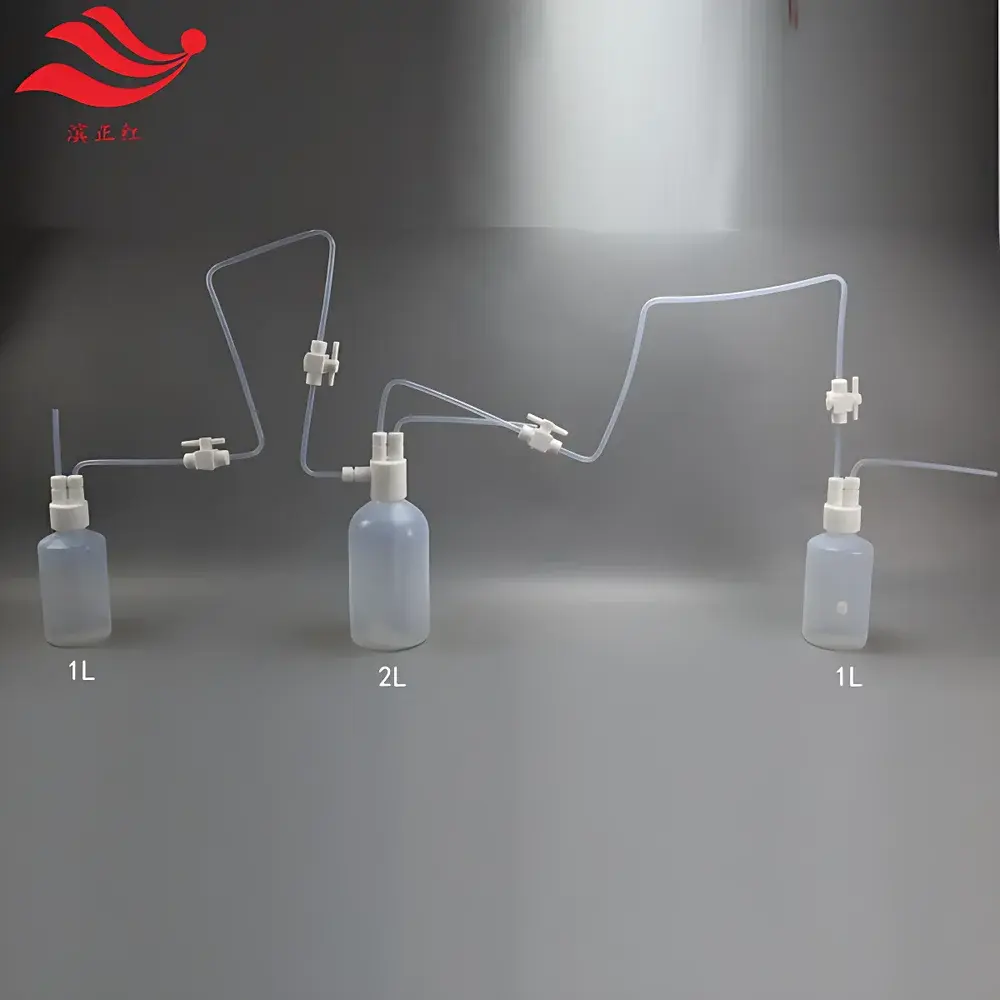
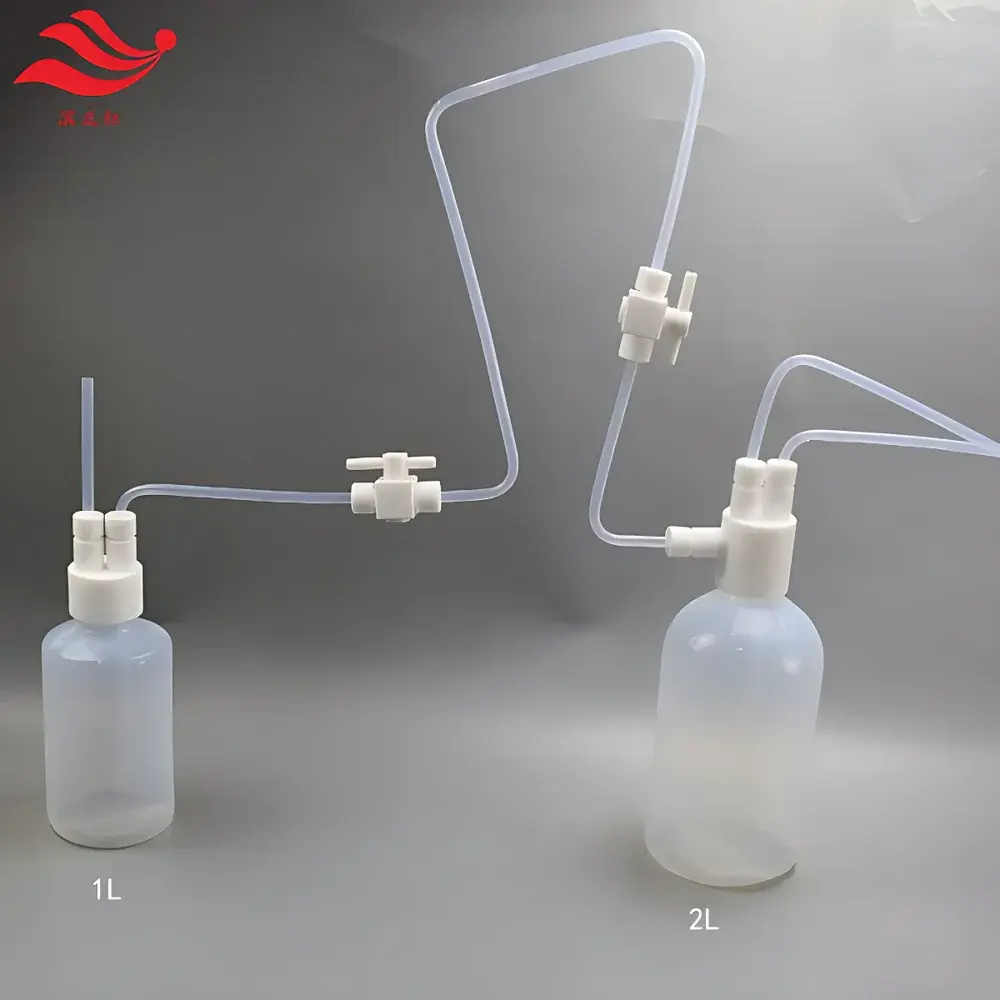
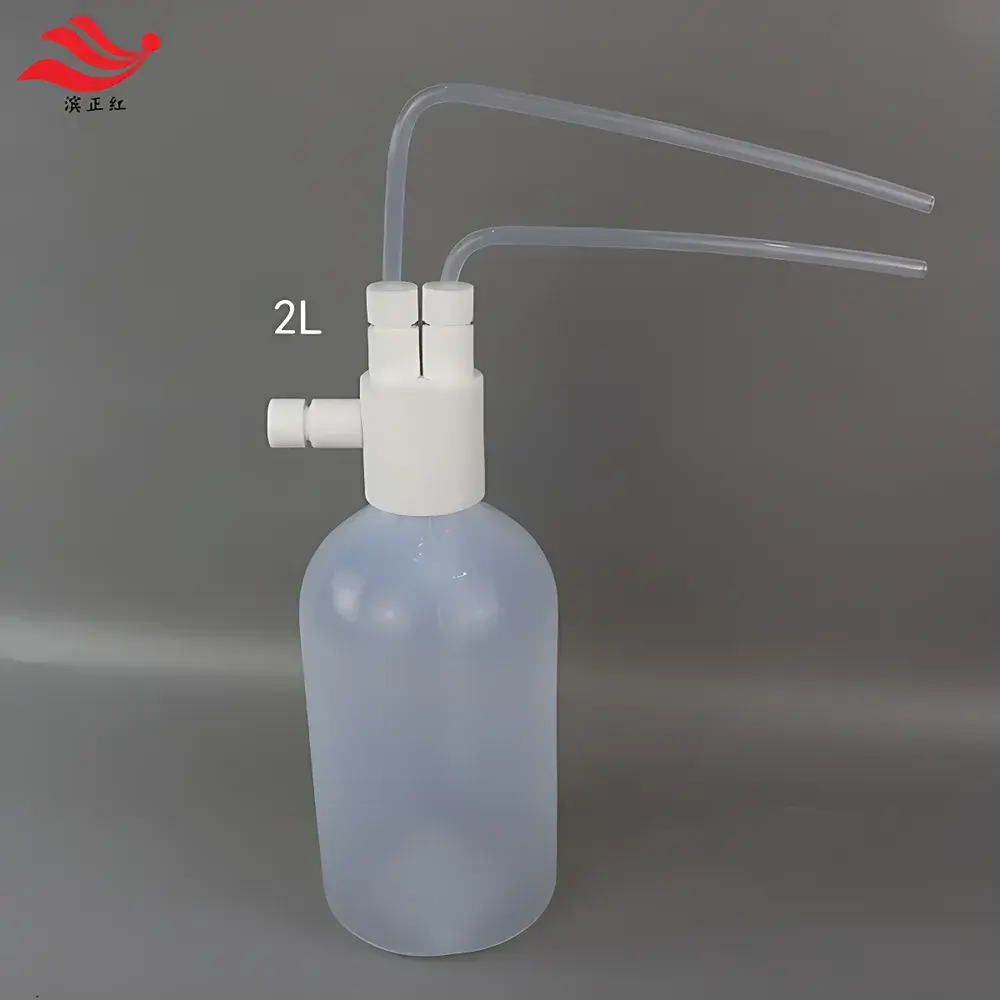
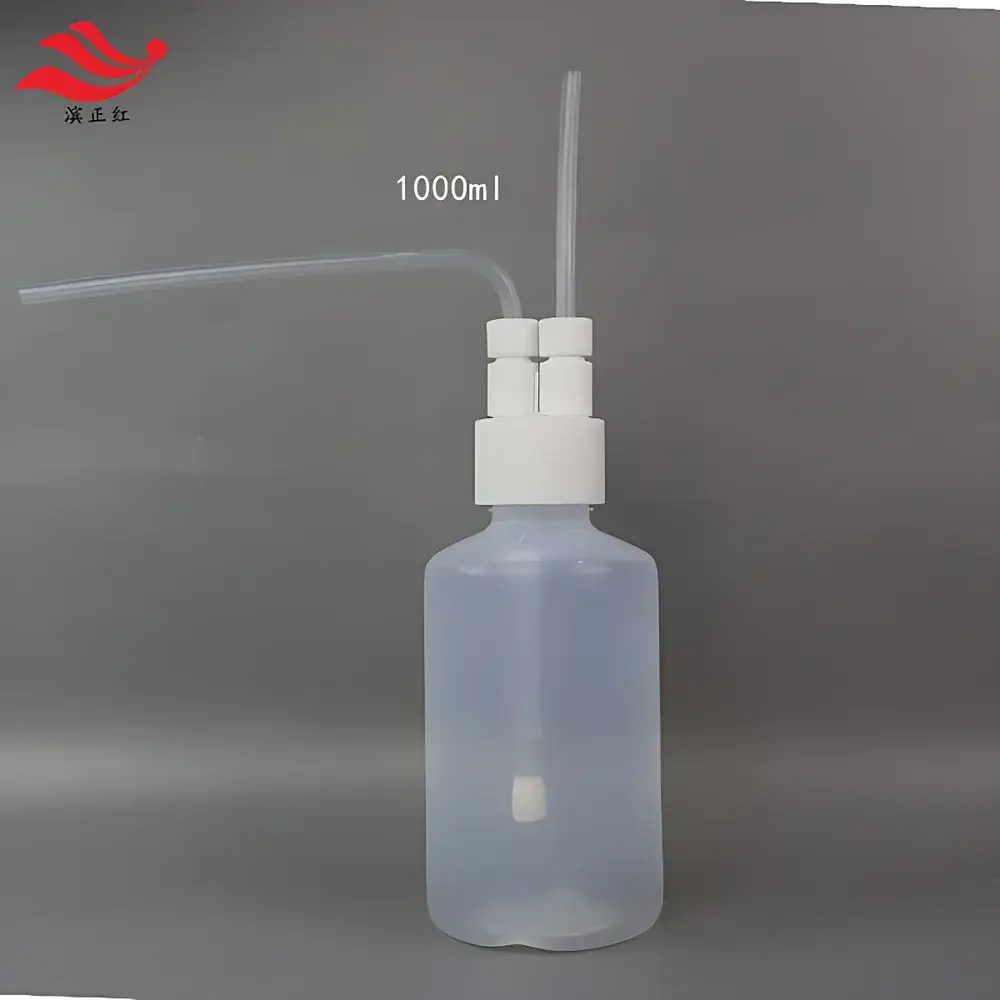
PFA Series串联 Reaction & Absorption Vessel (1 L / 2 L), GL45 Thread, Fluorinated Ethylene Propylene (FEP) / Perfluoroalkoxy (PFA) Construction for HF and Corrosive Gas Handling
| Brand | Binzhenghong |
|---|---|
| Origin | Jiangsu, China |
| Manufacturer Type | Direct Producer |
| Capacity Options | 1000 mL & 2000 mL |
| Material | High-Purity PFA (Perfluoroalkoxy) with Optional FEP Components |
| Thread Standard | GL45 (DIN 15887) |
| Application | HF Absorption, Acid Gas Scrubbing, Corrosive Vapor Trapping, Inert Reaction Sequencing |
Overview
The Binzhenghong PFA Series Tandem Reaction & Absorption Vessel is a chemically inert, high-integrity containment system engineered for safe handling of highly aggressive reagents—particularly anhydrous hydrogen fluoride (HF), chlorine trifluoride (ClF₃), bromine pentafluoride (BrF₅), and other halogenated corrosives. Constructed entirely from molded, seamless perfluoroalkoxy (PFA) resin—certified to ASTM D4894 and ISO 10360-2 for purity and thermal stability—the vessel eliminates metallic leaching, surface adsorption, or catalytic decomposition risks common in glass or stainless-steel alternatives. Its tandem (series-connected) design enables staged gas–liquid contact: inlet gas first passes through a pre-scrubbing chamber (e.g., for particulate or moisture removal), then enters the primary absorption zone where turbulent bubbling through a defined liquid column ensures high mass-transfer efficiency. The GL45 standardized neck facilitates secure, leak-tight integration with PFA tubing, diaphragm valves, pressure regulators, and inline sensors—supporting closed-system operation under vacuum or controlled positive pressure (up to 0.3 MPa at 25 °C).
Key Features
- Monolithic PFA construction: No welds, joints, or adhesive interfaces—ensures zero permeation and long-term chemical resistance against HF, oleum, fuming nitric acid, and molten alkali metals.
- Tandem dual-chamber configuration: Separates gas conditioning (pre-filtering/drying) from active absorption—reducing carryover and enabling multi-step purification protocols.
- GL45 (DIN 15887) threaded neck with PTFE-coated sealing surface: Compatible with industry-standard PFA, FEP, or ETFE stopcocks, caps, and manifolds; torque-spec compliant for reproducible sealing integrity.
- Optimized bubble dispersion geometry: Internal draft tube and conical base promote uniform gas distribution and minimize channeling—validated via water-air flow visualization studies at 0.5–5 L/min.
- Thermal stability range: –200 °C to +260 °C continuous use; short-term excursions to +300 °C permitted without dimensional distortion or outgassing.
- Autoclavable and plasma-clean compatible: Suitable for semiconductor-grade cleaning protocols (Class 10 cleanroom validated).
Sample Compatibility & Compliance
These vessels are routinely deployed in HF-based etching chemistry recovery loops, nuclear fuel reprocessing off-gas treatment, and fluoropolymer synthesis QA/QC labs. They meet material compatibility requirements outlined in ASTM D543 (resistance to chemical reagents), IEC 60068-2-52 (corrosion testing), and support GLP-compliant documentation workflows. While not certified to ASME B31.3 or PED 2014/68/EU as pressure equipment (intended for low-pressure lab service), their burst pressure exceeds 1.2 MPa at 25 °C per ISO 11357-3 tensile testing. All units undergo helium leak testing (<1×10⁻⁹ mbar·L/s) and extractables profiling (ICP-MS per USP ) prior to shipment.
Software & Data Management
As a passive hardware component, the vessel requires no embedded firmware or software. However, it integrates natively into automated gas-handling platforms (e.g., Bronkhorst EL-FLOW, MKS Instruments controllers) via standard analog (4–20 mA) or digital (RS485/Modbus RTU) I/O when paired with optional inline pressure, temperature, and conductivity sensors. Raw process data—including differential pressure across chambers, liquid level (capacitive probe), and effluent pH—is loggable in compliance with FDA 21 CFR Part 11 when acquired through validated SCADA or LIMS systems (e.g., LabWare LIMS, DeltaV DCS). Audit trails, electronic signatures, and change control are maintained at the system level—not within the vessel itself.
Applications
- Hydrogen fluoride (HF) absorption from semiconductor wafer cleaning exhaust streams
- In-line scrubbing of Cl₂, SO₂, HCl, and NOₓ in environmental emission monitoring calibrations
- Multi-stage fluorination reactions requiring sequential reagent addition under inert atmosphere
- Radiochemical separation processes involving volatile uranium or plutonium fluorides (e.g., UF₆ condensation traps)
- Calibration gas generation for FTIR and cavity ring-down spectroscopy (CRDS) analyzers
- Stability testing of fluorinated pharmaceutical intermediates under accelerated humidity/acid vapor exposure
FAQ
Can this vessel be used for pressurized reactions above atmospheric pressure?
Yes—rated for continuous service up to 0.3 MPa (3 bar) at 25 °C; maximum non-destructive test pressure is 1.2 MPa. Pressure-rated PFA fittings and torque-controlled assembly are mandatory.
Is PFA equivalent to FEP or ETFE for HF service?
No. PFA offers superior creep resistance, higher continuous-use temperature (+260 °C vs. +200 °C for FEP), and lower extractables than FEP or ETFE—making it the only fluoropolymer specified for critical HF absorption per ASTM E2912.
Does the tandem design require custom manifolding?
No—standard GL45-to-GL45 PFA bridging sleeves (sold separately) enable plug-and-play series connection; internal flow paths are hydrodynamically optimized to prevent backmixing.
How is cleaning validated for semiconductor applications?
Units are supplied with certificate of conformance including ICP-MS trace metal analysis (<10 ppt Al, Fe, Na, K) and TOC rinse validation (<5 ppb); additional particle count certification (ISO 14644 Class 5) available on request.
Are replacement O-rings or gaskets included?
No—PFA vessels operate seal-free via metal-to-plastic compression; GL45 sealing relies solely on the machined PTFE-faced cap. No elastomers are used or required.



