
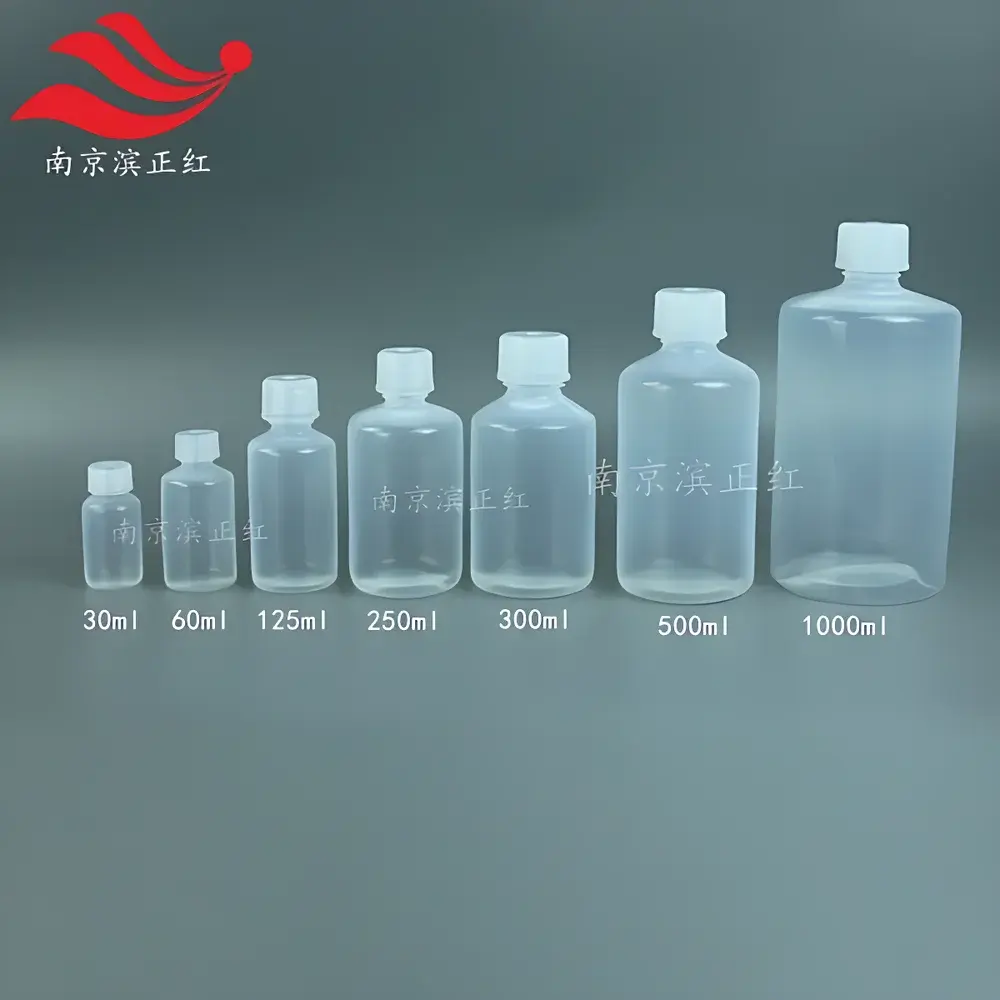
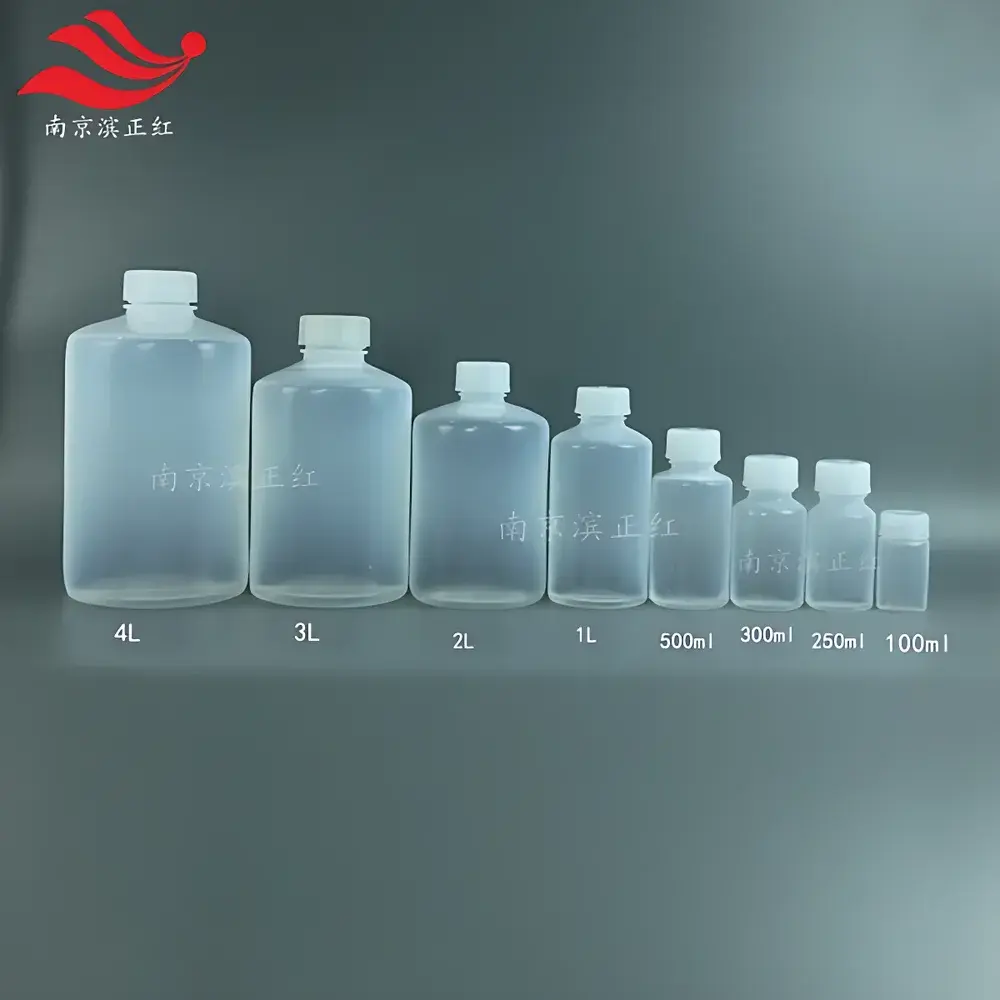
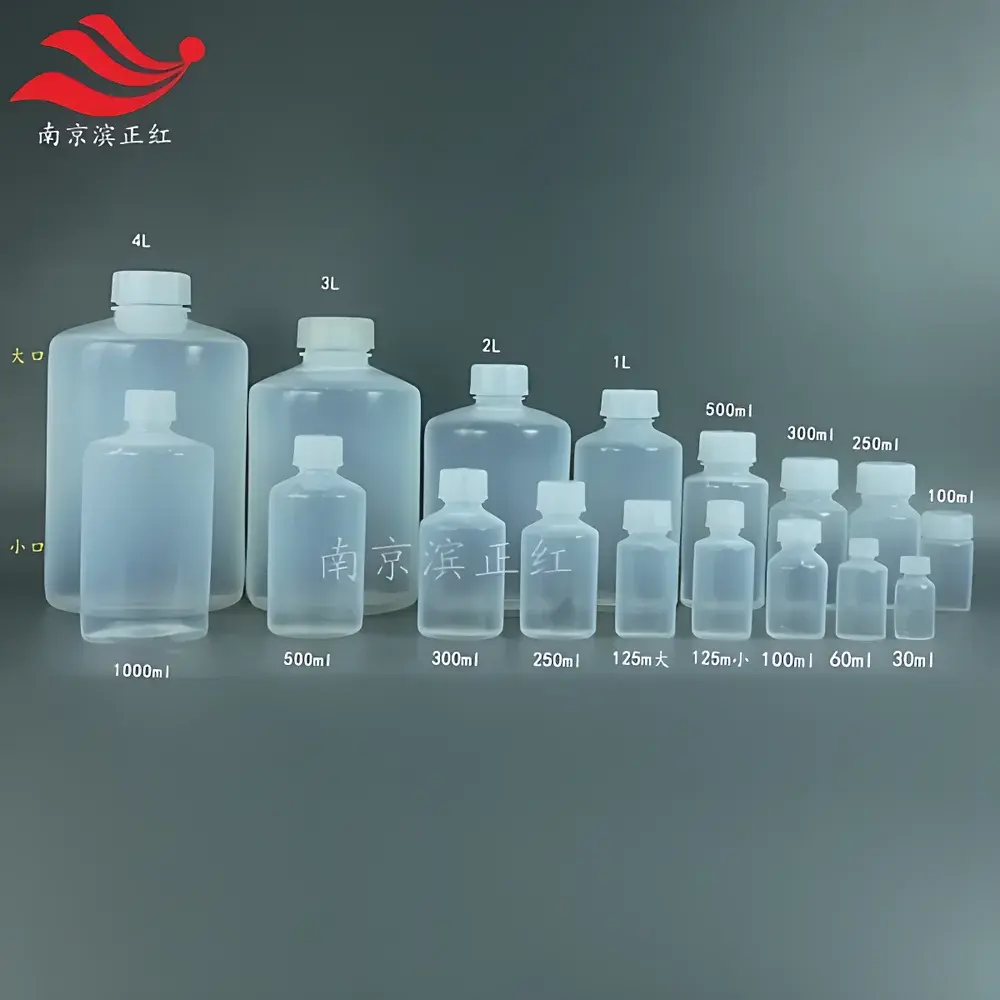
PFA Wide-Mouth and Narrow-Mouth Sample Vials – High-Purity Perfluoroalkoxy (PFA) Resin Bottles by Binzhenghong
| Brand | Binzhenghong |
|---|---|
| Origin | Jiangsu, China |
| Manufacturer Type | Direct Producer |
| Country of Origin | China |
| Model | NJ-PFA-YPP |
| Price Range | USD 15–570 |
Overview
PFA Wide-Mouth and Narrow-Mouth Sample Vials are precision-engineered laboratory containers fabricated from high-purity perfluoroalkoxy (PFA) resin—a fluoropolymer distinguished by exceptional chemical inertness, ultra-low extractables, and outstanding thermal stability (−200 °C to +260 °C). Unlike standard polypropylene or HDPE vials, PFA vials eliminate trace metal leaching, organic outgassing, and surface adsorption—critical for ultratrace analysis, isotopic studies, and high-sensitivity spectroscopic workflows. These vials operate on the principle of passive containment: their fully fused, seamless construction ensures zero particulate shedding and negligible background interference, making them ideal for ICP-MS, GC-MS, LC-MS/MS, and EPA Method 1638/200.5 compliant environmental testing where method detection limits (MDLs) fall below sub-ppt levels.
Key Features
- Ultra-High Purity PFA Resin: Compliant with ASTM D4894 and ISO 10993-5 standards; certified for low-metal content (<0.1 ppb total metals), non-volatile residue (NVR) <0.5 µg/cm², and extractable organics <10 ng/mL in aqueous and acidic matrices.
- Two Neck Configurations: GL32 narrow-mouth vials for controlled dispensing and reduced headspace oxidation; GL45 wide-mouth variants for rapid sample loading, solid-phase extraction (SPE) cartridge transfer, or viscous matrix handling.
- Optical Clarity & Low Autofluorescence: Transparent, non-yellowing formulation enables visual inspection without compromising UV-VIS transparency (transmittance >90% at 200–800 nm); suitable for fluorescence-based assays requiring minimal background signal.
- Thermal & Mechanical Robustness: Withstands repeated autoclaving (121 °C, 20 min, 15 psi), freeze-thaw cycling (−80 °C → +25 °C), and centrifugation up to 15,000 × g—retaining dimensional stability and seal integrity across 1,000+ cycles.
- Trace-Level Cleanliness Assurance: Manufactured in ISO Class 7 cleanrooms; individually double-bagged in static-dissipative polyethylene; supplied with certificate of analysis (CoA) listing residual fluoride, sodium, potassium, iron, and chromium levels.
Sample Compatibility & Compliance
These vials are validated for use with aggressive solvents—including concentrated HF (up to 48%), aqua regia, hot nitric acid (70%), and piranha solution—without swelling, stress cracking, or fluorine ion release. They meet USP Class VI biocompatibility requirements and are compatible with EPA SW-846 Methods 3005A (acid digestion), 3015A (microwave-assisted extraction), and 6010D (ICP-OES). All models comply with GLP/GMP documentation standards and support full audit trails when integrated into LIMS environments. Sterilization validation data (bioburden reduction ≥6 log₁₀) is available upon request for regulated pharmaceutical QC applications.
Software & Data Management
While inherently hardware-only, the NJ-PFA-YPP vial series is designed for seamless integration into digital lab ecosystems. Each batch is assigned a unique QR-coded lot identifier linked to its CoA, manufacturing date, sterilization log, and elemental impurity profile—scannable via LIMS barcode readers or mobile devices. Optional RFID-enabled caps (sold separately) allow real-time tracking of vial lifecycle status (e.g., “unopened”, “sampled”, “autoclaved”, “disposed”) within electronic lab notebooks (ELNs) compliant with FDA 21 CFR Part 11 and EU Annex 11 requirements.
Applications
- Ultratrace elemental analysis (ICP-MS, HR-ICP-MS) requiring sub-attogram detection limits
- Radiochemical sample storage for gamma spectrometry and alpha/beta counting
- Reference material packaging for CRM certification (ISO Guide 34)
- Long-term archiving of clinical proteomics samples (plasma, CSF) under cryogenic conditions
- Inorganic speciation workflows involving As(III)/As(V), Cr(III)/Cr(VI), and Se(IV)/Se(VI) separation
- Calibration standard preparation for semiconductor process control (SEMI F57)
FAQ
Are these vials suitable for hydrofluoric acid (HF) storage?
Yes—PFA exhibits the highest resistance among fluoropolymers to HF corrosion, including anhydrous and aqueous forms up to 48% concentration at ambient temperature.
Do you provide pre-cleaned, certified vials for trace metal analysis?
All NJ-PFA-YPP vials are factory-cleaned using ASTM E1971-compliant ultrasonic baths with sub-boiling HNO₃ and Class 1 water, then sealed under nitrogen; CoA includes ICP-MS quantification of 32 elements.
Can these vials be used in automated liquid handlers?
GL45 wide-mouth vials feature standardized footprint and rim geometry compatible with Hamilton, Tecan, and Agilent autosampler trays; narrow-mouth GL32 variants require custom adapter plates.
What is the maximum recommended centrifugation speed?
Validated for continuous operation at 15,000 × g for 30 minutes with no deformation or cap ejection when paired with PFA-coated screw caps.
Is lot-specific traceability available for regulatory submissions?
Yes—each lot carries a unique alphanumeric ID traceable to raw material batch, extrusion parameters, cleanroom shift logs, and final QC test reports, supporting 21 CFR Part 11 compliance.



