
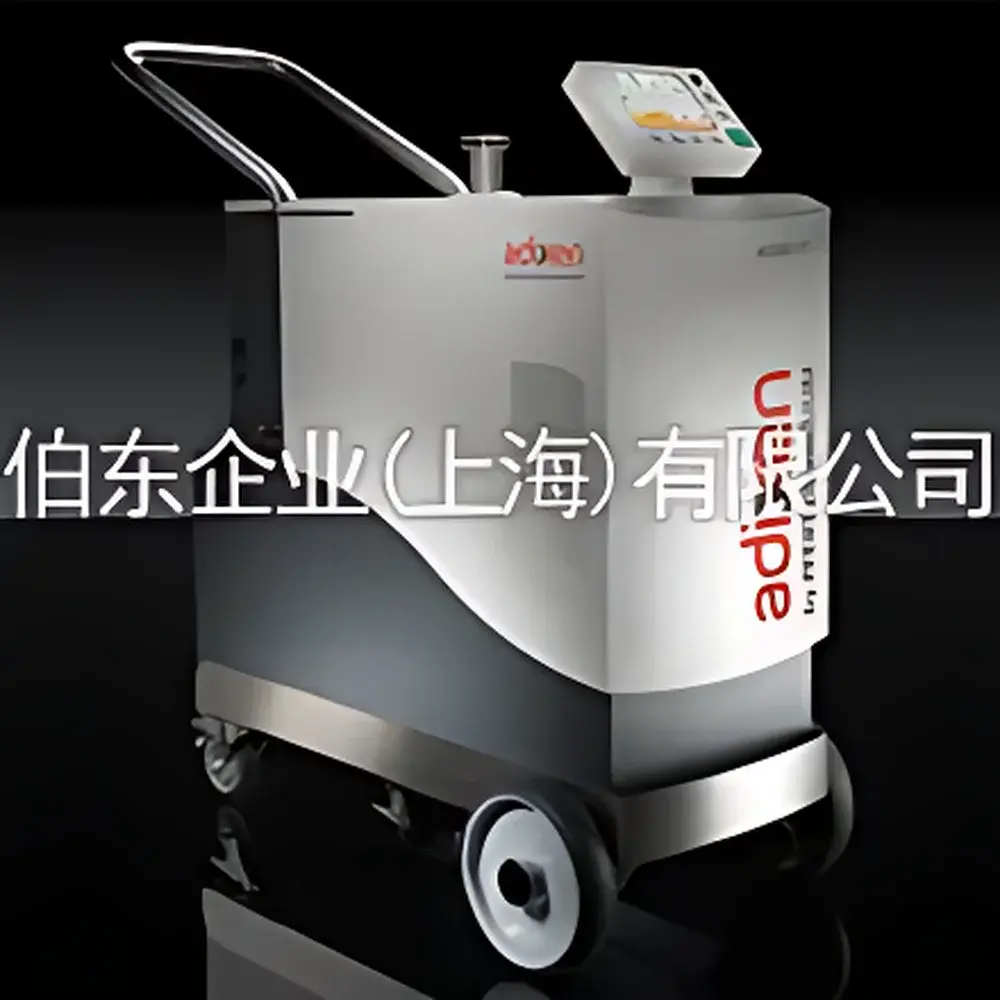
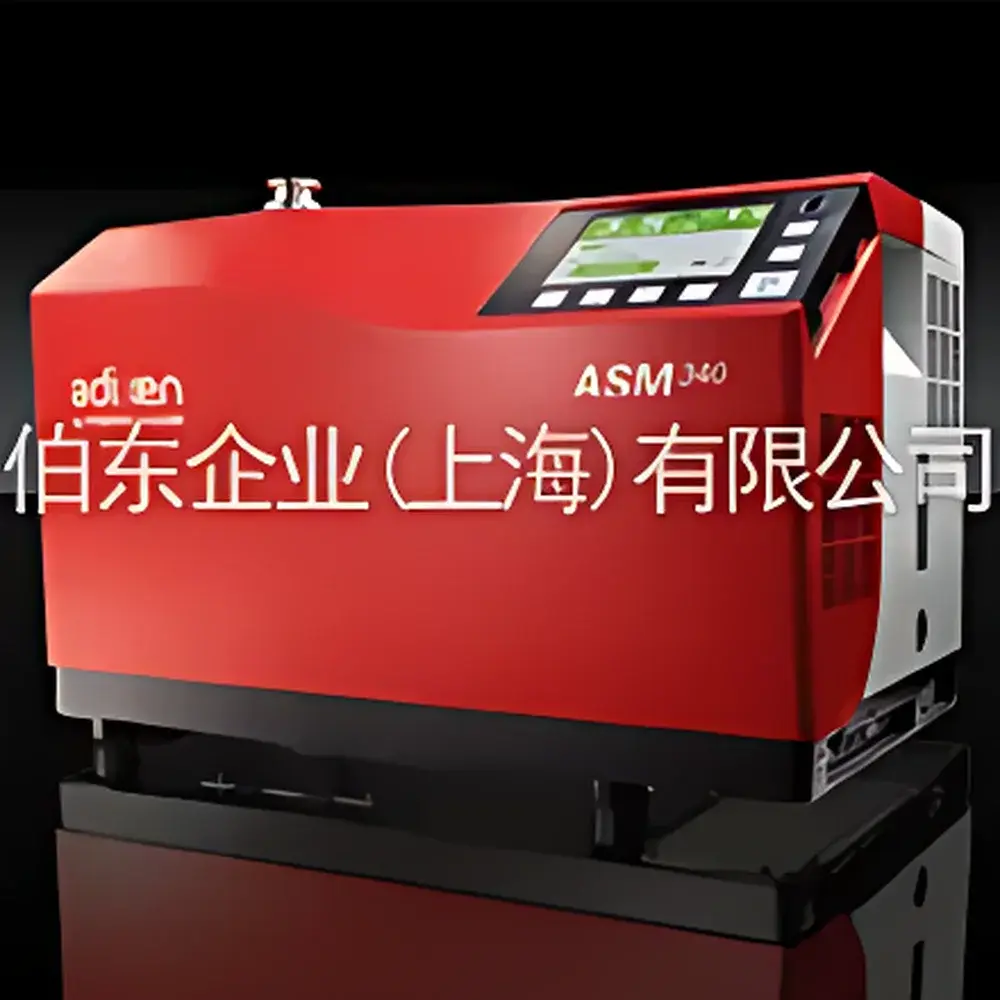
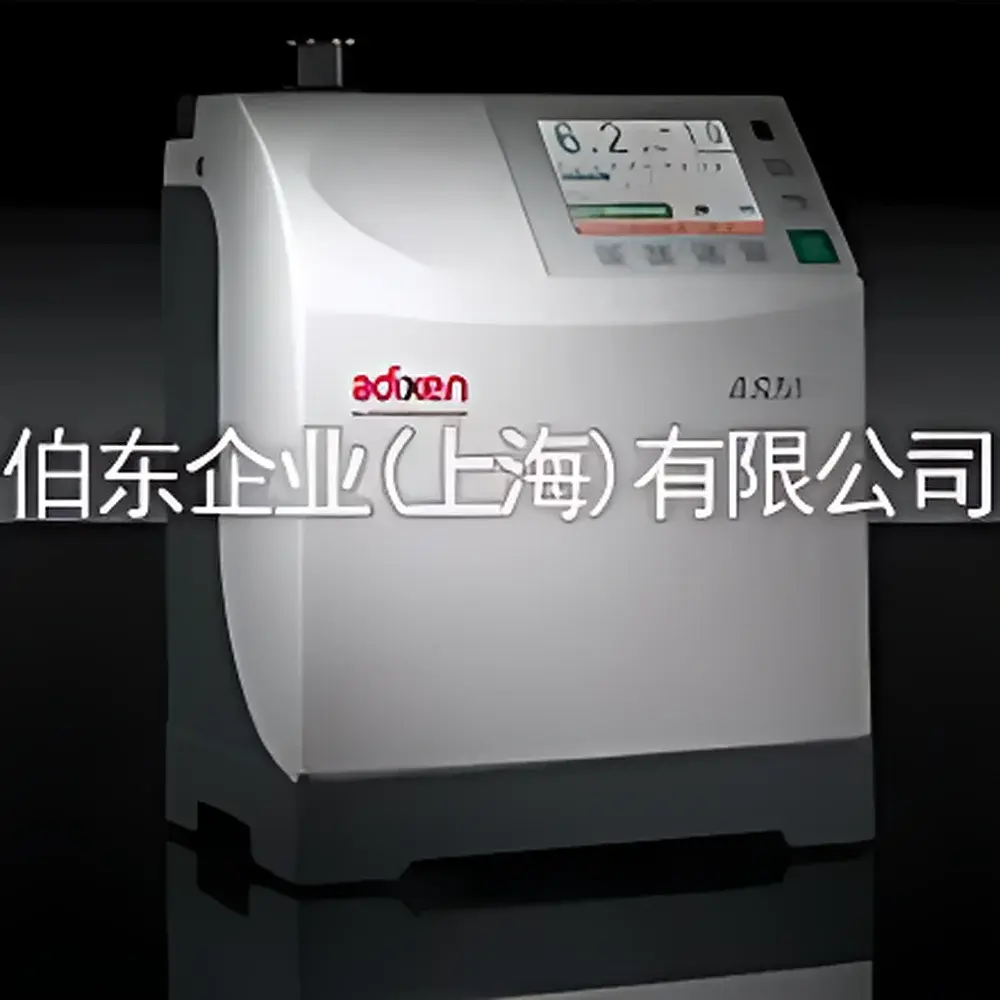
Pfeiffer Vacuum ASM Series Helium Mass Spectrometer Leak Detector
| Brand | Pfeiffer Vacuum |
|---|---|
| Origin | France |
| Manufacturer Type | Authorized Distributor |
| Origin Category | Imported |
| Model | ASM Series |
| Price Range | USD 13,500 – 40,500 (FOB) |
| Detection Principle | Quadrupole Mass Spectrometry (4 amu He⁺ ion detection) |
| Minimum Detectable Leak Rate | ≤5×10⁻¹³ mbar·L/s (typical, with optimized calibration and turbomolecular pumping) |
| Pumping Configuration | Integrated turbomolecular pump + backing pump |
| Interface | RS232 / Ethernet / Optional Profibus/Modbus TCP |
| Compliance | CE, RoHS, ISO 9001 certified manufacturing |
Overview
The Pfeiffer Vacuum ASM Series Helium Mass Spectrometer Leak Detector is a high-sensitivity, industrial-grade analytical instrument engineered for quantitative detection and localization of minute helium tracer gas leaks in vacuum and pressurized systems. Operating on the principle of quadrupole mass spectrometry, it selectively ionizes and separates helium atoms (mass-to-charge ratio m/z = 4) from background gases using a high-resolution mass filter, enabling detection limits as low as 5×10⁻¹³ mbar·L/s under calibrated conditions. Unlike pressure decay or bubble testing—methods limited by environmental interference, operator dependency, and poor reproducibility—the ASM series delivers trace-level sensitivity, measurement stability, and metrological traceability required in mission-critical applications across aerospace, semiconductor packaging, medical device manufacturing, battery production, and vacuum furnace qualification.
Key Features
- Integrated turbomolecular vacuum system with oil-free backing pump, ensuring rapid pump-down and long-term operational stability without hydrocarbon contamination.
- High-transmission quadrupole mass analyzer with optimized ion optics, delivering consistent signal-to-noise ratio and minimal drift over extended duty cycles.
- Six standardized helium leak testing modes implemented via firmware-controlled vacuum sequencing and gas handling logic: Vacuum Spraying (localization), Sniffing (atmospheric pressure), Integral Vacuum Accumulation, Bombing (backpressure), Enclosed Part Vacuum Accumulation, and Atmospheric Pressure Integral Sniffing.
- Real-time leak rate calculation with automatic background subtraction and helium partial pressure normalization, supporting both qualitative localization and quantitative reporting per ISO 10648-2 Annex A.
- Rugged industrial enclosure (IP54 rated), EMC-compliant design, and dual-language (English/German) GUI with intuitive touchscreen interface and configurable test sequences.
Sample Compatibility & Compliance
The ASM Series accommodates diverse component geometries—from microelectronic hermetic packages (10 m³). Its modular gas inlet architecture supports direct connection to test fixtures, robotic handling interfaces, and automated production line integration. All test methodologies align with internationally recognized standards: ASTM E493 (Standard Practice for Leak Testing Using Helium Mass Spectrometers), ISO 10648-2 (Vacuum Technology — Leak Detection — Part 2: Helium Leak Testing), and EN 1330-8 (Non-destructive Testing — Terminology — Part 8: Terms Used in Leak Testing). For regulated industries, optional audit trail logging and user access control modules support FDA 21 CFR Part 11 compliance when deployed in GMP/GLP environments.
Software & Data Management
The embedded ASM Control Software provides full test sequence programming, real-time spectral monitoring, and export-capable data logging (CSV, XML). Each test record includes timestamp, operator ID, system status flags, raw ion current values, calculated leak rates, and pass/fail thresholds defined per customer-specific acceptance criteria. Data files are digitally signed and stored with SHA-256 hash integrity verification. Remote diagnostics, firmware updates, and configuration backup are supported via secure Ethernet (TLS 1.2) or local USB port. Optional PC-based ASM Data Manager software enables batch analysis, SPC charting (X̄-R, Cpk), and integration with MES/SCADA platforms via OPC UA or Modbus TCP.
Applications
- Aerospace: Qualification of propulsion system manifolds, satellite thermal control loops, and avionics enclosures using Bombing and Integral Vacuum methods per NASA-STD-6002.
- Lithium-ion Battery Manufacturing: In-line detection of cell casing weld defects via Atmospheric Pressure Integral Sniffing at >20 units/min throughput.
- Medical Devices: Hermeticity validation of implantable pacemaker housings and diagnostic sensor modules under ISO 11607-2 accelerated aging protocols.
- Power Generation: Field inspection of turbine condenser tubes and nuclear coolant loop instrumentation using Sniffing mode with portable helium supply.
- Research Infrastructure: Leak integrity verification of ultra-high vacuum beamlines (UHV <10⁻⁹ mbar) and cryostat feedthroughs prior to commissioning.
FAQ
What is the minimum detectable leak rate for the ASM Series under standard calibration conditions?
Typical minimum detectable leak rate is ≤5×10⁻¹³ mbar·L/s when operated with a calibrated helium reference leak, optimal pumping speed, and stabilized ambient temperature (20–25°C). Actual performance depends on test configuration, background helium concentration, and system conductance.
Can the ASM Series perform both qualitative localization and quantitative leak rate measurement?
Yes. Vacuum spraying and sniffing modes provide spatial localization, while integral and bombing methods deliver quantitative leak rate values traceable to NIST-traceable helium standards.
Is the ASM Series compatible with automated production line integration?
Yes. It supports digital I/O (24 VDC), Ethernet/IP, Modbus TCP, and optional Profibus DP for seamless PLC synchronization and recipe-driven test execution.
Does the system require periodic recalibration?
Annual calibration is recommended per ISO/IEC 17025 guidelines. Internal zero-point and gain checks can be performed daily using built-in diagnostics; full calibration requires certified helium reference leaks and vacuum metrology lab support.
What vacuum pumping configuration is standard on the ASM Series?
All models include an integrated two-stage turbomolecular pump (pumping speed ≥200 L/s for helium) and a dry scroll backing pump, eliminating oil vapor backstreaming and ensuring compatibility with oxygen-sensitive processes.



