Pfeiffer Vacuum Calibration System Pro
| Brand | Pfeiffer Vacuum |
|---|---|
| Origin | Germany |
| Model | Calibration System Pro |
| Calibration Range | 1013 hPa to 10⁻³ hPa |
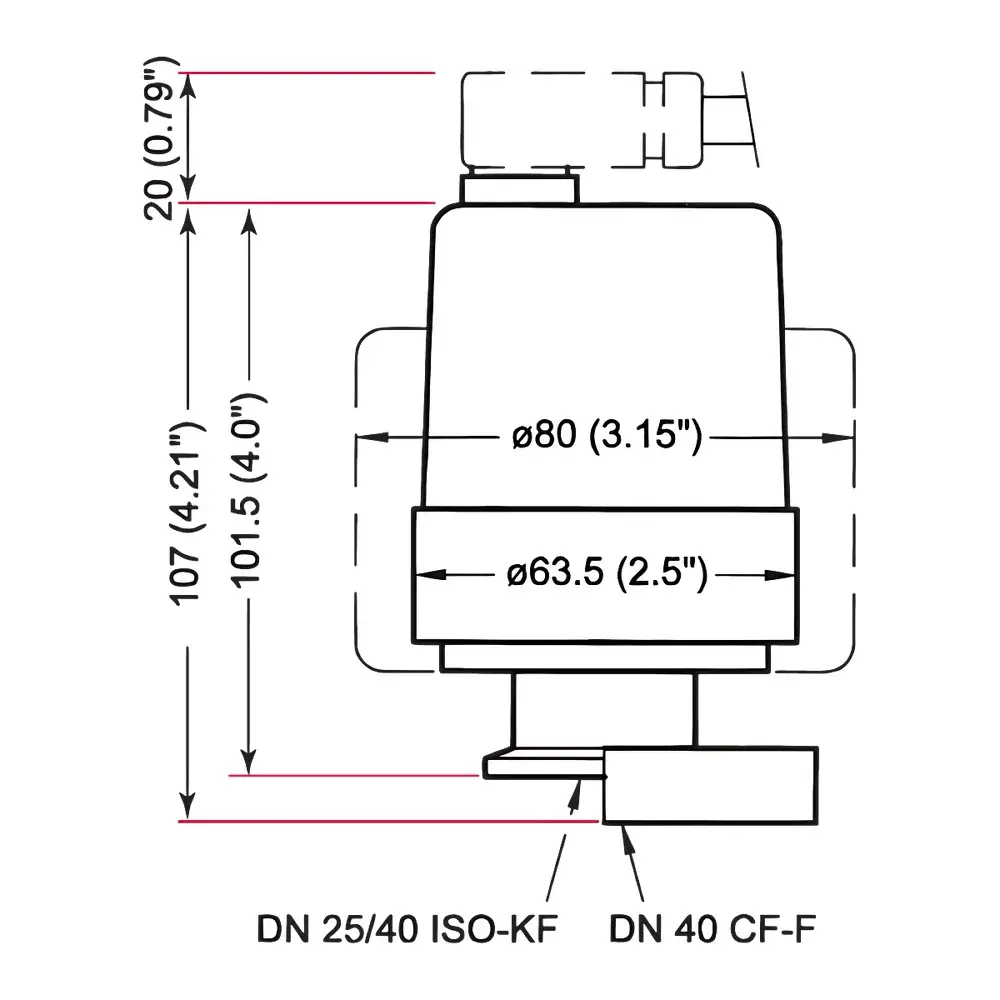
| Flange Configuration | PS A30 110 (4×DN 16 ISO-KF, 2×DN 25 ISO-KF, 1×DN 40 ISO-KF, 1×DN 40 CF) / PS A30 111 (5×DN 16 ISO-KF, 2×DN 25 ISO-KF, 2×DN 40 ISO-KF) |
| Nitrogen Pumping Speed | 67 L/s |
| Forevacuum Pump Speed (50 Hz) | 2.5 m³/h |
| Ultimate Pressure | < 1 × 10⁻⁷ hPa |
| Gas Flow Control Range | 5 × 10⁻⁶ to 1 × 10³ hPa·L/s |
| Operating Temperature | +5 °C to +40 °C (cooling-dependent) |
| Weight | 66 kg (standard configuration) |
| Dimensions (L×W×H) | 700 × 639 × 593 mm |
| Compliance | ISO 3567, DAkkS-DKD-R 6-2, EN ISO 12100, EN 60204-1, CE (2006/42/EC & 2014/30/EU) |
Overview
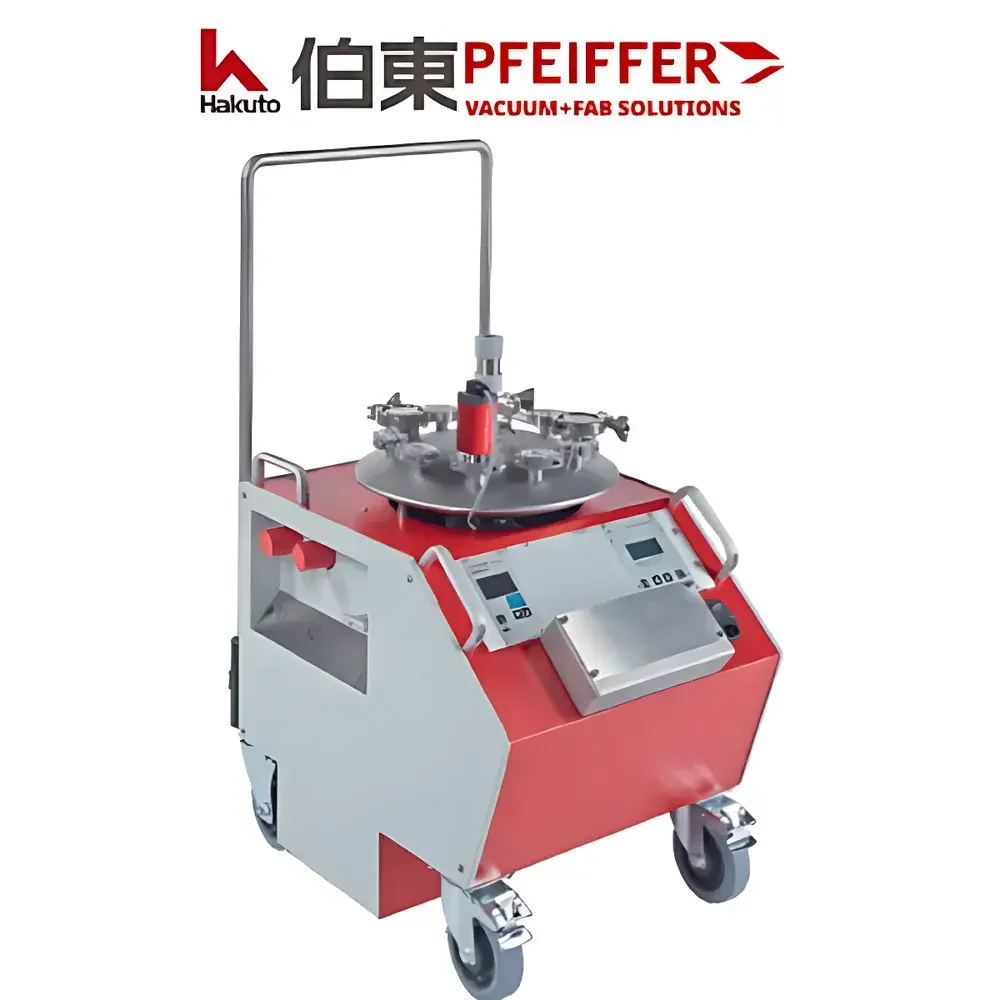
The Pfeiffer Vacuum Calibration System Pro is a metrologically traceable, benchtop vacuum gauge calibration platform engineered for high-accuracy pressure measurement verification across industrial, pharmaceutical, academic, and third-party calibration laboratory environments. Based on the fundamental principles of direct comparison—either static (closed-volume equilibrium) or dynamic (controlled gas flow)—the system enables primary and secondary calibration of capacitance manometers, Pirani gauges, cold cathode gauges, and other vacuum sensors within the range of 1013 hPa down to 10⁻³ hPa. Its architecture adheres strictly to ISO 3567 (“Calibration of vacuum gauges—Methods and procedures”) and supports traceability to national metrology institutes (NMIs) via optional DAkkS-accredited reference transducers such as the CMR 375 and CMR 363. The system operates as a self-contained, manually controlled vacuum standard—requiring no external automation interface—and is designed for use in GLP-compliant laboratories where audit-ready documentation and procedural repeatability are essential.
Key Features
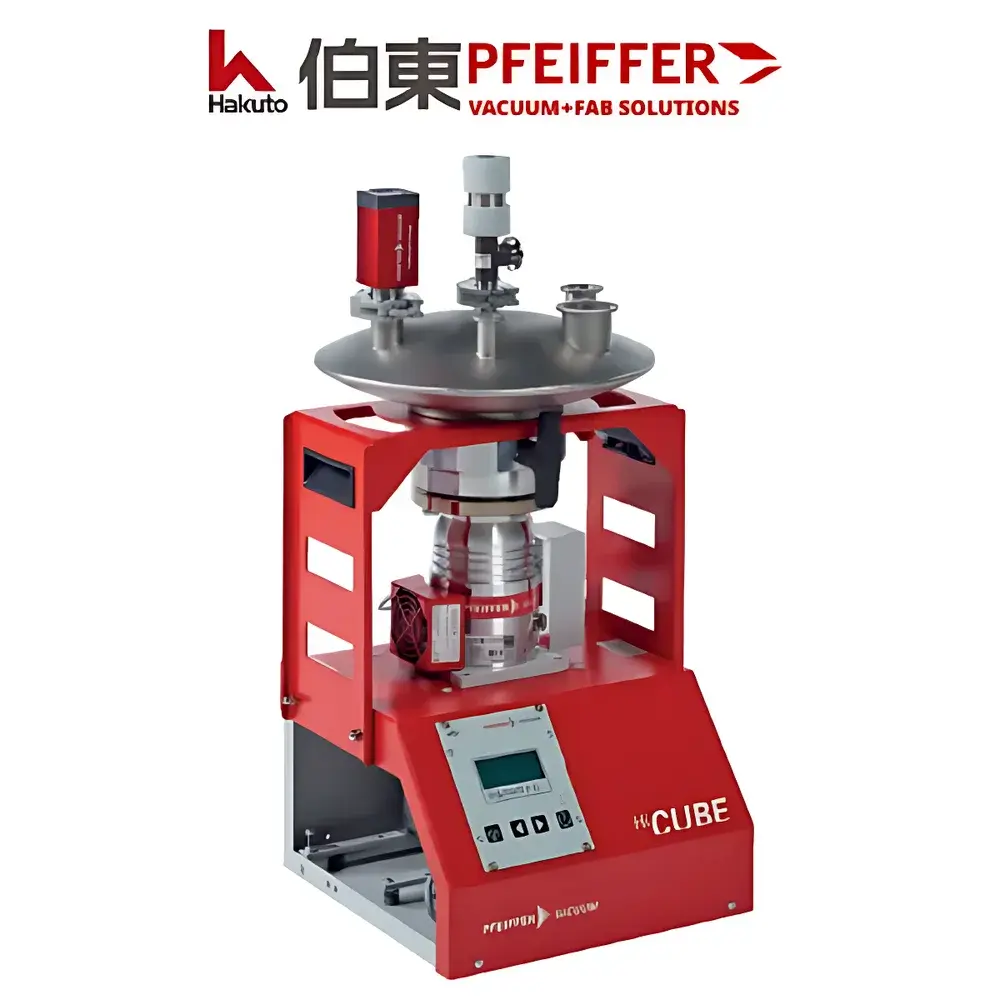
- Integrated high-vacuum architecture featuring a stainless-steel vacuum chamber with glass-bead blasted interior surface to minimize outgassing and adsorption effects.
- Dual-pump configuration: HiPace 80 turbomolecular pump (67 L/s N₂) backed by DUO 3 rotary vane forepump (2.5 m³/h at 50 Hz), achieving an ultimate pressure below 1 × 10⁻⁷ hPa.
- Modular flange manifold supporting up to five simultaneous reference transducer connections—enabling multi-sensor cross-validation and expanded uncertainty analysis per ISO/IEC 17025 requirements.
- Manual gas dosing control via EVN 116 precision needle valve, calibrated for stable, repeatable gas flow rates between 5 × 10⁻⁶ and 1 × 10³ hPa·L/s (N₂-equivalent).
- Mobility-optimized mechanical design: rigid welded steel frame with locking casters (IP20-rated), facilitating repositioning between cleanrooms, QC labs, and production floors without disassembly.
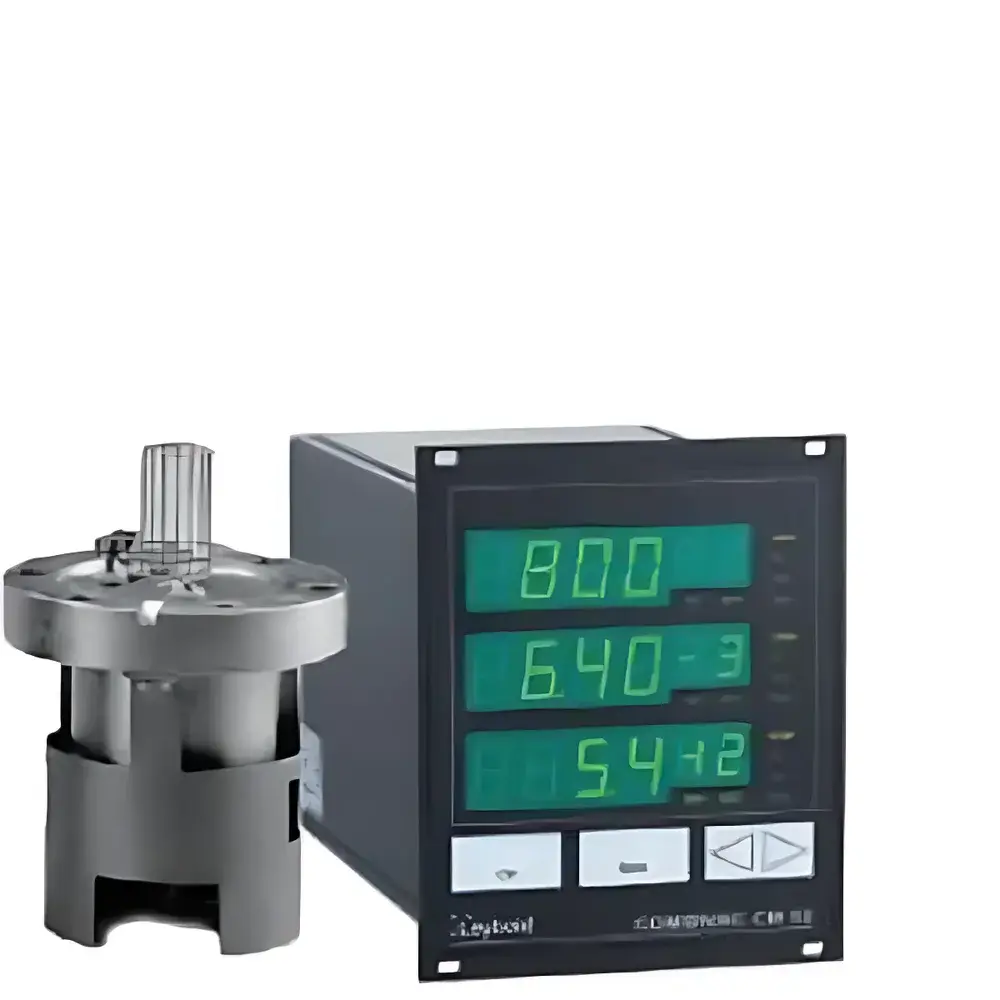
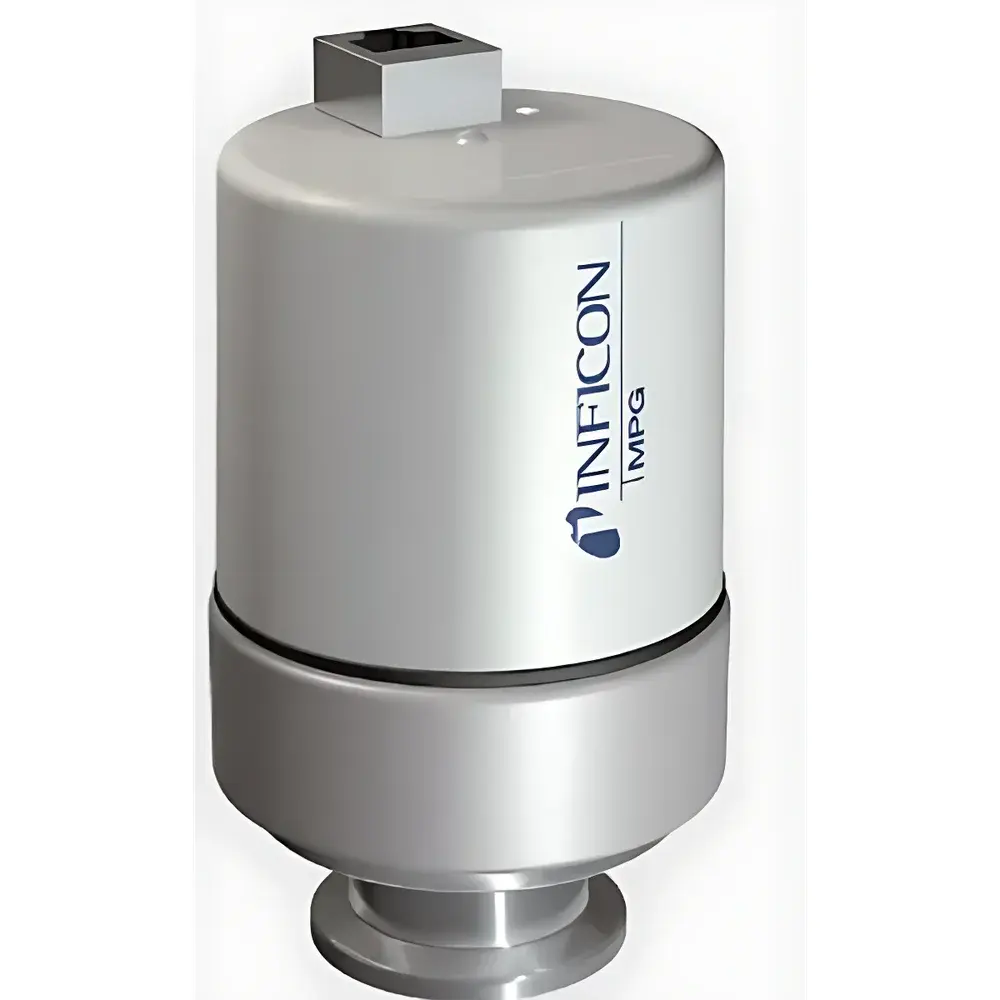
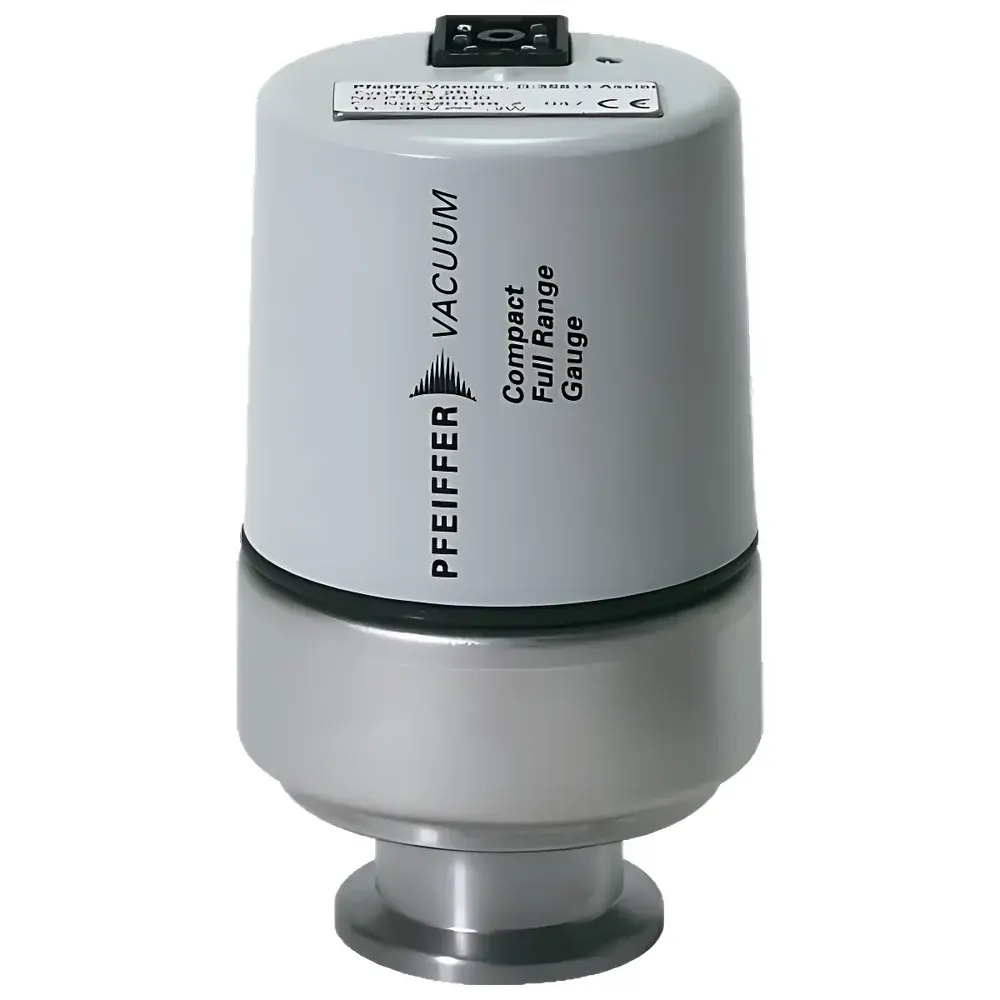
- DCU 110 digital control unit with TPG 361 display and PKR 360 transmitter provides real-time pressure monitoring, zero-point adjustment capability, and operational status feedback—fully independent of external PC software.
Sample Compatibility & Compliance
The Calibration System Pro accommodates all major vacuum sensor types—including analog and digital output variants—via standardized ISO-KF and CF flanges. It supports calibration of devices compliant with ASTM E1192, ISO 20483, and USP <1058> (Analytical Instrument Qualification), particularly in applications requiring documented evidence of measurement integrity. All pressure references used in calibration must be individually certified and maintained under a defined recalibration interval; optional DAkkS-certified CMR series transducers provide full traceability to PTB (Physikalisch-Technische Bundesanstalt). The system itself conforms to CE marking directives 2006/42/EC (Machinery Directive) and 2014/30/EU (EMC Directive), and complies with EN 60204-1 (safety of machinery—electrical equipment) and EN ISO 12100 (risk assessment methodology). It is suitable for operation in Class 1 electrical environments (protective earth required) and meets environmental specifications for humidity-controlled labs (≤80% RH at ≤31 °C).
Software & Data Management
While the Calibration System Pro operates in a standalone, hardware-integrated mode—eliminating dependency on proprietary software—the system supports manual data capture in accordance with 21 CFR Part 11 principles when integrated into regulated workflows. Users record pressure readings, timestamps, ambient conditions, and operator IDs directly onto paper-based or validated electronic lab notebooks (ELN). Optional integration with OmniControl 200 (with TPR 270 controller) enables programmable ramp sequences and automated log export for QA/QC reporting. All calibration events must include documented evidence of zero-point verification, reference transducer certification validity, and environmental condition logs to satisfy ISO/IEC 17025 clause 7.7 (uncertainty evaluation) and FDA guidance on analytical instrument qualification.
Applications
- Pharmaceutical lyophilization: Verification of chamber and condenser pressure sensors prior to batch release, ensuring compliance with EU GMP Annex 15 and FDA Process Validation Guidance.
- PVD/CVD thin-film deposition: Routine calibration of process chamber gauges to maintain stoichiometric control and layer uniformity.
- Frozen food manufacturing: Validation of vacuum packaging line sensors to guarantee shelf-life stability and microbial barrier integrity.
- Vacuum pump OEM testing: Final performance verification of ultimate pressure, pumping speed, and compression ratio under standardized test conditions.
- National metrology labs and accredited calibration service providers: Execution of inter-laboratory comparisons and proficiency testing under ILAC G19 requirements.
- Research facilities: Characterization of novel vacuum sensors, including MEMS-based and ionization-type transducers, against primary standards.
FAQ
What pressure ranges can be calibrated using the Calibration System Pro?
The system covers 1013 hPa (atmospheric) to 10⁻³ hPa (high vacuum), with static calibration recommended above 0.1 hPa and dynamic calibration below that threshold.
Is the system compatible with non-Pfeiffer vacuum gauges?
Yes—it accepts any gauge with standard ISO-KF or CF flange interfaces and analog/digital output signals compatible with the TPG 361 display unit or external DAQ systems.
Does the system support automated calibration protocols?
No—the Calibration System Pro is designed for manual, operator-guided calibration. Automation requires external controllers such as OmniControl 200, which is available as an optional upgrade.
How is measurement traceability established?
Traceability is achieved through the use of DAkkS-accredited reference transducers (e.g., CMR 375), whose calibration certificates link directly to PTB’s primary pressure standards via documented uncertainty budgets.
What maintenance intervals are recommended?
Turbomolecular pump bearings require inspection every 12 months or 8,000 operating hours; forepump oil should be changed every 3 months under continuous use, and chamber cleaning is advised after exposure to condensable vapors or particulates.