
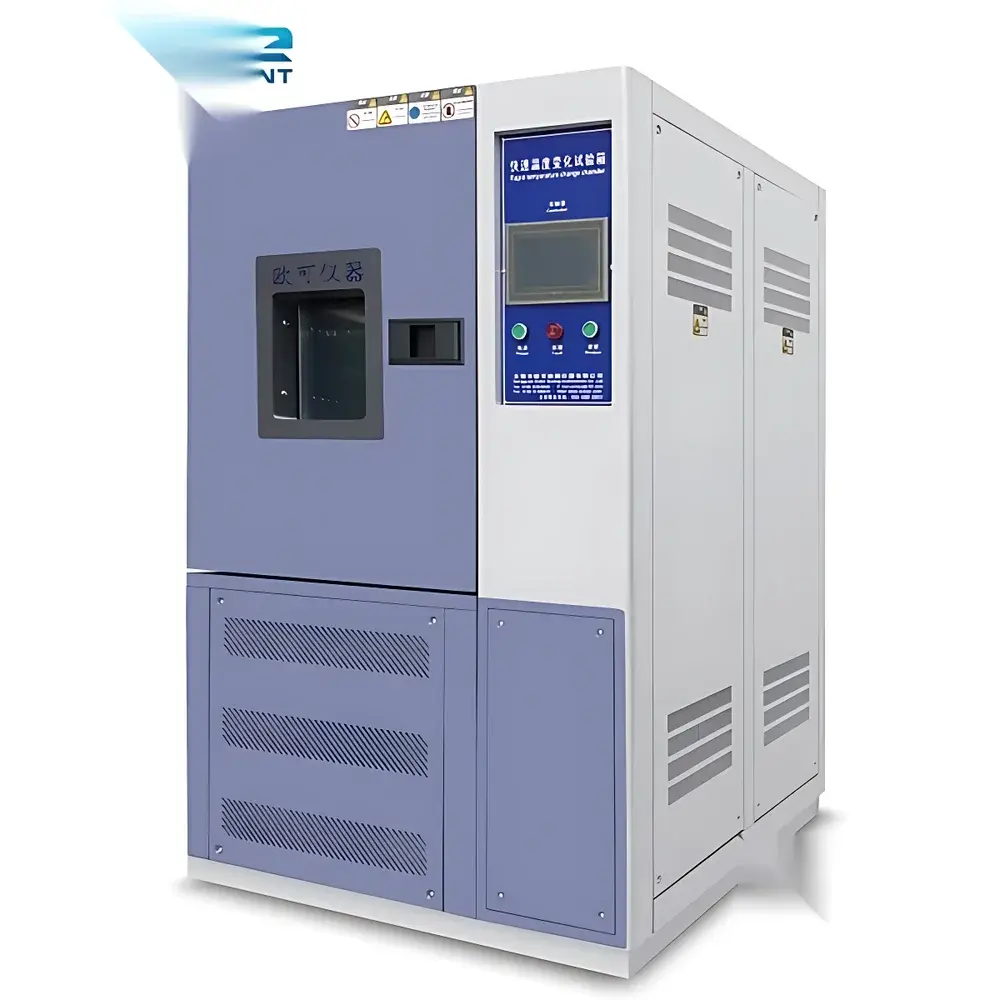
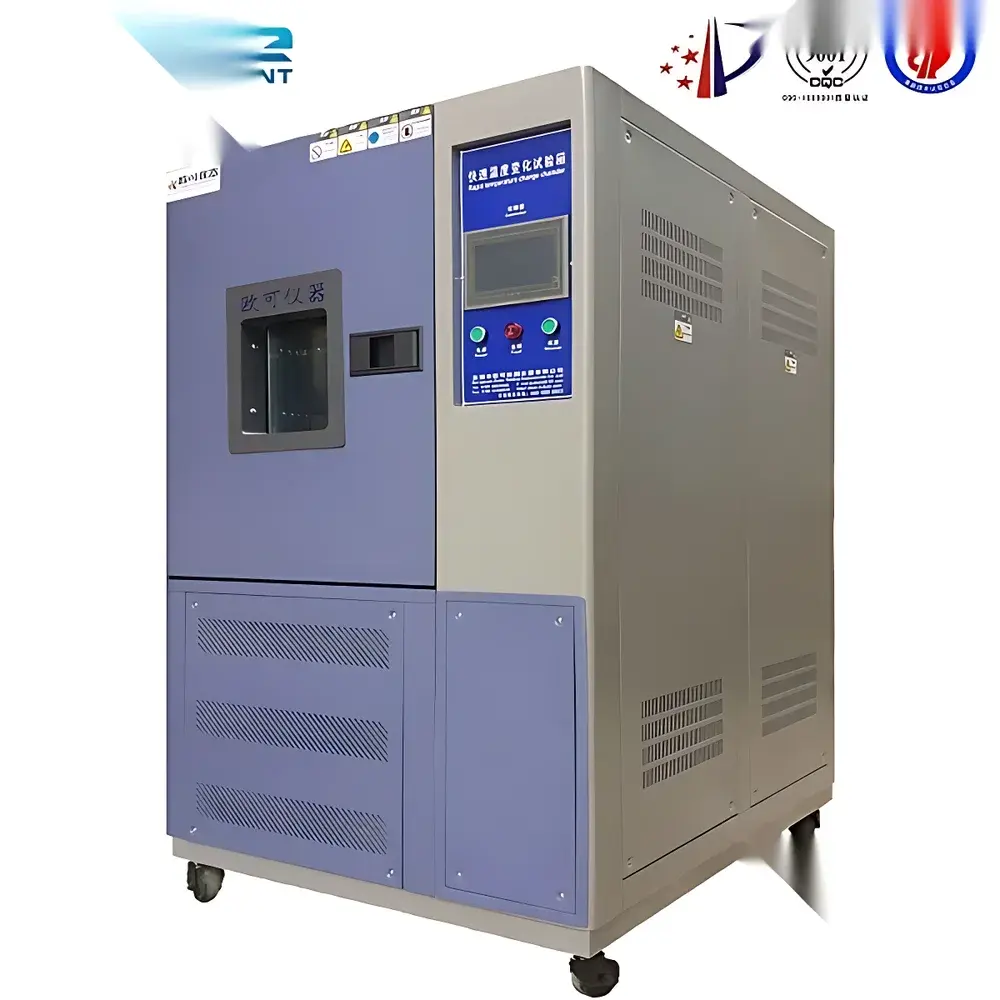
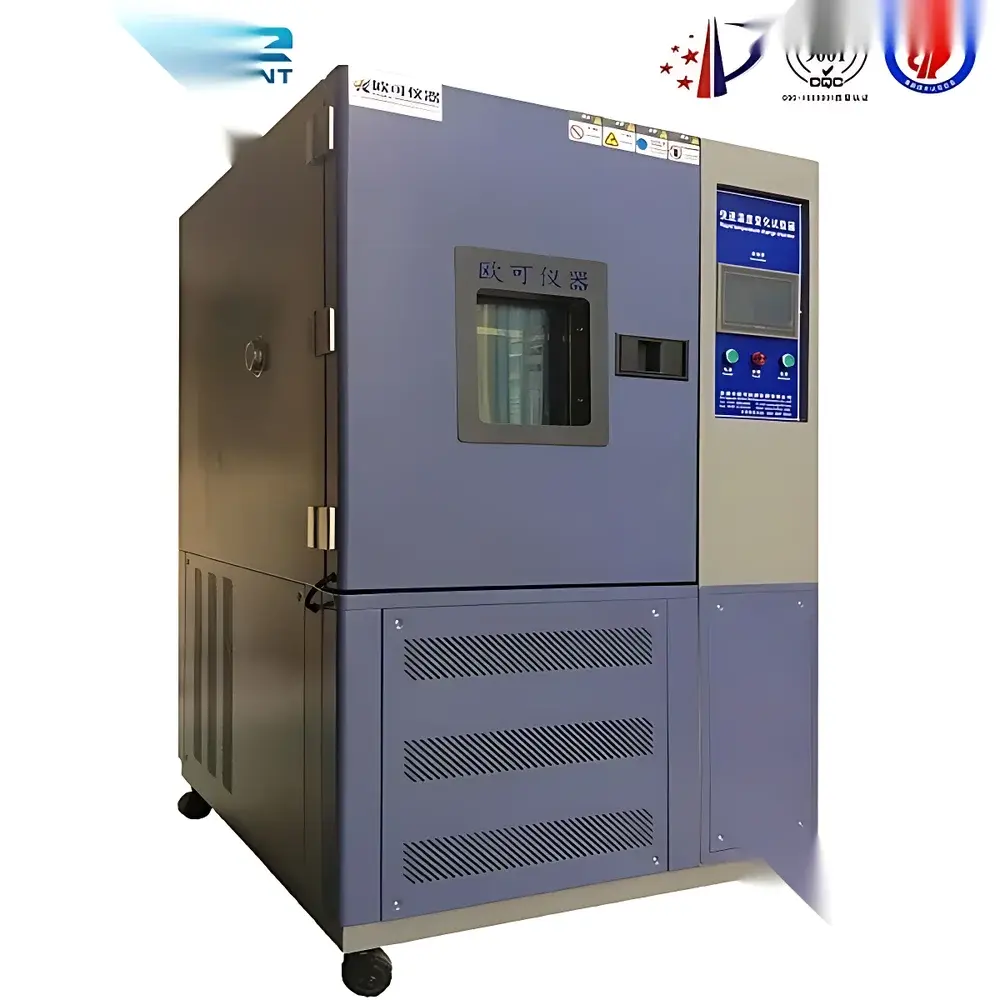
Photovoltaic PV Module Environmental Stress Test Chamber – Thermal Cycling & Damp Heat Compliance System
| Brand | OEM / Third-Party Manufacturer |
|---|---|
| Origin | Imported |
| Supplier Type | Authorized Distributor |
| Temperature Range (Loaded) | -40 °C to +85 °C |
| Temperature Range (Unloaded) | -70 °C to +150 °C |
| Temperature Uniformity | ±2.0 °C |
| Temperature Stability | ±0.5 °C |
| Humidity Range | 20–98% RH |
| Humidity Stability | ±2.5% RH |
| Humidity Uniformity | ±4.0% RH |
| Compliance Standards | IEC 61215, IEC 61646, IEC 62108, IEC 61730, UL 1703, IEEE 1513, GB/T 5170.2, GB/T 5170.5 |
Overview
The Photovoltaic PV Module Environmental Stress Test Chamber is an engineered climatic test system designed to validate long-term reliability of photovoltaic modules under accelerated environmental stress conditions. It replicates decades of terrestrial exposure through controlled thermal cycling, humidity-freeze, and damp heat protocols—core qualification tests mandated by international photovoltaic product certification standards. Based on Couette-flow air circulation, high-efficiency refrigeration cascades, and precision PID-controlled steam humidification, the chamber delivers reproducible, traceable environmental profiles required for design verification and production lot release. Its architecture supports continuous operation across extreme temperature and humidity gradients while maintaining metrological stability compliant with ISO/IEC 17025-accredited laboratory practices.
Key Features
- Triple-mode environmental simulation: programmable thermal cycling (−40 °C ↔ +85 °C), humidity-freeze (−40 °C at 10% RH → +85 °C at 85% RH), and steady-state damp heat (85 °C / 85% RH for up to 1,000 h)
- High-fidelity chamber control: dual-sensor feedback loop with independent temperature and humidity transducers calibrated per ISO 17025 traceability requirements
- Robust thermal management: cascade refrigeration system with low-GWP refrigerant (R513A/R134a blend), enabling stable sub-zero operation without liquid nitrogen dependency
- Uniform airflow design: tangential blower array with adjustable vane diffusers ensures ±2.0 °C spatial uniformity across full working volume (per IEC 60068-3-5)
- Corrosion-resistant construction: stainless steel 304 inner chamber, epoxy-coated outer casing, and condensate management system compatible with extended high-humidity operation
- Integrated safety architecture: overtemperature cutoff, humidity sensor redundancy, door interlock, and real-time alarm logging with event timestamping
Sample Compatibility & Compliance
The chamber accommodates standard photovoltaic module formats—including monocrystalline silicon, polycrystalline silicon, thin-film (CIGS, CdTe, a-Si), and CPV assemblies—up to 2.4 m × 1.3 m footprint (customizable internal dimensions). All operational profiles adhere strictly to test sequence definitions in IEC 61215 (crystalline Si), IEC 61646 (thin-film), IEC 62108 (concentrator PV), and UL 1703 (US safety certification). Humidity-freeze testing follows the exact ramp rates, dwell times, and transition criteria specified in IEC 61215 Ed.3 Annex A. Damp heat execution conforms to IEC 61215 Clause 10.13 and IEC 61730-2 Annex B, including mandatory pre-conditioning, stabilization, and post-test insulation resistance measurement integration points. Full compliance documentation—including calibration certificates, uncertainty budgets, and validation reports—is provided upon installation and qualifies the system for GLP/GMP-regulated QA environments.
Software & Data Management
Equipped with Windows-based controller software compliant with FDA 21 CFR Part 11 requirements, the system supports electronic signatures, audit trails, role-based access control, and encrypted data storage. Test programs are defined via intuitive drag-and-drop sequencing with support for nested loops, conditional branching, and real-time parameter override. All sensor readings—including chamber air temperature, relative humidity, dew point, and module surface thermocouple inputs—are sampled at 1 Hz and archived in CSV and SQL-compatible formats. Data export includes ISO 17025-compliant metadata: instrument ID, calibration due date, operator ID, environmental ambient conditions, and uncertainty contributions. Optional integration with LIMS platforms (e.g., LabWare, Thermo Fisher SampleManager) is available via OPC UA or RESTful API.
Applications
- Design qualification testing of new PV module architectures prior to IEC certification submission
- Production line quality assurance for batch release per IEC 61215 Annex A (thermal cycling), Annex B (humidity freeze), and Clause 10.13 (damp heat)
- Failure mode analysis (FMA) of delamination, solder joint fatigue, EVA discoloration, and backsheet hydrolysis under cyclic stress
- Accelerated lifetime modeling (ALM) using Arrhenius and Peck equations with empirically derived activation energies
- Third-party certification lab testing per TÜV Rheinland, UL, CSA, and CQC accreditation scopes
- Research into moisture ingress kinetics, potential-induced degradation (PID), and UV-assisted humidity aging mechanisms
FAQ
What standards does this chamber fully support for photovoltaic module qualification?
It meets all environmental test requirements in IEC 61215 (crystalline Si), IEC 61646 (thin-film), IEC 62108 (CPV), UL 1703, IEEE 1513, and IEC 61730—covering thermal cycling, humidity-freeze, and damp heat test sequences.
Can the chamber operate continuously at 85 °C / 85% RH for 1,000 hours?
Yes—its steam humidification system, corrosion-resistant chamber lining, and redundant condensate removal enable uninterrupted damp heat testing per IEC 61215 Clause 10.13 without performance drift.
Is calibration and validation documentation included?
Each unit ships with factory calibration certificates (NIST-traceable sensors), IQ/OQ documentation, and a chamber mapping report per IEC 60068-3-5, supporting immediate GLP/GMP implementation.
How is temperature and humidity uniformity verified?
A 9-point sensor mapping procedure is performed during commissioning using accredited reference probes; results are documented in the Uniformity Validation Report and repeated annually per ISO/IEC 17025.
Does the system support remote monitoring and alarm notification?
Yes—via Ethernet-connected controller with SMTP email alerts, SNMP trap forwarding, and optional cloud-based dashboard access for multi-site fleet management.



