
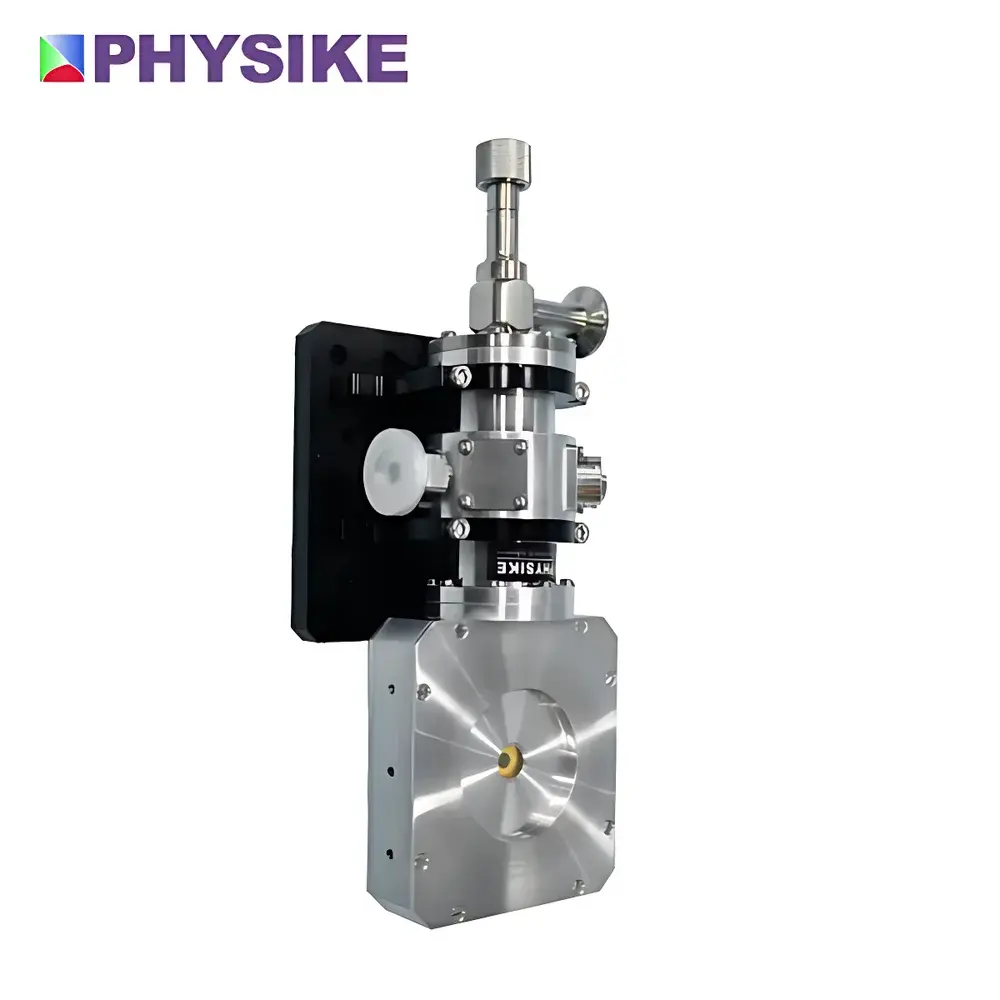
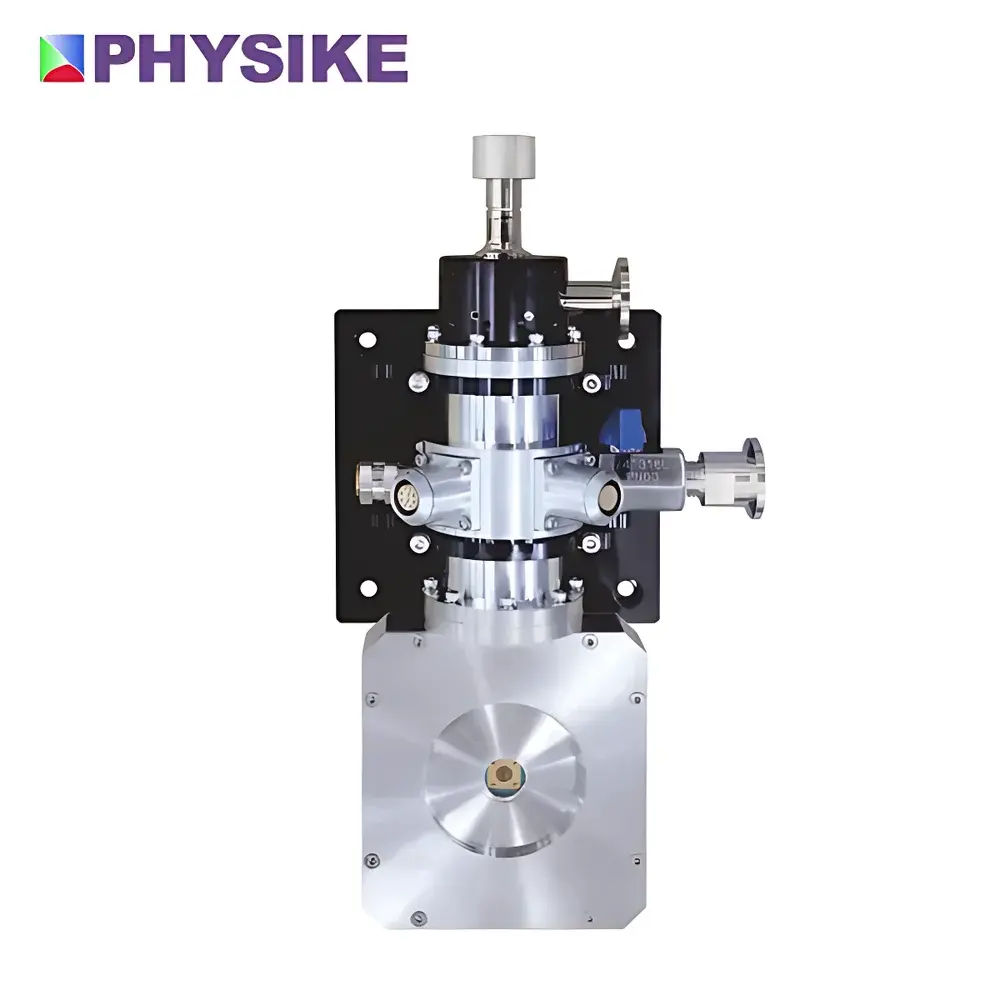
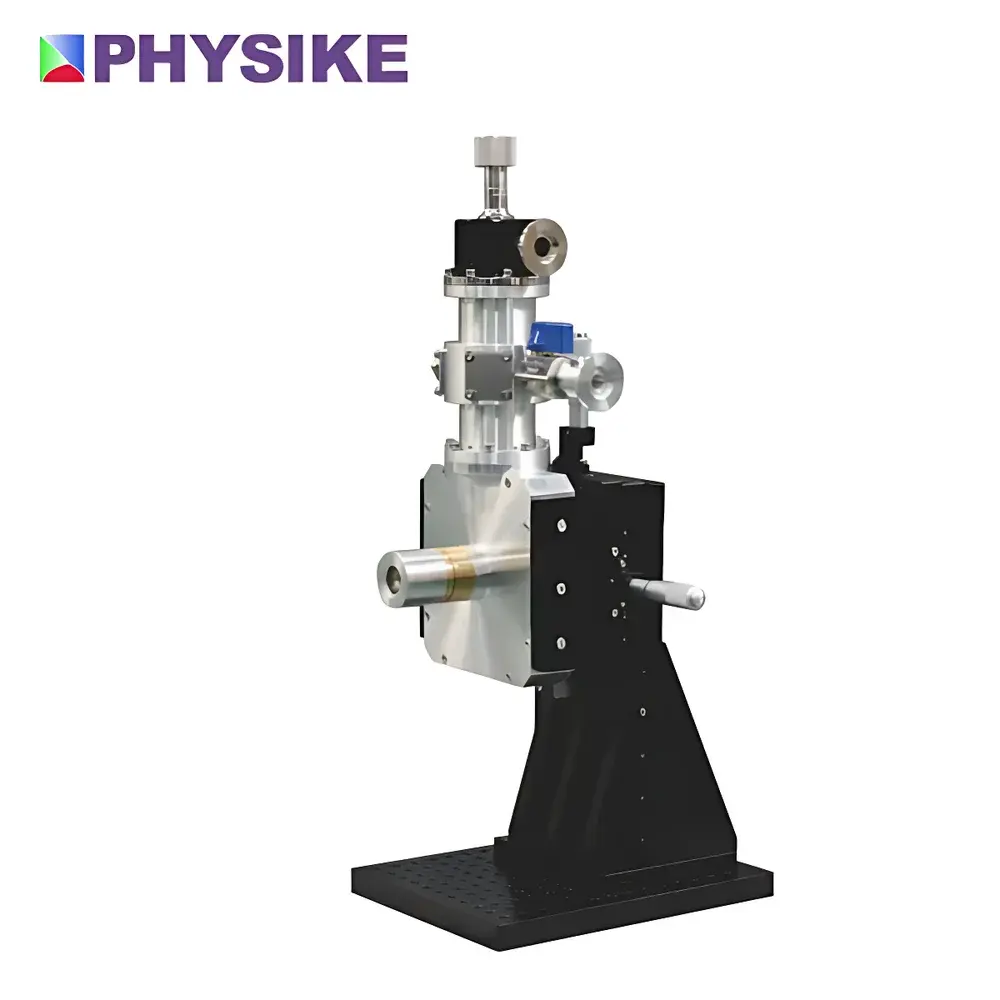
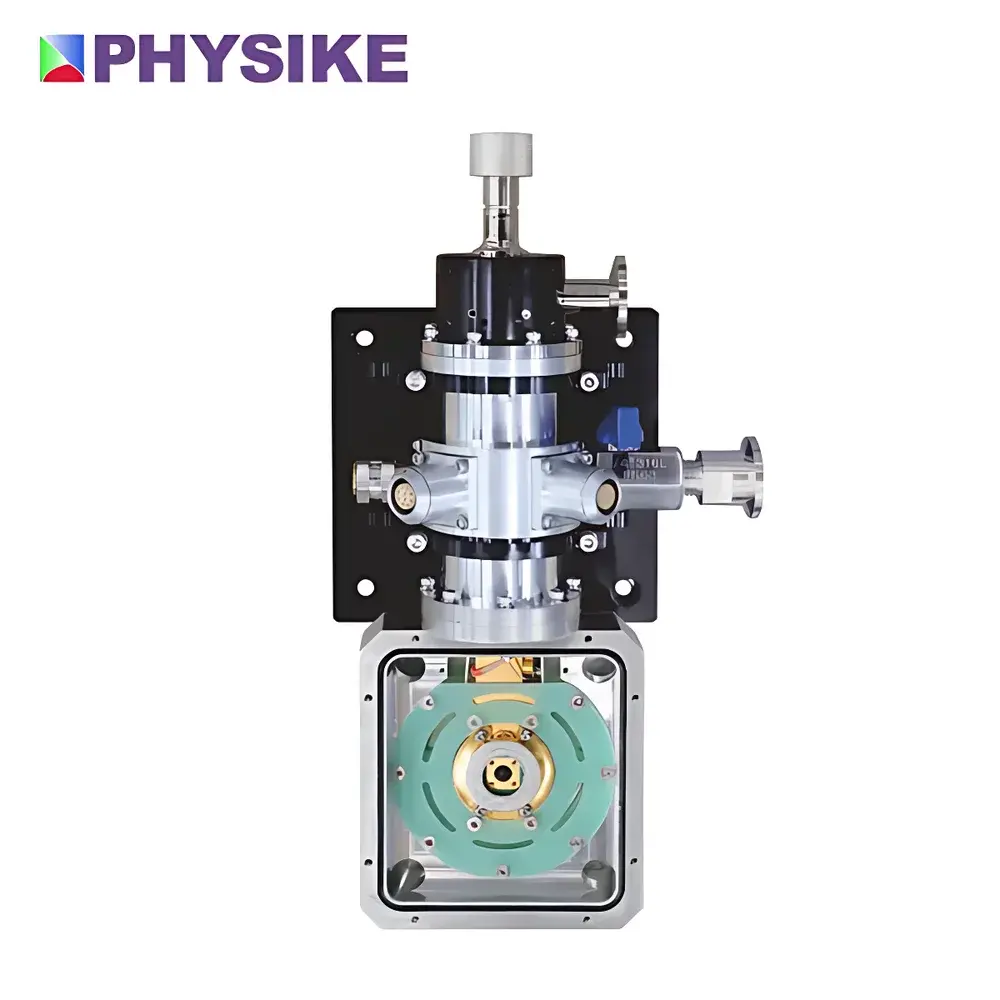
Physik Vcryo-V-200 Microscopic Liquid Nitrogen Cryogenic Thermostat
| Brand | Physik |
|---|---|
| Origin | Beijing, China |
| Manufacturer Type | Direct Manufacturer |
| Product Origin | Domestic (China) |
| Model | Vcryo-V-200 |
| Temperature Setpoint Range | 78.5 K – 500 K |
| Working Distance | 2 mm |
| Vibration Stability | ±5 nm |
| Unit Weight | 1.5 kg |
| Cooling Medium | Liquid Nitrogen |
| Initial Cool-down Time | <10 min |
| LN₂ Consumption Rate | 0.2 L/h |
| Compact Dimensions | 3 cm (thickness) × 29 cm (length) |
Overview
The Physik Vcryo-V-200 is a compact, high-stability microscopic cryogenic thermostat engineered for integration with optical microscopes, spectroscopic platforms, and magnetooptical measurement systems. It operates using liquid nitrogen as the primary cryogen and achieves precise temperature control across a broad range of 78.5 K to 500 K. Its design centers on minimizing thermal drift and mechanical vibration—critical parameters in high-resolution optical and spectroscopic experiments where sub-micron sample stability directly affects signal fidelity and spatial resolution. The Vcryo-V-200 employs a dual-stage thermal compensation architecture: first, a low-heat-leak support structure fabricated from high-strength, low-conductivity materials; second, active temperature drift compensation via integrated thermal feedback loops. This combination enables stable operation at cryogenic temperatures without requiring external cryocoolers or complex vacuum pumping infrastructure beyond standard roughing pumps.
Key Features
- Ultra-low vibration performance: ±5 nm positional stability over extended dwell times—validated under static load and during thermal ramping.
- Minimal working distance of only 2 mm, enabling direct coupling with high-NA objective lenses on upright and inverted microscopes.
- Compact form factor (3 cm thick × 29 cm long) and lightweight construction (1.5 kg), facilitating seamless integration onto motorized or manual translation stages.
- Standard ultra-insulated transfer line with precision needle valve for controlled LN₂ flow; optional bubble-free vacuum-jacketed line available for applications demanding maximum mechanical quietness (e.g., confocal Raman, near-field optical microscopy).
- Rapid thermal response: reaches 80 K from ambient in under 10 minutes, with steady-state temperature stability better than ±0.1 K after equilibration.
- Modular vacuum feedthrough options—including electrical, fiber-optic, and coaxial signal lines—as well as customizable sample holders and window materials (CaF₂, Si, ZnSe, sapphire) for UV–IR spectral transmission.
Sample Compatibility & Compliance
The Vcryo-V-200 is compatible with standard microscope slides, TEM grids, diamond anvil cells (DACs), custom sample plates, and magnetic sample holders. Its vacuum chamber (rated to 10⁻⁶ mbar base pressure) supports in-situ measurements under controlled atmospheres or high-purity inert gas purging. All vacuum components comply with ISO-KF and CF flange standards. Electrical feedthroughs meet IEC 61000-4-2 ESD immunity requirements. The system supports GLP-compliant operation when paired with validated temperature logging software and calibrated Pt-100 sensors traceable to NIST standards. No proprietary firmware lock-in; all analog sensor outputs are accessible via standard BNC or SMA connectors for third-party DAQ integration.
Software & Data Management
Temperature control is managed via a standalone PID controller with front-panel interface and RS-232/USB connectivity. Optional LabVIEW™ and Python APIs enable full remote scripting of temperature ramps, dwell steps, and synchronized data acquisition. All temperature setpoints, actual readings, and error logs are timestamped and exportable in CSV format. Audit trails—including operator ID, parameter changes, and system alarms—are retained for up to 30 days onboard and can be archived externally per FDA 21 CFR Part 11 requirements when used in regulated environments (e.g., photovoltaic material qualification labs). Firmware updates are delivered via signed binary packages with SHA-256 verification.
Applications
- Micro-photoluminescence (µ-PL) and electroluminescence (µ-EL) mapping of semiconductor heterostructures and 2D materials.
- Confocal Raman spectroscopy of superconductors, topological insulators, and quantum dot arrays.
- Magneto-optical Kerr effect (MOKE) and Faraday rotation measurements under applied fields using room-temperature bore superconducting magnets.
- Infrared microspectroscopy (FTIR) and synchrotron-based X-ray absorption fine structure (XAFS) at cryogenic temperatures.
- High-pressure studies using diamond anvil cells coupled to optical readout paths.
- Neutron scattering sample environment staging with minimal background scattering cross-section.
- Thermal transport characterization (e.g., time-domain thermoreflectance) requiring nanoscale positional repeatability.
FAQ
What is the minimum achievable base temperature with the Vcryo-V-200?
The system achieves a base temperature of 78.5 K using liquid nitrogen under standard vacuum conditions (10⁻⁵–10⁻⁶ mbar). With optional cold-finger extensions or helium exchange gas, sub-77 K operation is possible but requires auxiliary cooling infrastructure.
Can the Vcryo-V-200 be used under ultra-high vacuum (UHV)?
Yes—the main body uses all-metal seals and is UHV-compatible up to 10⁻¹⁰ mbar when baked at 150 °C and equipped with appropriate feedthroughs.
Is temperature calibration traceable to international standards?
Each unit ships with a factory-calibrated Pt-100 sensor certified to NIST-traceable standards; full calibration certificates are provided upon request.
How is liquid nitrogen consumption minimized?
Through multi-layer vacuum insulation, low-emissivity surface coatings, and optimized thermal anchoring—resulting in a typical consumption rate of just 0.2 L/h at 80 K.
Does the system support automated temperature ramping?
Yes—via the integrated PID controller or external software (LabVIEW, Python) using ASCII command protocol over USB or RS-232.



