
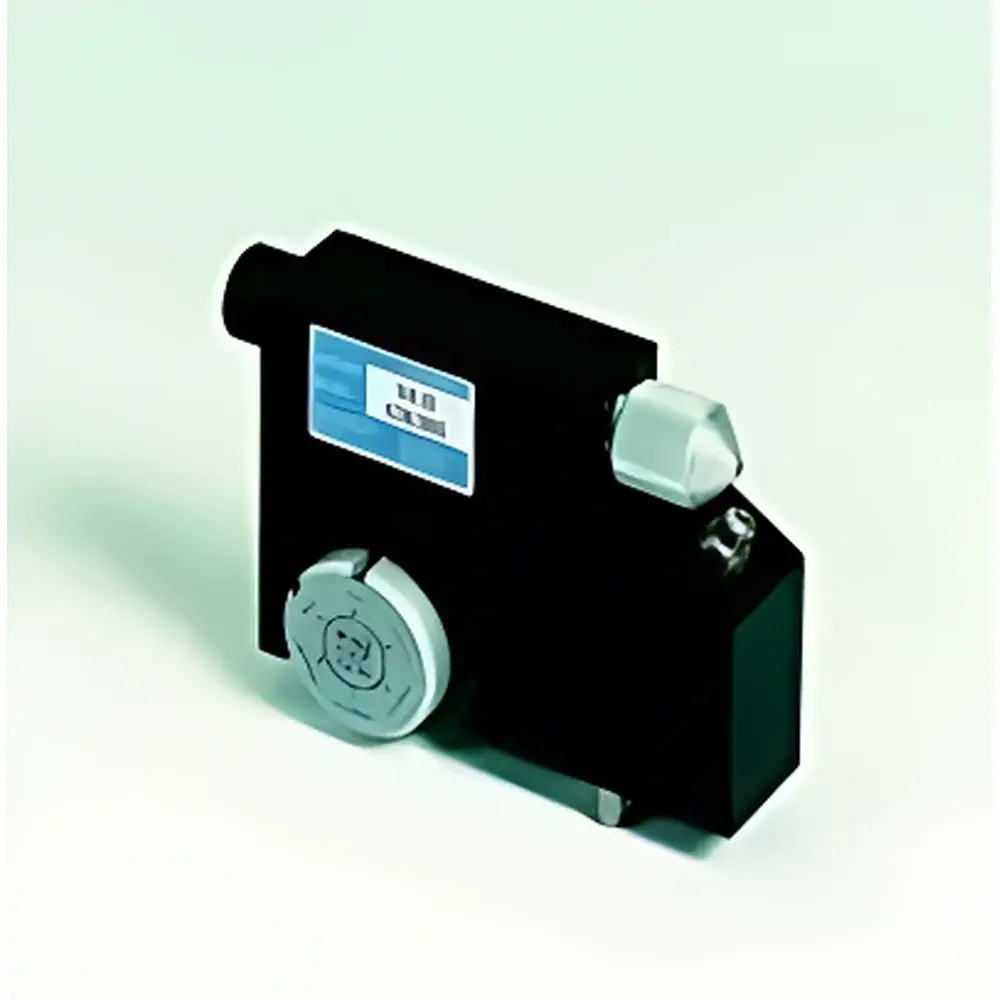
PIG PIG Multi-Function Dry Film Inspection Instrument
| Origin | Shanghai, China |
|---|---|
| Manufacturer Type | Authorized Distributor |
| Origin Category | Domestic (China) |
| Model | PIG |
| Pricing | Available Upon Request |
| Coating Thickness Range | 2–2000 µm |
| Substrate Compatibility | Ferrous metals, non-magnetic metals, plastics, wood |
| Adhesion Test Standard Compliance | ASTM D3359, DIN 53151 |
| Indentation Hardness Test Standard Compliance | DIN EN ISO 2815 (Brinell-type) |
| Optical Inspection Capability | Integrated magnifier for defect assessment (pinholes, craters, cracks, bubbles, flaking, intercoat adhesion, substrate preparation quality) |
| Portability | Handheld, field-deployable with lab-grade repeatability |
| Dimensions | Ø50 mm × 27 mm |
Overview
The PIG Multi-Function Dry Film Inspection Instrument is an integrated, handheld metrology platform engineered for comprehensive quality assurance of protective and decorative coatings in industrial finishing, automotive refinish, aerospace maintenance, and infrastructure corrosion control. Unlike single-parameter gauges, this instrument consolidates four critical dry-film inspection modalities—non-destructive thickness measurement, standardized adhesion evaluation, indentation hardness assessment, and high-magnification visual defect analysis—into a single, ergonomically optimized unit. Its operational principle relies on calibrated electromagnetic induction (for ferrous substrates) and eddy current (for non-ferrous metals), combined with mechanical cross-hatch cutting and controlled load indentation, all validated against internationally recognized test standards. Designed for both laboratory-grade reproducibility and rugged field use, the PIG instrument meets the procedural rigor required by ISO 2360, ISO 2808, and ASTM D7091 for coating thickness, while its mechanical test modules conform to ASTM D3359 (tape test), DIN 53151 (cross-cut adhesion), and DIN EN ISO 2815 (indentation hardness). The compact cylindrical form factor (Ø50 mm × 27 mm) enables one-handed operation in confined spaces—such as pipe interiors, aircraft fuselage panels, or structural steel joints—without compromising measurement stability or operator fatigue.
Key Features
- Multi-modal inspection capability: Simultaneous support for thickness measurement, cross-cut adhesion testing, Brinell-type indentation hardness, and optical surface defect analysis
- Substrate-agnostic thickness measurement: Validated for ferrous metals (magnetic induction), non-magnetic metals (eddy current), plastics, and wood—eliminating the need for substrate-specific probes
- Integrated ASTM/DIN-compliant cross-hatch cutter: Precision-ground tungsten-carbide blade with fixed 1-mm spacing; includes pressure-regulated applicator for consistent cut depth and reproducible tape adhesion evaluation
- DIN EN ISO 2815-compliant indentation module: Spring-loaded indenter with calibrated 10 N load and 1.0 mm spherical tip; delivers repeatable hardness values traceable to national metrology institutes
- High-clarity 10× magnifier lens with coaxial LED illumination: Enables real-time identification of pinholes (<50 µm), micro-cracks, cratering, intercoat delamination, and substrate contamination or inadequate blast profile
- Robust aluminum alloy housing with IP54-rated ingress protection: Resistant to shop-floor dust, light splashing, and mechanical shock during transport or on-site deployment
- No external power or PC dependency: Fully self-contained operation ensures immediate readiness in remote locations or regulated environments where wireless connectivity is restricted
Sample Compatibility & Compliance
The PIG instrument supports inspection across diverse coated systems—including epoxy, polyurethane, zinc-rich primers, powder coatings, and ceramic-based thermal barrier layers—applied to structural steel, aluminum alloys, fiberglass-reinforced polymers (FRP), PVC piping, and timber substrates. All functional modules are validated per globally accepted regulatory frameworks: thickness measurements comply with ISO 2808 Annex B (non-destructive methods) and ASTM D7091 (for non-metallic substrates); adhesion testing fulfills the pass/fail criteria of ASTM D3359 Method B (cross-cut) and DIN 53151 (German industrial standard for paint adhesion); indentation hardness results align with the reporting conventions of DIN EN ISO 2815, enabling direct comparison with specification sheets from coating manufacturers such as PPG, AkzoNobel, or Sherwin-Williams. The device itself carries CE marking for EMC and low-voltage directive compliance, and its mechanical test components are manufactured to ISO 9001-certified processes.
Software & Data Management
As a fully analog, hardware-integrated inspection tool, the PIG instrument does not incorporate embedded firmware, Bluetooth, or cloud connectivity. This design choice ensures full compatibility with environments governed by strict cybersecurity policies—including defense contractors operating under NIST SP 800-171, pharmaceutical facilities adhering to FDA 21 CFR Part 11 (where electronic records are prohibited for certain QC checks), and nuclear maintenance organizations requiring air-gapped verification workflows. All measurements and observations are recorded manually in standardized inspection logs or digital QA forms (e.g., ASME BPVC Section V, ISO 12944-6 reporting templates). Calibration certificates—including traceability to NIM (National Institute of Metrology, China) for thickness probe linearity and certified load cells for indentation force—are supplied with each unit and recommended for annual recalibration per ISO/IEC 17025 guidelines.
Applications
- Automotive OEM and Tier-1 suppliers performing incoming inspection of electrocoat (E-coat) and topcoat systems on body-in-white assemblies
- Aerospace MRO facilities verifying primer integrity and topcoat thickness on composite wing skins prior to rework
- Oil & gas pipeline contractors conducting third-party coating audits per SSPC-PA 2 and ISO 21809-2 before hydrostatic testing
- Marine shipyard QA teams assessing antifouling system continuity on ballast tanks and cargo holds
- Architectural metal fabricators validating powder-coated aluminum curtain wall components against AAMA 2604/2605 specifications
- Academic corrosion laboratories using the instrument for accelerated weathering study endpoint analysis (e.g., ASTM D5894 cyclic testing)
FAQ
Does the PIG instrument require calibration certification for ISO/IEC 17025-accredited labs?
Yes—each unit ships with a manufacturer’s calibration certificate referencing NIM-traceable standards for thickness measurement linearity and indentation force accuracy. Annual recalibration is recommended.
Can the instrument measure coatings on galvanized steel?
Yes, provided the zinc layer thickness is ≤15 µm; thicker galvanizing may require correction factors per ISO 1461 Annex C.
Is the cross-cut blade replaceable, and what is its service life?
The tungsten-carbide blade is user-replaceable and rated for ≥500 cuts on mild steel substrates before edge degradation affects ASTM D3359 rating consistency.
What magnification does the built-in lens provide, and is it adjustable?
The fixed-focus lens delivers 10× linear magnification with uniform LED illumination; no zoom or focus adjustment is provided to maintain optical stability and field-readiness.
Does the instrument meet MIL-STD-810G for shock and vibration resistance?
While not formally tested to MIL-STD-810G, the housing has passed internal drop tests from 1.2 m onto concrete per IEC 60068-2-32, supporting typical workshop handling conditions.



