
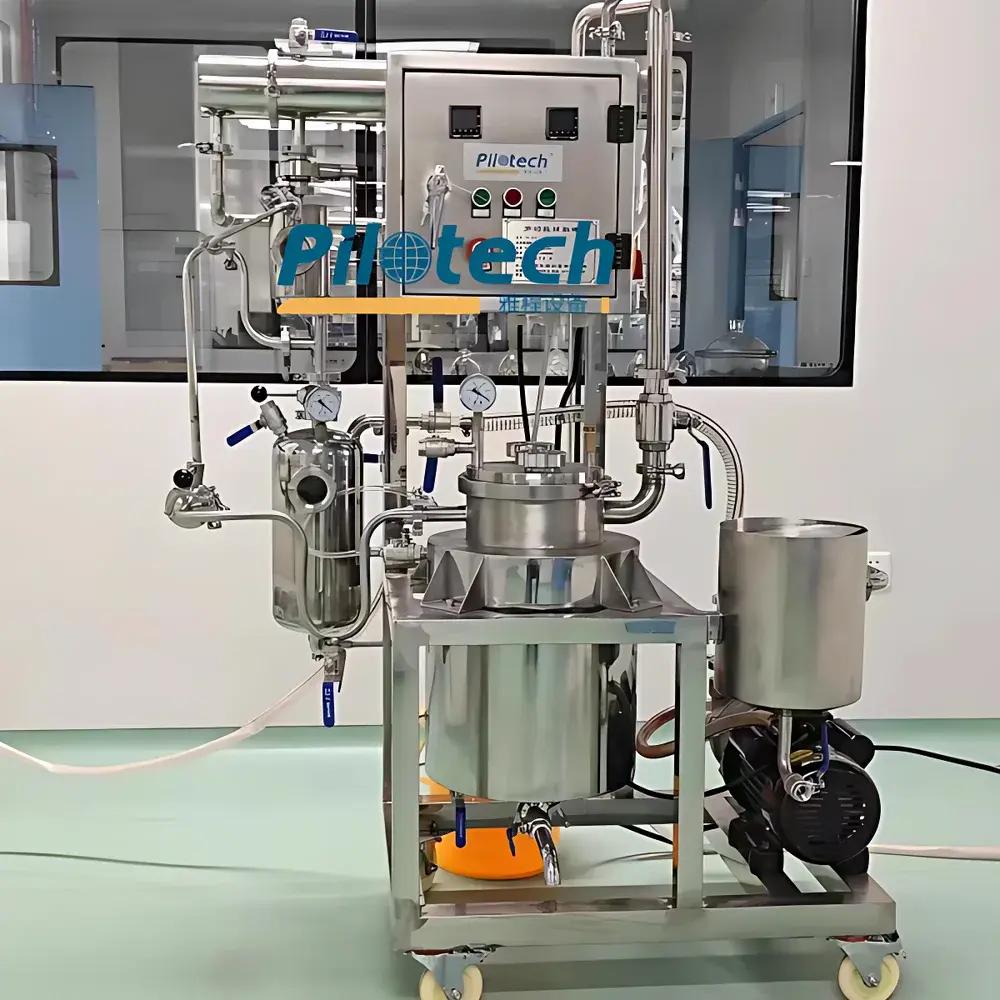
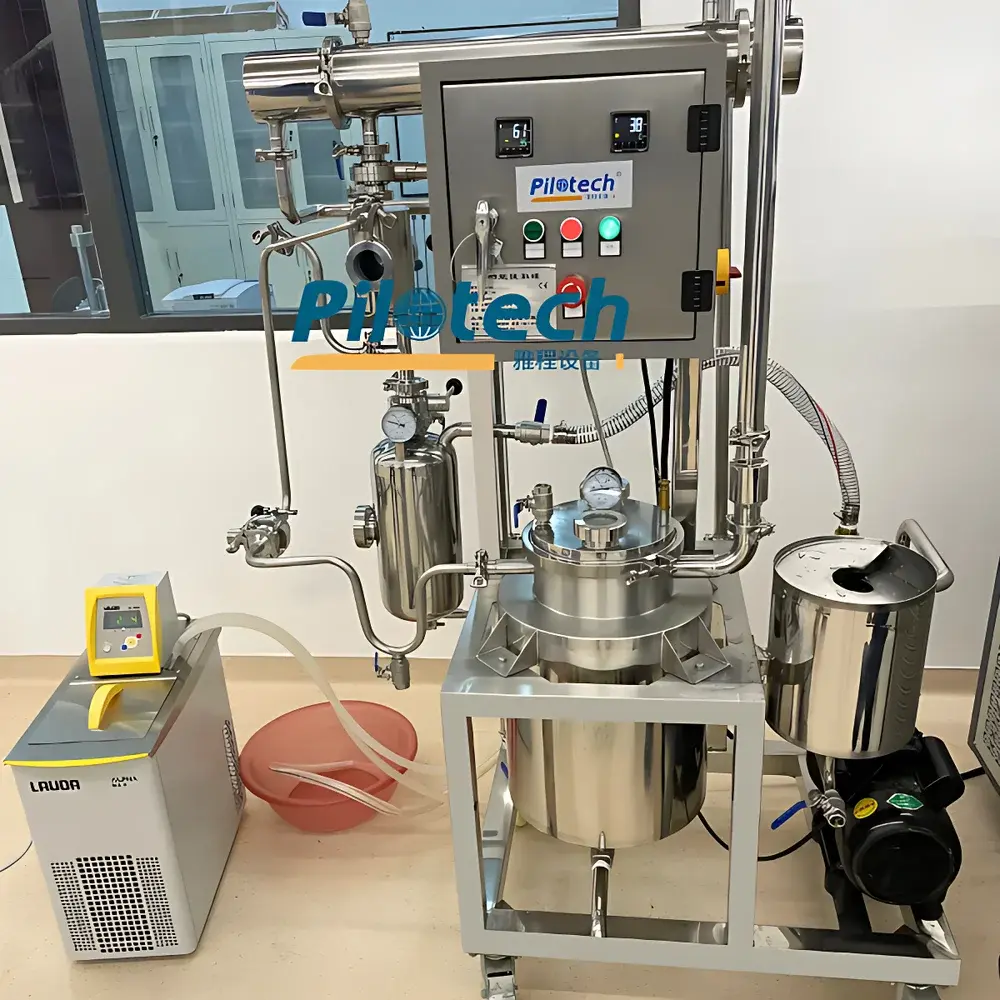
PILOTECH YC-010 10L Multifunctional Laboratory Extraction and Concentration Unit
| Brand | PILOTECH |
|---|---|
| Origin | Shanghai, China |
| Manufacturer | Yes |
| Country of Origin | China |
| Model | YC-010 |
| Extraction Chamber Volume | 10 L (effective) |
| Temperature Control Accuracy | ±2 °C |
| Operating Pressure Range | −0.08 MPa to +0.1 MPa (vacuum to slight positive pressure) |
| Condenser Surface Area | 0.5 m² |
| Cooling Water Consumption | 0.5 t/h at < 0.3 MPa |
| Construction Material | 316L stainless steel (wetted parts), insulated triple-wall tank with polyurethane foam |
| Heating Method | Thermostatic oil-jacketed circulation (pressure-free jacket) |
| Optional Features | Integrated ultrasonic extraction module (15–60 kHz, titanium alloy transducer) |
Overview
The PILOTECH YC-010 is a compact, integrated 10 L multifunctional laboratory-scale extraction and concentration unit engineered for precise, scalable process development in natural product research and pharmaceutical R&D. It operates on the principles of solvent-based solid–liquid extraction under controlled thermal and vacuum conditions, combined with dynamic vacuum evaporation for simultaneous or sequential concentration. The system supports aqueous, alcoholic (e.g., ethanol, methanol), and mixed-solvent extractions — including reflux, percolation, maceration, and hydrodistillation — while enabling real-time recovery of volatile aromatic oils via phase separation. Its design conforms to fundamental unit operations defined in USP , ISO 21569 (for food extract analysis), and Chinese Pharmacopoeia general chapters on herbal preparation. With an effective working volume of 10 L and a minimum batch size of 0.3 kg raw material, the YC-010 bridges the gap between benchtop screening and pilot-scale feasibility studies, particularly for botanicals, tea extracts, fruit juices, and traditional herbal formulations.
Key Features
- Compact footprint (≤1 m²), plug-and-play operation requiring only electrical supply (380 V/50 Hz, 3-phase) and cooling water connection
- Triple-layer stainless steel extraction vessel: inner polished 316L surface (Ra ≤ 0.4 µm), middle thermostatic oil jacket (pressure-free design), outer polyurethane insulation (≥50 mm)
- PID-controlled temperature regulation with Omron digital controller (±2 °C accuracy across 20–120 °C range)
- Integrated vacuum-assisted concentration module with evaporator chamber, tubular condenser (0.5 m² heat transfer area), and oil–water separator for selective terpene and essential oil recovery
- Full-pressure-range operation: −0.08 MPa (deep vacuum) to +0.1 MPa (slight overpressure), validated for safe handling of low-boiling solvents
- Bottom-mounted perforated plate and 100-µm stainless steel filter basket for uniform percolation and residue retention
- Optional ultrasonic enhancement module featuring titanium alloy focused transducers (15–60 kHz selectable), enabling cell wall disruption without thermal degradation — especially critical for thermolabile flavonoids, alkaloids, and polysaccharides
Sample Compatibility & Compliance
The YC-010 accommodates dried or fresh plant matrices (roots, leaves, flowers, seeds, bark), powdered herbs, tea leaves, fruit pulps, and marine biomass. It is compatible with water, ethanol, methanol, acetone, ethyl acetate, and chloroform — provided appropriate safety interlocks and explosion-proof configurations are implemented per IEC 60079-0. All wetted surfaces meet ASME BPE-2022 surface finish standards and comply with FDA 21 CFR Part 11 requirements when paired with optional touchscreen HMI (with audit trail, user authentication, and electronic signature support). System validation documentation supports GLP/GMP-aligned method transfers, and design facilitates cleaning verification per ASTM E3106-18 (residue detection protocols).
Software & Data Management
The standard control panel includes an Omron E5CC temperature controller with RS485 Modbus RTU output. Optional upgrades include a 7-inch capacitive touchscreen HMI with embedded data logging (sample rate ≥1 Hz), USB export (CSV), Ethernet TCP/IP interface for SCADA integration, and remote monitoring via MQTT protocol. Logged parameters include jacket temperature, internal vessel temperature, vacuum level, condensate flow status, and ultrasonic power delivery (if installed). All records are time-stamped, user-attributed, and tamper-evident — satisfying traceability requirements under ISO/IEC 17025 and EU Annex 11.
Applications
- Extraction optimization studies for active pharmaceutical ingredients (APIs) from Salvia miltiorrhiza, Ginkgo biloba, or Camellia sinensis
- Development of standardized botanical extracts compliant with WHO monographs and EFSA health claim dossiers
- Volatile oil isolation (e.g., eucalyptus, peppermint, lavender) with quantitative recovery via gravity-driven oil–water phase separation
- Thermal-sensitive compound preservation using low-temperature vacuum concentration (down to 40 °C at −0.08 MPa)
- Process intensification via ultrasonically assisted extraction (UAE), reducing extraction time by 40–60% versus conventional reflux while improving yield consistency (RSD < 3.5% across n = 6 replicates)
- Academic teaching modules on mass transfer kinetics, solvent selection criteria, and green extraction metrics (E-factor, process mass intensity)
FAQ
What solvents are compatible with the YC-010 system?
Water, ethanol, methanol, isopropanol, acetone, ethyl acetate, and dichloromethane may be used — subject to compatibility verification with gasket materials (EPDM standard; Viton® available on request) and adherence to local ATEX/IECEx safety regulations.
Can the unit operate under inert gas blanket?
Yes — the vessel is rated for positive pressure up to 0.1 MPa and features dual-purpose gas inlet/outlet ports suitable for nitrogen or argon sparging during oxygen-sensitive extractions.
Is third-party IQ/OQ/PQ documentation available?
Comprehensive qualification templates (including sensor calibration certificates, leak test reports, and temperature mapping protocols) are provided upon order; full vendor-supported qualification services are available under separate agreement.
How is cleaning validation performed?
The fully drainable geometry, absence of dead legs, and electropolished interior allow for rinse sampling and swab testing per USP . CIP compatibility is supported with automated detergent dosing kits (optional).
Does the ultrasonic module affect long-term material stability?
Titanium alloy transducers are corrosion-resistant and fatigue-tested for ≥10,000 hours; cavitation erosion on vessel walls is mitigated by optimized probe positioning and duty-cycle control — confirmed by post-validation metallographic inspection.



