
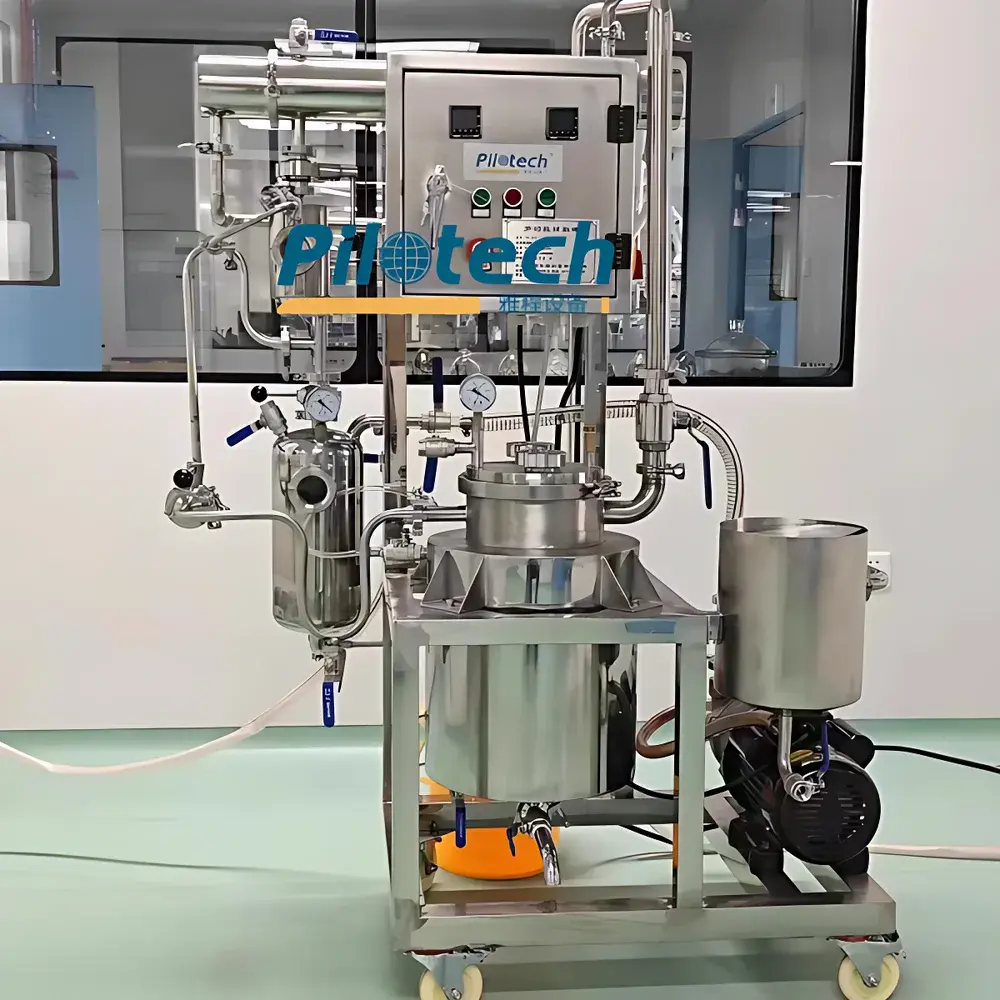
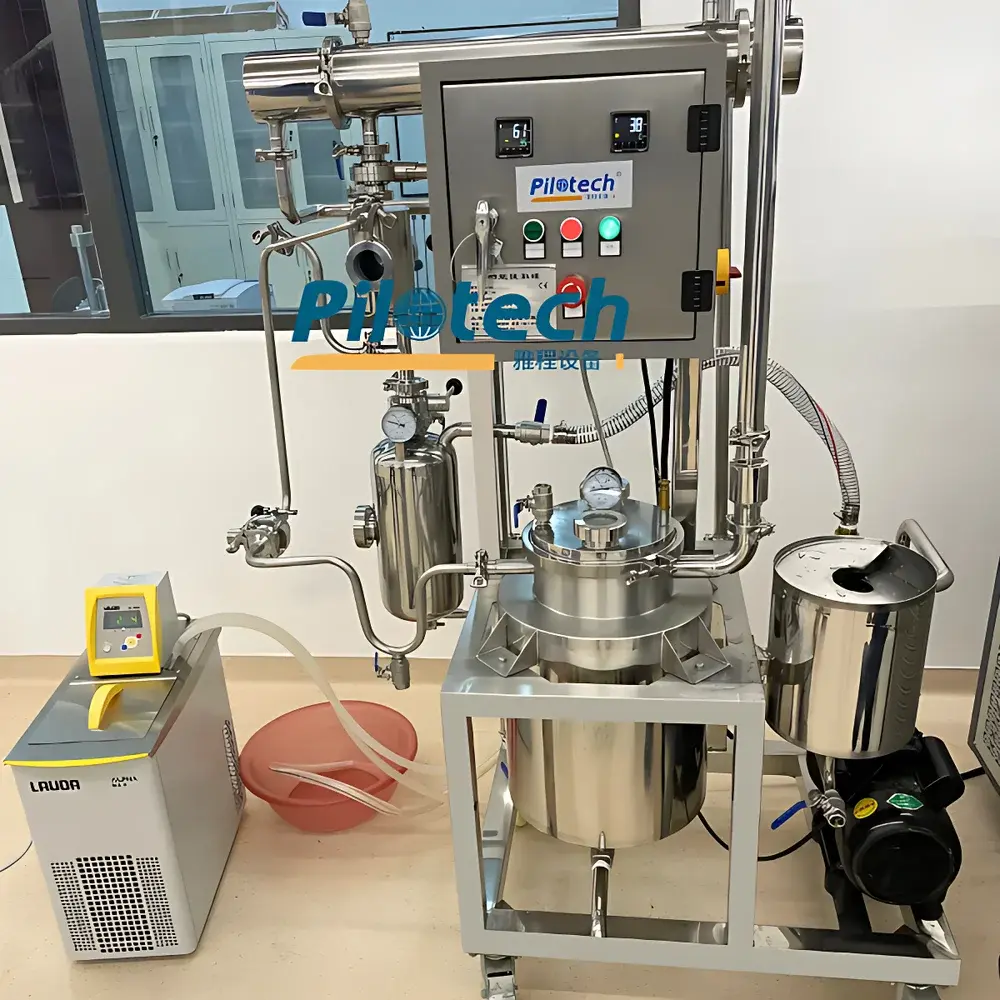
PiloTech YC-010 Multifunctional Laboratory Extraction and Concentration System
| Brand | PiloTech |
|---|---|
| Origin | Shanghai, China |
| Manufacturer | Yes |
| Country of Origin | China |
| Model | YC-010 |
| Extraction Chamber Volume | 10 L |
| Temperature Control Accuracy | ±2 °C |
Overview
The PiloTech YC-010 Multifunctional Laboratory Extraction and Concentration System is an integrated bench-scale platform engineered for solvent-based extraction, vacuum concentration, and volatile oil recovery from botanical matrices. Designed in accordance with standard laboratory-scale process development requirements, the system operates on principles of reflux extraction, vacuum-assisted evaporation, and phase separation—enabling reproducible isolation of thermolabile phytochemicals, essential oils, and aqueous or alcoholic extracts. Its compact footprint (≤1 m²) and modular architecture make it suitable for early-stage formulation studies, analytical method development, and pilot-scale process optimization in academic research labs, pharmaceutical R&D departments, and food/nutraceutical quality control environments. The unit supports operation under negative pressure (down to –0.08 MPa), atmospheric conditions, and mild positive pressure, with full material contact surfaces constructed from electropolished 316L stainless steel compliant with USP Class VI and ISO 9001 manufacturing standards.
Key Features
- Integrated 10 L jacketed extraction vessel with triple-layer construction: outer polyurethane insulation, middle thermal oil heating zone, and inner polished 316L chamber featuring a removable herb basket and perforated support plate with stainless steel mesh filtration.
- Precision PID temperature control via Omron digital controller; setpoint range: ambient to 120 °C; accuracy maintained at ±2 °C across full operating range.
- Onboard tubular condenser (0.5 m² heat transfer area) coupled with a calibrated oil–water separator for selective recovery of volatile aromatic fractions during steam distillation or hydrodistillation protocols.
- Self-contained water-ring vacuum pump system with dedicated coolant reservoir, enabling stable vacuum generation without external infrastructure dependency.
- Dynamic thermal reflux loop supporting continuous circulation between extraction and condensation zones—enhancing mass transfer kinetics and reducing solvent consumption by up to 30% versus batch static extraction.
- Optional ultrasonic-assisted extraction module featuring titanium alloy transducers with selectable frequencies (15–60 kHz), enabling controlled cell wall disruption while preserving heat-sensitive compounds such as flavonoids, terpenes, and polysaccharides.
- Full electrical cabinet with CE-compliant safety interlocks, emergency stop circuitry, and IP54-rated enclosure for laboratory-grade operational integrity.
Sample Compatibility & Compliance
The YC-010 accommodates solid–liquid extraction of dried or fresh plant materials—including roots, leaves, seeds, and flowers—with loading capacities ranging from 0.3 kg to 1.5 kg per cycle. It is validated for use with water, ethanol, methanol, acetone, ethyl acetate, and other GRAS-listed solvents. All wetted components meet FDA 21 CFR Part 11 traceability requirements when paired with optional Ethernet-enabled touchscreen HMI (with audit trail logging). The system complies with ASTM D7212 (standard test method for determination of fat content), ISO 6497 (animal feeding stuffs — sampling), and relevant sections of Chinese Pharmacopoeia Volume IV (2020 edition) for herbal extract preparation. Pressure-rated components conform to PED 2014/68/EU Annex I essential safety requirements.
Software & Data Management
The optional 7-inch capacitive touchscreen interface supports real-time monitoring of temperature, vacuum level, condensate flow rate, and elapsed cycle time. Logged data are timestamped and exportable via USB 2.0 port in CSV format. When connected to local network infrastructure, the system enables remote parameter adjustment and historical trend analysis through browser-based SCADA integration. Audit trails include operator ID, parameter changes, alarm events, and manual override actions—fully aligned with GLP and GMP documentation expectations for regulated environments.
Applications
- Development of standardized herbal extracts for pharmacological screening and bioactivity assays.
- Optimization of solvent-to-solid ratio, temperature profile, and dwell time in DOE-driven extraction studies.
- Recovery and quantification of volatile oils from citrus peels, mint, lavender, and eucalyptus using fractional condensation.
- Concentration of tea infusions, fruit juices, and fermentation broths to target specific gravity (1.1–1.38) under reduced boiling point conditions.
- Preparative-scale isolation of polyphenols, alkaloids, and saponins prior to HPLC or LC–MS analysis.
- Validation of alternative extraction technologies (e.g., ultrasound, microwave) against conventional Soxhlet or maceration benchmarks.
FAQ
What is the maximum working pressure and vacuum range of the YC-010?
The system operates safely within a pressure range of –0.08 MPa (vacuum) to +0.15 MPa (gauge), with all pressure-bearing components certified to ASME BPVC Section VIII Div. 1 design criteria.
Can the YC-010 be used for acid- or alkali-based extractions?
Yes—provided compatible gasket materials (e.g., EPDM or FKM) are selected and solvent compatibility is verified per NORSOK M-501 chemical resistance tables.
Is validation documentation available for IQ/OQ/PQ protocols?
Factory-issued FAT reports, calibration certificates for temperature and vacuum sensors, and material traceability dossiers (including mill test reports for 316L SS) are supplied standard. Custom IQ/OQ packages can be developed upon request.
Does the system support automated fraction collection?
Not natively—but third-party programmable fraction collectors with analog input/output interfaces may be integrated via the PLC’s 4–20 mA signal ports.
What maintenance intervals are recommended for the vacuum pump and heating system?
Water-ring vacuum pump oil and seal inspection every 500 operating hours; thermal oil replacement every 2,000 hours or biannually—whichever occurs first.



