
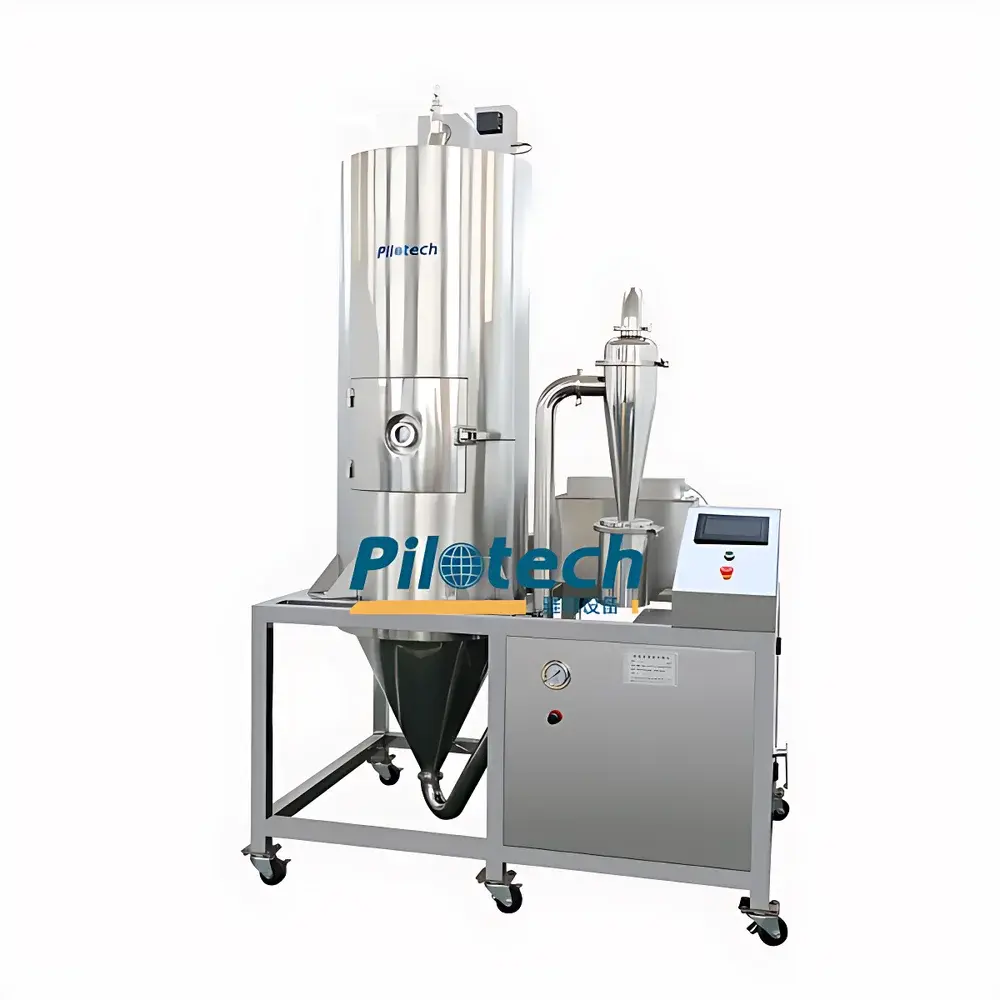
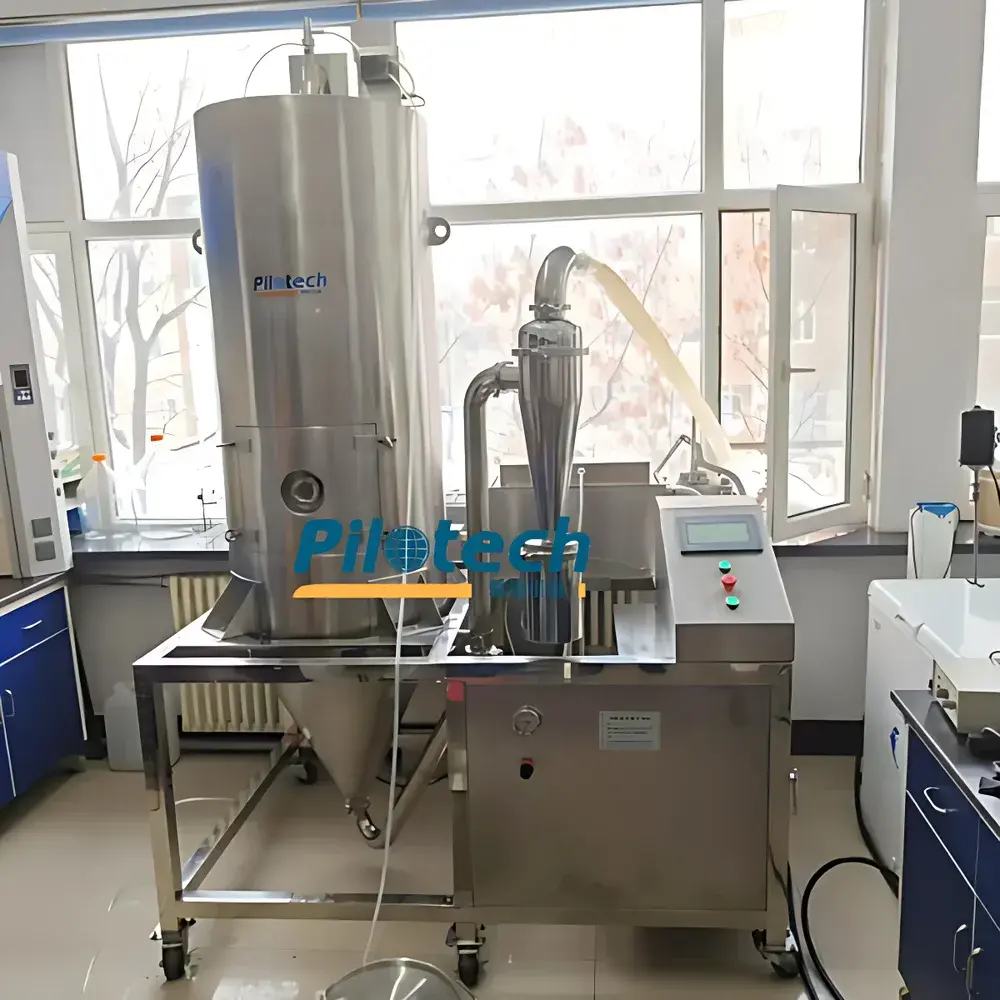
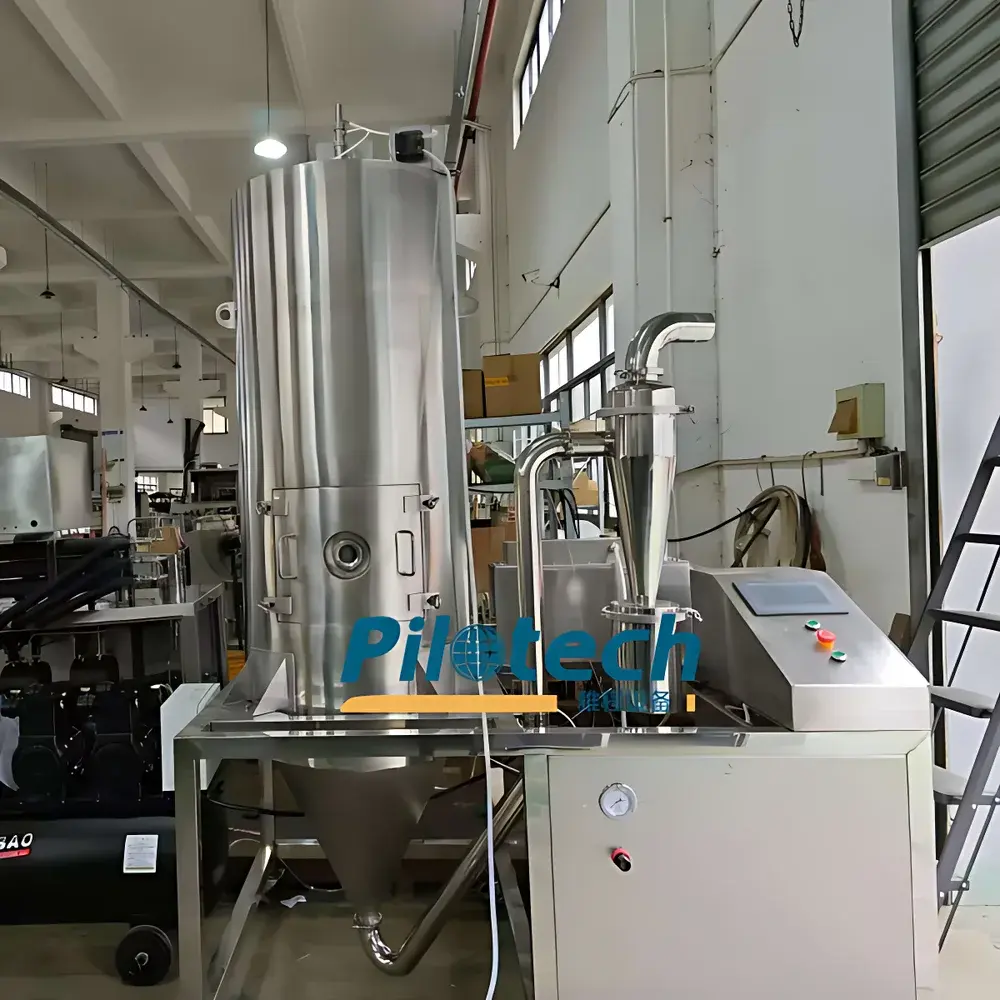
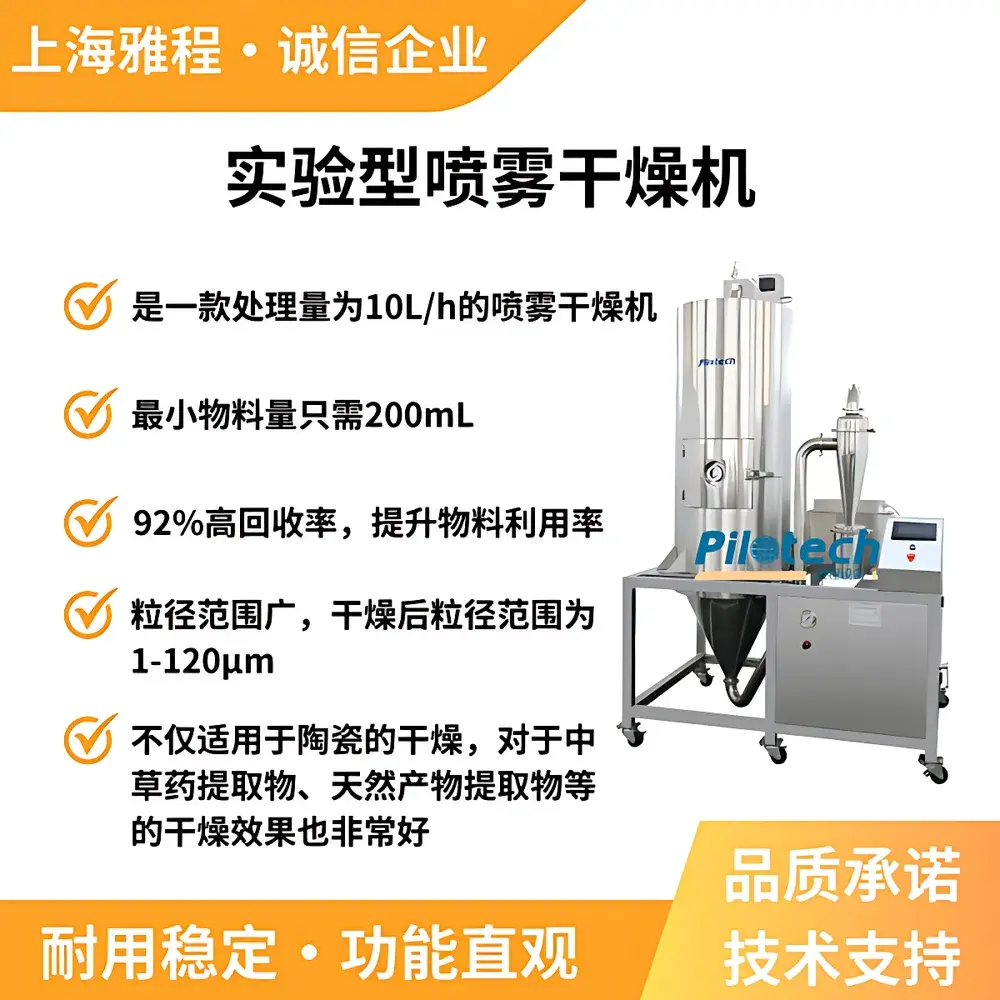
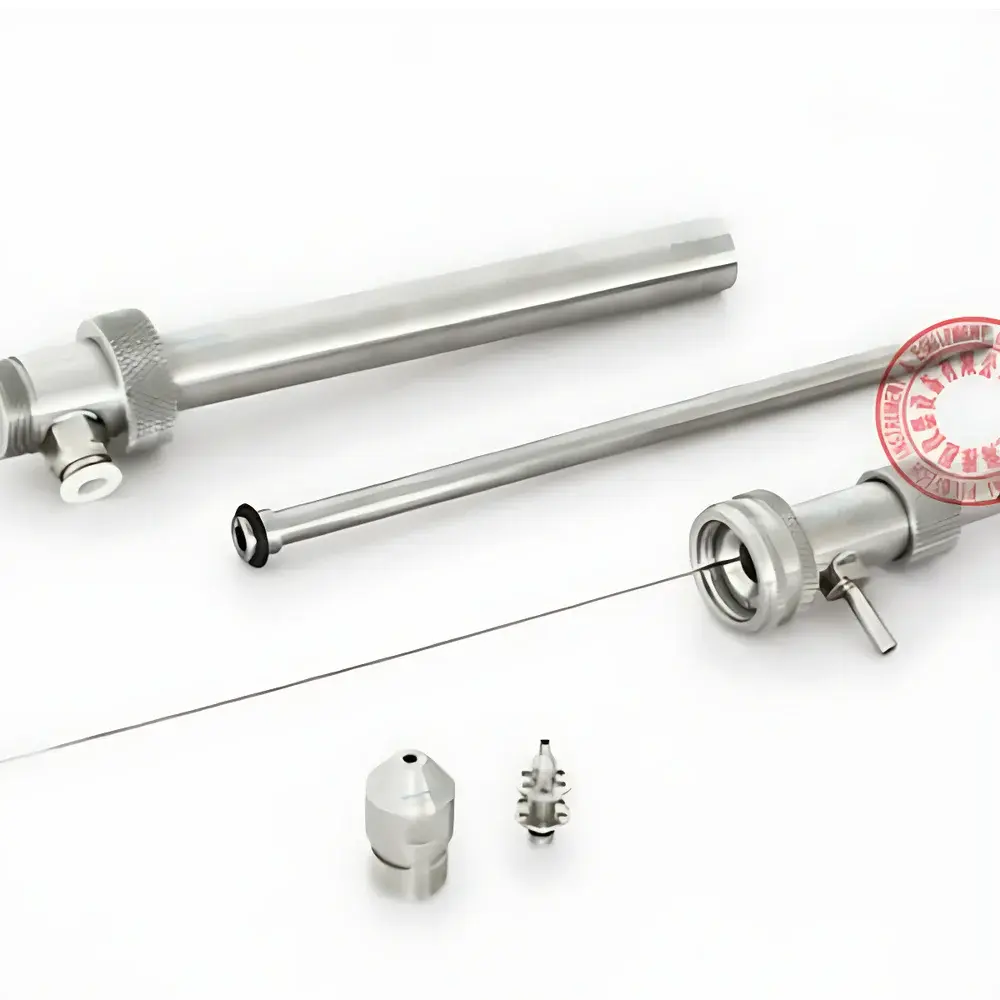
PILOTECH YC-029 Pilot-Scale High-Temperature Spray Dryer
| [Brand | PILOTECH |
|---|---|
| Origin | Shanghai, China |
| Manufacturer Type | OEM Manufacturer |
| Model | YC-029 |
| Max Feed Rate | 10,000 mL/h |
| Inlet Air Temperature Range | 105–300 °C |
| Particle Size Output | 1–120 µm |
| Construction Material | 304 Stainless Steel (Drying Chamber, Cyclone, Collection Vessel & Tubing) |
| Control System | Color LCD Touchscreen with Real-Time PID Temperature Regulation (±2 °C) |
| Noise Level | <60 dB(A) |
| Power Consumption | 20 kW] |
Overview
The PILOTECH YC-029 Pilot-Scale High-Temperature Spray Dryer is an engineered solution for laboratory-to-pilot-scale conversion of liquid feedstocks—especially aqueous suspensions and solutions—into free-flowing, spherical, and thermally stable particulate powders. Operating on the principle of rapid solvent evaporation via concurrent hot-air atomization, the YC-029 utilizes a concentric nozzle system to generate uniform droplets that undergo controlled drying in a heated stainless-steel chamber. Its design bridges the gap between benchtop feasibility studies and pre-commercial process development, supporting reproducible scale-up of formulations used in advanced ceramics, pharmaceuticals, functional foods, battery cathode precursors, and nanomaterial synthesis. With an inlet air temperature range extending to 300 °C, the system enables precise thermal profiling for heat-sensitive or high-boiling-point solutes—critical for preserving crystallinity in ceramic precursors or minimizing thermal degradation in bioactive extracts.
Key Features
- Wide operational temperature range: 105–300 °C inlet air, programmable in 1 °C increments for empirical optimization of drying kinetics and particle morphology.
- Pilot-capacity throughput: Adjustable feed rate from 200 mL to 10,000 mL/h via precision peristaltic pump—enabling both minimal-sample screening and representative batch production.
- Adjustable concentric spray nozzle (standard 3.0 mm orifice; optional extended-length variants ≥310 mm) ensures axial symmetry and eliminates wall impaction, improving yield and reducing fouling.
- Real-time PID-controlled heating system with ±2 °C accuracy across the entire operating range, validated per ASTM E220 calibration protocols.
- Full-color touchscreen interface displaying dynamic process parameters: inlet/outlet temperature, pump speed (RPM), blower frequency, and real-time drying animation.
- Integrated safety architecture: automatic shutdown sequence isolates heating elements upon stop command while maintaining airflow—preventing thermal damage to the heater coil or chamber lining.
- Low-noise operation (<60 dB[A]) achieved through acoustic damping of the centrifugal blower and optimized airflow path geometry—compliant with ISO 7779 and EU Directive 2000/14/EC.
- All-wetted parts fabricated from electropolished 304 stainless steel (ASTM A240), ensuring corrosion resistance, cleanability, and compatibility with GMP/GLP environments.
Sample Compatibility & Compliance
The YC-029 is validated for aqueous-based feeds—including colloidal ceramic slurries (e.g., alumina, zirconia, silicon carbide), botanical extracts, protein hydrolysates, polymer emulsions, and inorganic salt solutions. It does not require excipients or anti-caking agents to achieve flowable output—ideal for applications demanding high-purity, unadulterated powders. The system meets mechanical safety requirements under CE Machinery Directive 2006/42/EC and conforms to electrical safety standards IEC 61000-6-2 (immunity) and IEC 61000-6-4 (emissions). For regulated industries, optional audit-trail logging (time-stamped parameter history) supports compliance with FDA 21 CFR Part 11 when paired with validated software configuration. Documentation packages include Factory Acceptance Test (FAT) reports, material certificates (EN 10204 3.1), and traceable calibration records for temperature sensors (NIST-traceable RTDs).
Software & Data Management
The embedded control firmware provides local data logging at 1-second intervals for all critical variables (inlet T, outlet T, pump RPM, blower Hz). Export is supported via USB to CSV format for post-processing in MATLAB, Python, or statistical analysis platforms (e.g., JMP, Minitab). Optional Ethernet connectivity enables remote monitoring and integration into centralized lab informatics systems (LIMS) using Modbus TCP or OPC UA protocols. All user actions—including setpoint changes, start/stop events, and alarm acknowledgments—are timestamped and stored in non-volatile memory for GLP audit readiness. Firmware updates are delivered via signed .bin files with SHA-256 verification to ensure integrity.
Applications
- Ceramic engineering: Production of sinter-ready granules with narrow PSD (1–120 µm) for tape casting, dry pressing, and additive manufacturing feedstocks.
- Pharmaceutical development: Solvent-free drying of amorphous solid dispersions, inhalable microparticles, and API-loaded nanoparticles without organic solvents.
- Natural product stabilization: Conversion of heat-labile phytochemicals (e.g., curcuminoids, polyphenols) into shelf-stable powders retaining >92% antioxidant activity (per DPPH assay).
- Energy materials: Synthesis of lithium iron phosphate (LFP) and nickel-manganese-cobalt (NMC) oxide precursors with controlled stoichiometry and tap density.
- Food science: Encapsulation of probiotics, enzymes, and volatile flavors into matrix-protected powders suitable for direct compression or reconstitution.
- Environmental catalysis: Preparation of TiO₂, CeO₂, and Fe₃O₄ photocatalysts with tunable surface area (BET 25–180 m²/g) and crystallite size (XRD Scherrer analysis).
FAQ
What is the minimum sample volume required for a single run?
The system supports feed volumes as low as 200 mL, making it suitable for precious or limited-availability formulations.
Can the YC-029 handle organic solvents?
No—the standard configuration is certified only for aqueous feeds. Explosion-proof variants with nitrogen inerting and solvent recovery are available under custom engineering (Model YC-029-EX).
Is the particle size distribution (PSD) adjustable during operation?
Yes—PSD is modulated by coordinated control of inlet temperature, feed rate, atomization pressure (via optional pneumatic nozzle), and drying residence time—enabling targeted median diameter (D50) tuning within the 1–120 µm envelope.
Does the system comply with ISO 22000 or USP <1151> for pharmaceutical use?
While not pre-certified, the 304 SS construction, smooth surface finish (Ra ≤ 0.8 µm), and absence of dead-legs satisfy core equipment criteria in USP <1151>. Full qualification (IQ/OQ/PQ) documentation support is provided upon request.
What maintenance intervals are recommended?
Daily: Visual inspection of nozzle orifice and cyclone collection efficiency. Quarterly: Calibration of RTD sensors and verification of PID loop response. Annually: Full blower bearing service and gasket replacement per maintenance logbook (EN 13309-compliant).



