
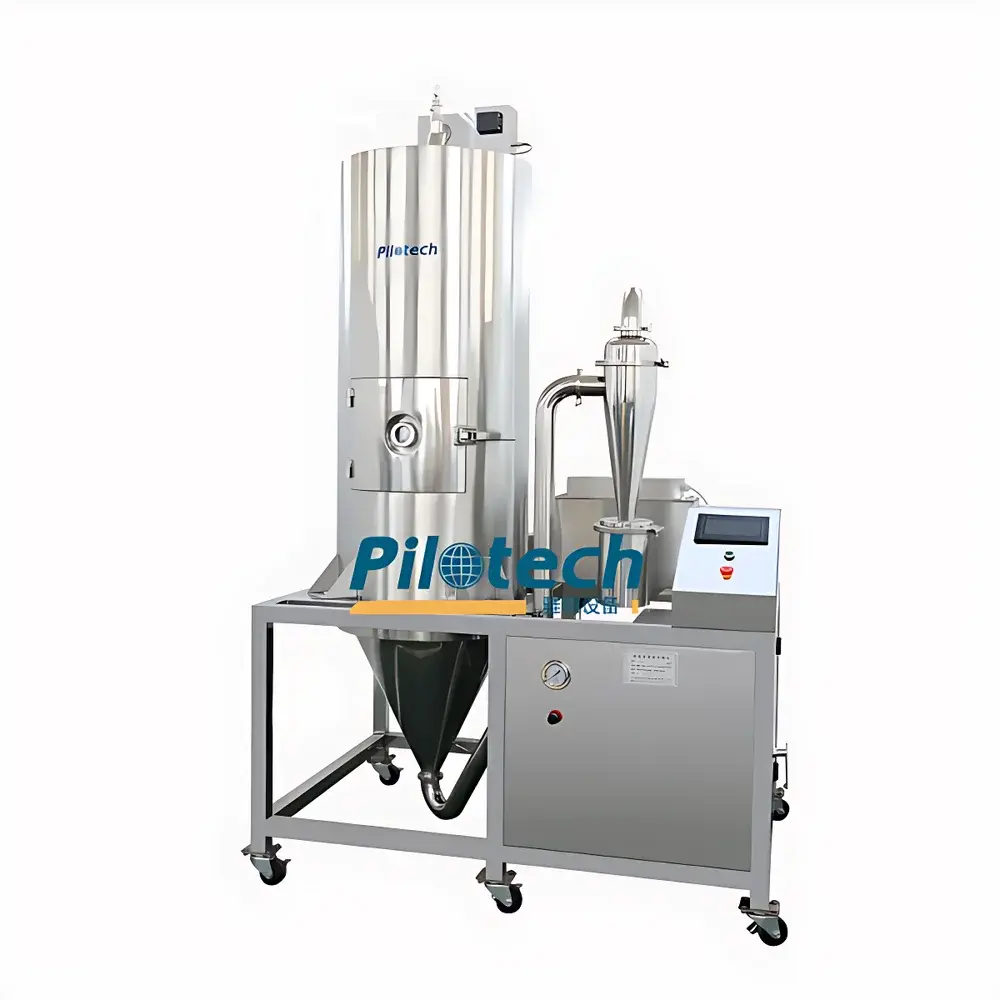
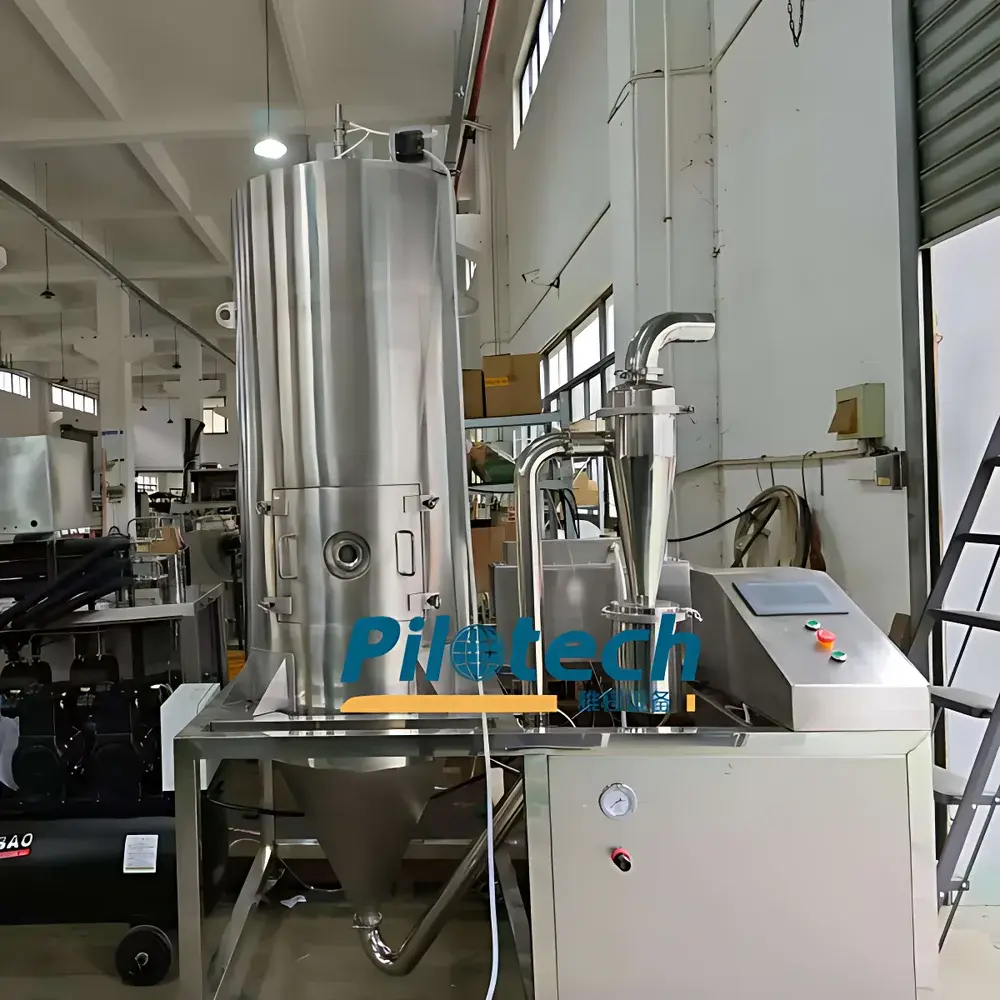
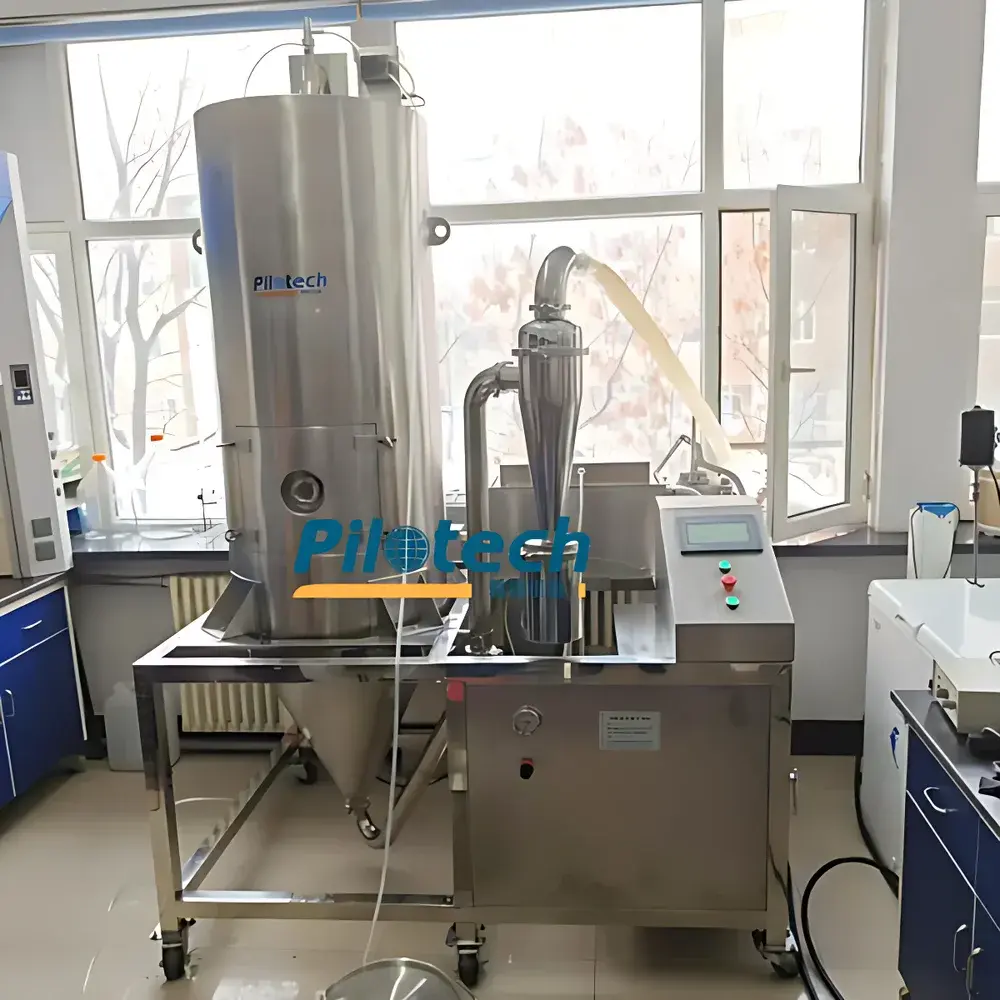
Pilotech YC-029 Pilot-Scale Spray Dryer
| Brand | Pilotech |
|---|---|
| Origin | Shanghai, China |
| Manufacturer Type | Direct Manufacturer |
| Country of Origin | China |
| Model | YC-029 |
| Sample Type Compatibility | Aqueous solutions only |
| Maximum Feed Rate | 10,000 mL/h |
| Inlet Air Temperature Range | 105–300 °C |
| Particle Size Distribution | 1–120 µm |
| Heating Power | 20 kW |
| Noise Level | <60 dB(A) |
| Control Interface | Bilingual (English/Chinese) touchscreen |
| Material Construction | AISI 304 stainless steel (drying chamber, cyclone, collection bottle, and tubing) |
| Temperature Control Accuracy | ±2 °C (PID-based) |
| Nozzle Orifice Diameter | 3.0 mm (optional) |
| Minimum Feed Volume | 200 mL per run |
Overview
The Pilotech YC-029 Pilot-Scale Spray Dryer is an engineered solution for laboratory-scale and pre-production powder synthesis via single-stage, concurrent-flow spray drying. It operates on the principle of rapid solvent evaporation through atomization of liquid feed into a heated air stream—enabling continuous conversion of aqueous suspensions or solutions into free-flowing, spherical microparticles. Designed for reproducible process development in materials science, pharmaceuticals, and natural product research, the YC-029 bridges the gap between benchtop feasibility studies and industrial-scale manufacturing. Its robust thermal architecture supports inlet air temperatures up to 300 °C, facilitating instantaneous drying kinetics critical for thermally sensitive or high-boiling-point formulations. Unlike conventional lab-scale units with fixed geometry, the YC-029 incorporates vertically adjustable concentric nozzles (≥310 mm length) to optimize droplet trajectory and wall impaction avoidance—ensuring uniform residence time distribution and minimizing thermal degradation.
Key Features
- Real-time dynamic visualization via full-color 7-inch LCD touchscreen interface, displaying animated process flow alongside live parameters (inlet temperature, peristaltic pump speed, blower frequency)
- Precision PID-controlled heating system with ±2 °C stability across the full 105–300 °C inlet temperature range
- Adjustable concentric nozzle assembly (3.0 mm standard orifice) enabling fine-tuned droplet size modulation and axial alignment to prevent off-center spray deposition
- Wide operational feed range: 200 mL minimum batch volume to 10,000 mL/h continuous throughput—supporting both exploratory screening and pilot validation
- Energy-optimized design: 20 kW total heating power delivers high thermal efficiency without compromising particle morphology control
- Low-noise engineering: acoustic enclosure and vibration-damped components maintain ambient noise below 60 dB(A), compliant with ISO 11201 for laboratory environments
- Fail-safe shutdown protocol: automatic heater deactivation upon stop command, preserving thermal integrity and preventing coil burnout
- Full AISI 304 stainless steel wetted path—including drying chamber, cyclonic separator, collection vessel, and transfer tubing—for corrosion resistance and GMP-aligned cleanability
Sample Compatibility & Compliance
The YC-029 is validated for aqueous-based feeds only, including ceramic slurries, botanical extracts, polymer dispersions, and inorganic salt solutions. It does not support organic solvents or flammable media. Its construction and control architecture align with foundational requirements for GLP-compliant process documentation: all setpoints, real-time readings, and event logs are timestamped and retained locally on the embedded HMI. While not certified to FDA 21 CFR Part 11 out-of-the-box, the system supports audit-trail-ready operation when integrated with external data acquisition software meeting ALCOA+ principles. The unit meets CE machinery directive standards (2006/42/EC) and conforms to IEC 61000-6-3 (EMC emission limits) and IEC 61000-6-2 (immunity). For regulatory submissions, users may reference ASTM E2859-18 (Standard Guide for Spray Drying Process Development) during method qualification.
Software & Data Management
The integrated HMI stores up to 100 historical drying protocols with full parameter snapshots (temperature ramp profiles, pump speed gradients, blower modulation sequences). Export functionality supports CSV-formatted data dumps via USB port for offline statistical analysis (e.g., DOE modeling in JMP or Minitab). Optional RS-485 Modbus RTU output enables integration into centralized SCADA or LIMS platforms. Firmware updates are performed via secure USB firmware loader—no internet connectivity required. Language localization beyond English/Chinese (e.g., Spanish, Japanese, German) is available upon request, subject to OEM configuration lead time.
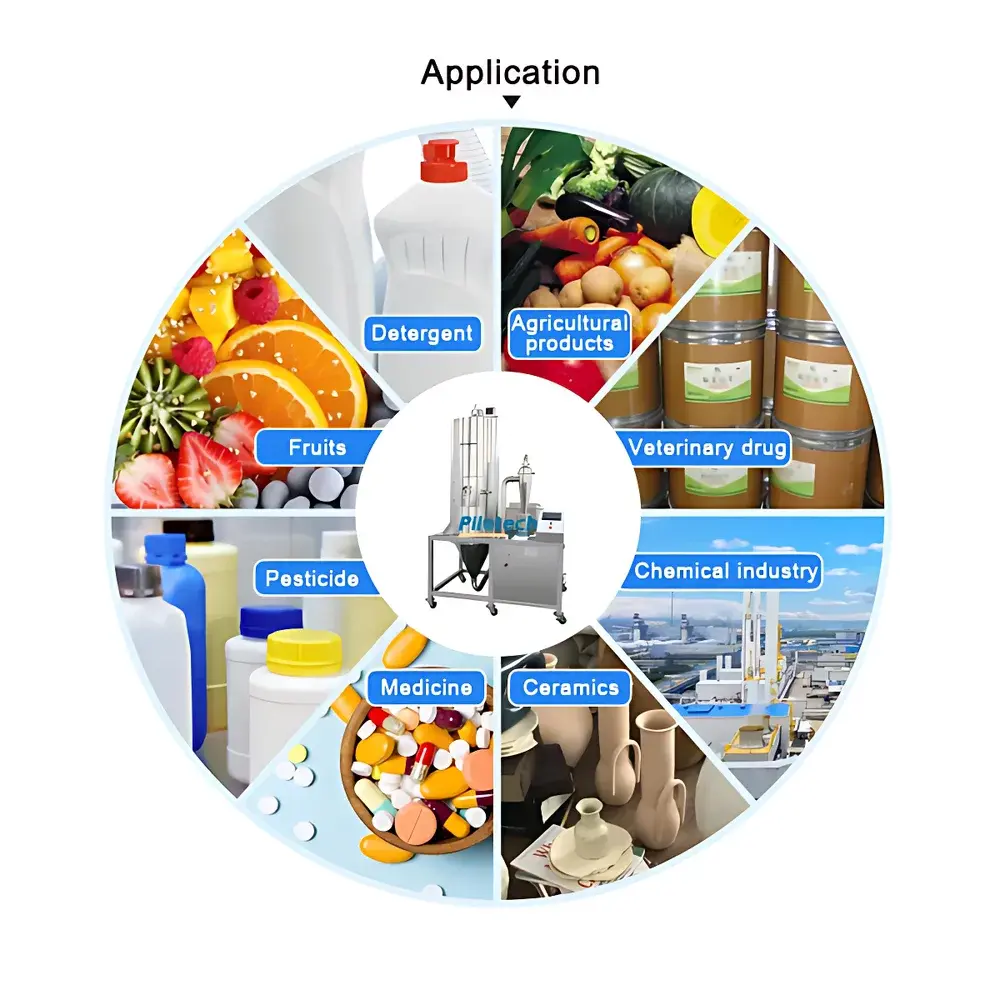
Applications
The YC-029 serves cross-disciplinary R&D workflows requiring controlled particulate formation. In advanced ceramics, it produces sinterable oxide powders (e.g., Al₂O₃, ZrO₂, SiC) with narrow PSD (1–120 µm) and high tap density—critical for tape casting and cold isostatic pressing. In phytochemistry, it dries heat-labile polyphenol-rich extracts without excipients, preserving antioxidant activity (validated via DPPH assay post-drying). In battery materials research, it synthesizes cathode precursors (e.g., NMC, LFP) with tunable secondary particle morphology. Additional use cases include: functional food ingredient microencapsulation (e.g., probiotics, omega-3 oils), catalyst support preparation (zeolites, mesoporous silica), and diagnostic reagent lyophilization alternatives where spray drying offers superior scalability.
FAQ
Is the YC-029 suitable for organic solvent-based feeds?
No. The system is designed exclusively for aqueous solutions and suspensions. Organic solvent handling requires explosion-proof modifications not included in this configuration.
Can particle size be precisely targeted within the 1–120 µm range?
Yes—via coordinated adjustment of inlet temperature, feed rate, nozzle orifice, and atomization air pressure. Empirical correlation models (e.g., using dimensionless numbers like Weber and Reynolds) are recommended for predictive scaling.
What maintenance intervals are recommended for the peristaltic pump and nozzle?
Peristaltic tubing should be replaced every 200 operational hours; nozzle inspection and ultrasonic cleaning are advised after each 10 drying cycles involving abrasive slurries.
Does the system comply with FDA 21 CFR Part 11 for electronic records?
The base unit provides traceable local logging but lacks digital signature and role-based access controls. Full Part 11 compliance requires third-party validation and supplementary software integration.
Is remote monitoring supported?
Not natively. However, analog 4–20 mA outputs for inlet temperature and pump speed are available as optional hardware add-ons for connection to external PLCs or cloud-enabled gateways.



