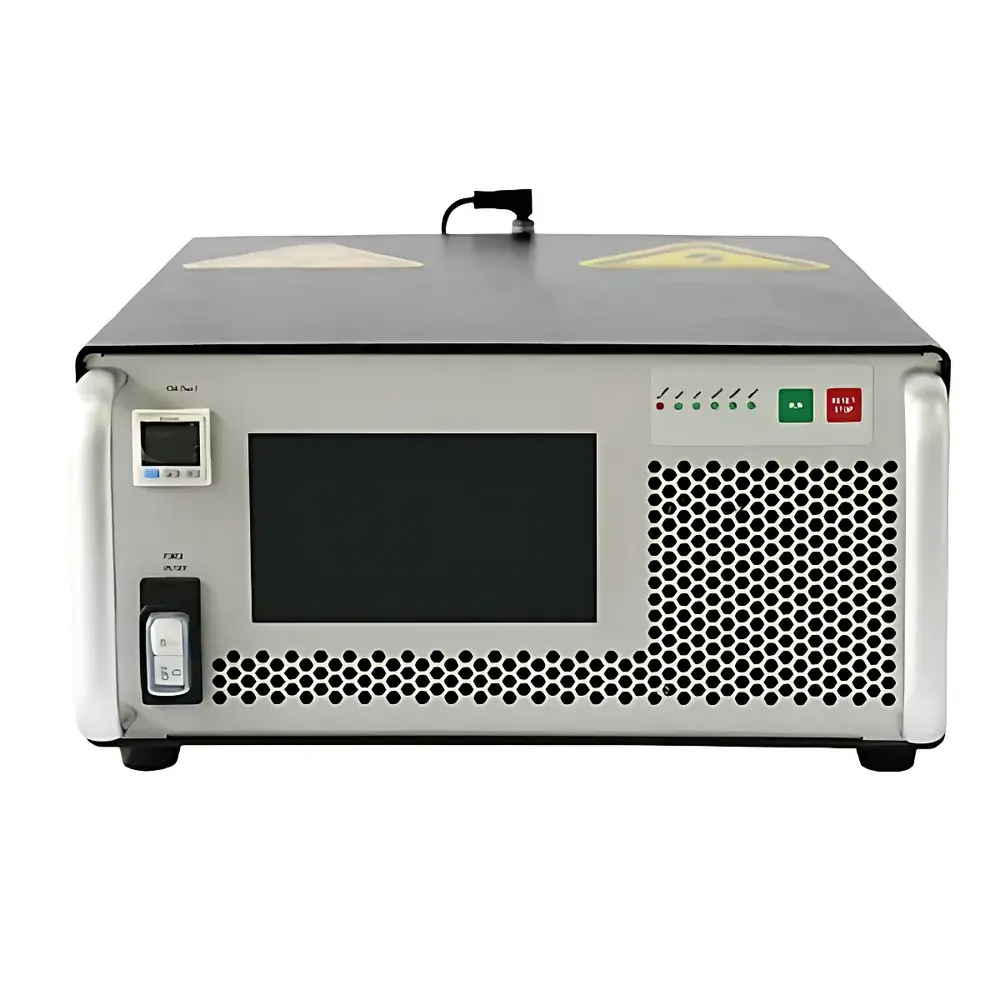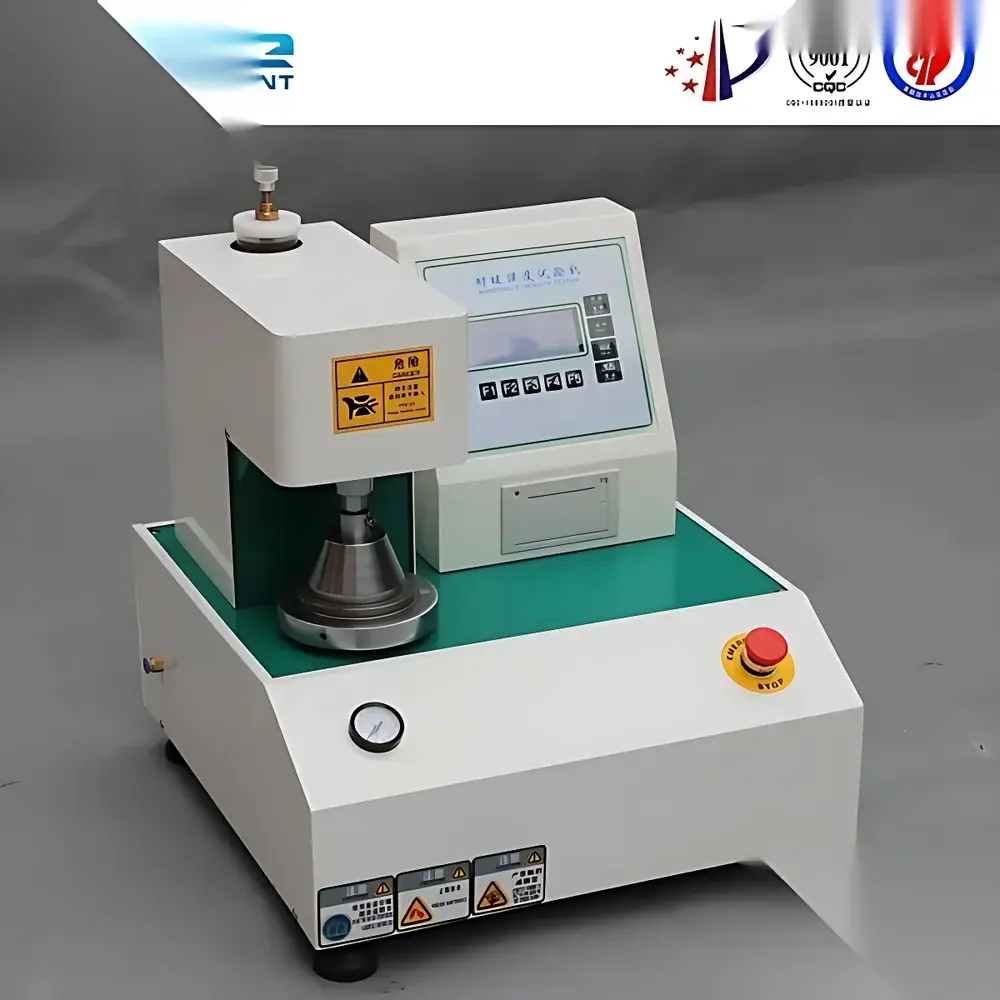
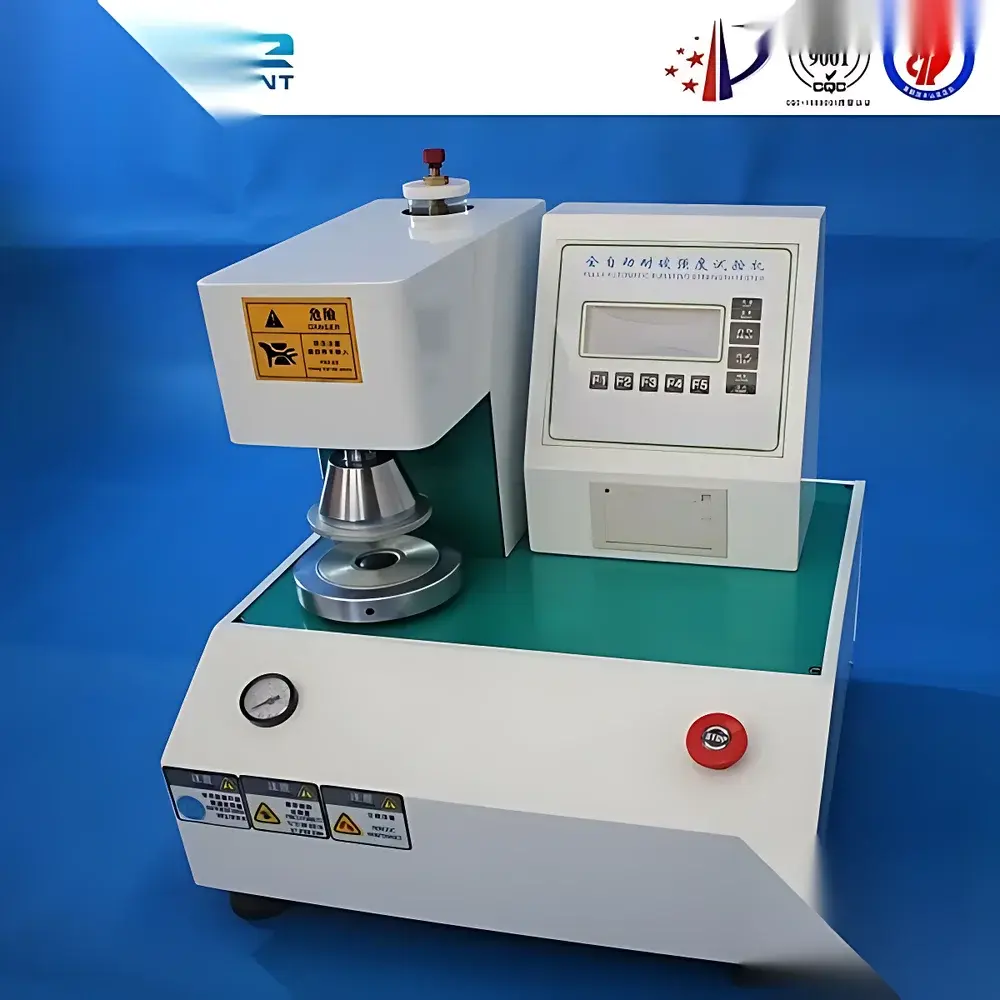
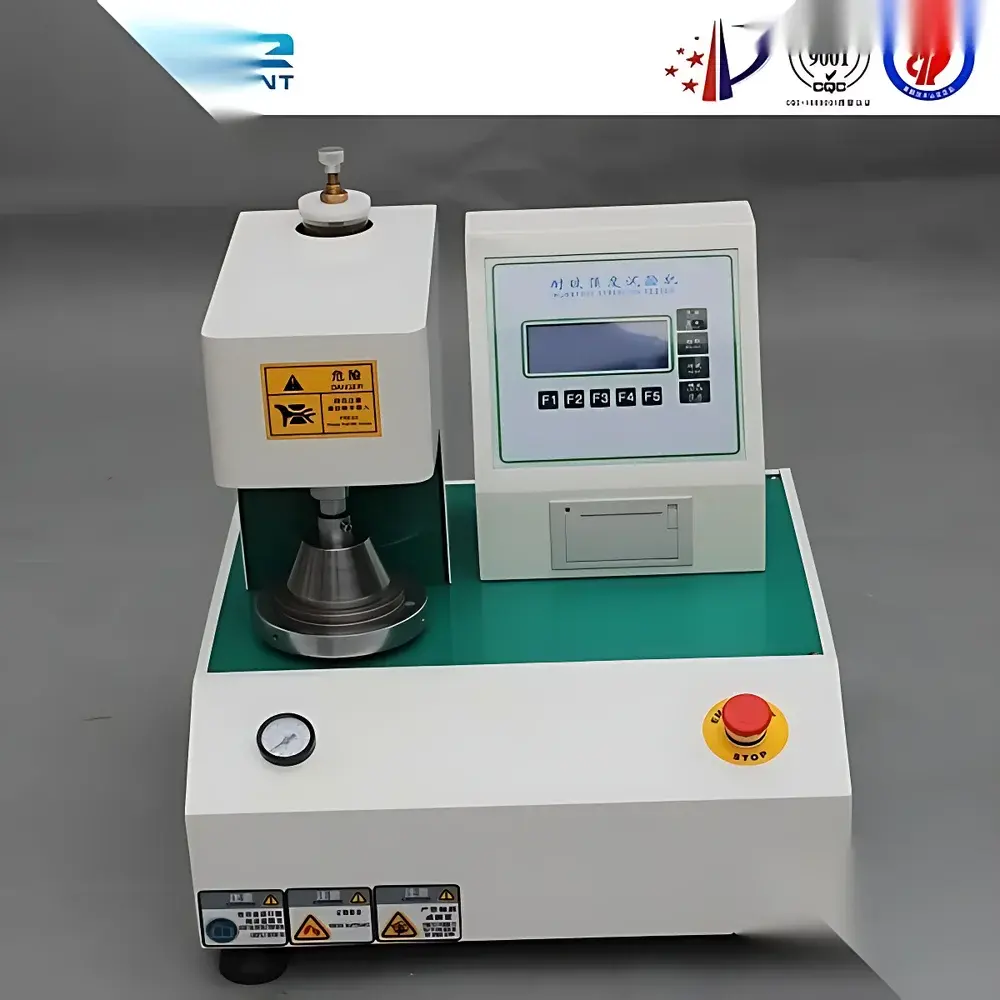
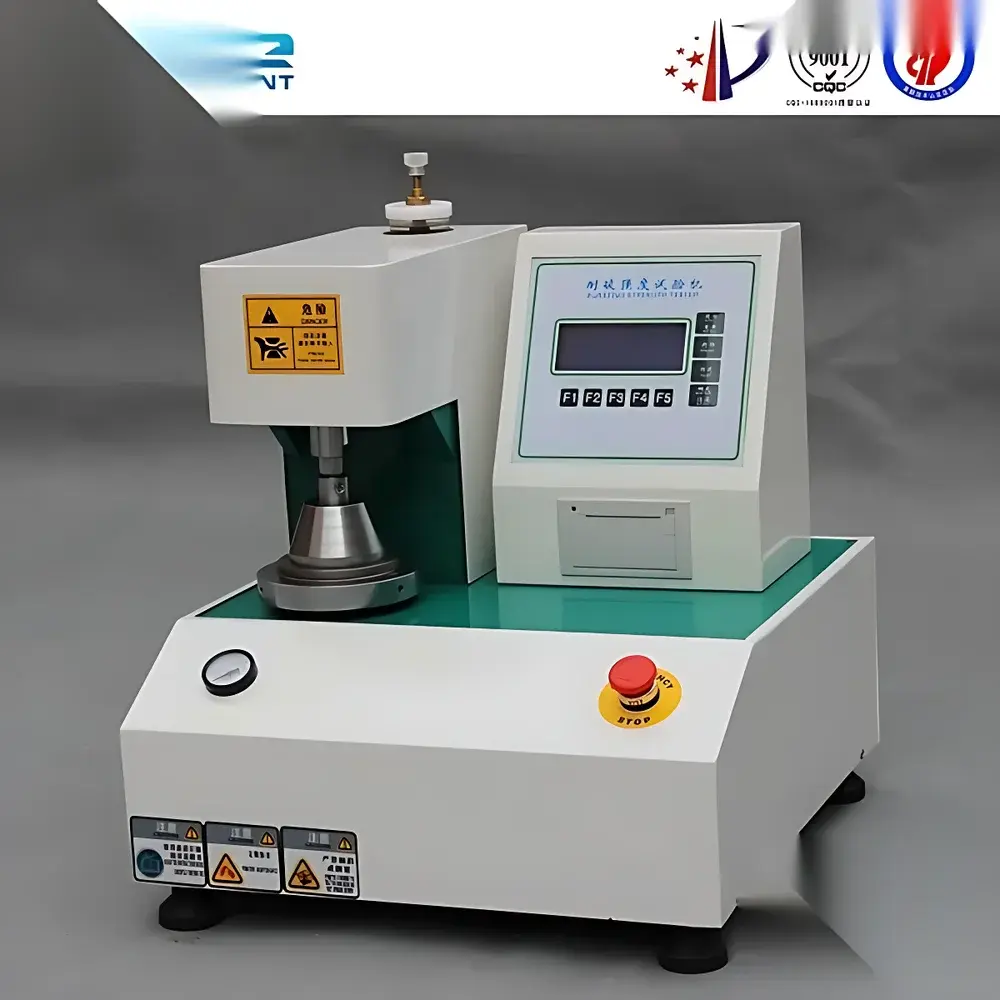
PL-100 Corrugated Box Burst Strength Tester
| Brand | OEM |
|---|---|
| Origin | Imported |
| Manufacturer Type | Authorized Distributor |
| Measurement Range | 0–100 kg/cm² (0.1 kg/cm² resolution) |
| Pressure Transducer Accuracy | ±1 kPa |
| Hydraulic Oil Displacement Rate | 170 ± 15 mL/min |
| Display | LED, Units selectable (kg, N, lb) |
| Dimensions (W×D×H) | 450 × 430 × 520 mm |
Overview
The PL-100 Corrugated Box Burst Strength Tester is a precision mechanical testing instrument engineered for the quantitative evaluation of the bursting resistance of corrugated fiberboard and solid fiberboard packaging materials. It operates on the Mullen burst test principle—applying hydraulic pressure uniformly beneath a clamped specimen until rupture occurs—thereby measuring the maximum pressure (in kg/cm², N, or lb) required to burst the material surface. Designed in strict alignment with international packaging test standards—including ASTM D7269, ISO 2758, TAPPI T810, and GB/T 6545—the PL-100 delivers repeatable, traceable, and metrologically sound results essential for quality assurance in packaging R&D, production line QC, and third-party certification laboratories. Its robust architecture integrates a calibrated pressure transducer, precision-machined brass hydraulic cylinder, and stainless-steel test head to ensure long-term dimensional stability and minimal hysteresis under cyclic loading.
Key Features
- High-accuracy pressure measurement: Equipped with a certified pressure transducer with ±1 kPa accuracy, enabling compliance with ISO/IEC 17025 calibration traceability requirements.
- Hydraulically actuated burst mechanism: Brass oil cylinder and precision-ground piston assembly provide consistent sealing integrity and low-leakage performance over >10,000 test cycles.
- Integrated electromechanical control: Microprocessor-based controller with real-time display of clamping force and burst pressure; supports automatic zeroing, peak-hold capture, and overload protection.
- Modular user interface: LED display with unit switching (kg/cm², N, lb), programmable test hold time, and digital output port for external data logging.
- Structural durability: Anodized aluminum front panel, stainless-steel load-bearing components, and hardened steel guide rods ensure mechanical rigidity and resistance to environmental corrosion.
- Onboard calibration mode: Dedicated internal calibration routine allows accredited metrology labs to perform full-range verification using NIST-traceable deadweight standards without disassembly.
Sample Compatibility & Compliance
The PL-100 accommodates standard test specimens of 140 mm × 140 mm (ASTM D7269) or 152 mm × 152 mm (TAPPI T810), with automatic clamping force adjustment to maintain uniform gasket contact pressure across varying board thicknesses (0.5–12 mm). It supports both single-wall and double-wall corrugated board, solid bleached sulfate (SBS), and recycled fiberboard substrates. All mechanical and electrical subsystems comply with CE marking directives (2014/30/EU EMC, 2014/35/EU LVD), and its pressure measurement chain meets ISO 9001:2015 clause 7.1.5 requirements for monitoring and measuring resources. The device is routinely deployed in facilities operating under ISO 9001, IATF 16949, and FDA-regulated packaging validation protocols where documented test repeatability and audit-ready calibration records are mandatory.
Software & Data Management
While the PL-100 operates as a standalone instrument, its RS-232 serial interface enables direct connection to laboratory PCs running Windows-based data acquisition software (e.g., LabVIEW-compatible drivers or custom CSV export utilities). Test records—including burst value, date/time stamp, operator ID, and calibration status—are stored internally (up to 500 entries) with timestamped metadata. Optional firmware upgrade supports GLP-compliant audit trails: all parameter changes, calibration events, and result exports are logged with immutable timestamps and user authentication fields. When integrated into enterprise QMS platforms (e.g., TrackWise, MasterControl), raw burst data can be automatically mapped to material lot numbers and fed into SPC dashboards for real-time process capability analysis (Cp/Cpk).
Applications
- Corrugated box qualification per ISTA 1A/2A and ASTM D642 compression-to-burst correlation studies.
- Supplier incoming inspection of fiberboard raw materials at paper mills and converting plants.
- Design validation of eco-friendly packaging alternatives (e.g., molded pulp, honeycomb board) against legacy corrugated benchmarks.
- Root cause analysis of field failures linked to insufficient burst strength in e-commerce shipping environments.
- Regulatory submission support for FDA 21 CFR Part 11-compliant packaging dossiers requiring validated test methodology documentation.
FAQ
What standards does the PL-100 comply with for burst strength testing?
It conforms to ASTM D7269, ISO 2758, TAPPI T810, and GB/T 6545, with mechanical design validated against ISO 16269-6 for statistical sampling of burst values.
Can the instrument be recalibrated by an external metrology lab?
Yes—its embedded calibration mode accepts external deadweight standards; full calibration certificates include uncertainty budgets per ISO/IEC 17025 Annex A.
Is the hydraulic system maintenance-free?
The brass cylinder requires biannual oil replacement (ISO VG 32 mineral oil) and annual seal inspection; no scheduled lubrication of the lead screw is needed due to pre-greased, sealed bearings.
Does the device support automated reporting for ISO 9001 audits?
Internal memory stores compliant test logs; when connected via RS-232, it outputs timestamped, operator-tagged CSV files compatible with QMS document control workflows.
What is the expected service life under daily QC use?
With routine oil maintenance and annual verification, the mechanical system maintains specification performance for ≥8 years at 20 tests/day average duty cycle.