
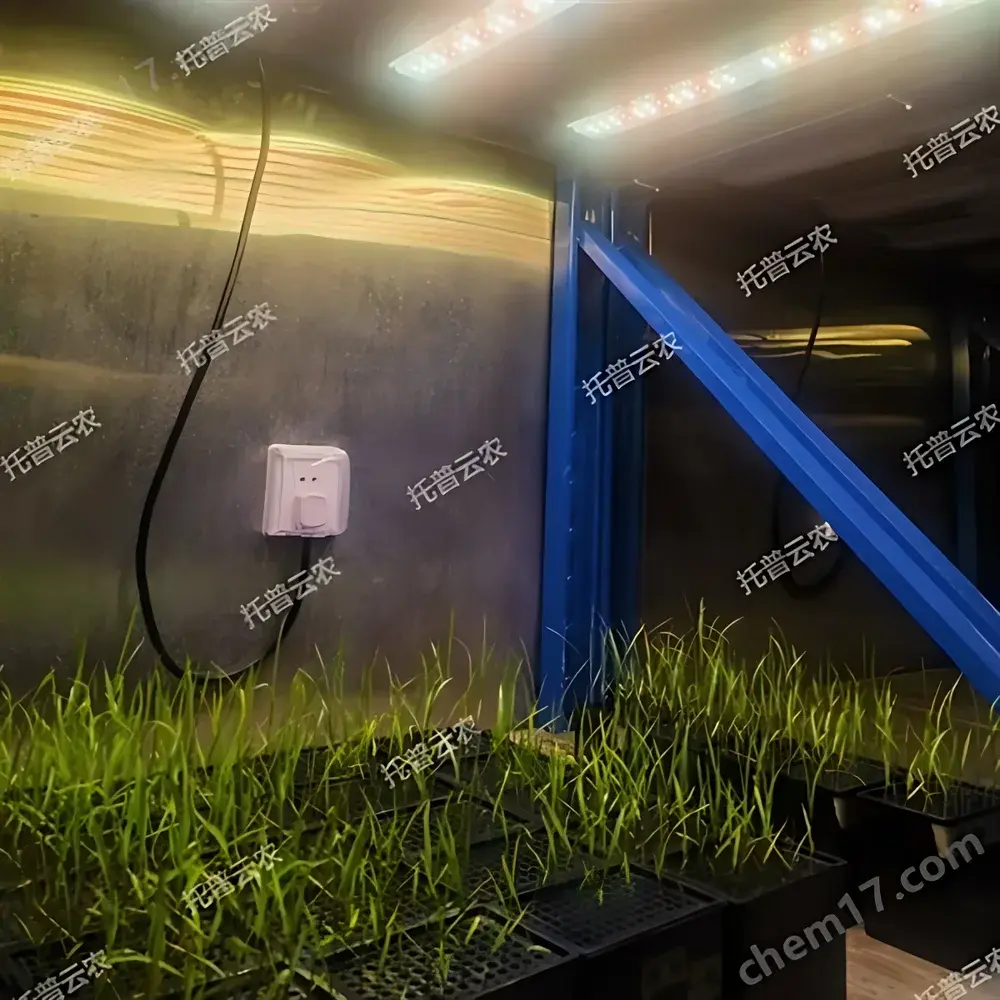
Plant Growth Chamber – Top Cloud-agri Walk-in Controlled Environment Chamber for Plant Physiology and Phenotyping Studies
| Brand | Top Cloud-agri |
|---|---|
| Origin | Zhejiang, China |
| Manufacturer Type | Direct Manufacturer |
| Product Category | Domestic |
| Model | Artificial Climate Chamber |
| Pricing | Available Upon Request |
Overview
The Top Cloud-agri Walk-in Plant Growth Chamber is an engineered environmental control system designed for reproducible, long-term plant physiology, phenotyping, seed germination, and controlled-environment agriculture (CEA) research. Based on the principle of active climate regulation—integrating precision refrigeration/heating, humidification/dehumidification, spectral LED lighting, and real-time gas exchange—the chamber maintains stable, programmable gradients of temperature (10–40 °C), relative humidity (45–90% RH), photosynthetically active radiation (PAR), and CO2 concentration. Unlike standard incubators, this walk-in architecture supports full-cycle cultivation—from seedling emergence through vegetative growth and reproductive development—enabling longitudinal studies under GLP-aligned conditions. Its modular design accommodates variable canopy heights and experimental scale, making it suitable for both small-plot screening and multi-tiered high-density trials.
Key Features
- Intelligent dual-loop climate control system with PID-based regulation of temperature and humidity, achieving ±0.5 °C temperature stability and ±3% RH repeatability over 24-hour cycles.
- Full-spectrum, dimmable LED lighting arrays with adjustable PAR intensity (0–1000 µmol·m−2·s−1) and customizable photoperiod programming (e.g., 16/8, 12/12, or continuous light).
- Multi-level, height-adjustable plant cultivation racks constructed from corrosion-resistant stainless steel or powder-coated aluminum; each shelf supports independent lighting control and load-rated structural integrity (up to 50 kg/m²).
- Integrated fresh-air exchange module with HEPA-filtered intake and CO2-monitoring feedback loop, enabling dynamic atmospheric composition management within the chamber volume.
- IoT-enabled cloud platform with encrypted HTTPS API, supporting remote monitoring and parameter adjustment via web dashboard or native iOS/Android application—fully compliant with audit-trail requirements per FDA 21 CFR Part 11 when configured with user-role permissions and electronic signature modules.
- Energy-optimized thermal envelope with vacuum-insulated panels (VIPs), variable-speed compressors, and heat-recovery ventilation—reducing power consumption by up to 35% compared to conventional growth chambers of equivalent volume.
Sample Compatibility & Compliance
The chamber accommodates a broad range of botanical specimens—including Arabidopsis thaliana, rice (Oryza sativa), maize (Zea mays), wheat (Triticum aestivum), tomato (Solanum lycopersicum), and tissue-cultured explants—across developmental stages from seed stratification to flowering and fruit set. Its internal dimensions and rack layout are configurable to support standard growth containers (e.g., Magenta boxes, square pots, hydroponic trays) as well as custom mounting fixtures for imaging rigs or sensor arrays. The system meets structural and electrical safety standards per IEC 61000-6-3 (EMC emissions) and IEC 61000-6-2 (immunity), and its control software architecture supports data integrity protocols aligned with ISO/IEC 17025 and ASTM E2500-18 for equipment qualification in regulated laboratories.
Software & Data Management
Embedded firmware runs on a Linux-based real-time OS with local SD-card logging (1-year buffer at 1-minute intervals) and synchronized cloud backup. Environmental logs include timestamped values for temperature, humidity, light intensity (PPFD), CO2, door-open events, and alarm status. Export formats include CSV, JSON, and NetCDF for integration with MATLAB, R, or Python-based analysis pipelines. Optional validation packages include IQ/OQ documentation templates, calibration certificate traceability to NIST standards, and GxP-compliant electronic logbooks with time-stamped operator actions and change history.
Applications
- Controlled-environment phenotyping for QTL mapping and GWAS studies under standardized light-temperature-humidity regimes.
- Abiotic stress simulation (drought, heat, cold, elevated CO2) to assess physiological resilience and gene expression dynamics.
- Seed dormancy and germination kinetics assays under precisely defined stratification and light-break protocols.
- Pre-breeding nursery trials for elite line selection prior to field evaluation.
- Teaching laboratories for undergraduate plant science courses—supporting hands-on experimentation in photomorphogenesis, circadian biology, and resource-use efficiency.
- Regulatory submission support for EPA, OECD, or EFSA dossier preparation requiring documented environmental control during toxicity or efficacy testing.
FAQ
What is the standard internal volume and customization lead time?
Standard configurations range from 2.5 m³ to 12 m³; custom engineering (e.g., ceiling-mounted lighting rails, integrated imaging ports, or HVAC integration) typically requires 10–14 weeks after final design sign-off.
Can the chamber be validated for GLP or GMP compliance?
Yes—validation support includes protocol development, execution of Installation Qualification (IQ), Operational Qualification (OQ), and Performance Qualification (PQ) reports, plus calibration certificates traceable to national metrology institutes.
Is third-party calibration service available?
Top Cloud-agri partners with ISO/IEC 17025-accredited calibration laboratories in Asia and Europe for on-site sensor verification and uncertainty reporting.
Does the system support integration with external sensors or lab information management systems (LIMS)?
Yes—the chamber’s RESTful API and Modbus TCP interface allow bidirectional communication with LIMS, SCADA platforms, or custom data acquisition networks.
What maintenance schedule is recommended?
Quarterly inspection of air filters, LED driver performance, and refrigerant pressure; annual recalibration of RH and CO2 sensors is advised for mission-critical applications.
Related Products




