
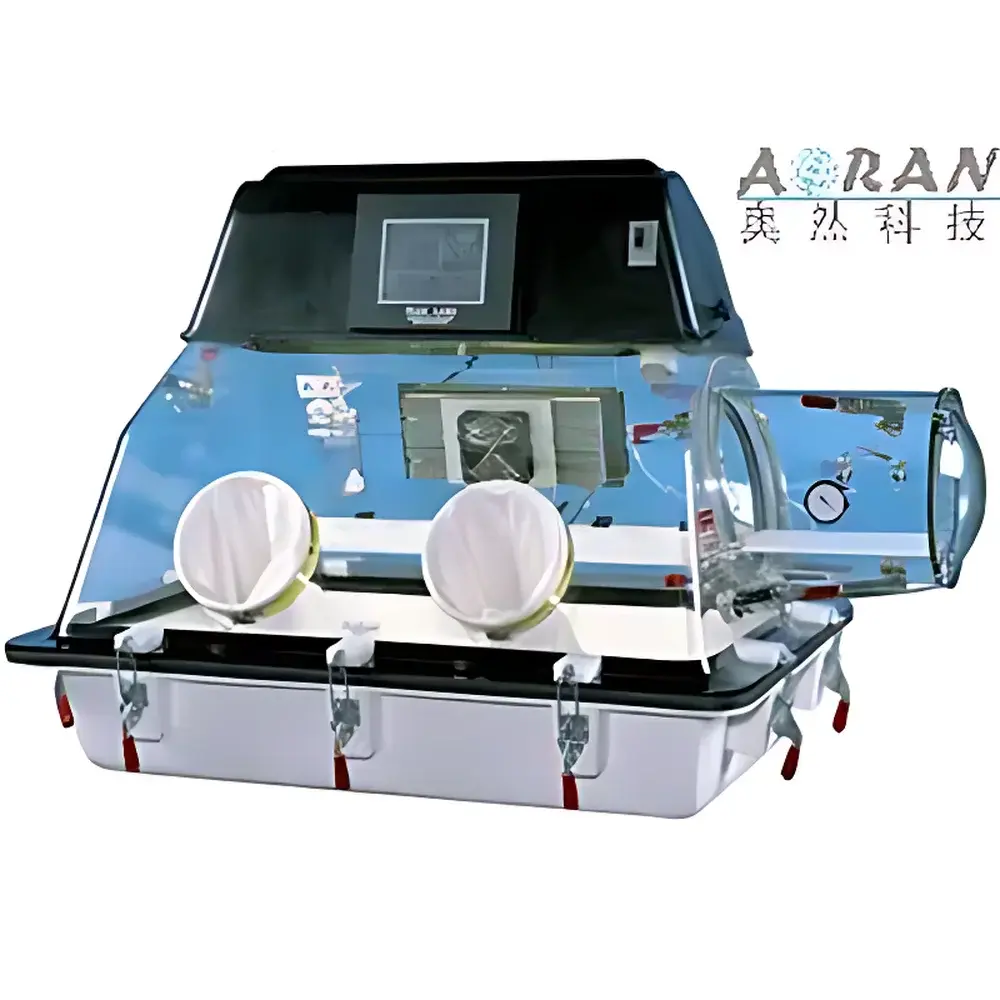
Plas-Labs 890-THC Automated Temperature- and Humidity-Controlled Glove Box
| Brand | Plas-Labs |
|---|---|
| Origin | USA |
| Model | 890-THC |
| Chamber Volume | 489 L |
| Transfer Chamber Volume | 19 L |
| Dimensions (L×W×H) | 1040 × 712 × 660 mm |
| Temperature Range | 16–44 °C (±1 °C accuracy) |
| Humidity Range | 1–80 %RH (±2 %RH accuracy) |
| Oxygen Level | ≤10 ppb |
| Water Vapor Content | 1–80 %RH |
| Leak Rate | Ultra-low, monolithic seamless construction |
| Glove Count | 1 pair (81 cm length) |
| Viewing Window | Acrylic transparent chamber |
| Max Operating Pressure | 1.49 kPa |
| Power Supply | 220–240 V, 50 Hz, 5 A |
| Weight | 112.5 kg |
| Compliance | UL & CSA medical-grade electrical safety certification |
Overview
The Plas-Labs 890-THC is an engineered inert-atmosphere glove box system designed for precise, independent control of temperature and relative humidity (RH) in research-critical environments. Unlike conventional nitrogen-purged glove boxes with passive humidity management, the 890-THC integrates active thermoelectric heating/cooling modules and dual-mode humidification/dehumidification—using ultrasonic mist generation and desiccant-based drying—to maintain stable, programmable conditions across its 489 L main chamber. Its core architecture follows ISO 14644-1 Class 5 cleanroom-compatible design principles, with a monolithic acrylic chamber eliminating seam-related leakage pathways and achieving verified leak rates below 0.05 vol%/hr (equivalent to ≤10 ppb O₂ ingress under continuous purge). The system operates as a negative-pressure enclosure, ensuring containment integrity during material transfer and minimizing cross-contamination risk—critical for applications in pharmaceutical formulation development, biologics handling, and moisture-sensitive battery electrode research.
Key Features
- 8-inch full-color capacitive touchscreen interface with password-protected access and audit-trail-capable event logging via DB15 data port
- Four programmable temperature/humidity setpoints stored in non-volatile memory; automatic recall of last-used parameters
- Integrated PID microprocessor controller delivering ±1 °C thermal stability and ±2 %RH hygric repeatability over 24-hour continuous operation
- Dual-stage transition chamber (19 L volume) with auto-balancing pressure equalization: internal door opens only upon pressure equilibrium, preventing atmosphere disruption during sample loading
- Medical-grade UL/CSA-certified internal power distribution (220–240 V, 5 A), including recessed GFCI outlets compatible with analytical instrumentation
- Optimized optical design: high-transparency acrylic walls, white stainless-steel floor, and 40,000-hour-life fluorescent lighting ensure shadow-free visual monitoring and ergonomic sample manipulation
- Four stainless-steel isolation valves (two on main chamber, two on transfer chamber) with tri-clamp sealing for controlled gas exchange and purge sequencing
Sample Compatibility & Compliance
The 890-THC accommodates a broad range of sample types—including lyophilized biologics, lithium-metal anodes, enzyme immobilization substrates, and sterile tissue culture reagents—without requiring external environmental conditioning. Its RH range (1–80 %RH) and temperature span (16–44 °C) align with ICH Q5C stability testing guidelines and ASTM E145-22 standard practices for environmental chambers. The system supports GLP-compliant workflows through timestamped parameter logging, user-access controls, and configurable alarm thresholds (audible/visual alerts for O₂ >10 ppb, RH deviation >±3 %, or temperature excursion >±1.5 °C). All wetted components meet USP Class VI biocompatibility requirements, and the sealed chamber design facilitates validation per FDA 21 CFR Part 11 for electronic records and signatures when paired with compliant data acquisition software.
Software & Data Management
Data capture is enabled via the integrated DB15 analog output port, supporting direct connection to third-party SCADA systems (e.g., LabVIEW, DeltaV) or standalone chart recorders. The onboard controller stores up to 30 days of 1-minute-interval environmental history, exportable as CSV files for trend analysis. While the base unit does not include cloud connectivity, its RS-232/RS-485 expansion options allow integration into centralized facility monitoring networks compliant with ISO/IEC 17025 laboratory management standards. Audit trail functionality records all parameter changes, user logins, alarm events, and door actuations—with immutable timestamps—satisfying traceability requirements for regulatory submissions.
Applications
- Pharmaceutical solid-state characterization under defined hygrothermal stress (per ICH Q1A–Q1E)
- Handling of air-sensitive catalysts and organometallic compounds requiring simultaneous O₂/H₂O suppression
- Preclinical cell therapy processing where ambient RH directly impacts transfection efficiency and viability assays
- Electrochemical materials research involving Li-S or Na-ion battery cathodes sensitive to both temperature gradients and moisture-induced side reactions
- Controlled-environment crystallization studies where nucleation kinetics depend on precise RH ramping profiles
- ISO 14644-1 certified clean assembly of microfluidic diagnostic devices requiring particle-free, static-dissipative handling
FAQ
What is the maximum allowable operating pressure differential between the chamber and ambient environment?
The system is rated for a maximum positive pressure differential of 1.49 kPa (≈0.216 psi); however, it is configured by default for negative-pressure operation to ensure inward leakage containment.
Can the 890-THC be integrated with external gas purification systems?
Yes—the four stainless-steel isolation valves support standardized 1/4″ Swagelok or VCR fittings, enabling direct coupling to commercial O₂/H₂O scrubbers (e.g., MBRAUN UHP or Vacuum Atmospheres PurgeMaster units).
Is the acrylic chamber resistant to common solvents used in pharmaceutical synthesis?
Standard acrylic exhibits limited resistance to chlorinated and aromatic hydrocarbons; optional polycarbonate or laminated acrylic variants are available for enhanced chemical compatibility upon request.
Does the system comply with electromagnetic compatibility (EMC) directives for laboratory use?
Yes—it meets EN 61326-1:2013 requirements for laboratory equipment, including radiated emission limits (Class B) and immunity to electrostatic discharge (IEC 61000-4-2, Level 3).



