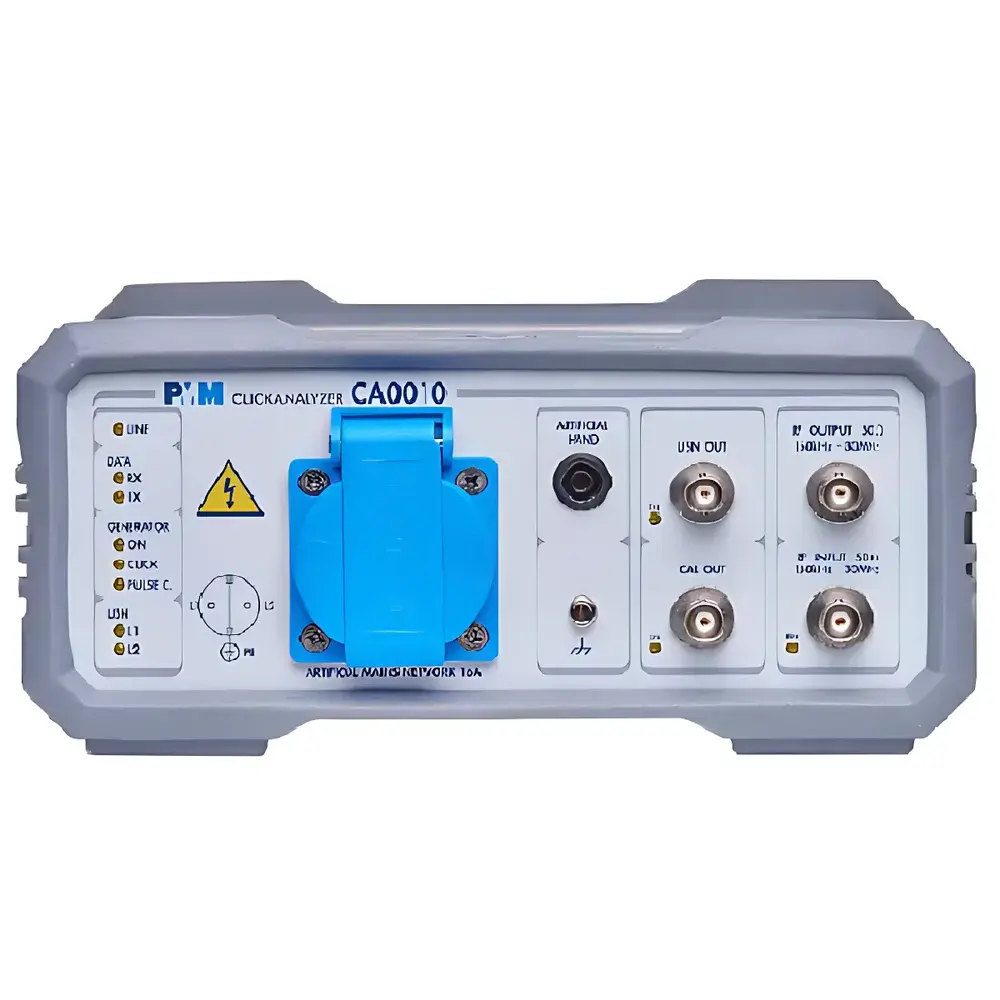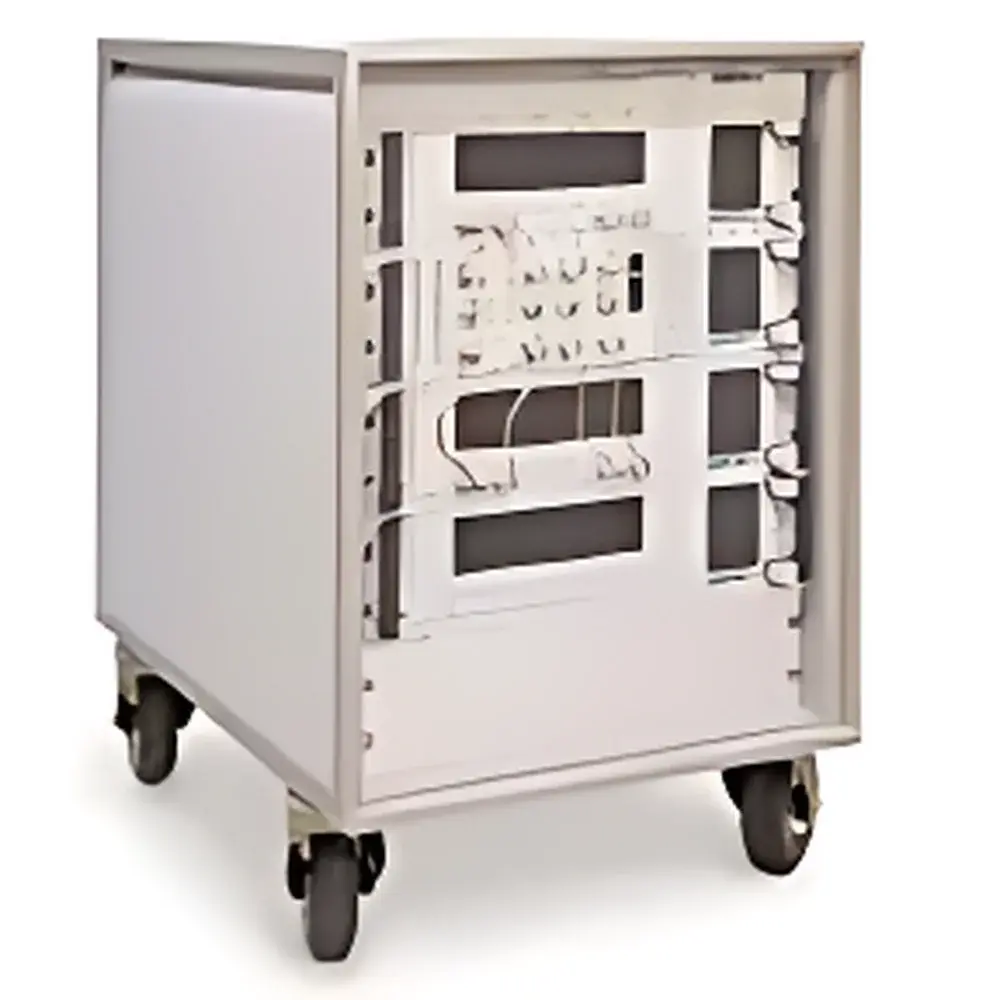
PMM Power Amplifier for RF & Microwave Metrology
| Brand | PMM |
|---|---|
| Origin | Italy |
| Type | RF Power Amplifier |
| Power Range | 15 W to 10,000 W |
| Compression Point | 1 dB typical |
| Stability | High long-term amplitude and phase stability |
| Configuration | Benchtop or rack-mountable (model-dependent) |
Overview
The PMM Power Amplifier is a precision RF and microwave signal amplification platform engineered for metrological-grade applications in calibration laboratories, EMC testing facilities, and radio frequency research environments. Designed in accordance with the fundamental principles of linear amplification under controlled thermal and impedance-matched conditions, it delivers traceable, repeatable gain across defined frequency bands—typically spanning from 10 kHz to 6 GHz (model-dependent). Unlike broadband commercial amplifiers optimized for throughput, this series prioritizes spectral purity, gain flatness (< ±0.3 dB over specified bandwidth), harmonic suppression (>45 dBc), and intermodulation distortion performance (IMD3 < –35 dBc at rated output), making it suitable for use as a reference-level source in accredited RF power calibration chains per ISO/IEC 17025 requirements.
Key Features
- Wide selectable output power range: 15 W, 50 W, 100 W, 250 W, 500 W, 1 kW, 3 kW, and up to 10 kW continuous wave (CW) operation—each model calibrated and characterized per individual unit serial number.
- Exceptional amplitude and phase stability: < ±0.05 dB and < ±0.5° variation over 8-hour operation at constant ambient temperature (23 ±2 °C), verified via internal monitoring sensors and external metrological validation protocols.
- Superior 1 dB compression point linearity: Ensures minimal gain deviation across dynamic input ranges; critical for accurate power transfer characterization in RF sensor calibration (e.g., thermistor mounts, diode-based sensors) and field probe linearity verification.
- Integrated thermal management architecture: Forced-air or liquid-cooled (high-power models), with real-time temperature telemetry and automatic derating logic to maintain compliance with IEC 61000-4-3 test margin requirements.
- Rack-mount or benchtop configurations available, supporting IEEE-488 (GPIB), LAN (LXI-compliant), and USB 2.0 remote control interfaces for integration into automated metrology systems.
Sample Compatibility & Compliance
The PMM Power Amplifier is compatible with standard 50 Ω RF measurement infrastructure, including directional couplers, power meters (e.g., Keysight N1911A, Rohde & Schwarz NRP-Z), and antenna calibration test sites. It supports full traceability to national metrology institutes (NMIs) such as INRIM (Italy), PTB (Germany), and NIST (USA) when used with certified RF power standards. All units comply with CE marking directives (EMC Directive 2014/30/EU and Low Voltage Directive 2014/35/EU), RoHS 2011/65/EU, and meet radiated/spurious emission limits per CISPR 11 Class A. For GLP/GMP-regulated environments, firmware supports audit-trail-enabled operation logs compliant with FDA 21 CFR Part 11 when paired with validated host software.
Software & Data Management
PMM provides the AmpliControl™ Suite—a Windows-based application enabling remote configuration, real-time gain monitoring, thermal status visualization, and automated sweep sequencing (frequency/power). The software exports measurement data in CSV and XML formats, embeds calibration certificate metadata (including date, uncertainty budget, and technician ID), and supports digital signature workflows for ISO/IEC 17025 documentation. API libraries (C++, Python, LabVIEW) allow seamless integration into custom calibration management systems (CMS) and LIMS platforms, ensuring full chain-of-custody for RF power measurement records.
Applications
- Primary and secondary calibration of RF power sensors and field probes in national and industrial metrology labs.
- EMC immunity testing per IEC 61000-4-3, IEC 61000-4-6, and MIL-STD-461 RS103, where stable, broadband high-power excitation is required.
- Antenna pattern measurement and gain calibration in far-field and near-field ranges.
- Verification of RF absorber performance and chamber validation (e.g., normalized site attenuation).
- Research on nonlinear device behavior, including amplifier linearity mapping and PAE (power-added efficiency) analysis under modulated signal conditions.
FAQ
What frequency ranges are supported by different PMM power amplifier models?
Standard models cover 10 kHz–1 GHz, 100 kHz–3 GHz, and 10 MHz–6 GHz bands; narrowband variants extend to 18 GHz and 40 GHz upon request.
Is factory calibration included, and what uncertainty values are achieved?
Yes—each unit ships with a UKAS-accredited (or equivalent NMI-traceable) calibration certificate. Typical expanded uncertainty (k=2) for output power is ±1.2% (15–100 W) and ±1.8% (1–10 kW) at reference conditions.
Can the amplifier be operated in pulsed mode for radar-related calibration?
Selected models support gated CW and pulse-modulated operation with rise/fall times <100 ns and duty cycle programmability (1–100%), subject to peak power derating per datasheet specifications.
Does the system support third-party SCPI command sets?
Yes—fully SCPI 1999-compliant command structure is implemented for all remote interfaces, ensuring interoperability with common test executive frameworks (e.g., NI TestStand, Keysight PathWave).
How is thermal drift compensated during extended calibration sessions?
Real-time internal temperature sensing feeds closed-loop bias adjustment; optional external temperature lock-in via PT100 input enables active ambient compensation synchronized with reference sensor readings.